
Ganesh Chaturthi 2026 – Welcoming the Elephant God Home
गणेश चतुर्थी
When is Ganesh Chaturthi in 2026?
Ganesh Chaturthi 2026 falls on Monday, 14 September. It marks the birth of Lord Ganesha and opens a festival of up to ten days that ends with Ganesh Visarjan on Anant Chaturdashi, Friday, 25 September 2026, when idols are carried to water for immersion.
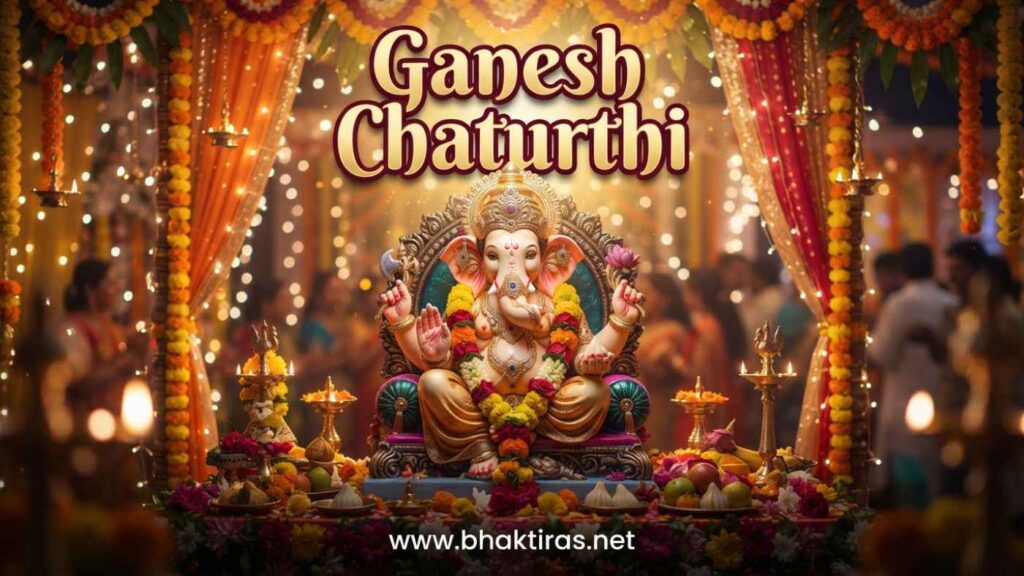
Ganesh Chaturthi celebrates the birth of Lord Ganesha, the elephant-headed remover of obstacles and the god families turn to before any new beginning. Falling on Bhadrapada Shukla Chaturthi, in 2026 it begins on Monday, 14 September. Clay idols of Ganesha are brought home and into public pandals, honoured with modak, flowers and daily aarti for one to ten days, and then given a joyful farewell at the water’s edge on Anant Chaturdashi to cries of Ganpati Bappa Morya.
Ganesh Chaturthi 2026-2028: Dates & Calendar
The next Ganesh Chaturthi is Monday, 14 September 2026. Because the festival follows the Hindu lunar calendar, the Gregorian date shifts a little each year.
| Year | Chaturthi (Start) | Day | Visarjan (Anant Chaturdashi) |
|---|---|---|---|
| 2026 | 14 September | Monday | Friday, 25 September |
| 2027 | 4 September | Saturday | Tuesday, 14 September |
| 2028 | 23 August | Wednesday | Saturday, 2 September |
The main worship begins on the Chaturthi tithi. Households and pandals immerse their idols after one and a half, three, five, seven or ten days, with the grandest processions saved for Anant Chaturdashi.
Why Ganesh Chaturthi Is Celebrated
Ganesh Chaturthi honours the birthday of Lord Ganesha and invites his blessing on new ventures, since he is worshipped first among the gods.
The birth of Ganesha
The festival marks the day Ganesha was created. In the best-known account, Parvati formed a boy from turmeric paste to guard her door; Shiva, not knowing the child, beheaded him, then restored his life with an elephant’s head. That story of loss and renewal sits at the heart of the celebration.
Remover of obstacles
Ganesha is Vighnaharta, the one who clears obstacles, and Buddhi-pati, lord of intellect. He is invoked before weddings, journeys, exams and the opening of a business, which is why his birthday carries such wide appeal beyond any single region.
A public festival by design
The freedom fighter Lokmanya Bal Gangadhar Tilak reshaped Ganesh Chaturthi in 1893 Pune from a private home ritual into a large public event. Community pandals gave people a lawful reason to gather under colonial rule, and the shared celebration became a tool for social unity.
Deities & Figures Worshipped
Ganesh Chaturthi is devoted to Lord Ganesha, though his divine family is often remembered alongside him.
Ganesha
The elephant-headed son of Shiva and Parvati, worshipped as the remover of obstacles and patron of wisdom and beginnings. His large ears, small eyes and the modak in his hand each carry a teaching about listening, focus and the sweetness of a good life.
Shiva and Parvati
Ganesha’s parents feature in the birth story and in many aartis. Parvati’s creation of the child and Shiva’s granting of the elephant head explain both Ganesha’s form and his standing as the first to be worshipped.
Key Rituals, Step by Step
From welcoming the idol to the final immersion, the days follow a clear and joyful rhythm.
- Sthapana (installation). A clay Ganesha idol is brought home or into a pandal and placed on a decorated platform, often on the Chaturthi morning.
- Pranapratishtha. Priests or elders chant mantras to invoke the living presence of Ganesha into the idol, awakening it for worship.
- Shodashopachara puja. Sixteen forms of offering follow, including bathing, dressing, sandal paste, flowers, incense and the favoured durva grass.
- Modak and naivedya. Sweet modak, ladoo and fruit are offered as bhog, then shared as prasad among family and visitors.
- Daily aarti. Morning and evening aartis such as Sukhkarta Dukhaharta are sung, with bells, cymbals and clapping through the days of worship.
- Uttarpuja. On the chosen final day a farewell puja thanks Ganesha and formally readies the idol to depart.
- Visarjan (immersion). On Anant Chaturdashi the idol is carried in procession to a river, lake, tank or sea and immersed, with the crowd chanting Ganpati Bappa Morya, pudhchya varshi lavkar ya.
Special Foods of Ganesh Chaturthi
Sweet dishes lead the table, since Ganesha is famously fond of them.
Modak
The signature offering: a steamed rice-flour dumpling (ukadiche modak) filled with jaggery and fresh coconut. Twenty-one are often offered together, and it is the dish most associated with the god himself.
Puran Poli
A flat bread stuffed with a sweet lentil and jaggery filling, served warm with ghee. It appears on festival plates across Maharashtra during the celebration.
Karanji
Crisp fried pastry parcels filled with coconut, jaggery and dry fruit, similar to gujiya, prepared in bulk to share with visiting guests.
Modaka & Kudumu
Steamed rice offerings prepared in the south, including undrallu (steamed rice-lentil dumplings) and kudumulu, laid before the idol as naivedya.
Regional Names & Variations
The festival is called Vinayaka Chaturthi in the south and takes on a distinct flavour in each region.
Maharashtra
The heartland of the public festival. Mumbai and Pune raise towering pandals, and idols like Lalbaugcha Raja draw enormous crowds across the ten days before the Girgaon Chowpatty immersions.
Goa
Known here as Chavath, it is a largely home-centred festival with matoli, a canopy of local fruit and greenery hung above the idol, and family recipes passed down for the naivedya.
Karnataka
Celebrated as Gowri-Ganesha, with the Gauri festival for Parvati observed a day before Ganesha’s arrival, linking mother and son across the two days.
Andhra Pradesh & Telangana
Observed as Vinayaka Chavithi, with the Khairatabad idol in Hyderabad among the tallest in the country and the patri (leaves) puja given special importance.
Gujarat
Home and community pandals honour Ganesha as the festival opens the wider autumn season, with idols immersed in local water bodies after the days of worship.
Ganesh Chaturthi Do's and Don'ts
A few simple points keep the worship respectful and the celebration kind to the environment.
Do
- Choose a clay (shadu maati) idol and natural, water-soluble colours where you can.
- Offer durva grass and modak, both dear to Ganesha, during the puja.
- Keep the puja space clean and light a lamp for the daily morning and evening aarti.
- Immerse in a home bucket, artificial pond or designated tank to protect rivers and lakes.
- Share prasad generously with neighbours, guests and those in need.
Avoid
- Avoid Plaster of Paris idols and chemical paints, which pollute water and harm aquatic life.
- Do not look at the moon on the Chaturthi night, a caution linked to the Syamantaka legend.
- Avoid using tulsi leaves in Ganesha’s worship, as tradition keeps them apart.
- Do not leave immersion waste, thermocol or plastic decorations behind at water bodies.
- Avoid arguments and disrespect near the idol during the days it is installed.
Frequently Asked Questions
When is Ganesh Chaturthi in 2026?
Ganesh Chaturthi 2026 falls on Monday, 14 September. It marks the birth of Lord Ganesha on Bhadrapada Shukla Chaturthi and opens a festival of up to ten days.
When is Ganesh Visarjan in 2026?
Ganesh Visarjan 2026 is on Friday, 25 September, the day of Anant Chaturdashi. This is when the largest immersion processions carry Ganesha idols to water to conclude the ten-day festival.
When is Ganesh Chaturthi in 2027 and 2028?
Ganesh Chaturthi is on Saturday, 4 September in 2027 (Visarjan Tuesday, 14 September) and on Wednesday, 23 August in 2028 (Visarjan Saturday, 2 September). The date moves each year because it follows the Hindu lunar calendar.
Why is Ganesh Chaturthi celebrated?
Ganesh Chaturthi is celebrated as the birthday of Lord Ganesha, the remover of obstacles and god of wisdom and new beginnings. Devotees install his idol, worship him for one to ten days, and immerse it on Anant Chaturdashi.
Which god is worshipped on Ganesh Chaturthi?
Lord Ganesha, the elephant-headed son of Shiva and Parvati, is worshipped on Ganesh Chaturthi. He is honoured first among the gods and invoked before any new venture as Vighnaharta, the remover of obstacles.
Why is Ganesh Chaturthi a public festival?
Ganesh Chaturthi became a large public festival largely through Lokmanya Bal Gangadhar Tilak, who from 1893 in Pune encouraged community pandals. Under colonial rule these shared celebrations gave people a legitimate reason to gather and built social unity.
What is an eco-friendly Ganesh Chaturthi?
An eco-friendly Ganesh Chaturthi uses clay (shadu maati) idols and natural colours instead of Plaster of Paris and chemical paint. Devotees immerse them in a home bucket, artificial pond or designated tank so rivers and lakes are not polluted.
What is offered to Ganesha during the festival?
Modak, a steamed sweet dumpling of rice flour, jaggery and coconut, is the favourite offering to Ganesha, often given in sets of twenty-one. Durva grass, red flowers, ladoo and fruit are also placed before the idol as naivedya.
May Ganesha clear every obstacle from your path this year. Ganpati Bappa Morya!