
Diwali 2026 – Festival of Lights
दीपावली
When is Diwali in 2026?
Diwali falls on Sunday, 8 November 2026, with Lakshmi Puja performed that evening during Pradosh Kaal. The full five-day festival runs from Dhanteras on 6 November to Bhai Dooj on 10 November 2026.
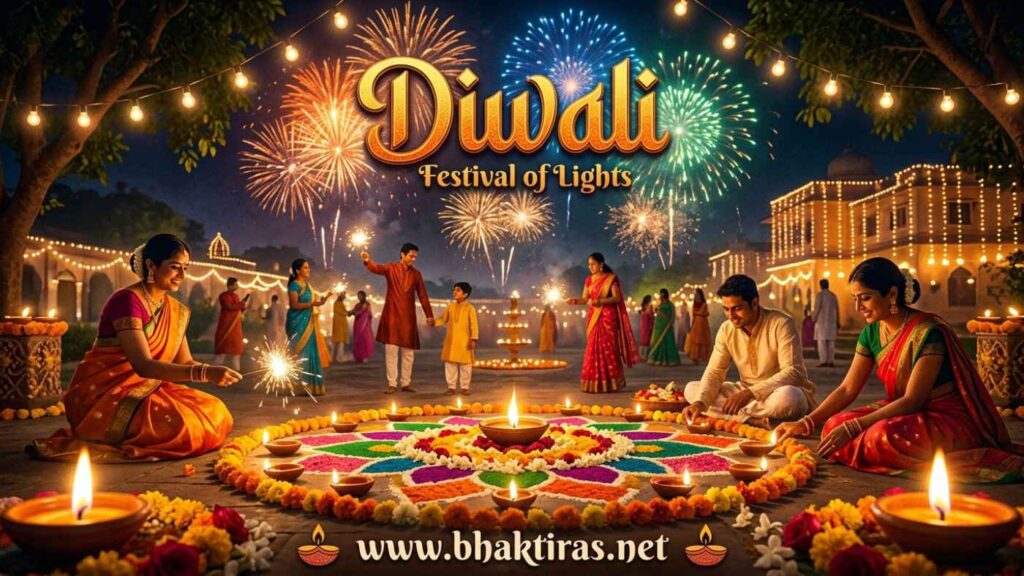
Diwali — Deepavali in Sanskrit, literally “a row of lamps” — is the largest festival of the Hindu year. For five evenings, homes are cleaned and lit with oil lamps, sweets move between neighbours, and on the darkest night of the month of Kartik, families welcome Goddess Lakshmi with a puja at dusk. This guide covers the 2026 dates, why the festival is celebrated, its rituals day by day, the foods, and how celebrations change from state to state.
Diwali 2026: Key Dates, Day by Day
The five days of Diwali 2026 run from Friday, 6 November to Tuesday, 10 November. Each day has its own name, tithi and purpose — the main Lakshmi Puja night is the third day, on the new moon.
| Day | Festival | Date (2026) | Tithi | What happens |
|---|---|---|---|---|
| 1 | Dhanteras | Fri, 6 Nov | Kartik Krishna Trayodashi | Homes are ready and shining; families buy a metal item, worship Dhanvantari and light the first lamp (Yama Deepam) at the doorstep. |
| 2 | Naraka Chaturdashi (Choti Diwali) | Sat, 7 Nov | Chaturdashi | Pre-dawn oil bath (abhyanga snan); in south India and Goa this is the main Deepavali day. |
| 3 | Diwali · Lakshmi Puja | Sun, 8 Nov | Amavasya (new moon) | The main night — Lakshmi and Ganesha puja during Pradosh Kaal, rows of diyas, fireworks, sweets. |
| 4 | Govardhan Puja (Annakut) | Mon, 9 Nov | Kartik Shukla Pratipada | A mound of food is offered to Krishna; in Gujarat this is Bestu Varas, the new year. |
| 5 | Bhai Dooj | Tue, 10 Nov | Dwitiya | Sisters apply tilak to their brothers and pray for their long life; gifts are exchanged. |
Lakshmi Puja muhurat 2026: the puja is done during Pradosh Kaal — roughly the first two hours after sunset while Amavasya tithi prevails. In Delhi this window is about 5:45 to 7:15 pm on 8 November; it shifts by 10–20 minutes between Mumbai, Kolkata and Chennai, so confirm with a local panchang for your city.
Why Diwali Is Celebrated
One festival, many stories — each region of India lights its lamps for a different homecoming or victory, and all of them say the same thing: light wins over darkness, and knowledge over ignorance.
The idea is as old as the Upanishads: तमसो मा ज्योतिर्गमय — “lead me from darkness to light.” Diwali turns that prayer into something you can see from the street.
Rama returns to Ayodhya
In north India, Diwali marks the night Lord Rama came home to Ayodhya with Sita and Lakshmana after fourteen years of exile and the defeat of Ravana. The people of Ayodhya lit rows of lamps to guide him home — the tradition every lit balcony continues today.
Lakshmi appears from the ocean
Goddess Lakshmi is said to have emerged during the churning of the ocean (Samudra Manthan) on Kartik Amavasya. On Diwali night she is believed to walk the earth and enter homes that are clean, open and lit — the reason behind the great pre-Diwali cleaning.
Krishna defeats Narakasura
In south India the festival remembers Krishna and Satyabhama ending the tyranny of the demon Narakasura at dawn — which is why the south celebrates a day earlier, with an oil bath before sunrise on Naraka Chaturdashi.
Beyond Hinduism
Jains observe Diwali as the night Lord Mahavira attained moksha at Pavapuri. Sikhs celebrate Bandi Chhor Divas, when Guru Hargobind was released from Gwalior fort along with 52 kings. In Nepal, the same days are celebrated as Tihar.
Deities Worshipped During Diwali
The main night belongs to Lakshmi and Ganesha, worshipped together at dusk — but each of the five days honours its own deity.
Goddess Lakshmi
Goddess of wealth and well-being. Families place her image on a decorated chowki with rice, coins and kheel-batasha, and sing her aarti after the evening puja.
Lord Ganesha
Every Diwali puja opens with Ganesha, the remover of obstacles — no Lakshmi Puja begins without him seated to her left.
Dhanvantari & Kubera
Dhanvantari, the physician of the gods, is honoured for health; Kubera, treasurer of the gods, is invoked alongside Lakshmi — especially by shopkeepers and businesses.
Goddess Kali
On the same Amavasya night, eastern India performs Kali Puja — a midnight worship of the fierce mother goddess, with lamps lit for departed ancestors.
Key Rituals, Step by Step
Here is how a traditional household moves through the five days — from the deep clean before Dhanteras to the tilak of Bhai Dooj.
- Clean and prepare the home. In the days before Dhanteras, houses are scrubbed, whitewashed and decluttered. Tradition holds that Lakshmi enters only clean, welcoming homes — this cleaning is itself considered the first ritual of Diwali.
- Dhanteras (6 Nov): buy something metal — a utensil, silver coin or gold — worship Lord Dhanvantari, and light the year’s first lamp, the Yama Deepam, facing south at the doorstep for protection from untimely death.
- Naraka Chaturdashi (7 Nov): wake before sunrise for the abhyanga snan — a sesame-oil massage followed by a bath — which south Indian and Maharashtrian homes treat as the festival’s defining act.
- Diwali morning (8 Nov): lay a fresh rangoli at the entrance, hang torans of marigold and mango leaves, and set up the puja chowki with images of Lakshmi and Ganesha, rice, coins and sweets.
- Lakshmi Puja at Pradosh Kaal: after sunset, worship Ganesha first, then Lakshmi — with flowers, kheel-batasha and sweets. Business families also open new account books (Chopda Pujan). Close with the Lakshmi aarti.
- Light the diyas. Place rows of lamps at doorways, windows, the tulsi plant and dark corners. One lamp near the puja place is kept burning through the night so Lakshmi’s welcome never goes dark.
- Govardhan Puja (9 Nov): prepare the Annakut — a small hill of grains, sweets and vegetables offered to Krishna, remembering how he lifted Govardhan hill to shelter Vrindavan.
- Bhai Dooj (10 Nov): sisters apply a tilak on their brothers’ foreheads, pray for their long life, and the festival closes the way it began — with family.
Special Foods of Diwali
Every region has its own Diwali plate — sweets dominate, but the crunchiest savouries of the year are made this week too.
Kaju katli, laddoo & kheel-batasha
Kaju katli and motichoor laddoo fill the gift boxes, while puffed rice (kheel) and sugar drops (batasha) are the classic offering placed before Lakshmi during the puja.
Diwali faral
A whole platter made at home in the preceding week — chakli, chivda, karanji, shankarpali and besan laddoo — shared with every visiting neighbour.
Murukku, adhirasam & legiyam
Alongside murukku and adhirasam, Tamil homes prepare Deepavali legiyam — a spiced herbal paste eaten first on festival morning to settle the stomach before the feasting begins.
Narkel naru & sandesh
Coconut-jaggery naru, sandesh and kheer are made for Kali Puja night, offered first to the goddess and then passed around the para.
Mathiya, ghughra & magas
Crisp mathiya and stuffed ghughra sit next to magas and sukhdi — made in bulk because the day after Diwali is the Gujarati new year, when guests arrive all day.
The gift box
Dry fruits, soan papdi and homemade sweets travel between homes all week — exchanging food with neighbours is as much a Diwali ritual as the puja itself.
Regional Names & Variations
Diwali is pan-Indian, but no two states celebrate it quite the same way.
North India
Rama’s homecoming is the central story. Ayodhya’s Deepotsav lights lakhs of diyas on the Sarayu ghats, and homes follow the full five-day sequence from Dhanteras to Bhai Dooj.
Maharashtra
The festival opens earlier with Vasubaras and includes the dawn abhyanga snan, the faral platter, and Diwali Padwa honouring the bond between husband and wife.
Gujarat
Diwali closes the Gujarati year: account books are worshipped at Chopda Pujan, and the next morning — Bestu Varas — begins the new year with temple visits and “Saal Mubarak” greetings.
Bengal, Odisha & Assam
The same new-moon night is Kali Puja. Fourteen lamps (choddo prodip) are lit the evening before for ancestors, and the goddess is worshipped at midnight.
South India
Tamil Nadu, Karnataka, Andhra and Telangana celebrate the main day on Naraka Chaturdashi — a pre-dawn oil bath, new clothes at sunrise, and crackers before breakfast.
Goa & beyond India
Goa burns towering effigies of Narakasura at dawn. Outside India, Diwali is a public holiday in Nepal (as Tihar), Fiji, Mauritius, Singapore, Malaysia and Trinidad, and is celebrated by the diaspora worldwide.
Diwali Do’s and Don’ts
A short checklist — part tradition, part plain good sense for a festival built around open flames.
Do
- Perform Lakshmi Puja during Pradosh Kaal, and worship Ganesha before Lakshmi.
- Finish cleaning before Dhanteras — a clean, lit entrance is the heart of the festival.
- Keep one diya burning near the puja place through Diwali night.
- Prefer clay diyas and flower rangoli; they are traditional and kinder to the environment.
- Share sweets with neighbours, and keep water or sand near where children light sparklers.
Avoid
- Leaving burning diyas unattended near curtains, or lamps at floor level where children play.
- Sweeping the house after the Lakshmi Puja — many families hold that it sweeps prosperity out.
- Bursting loud crackers late at night; follow local timings and spare the elderly, infants and animals.
- Gifting leather or sharp objects, which custom treats as inauspicious on this day.
- Lending or borrowing money on Diwali day itself — a widely observed business custom.
Diwali FAQs
When is Diwali in 2026?
Diwali falls on Sunday, 8 November 2026, with Lakshmi Puja performed that evening during Pradosh Kaal. The full five-day festival runs from Dhanteras on 6 November to Bhai Dooj on 10 November 2026.
When is Diwali in 2027 and 2028?
Diwali falls on Friday, 29 October in 2027 and on Tuesday, 17 October in 2028. The date shifts each year because it follows the lunar Kartik Amavasya, which lands in October or November.
Why is Diwali celebrated?
Diwali marks the victory of light over darkness. In north India it celebrates Lord Rama’s return to Ayodhya after fourteen years of exile; in the south it commemorates Krishna’s defeat of Narakasura; and across India it is the night Goddess Lakshmi is welcomed into clean, lamp-lit homes.
Which god is worshipped on Diwali?
The main Diwali night is dedicated to Goddess Lakshmi and Lord Ganesha, who are worshipped together during Pradosh Kaal. Dhanvantari and Kubera are honoured on Dhanteras, while Bengal, Odisha and Assam worship Goddess Kali the same night.
What is the best time for Lakshmi Puja on Diwali 2026?
Lakshmi Puja is performed during Pradosh Kaal — roughly the first two hours after sunset — while Amavasya tithi prevails. On 8 November 2026 this window is about 5:45 to 7:15 pm in Delhi; the exact muhurat shifts by 10–20 minutes between cities, so check a local panchang.
Why is Diwali celebrated on Amavasya (new moon)?
Diwali falls on Kartik Amavasya, the darkest night of the Hindu lunar year. Lighting rows of lamps on this night carries the festival’s central idea — light dispelling darkness — and tradition holds that Lakshmi visits well-lit homes on this new-moon night.
Is Diwali only a Hindu festival?
No. Jains observe it as the night Lord Mahavira attained moksha, Sikhs celebrate Bandi Chhor Divas marking Guru Hargobind’s release from Gwalior fort, and Newar Buddhists in Nepal also mark the festival, celebrated there as Tihar.
What foods are prepared for Diwali?
Sweets lead the menu — kaju katli, motichoor laddoo, gujiya and kheel-batasha in the north; the crunchy faral platter of chakli, chivda and karanji in Maharashtra; murukku, adhirasam and the herbal Deepavali legiyam in the south; and narkel naru and sandesh in Bengal.
Wishing you a bright and safe Diwali — शुभ दीपावली