
Yaosang 2027 – Manipur's Five-Day Spring Holi
যাওশাং
When is Yaosang in 2027?
Yaosang is expected to run from about 21 to 25 March 2027 in Manipur. It is the state’s biggest festival and its own form of Holi, beginning on the full-moon day of Lamda (Phalguna). The five days blend Krishna devotion with older Meitei custom, colour play, and the moonlight dance Thabal Chongba.
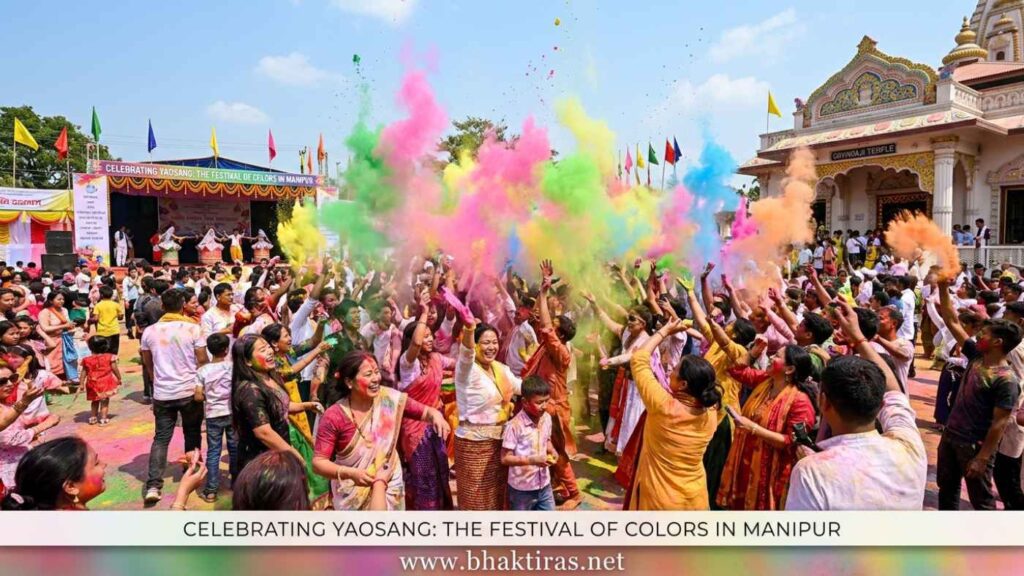
Yaosang is Manipur’s most loved festival and the state’s own version of Holi. Starting on the full-moon day of Lamda, the month that matches Phalguna, it runs for five days that mix Meitei tradition with Vaishnav devotion to Krishna as Govindaji. A thatched hut is burnt on the first evening, children collect small donations door to door, temples fill with singing, colours and water fly through the streets, and the nights belong to Thabal Chongba, the circle dance held under the full moon.
Yaosang 2026-2028: Dates & Calendar
Yaosang next falls around 21-25 March 2027, opening on the Phalguna full moon. Because it follows the lunar calendar, the exact dates shift by a couple of weeks each year.
| Year | Dates | Opening day | Notes |
|---|---|---|---|
| 2026 | 3-7 March (approx) | Tuesday | Passed – opened on the Phalguna full moon |
| 2027 | 21-25 March (approx) | Sunday | Next occurrence |
| 2028 | 10-14 March (approx) | Friday | Following year |
The first evening carries the hut-burning rite, the middle nights host the main Thabal Chongba dances and sports, and the last day closes the festival with the biggest colour play. Confirm the exact local dates nearer the time, as they depend on the moon.
Why Yaosang Is Celebrated
Yaosang is celebrated to welcome spring, honour Krishna, and bring the whole community together in play, music and dance. It is where Meitei folk custom and Vaishnav devotion meet.
Manipur's Holi
Yaosang is how Manipur keeps Holi. The colour throwing and water play that mark Holi across India appear here too, but they sit alongside local rites that are found nowhere else, giving the festival a character entirely its own.
Krishna at the centre
As a Vaishnav festival, Yaosang turns toward Krishna, worshipped in Manipur as Govindaji. Devotional singing and processions at the Govindaji and other Krishna temples run through the five days, tying the spring joy to bhakti.
Meitei roots
Beneath the Vaishnav layer sit older Sanamahi folk practices. The hut burning and the collection by children carry echoes of pre-Vaishnav Meitei custom, so Yaosang holds two traditions at once rather than replacing one with the other.
A showcase of culture
For Manipuris the festival is also a stage for their own arts. Thabal Chongba, local sports meets, and band contests turn Yaosang into a yearly display of Meitei music, dance and community spirit.
Deities & Figures Worshipped
Krishna, worshipped in Manipur as Govindaji, is the deity at the heart of Yaosang. Older Meitei belief also colours the folk side of the festival.
Krishna (Govindaji)
Krishna is honoured throughout Yaosang as Govindaji, the form enshrined at Imphal’s Shri Govindajee temple. Devotees gather for kirtan and darshan, and the spring play recalls the raas and colour games linked with Krishna in the Braj tradition.
Meitei folk tradition
The festival also draws on Sanamahi-era Meitei custom. The hut-burning rite and the children’s rounds are folk elements that predate Vaishnavism in Manipur and give Yaosang its distinct local flavour.
Key Rituals, Step by Step
Yaosang unfolds over five days, opening with a fire rite and building to full colour play, with dancing every night.
- Yaosang Mei Thaba. On the first evening a small thatched hut is built and then set alight, the rite that formally opens the festival.
- Nakatheng. Children go door to door collecting small donations, a custom that begins soon after the hut is burnt.
- Temple devotion. Families visit the Govindaji and other Krishna temples for kirtan, offerings and darshan across the days.
- Thabal Chongba nights. After dark, young people join hands in a circle and dance to folk songs and drums under the full moon.
- Sports tournaments. Local sports meets and games are held during the daytime, drawing players and crowds from across the neighbourhood.
- Colour and water play. Gulal and water are thrown in the streets, the Holi element that gives the daytime its riot of colour.
- Band contests. Music and band competitions add to the entertainment, another highlight of the community celebration.
- Final day close. The festival ends on the fifth day with the largest colour play before life returns to normal.
Special Foods of Yaosang
Yaosang brings out favourite Manipuri festival dishes, from black-rice pudding to tangy eromba, shared among families and neighbours.
Chak-hao kheer
A pudding made from chak-hao, Manipur’s aromatic black rice, slow-cooked in milk until deep purple. Its nutty flavour and striking colour make it a signature sweet of festive tables.
Bora
Bora are fritters, made in savoury and sweet forms, fried up as a treat during the celebrations and handed round to visitors and children.
Kabok
Kabok is a puffed-rice snack, often bound with jaggery into crisp, sweet clusters. Light and easy to share, it is a common festive nibble.
Eromba
Eromba is a much-loved Manipuri dish of boiled vegetables mashed with chillies and fermented fish, sharp and pungent, served as a hearty part of the festive meal.
Festive sweets
Alongside the local specialities, families prepare and exchange a range of sweets during Yaosang, adding to the abundance of the five days.
The Five Days of Yaosang
Yaosang is celebrated across Manipur, and each of its five days has its own mood, from the opening fire rite to the closing colour play.
Day one – hut burning and nakatheng
The festival opens at dusk with Yaosang Mei Thaba, the burning of a small thatched hut. Soon after, children begin nakatheng, going house to house to collect small donations – a custom that sets the community tone for the days ahead.
Thabal Chongba nights
Once night falls the dancing starts. Thabal Chongba gathers young people in a large circle, hands joined, moving to folk songs and drumbeats under the moon. These moonlight dances are among the most famous sights of the whole festival.
Sports and games
The daytime hours fill with sports tournaments and local games. Neighbourhoods field teams, crowds gather to watch, and the meets become a friendly contest that runs through the middle of the festival.
Colour play
As with Holi elsewhere, gulal and water are thrown freely in the streets. Friends and families chase each other with colour, and the play grows louder as the festival moves toward its end.
Final day
The fifth day brings the festival to its peak and its close, with the biggest colour celebration and, in many places, band contests, before the community settles back into ordinary life.
Yaosang Do's and Don'ts
A few simple points help visitors and families enjoy Yaosang with respect and care.
Do
- Join the Thabal Chongba circle if invited and follow the group’s rhythm
- Visit the Govindaji temple for kirtan and darshan during the festival
- Try Manipuri festive dishes like chak-hao kheer and eromba
- Give a small amount when children come round for nakatheng
- Use skin-safe, natural colours and protect your eyes during colour play
Avoid
- Do not throw colour or water at anyone who does not wish to take part
- Do not treat the hut-burning rite as mere spectacle – it opens the festival
- Do not waste water during the play; keep it in good spirit
- Do not enter temples in a soiled or disrespectful state
- Do not assume fixed dates – the lunar calendar shifts them each year
Frequently Asked Questions
When is Yaosang in 2027?
Yaosang is expected to run from about 21 to 25 March 2027 in Manipur, opening on the full-moon day of Lamda (Phalguna). Because it follows the lunar calendar, treat these dates as approximate and confirm them locally nearer the time.
When is Yaosang in 2026 and 2028?
Yaosang fell around 3 to 7 March 2026 and is expected around 10 to 14 March 2028. Both dates are approximate, as the festival is set by the Phalguna full moon and moves each year.
Why is Yaosang celebrated?
Yaosang is celebrated to welcome spring, honour Krishna, and bring the Manipuri community together in colour, music and dance. It is Manipur’s own form of Holi, blending Meitei folk tradition with Vaishnav devotion over five days.
Which god is worshipped during Yaosang?
Krishna, worshipped in Manipur as Govindaji, is the deity at the heart of Yaosang. Devotees gather for kirtan and darshan at the Govindaji and other Krishna temples throughout the festival, while older Meitei folk custom shapes its other rites.
What is Thabal Chongba?
Thabal Chongba is Manipur’s famous moonlight folk dance, held on the nights of Yaosang. Young people join hands in a large circle and move to folk songs and drums under the full moon, and it is one of the festival’s best-known highlights.
What is Yaosang Mei Thaba?
Yaosang Mei Thaba is the burning of a small thatched hut on the first evening of Yaosang, the rite that formally opens the festival. It carries echoes of older Meitei tradition and is followed by nakatheng, when children collect small donations door to door.
How long does Yaosang last?
Yaosang lasts five days. It begins with the hut-burning rite on the Phalguna full moon, continues with Thabal Chongba nights, sports and colour play through the middle days, and closes with the biggest celebration on the fifth day.
What foods are eaten during Yaosang?
Manipuri festive dishes feature strongly during Yaosang, including chak-hao kheer made from black rice, bora fritters, kabok puffed-rice sweets and tangy eromba, alongside a range of general sweets shared among families.
May the moonlight dances and colours of Yaosang bring your family joy and togetherness this spring.