
Holi 2027 – The Festival of Colours
होली
When is Holi in 2027?
Holi in 2027 falls on Monday, 22 March, the day of colours (Rangwali Holi). The bonfire night before it, Holika Dahan, is on Sunday, 21 March. Holi is a two-day Hindu spring festival celebrating the victory of good over evil and the divine love of Radha and Krishna.
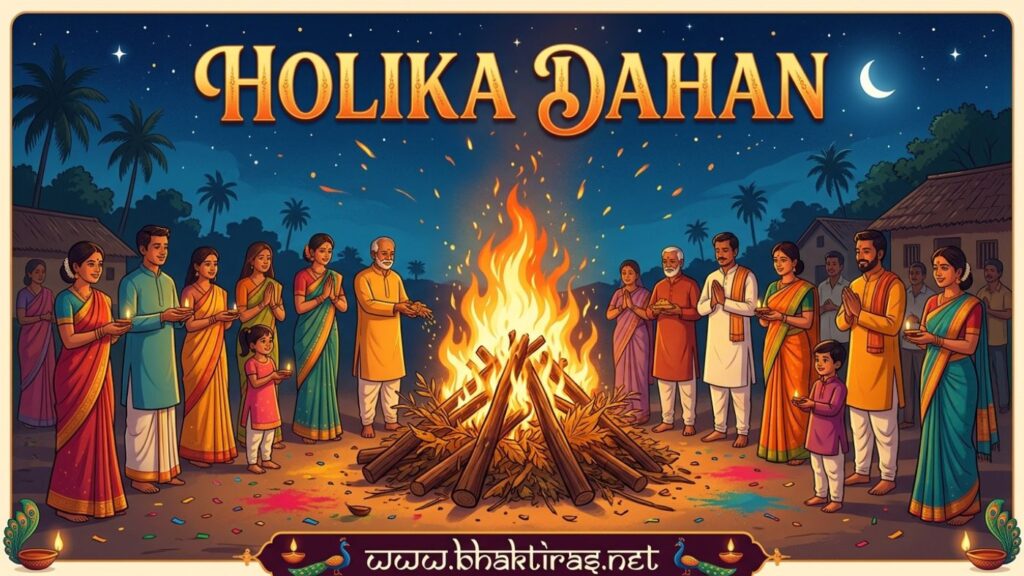
Holi is the Hindu festival of colours, celebrated over two days at the end of the cold season on the full moon of Phalguna. It opens on the eve with Holika Dahan, a bonfire recalling how the boy-devotee Prahlad was saved while the demoness Holika burned, and continues the next morning with Rangwali Holi, when people of every age drench one another in dry gulal and coloured water. The mood is joyful and levelling: old quarrels are forgiven, spring is welcomed, and the play of Radha and Krishna in Braj is relived in song and colour.
Holi 2026-2028: Dates & Calendar
Holi 2027 is on Monday, 22 March, with Holika Dahan on the evening of Sunday, 21 March. The dates shift each year because Holi follows the Hindu lunar calendar, falling on the full moon (Purnima) of the month of Phalguna.
| Year | Holika Dahan | Rangwali Holi | Day |
|---|---|---|---|
| 2026 | 3 March | 4 March | Tue / Wed |
| 2027 | 21 March | 22 March | Sun / Mon |
| 2028 | 10 March | 11 March | Fri / Sat |
Holika Dahan is the bonfire lit on the evening before the main day; Rangwali Holi (also called Dhulandi) is the daytime festival of colours that follows the next morning.
Why Holi Is Celebrated
Holi is celebrated to mark the triumph of good over evil, the arrival of spring, and the love of Radha and Krishna. Its two days weave together a story of faith rewarded and a season of renewal.
Prahlad, Holika and Narasimha
The bonfire recalls the tale of Prahlad, a devoted young worshipper of Vishnu whose father, the demon king Hiranyakashipu, tried to have him killed. His aunt Holika, granted immunity to fire, sat in the flames holding Prahlad – but she burned and the boy was unharmed. Vishnu later appeared as Narasimha to end the tyrant. Good outlasts cruelty, and Holika Dahan re-enacts that night.
The love of Radha and Krishna
In the Braj region around Mathura and Vrindavan, Holi relives Krishna’s playful colouring of Radha and the gopis. Shy about his own dark complexion beside the fair Radha, the young Krishna, on his mother’s teasing advice, smeared colour on her face – and so, the story goes, began the custom of playing with colours as an expression of affection.
Spring and social levelling
Holi arrives as winter ends and fields turn golden, so it is also a harvest and spring festival. For one day the usual boundaries of age, caste and status dissolve: everyone is fair game for a handful of gulal, and the phrase “bura na maano, Holi hai” (don’t take offence, it’s Holi) invites strangers and friends alike to join in.
Deities & Figures Worshipped
Holi centres on Krishna and Radha, whose love is celebrated across the Braj country, while the story behind Holika Dahan honours Vishnu and his devotee Prahlad.
Krishna
The colour-play of Holi is most closely tied to Krishna, whose youthful games with colour in Vrindavan and Barsana are re-enacted every year. Temples across Braj hold days of song, dance and gulal in his honour.
Radha
Radha, Krishna’s beloved, is worshipped alongside him. The Lathmar Holi of Barsana – her village – playfully recalls Krishna’s visits, with women driving off the men from Nandgaon with sticks.
Vishnu and Prahlad
The eve of Holi honours Vishnu, who saved his devotee Prahlad and destroyed the demon Hiranyakashipu in his Narasimha form. The Holika bonfire is the ritual memory of Prahlad’s rescue.
Key Rituals, Step by Step
Holi unfolds over two connected days, from the evening bonfire to the morning of colour.
- Gather the pyre. In the days before Holi, families and neighbourhoods collect wood, dried cow-dung cakes and twigs at a public spot, often topping the heap with an effigy of Holika.
- Holika Dahan at dusk. On the eve (21 March 2027), the bonfire is lit after sunset at an auspicious time. People gather around it as the demoness Holika is symbolically burned and Prahlad’s rescue is remembered.
- Circumambulate and offer. Devotees walk around the fire, offer grains, coconut and sweets, and some roast fresh chickpeas or wheat ears in the embers as a token of the coming harvest.
- Rangwali Holi at dawn. The next morning (22 March 2027), the play of colours begins. People step out with dry gulal, coloured water, pichkaris (water guns) and balloons.
- Smear and drench. Colour is rubbed on faces and thrown over friends, family and passers-by alike, with the cheerful cry of “bura na maano, Holi hai”.
- Music, dance and sweets. Drums and folk songs fill the streets; groups dance, and thandai and gujiya are shared freely.
- Visit and reconcile. By afternoon people wash off, change into fresh clothes and visit relatives and neighbours, exchanging sweets and mending old rifts.
Special Foods of Holi
Holi tables are stacked with fried and sweet treats, along with the festival’s signature drink.
Gujiya
The defining sweet of Holi: a crescent-shaped pastry stuffed with khoya, dried fruit and coconut, then deep-fried and often dipped in sugar syrup.
Thandai
A cold, spiced milk drink flavoured with almonds, fennel, peppercorn and rose. In some places it is served with bhang, a cannabis preparation, though a plain version is far more common.
Malpua
Soft, syrup-soaked pancakes fried till the edges crisp, sometimes topped with rabri. A festive favourite in Braj and Bengal.
Dahi bhalla & namak pare
Soft lentil dumplings in cool spiced yoghurt (dahi bhalla) balance the sweets, while crunchy fried namak pare are a common snack alongside.
Puran poli
A flatbread stuffed with sweet chana-dal and jaggery, this is the classic Holi dish in Maharashtra, where the festival day is also called Shimga or Puran Poli.
Kanji
A tangy, fermented drink of black carrots and mustard seeds, sipped to cut through the richness of all the fried food.
Regional Names & Variations
Holi is celebrated across India and the diaspora under many names, each place adding its own flavour.
Lathmar Holi – Barsana & Nandgaon
In Radha’s village of Barsana, women playfully beat the men of Krishna’s Nandgaon with long sticks (lath) while the men shield themselves – a boisterous re-enactment of Krishna’s teasing visits. See our guide to Lathmar Holi.
Phoolon wali Holi – Vrindavan
At the Banke Bihari temple in Vrindavan, priests shower devotees with flower petals instead of colour on Ekadashi, a gentle and fragrant form of Holi unique to the Braj temples.
Dol Purnima / Dol Jatra – Bengal
In Bengal, Holi is Dol Purnima, when images of Krishna and Radha are placed on a decorated swing (dol) and carried in procession as devotees sing and apply colour. Read about Dol Purnima.
Basanta Utsav – Shantiniketan
At Tagore’s Visva-Bharati in Shantiniketan, Holi is the graceful Basanta Utsav (Spring Festival), marked by students in yellow performing dance and song before playing with colour.
Yaosang – Manipur
In Manipur, the five-day Yaosang blends Holi with local tradition, featuring the thabal chongba folk dance under the full moon and processions of children collecting small gifts.
Shigmo, Rangpanchami & Hola Mohalla
Goa celebrates Shigmo with folk parades and floats; Maharashtra and parts of Madhya Pradesh keep the main colour-play for Rangpanchami, five days later; and in Punjab the Sikh Hola Mohalla, begun by Guru Gobind Singh, adds martial arts and mock battles the day after Holi.
Holi Do's and Don'ts
A little care keeps Holi joyful and safe for everyone, including those who cannot join in.
Do
- Use skin-safe, natural colours made from flowers, turmeric or food-grade dyes.
- Ask before colouring someone; “bura na maano” is an invitation, not a licence to force anyone.
- Oil your hair and skin beforehand so the colour washes off more easily.
- Protect your eyes, and keep colour away from the mouth, nose and ears.
- Keep pets and unwilling neighbours out of the splash zone, and check on elders.
Avoid
- Don’t use harmful chemical, metallic or oil-based colours that can burn skin and eyes.
- Don’t smear colour on anyone who says no, or on strangers who clearly wish to be left alone.
- Don’t waste water; a bucket and gulal go a long way without emptying tanks.
- Don’t throw water balloons or colour at people on two-wheelers, animals or moving traffic.
- Don’t drink bhang thandai unknowingly or offer it to children; label it clearly and drink responsibly.
Frequently Asked Questions
When is Holi in 2027?
Holi in 2027 is on Monday, 22 March, which is the day of colours (Rangwali Holi). The Holika Dahan bonfire is lit the previous evening, on Sunday, 21 March. The dates follow the full moon of the Hindu month Phalguna.
When is Holi in 2026 and 2028?
In 2026, Holika Dahan was on Tuesday, 3 March and Rangwali Holi on Wednesday, 4 March. In 2028, Holika Dahan falls on Friday, 10 March and Rangwali Holi on Saturday, 11 March. Holi moves each year with the lunar calendar.
Why is Holi celebrated?
Holi is celebrated to mark the victory of good over evil, remembered through the story of Prahlad and Holika, and to welcome spring. It also honours the love of Radha and Krishna, whose colour-play in Braj gave rise to the custom of throwing gulal.
What is the difference between Holika Dahan and Rangwali Holi?
Holika Dahan is the bonfire lit on the eve of Holi, symbolising the burning of the demoness Holika and the saving of the devotee Prahlad. Rangwali Holi, or Dhulandi, is the following day when people play with dry colours and coloured water. The two together make up the festival.
Which god is worshipped on Holi?
Krishna and Radha are the central deities of Holi, especially in the Braj region where the colour-play originated. The eve of Holi also honours Vishnu, who saved his devotee Prahlad and destroyed the demon Hiranyakashipu in his Narasimha form.
What foods are eaten during Holi?
The signature Holi foods are gujiya (a sweet stuffed pastry) and thandai (a spiced milk drink). Other favourites include malpua, dahi bhalla, puran poli in Maharashtra, and savoury namak pare and kanji. Sharing sweets with visitors is central to the day.
What does "bura na maano, Holi hai" mean?
“Bura na maano, Holi hai” means “don’t take offence, it’s Holi”. It is the cheerful phrase people call while smearing colour on one another, capturing the festival’s spirit of setting aside differences for a day. Even so, consent still matters – it is an invitation to play, not a reason to force colour on anyone.
How can I play Holi safely?
To play Holi safely, use natural, skin-safe colours, oil your skin and hair beforehand, and protect your eyes. Ask before colouring anyone, avoid harmful chemical colours, conserve water, and keep pets and unwilling people away from the play. These steps keep the day joyful for everyone.
However you celebrate, may your Holi be full of colour, laughter and forgiveness. Holi hai!