
Samba Dashami 2027 – Odia Mothers' Prayer to the Sun
ସାମ୍ବ ଦଶମୀ
When is Samba Dashami in 2027?
Samba Dashami falls on Pausha Shukla Dashami, expected around 8 January 2027 (the date is approximate and confirmed only when the Odia panjika is published). On this day mothers across Odisha worship Surya, the Sun god, praying for the health, long life and prosperity of their children.
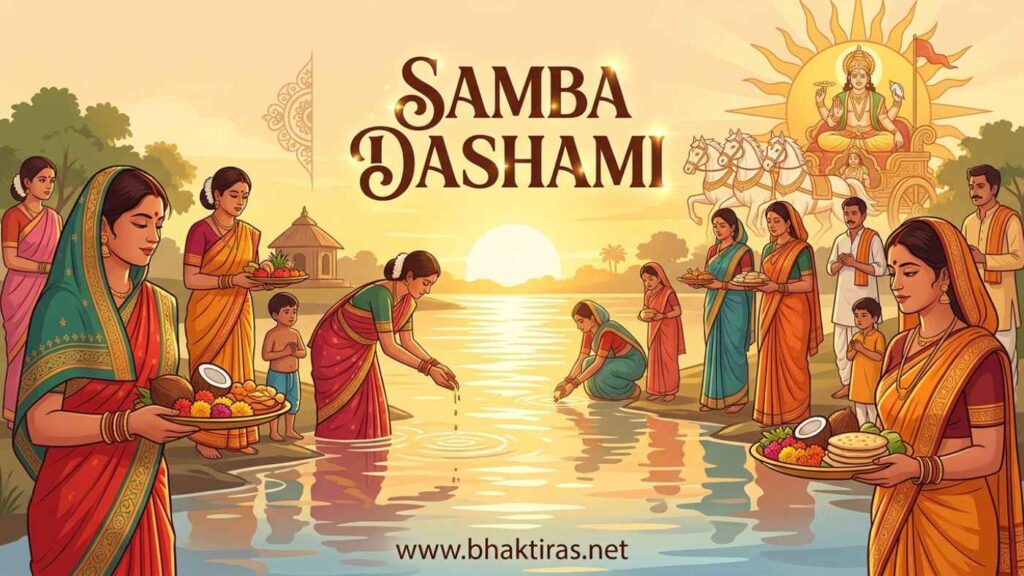
Samba Dashami is one of Odisha’s most tender festivals, kept almost entirely by mothers for the sake of their children. Falling on the tenth day of the bright fortnight of Pausha (December-January), it honours Surya, the Sun god. Mothers rise before dawn, clean the house, lay out an unusually large spread of Odia dishes and pithas, and offer them to the rising and setting sun from the courtyard, naming each child in their prayers for health and long life.
Samba Dashami 2026-2028: Dates & Calendar
Samba Dashami is fixed to Pausha Shukla Dashami, so it shifts each year with the lunar calendar and usually lands in late December or early January. The exact date is set by the Odia panjika (almanac), so treat the years below as close estimates until it is published.
| Year | Date (approx) | Day | Tithi |
|---|---|---|---|
| 2026 | 20 December | Sunday | Pausha Shukla Dashami |
| 2027 | 8 January | Friday | Pausha Shukla Dashami |
| 2028 | 28 December | Thursday | Pausha Shukla Dashami |
Because the festival tracks the tithi rather than a fixed calendar date, a Pausha month can occasionally carry it into late December of the previous English year. Always check the printed Odia almanac for the confirmed date and the sunrise timing that most families observe.
Why Samba Dashami Is Celebrated
Samba Dashami is celebrated so that mothers may pray to Surya for the health, long life and prosperity of their children, echoing an old story of a child cured by the Sun.
The festival carries a mother’s hope in a very direct way. Every dish cooked and every prayer offered is meant for the wellbeing of the children of the house, and each child is remembered by name before the sun.
The story of Samba
Samba, a son of Krishna, is said to have been struck with a skin disease after a curse. He undertook a long devotion to Surya, worshipping the Sun with discipline until he was healed. Odia tradition connects his cure with the great Sun temple at Konark, and mothers recall his recovery as they pray for their own children.
A mother's vow for her children
The heart of Samba Dashami is maternal love. Just as Samba was restored to health through the Sun’s grace, mothers ask that their children be kept free of illness and given long, prosperous lives. It is one of the few Hindu festivals shaped almost wholly around this single prayer.
The Sun as healer and giver
Surya is honoured here as the source of health, energy and the daily rhythm of life. Offering food at both sunrise and sunset acknowledges the Sun through his full journey across the sky, and thanks him for the light that sustains every living thing.
Deities & Figures Worshipped
The central deity of Samba Dashami is Surya, the Sun god, with the figure of Samba recalled through his story of healing.
Surya
Surya, the Sun god, is the one worshipped through the day. Families offer food and prayers to him at dawn and again at dusk from the open courtyard, facing the sun directly. He is honoured as the giver of health, vitality and long life.
Samba
Samba, a son of Krishna, gives the festival its name. His cure from a skin ailment through devotion to Surya is the story mothers hold in mind, praying that their own children be kept as well as Samba was made whole again.
Key Rituals, Step by Step
The day moves from cleaning and cooking to two rounds of offering, at sunrise and sunset. Here is how most Odia households observe it.
- Clean and decorate the home. The house and especially the courtyard are cleaned thoroughly the day before, and the floor is decorated with jhoti, delicate freehand designs drawn in rice-paste.
- Cook the special spread. Mothers prepare an elaborate array of traditional Odia dishes and several kinds of pitha (rice cakes), often waking well before dawn to have everything ready.
- Arrange the offering. The cooked food is laid out neatly, usually on plates or leaves, ready to be presented to the Sun in the open air.
- Offer at sunrise. As the sun rises, the mother presents the food from the courtyard facing the sun, lights a lamp and incense, and prays for each of her children by name.
- Recall the story of Samba. Many families remember Samba’s cure at this point, tying the prayer for their own children’s health to his recovery through Surya’s grace.
- Offer again at sunset. A second offering is made as the sun sets, completing the day’s worship across the Sun’s full journey.
- Share the prasad. After the evening offering the food is shared among the family, with the children fed first, and often given to neighbours and relatives as well.
Special Foods of Samba Dashami
The food is the offering, so the spread is deliberately large and made with care. Pithas and rice-based sweets sit at the centre of it.
Pithas
Several kinds of pitha are made for the day, including steamed and fried rice cakes with fillings of coconut, jaggery and chhena. They are the signature offering of Samba Dashami and are prepared in generous quantity.
Kakara pitha
A deep-fried semolina or wheat pitha with a sweet coconut-jaggery filling, crisp outside and soft within. It is a common favourite offered to the Sun and enjoyed by the children afterwards.
Manda pitha
A soft steamed dumpling of rice flour filled with sweetened grated coconut. Light and mildly sweet, it is one of the classic pithas laid out in the offering.
Mudki and khaja
Sweet puffed-rice clusters (mudki) and layered flaky khaja are added to the spread alongside the pithas, giving the offering variety and keeping well through the day’s two rounds of worship.
Samba Dashami Do's and Don'ts
A few simple points help keep the day meaningful and the offering clean.
Do
- Clean the house and courtyard well and draw jhoti with rice-paste
- Prepare the food fresh and keep it covered and clean before offering
- Offer to Surya at both sunrise and sunset from the open courtyard
- Pray for each child by name, remembering the story of Samba
- Share the prasad with children first, then family and neighbours
Avoid
- Do not taste the food before it has been offered to the Sun
- Do not skip the courtyard offering by staying indoors
- Do not treat it as only a feast; the prayer for the children is the point
- Do not use stale or leftover items in the Sun’s offering
- Do not fabricate muhurat times; follow the local panjika for timings
Frequently Asked Questions
When is Samba Dashami in 2027?
Samba Dashami in 2027 is expected around 8 January, on Pausha Shukla Dashami. The date is approximate and set by the Odia panjika, so confirm it with the local almanac before the day.
When is Samba Dashami in 2026 and 2028?
Samba Dashami is expected around 20 December 2026 and around 28 December 2028, both on Pausha Shukla Dashami. These dates are approximate because the festival follows the Odia lunar calendar and is finalised in the panjika.
Why is Samba Dashami celebrated?
Samba Dashami is celebrated so mothers can pray to Surya, the Sun god, for the health, long life and prosperity of their children. It recalls the story of Samba, a son of Krishna, who was cured of a skin disease by worshipping the Sun.
Which god is worshipped on Samba Dashami?
Surya, the Sun god, is worshipped on Samba Dashami. Families offer food and prayers to him at both sunrise and sunset from the courtyard, honouring him as the giver of health and long life.
Who observes Samba Dashami?
Samba Dashami is observed mainly by mothers in Odisha, who keep the day for the wellbeing of their children. It is one of the few Hindu festivals shaped almost entirely around a mother’s prayer for her children.
What is the story of Samba and the Sun?
Samba, a son of Krishna, is said to have been afflicted with a skin disease through a curse and then cured by devoted worship of Surya, linked in Odia tradition to the Konark Sun temple. Mothers recall his healing and pray that their own children be kept as well.
What foods are made on Samba Dashami?
On Samba Dashami mothers prepare an elaborate spread of traditional Odia dishes and pithas, such as kakara pitha, manda pitha, mudki and khaja. The food is offered to the Sun first and then shared with the children and family.
How is Samba Dashami celebrated?
Samba Dashami is celebrated by cleaning and decorating the home with jhoti rice-paste art, cooking a large spread of pithas and dishes, and offering it to Surya at sunrise and sunset from the courtyard. Mothers pray for each child by name and then share the prasad with the family.
May the Sun keep your children well and your home in good health this Samba Dashami. Suna Dashami ra anek shubhechha.