
Prathamastami 2026 – Odisha's Prayer for the Firstborn
ପ୍ରଥମାଷ୍ଟମୀ
When is Prathamastami in 2026?
Prathamastami falls on Tuesday, 1 December 2026. It is an Odia family festival held on Margashirsha Krishna Ashtami, when mothers and grandmothers worship Shashthi Devi and the household deities to pray for the long life and wellbeing of the eldest child. The firstborn is bathed, dressed in new clothes and honoured with aarti, tikas and the special enduri pitha.
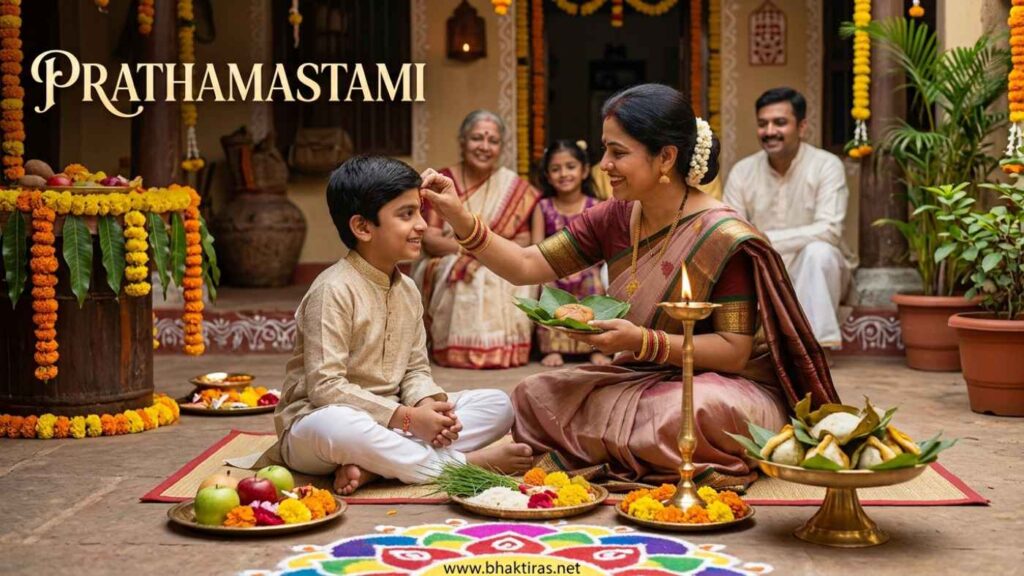
Prathamastami is one of Odisha’s most tender household festivals, kept for the sake of the eldest child in a family. Held on the eighth day of the dark fortnight in Margashirsha (November-December), it belongs to the mothers and grandmothers of the house, who worship Shashthi Devi and their family deities and ask for the firstborn’s long life and good health. The child is bathed, given new clothes, seated with honour, and blessed with aarti and tikas, while the kitchen fills with the smell of enduri pitha steaming in turmeric leaves. In 2026 it falls on Tuesday, 1 December.
Prathamastami 2026-2028: Dates & Calendar
Prathamastami is tied to the moon, not to a fixed calendar date, so it shifts each year. In 2026 it falls on Tuesday, 1 December, always on Margashirsha Krishna Ashtami.
| Year | Date | Day | Tithi |
|---|---|---|---|
| 2026 | 1 December | Tuesday | Margashirsha Krishna Ashtami (next occurrence) |
| 2027 | 20 November | Saturday | Margashirsha Krishna Ashtami |
| 2028 | 9 November | Thursday | Margashirsha Krishna Ashtami |
The festival is observed on the eighth day of the waning moon that follows Kartik Purnima, which is why it lands in late November or the first days of December each year.
Why Prathamastami Is Celebrated
Prathamastami is celebrated to pray for the long life, health and good fortune of the eldest child in a family. It is, at heart, a mother’s day of prayer for her firstborn.
In an Odia household the birth of the first child changes everyone’s place in the family – a woman becomes a mother, her parents become grandparents, and the eldest child carries a special weight of hope and responsibility for years to come. Prathamastami sets aside one day a year to honour that bond and to shield the firstborn with the blessings of the family’s protecting deities.
A prayer for the firstborn
The whole ritual is aimed at the eldest child – not the youngest, not all the children equally. Elders believe the firstborn faces the longest road and the heaviest expectations, so the family asks the deities to grant that child health, protection and a long life.
The mother's vow
It is the mothers and grandmothers who keep the observance, often fasting until the puja is done. The day is an expression of maternal love made visible – the new clothes, the special pithas and the tika are a mother’s way of putting her prayer into her child’s hands.
Shashthi, guardian of children
Shashthi Devi is worshipped across eastern India as the goddess who watches over children and mothers. By invoking her alongside the family deities, the household places the firstborn under a divine guardianship believed to keep illness and misfortune away.
Deities & Figures Worshipped
Prathamastami centres on Shashthi Devi, the goddess who protects children, worshipped together with each family’s own household deities.
Shashthi Devi
Shashthi is the goddess of childbirth and the guardian of children and mothers. On Prathamastami she is invoked first, so that her protection settles over the eldest child for the year ahead.
Family & household deities
Alongside Shashthi, each family worships its own ishta devata and kula devata – the personal and clan deities kept in the home shrine. The eldest child is offered to their care, tying the day to the family’s own line of devotion.
The elders of the house
Grandmothers and mothers are not only the priests of the day but its living blessing. Their tika, aarti and words over the firstborn are treated as an inseparable part of the worship.
Key Rituals, Step by Step
The day moves from the kitchen to the family shrine and finally to the honouring of the eldest child. A typical Prathamastami unfolds like this.
- Fasting and preparation. Mothers and grandmothers often keep a fast from the morning and clean the home shrine, gathering the items for puja – lamp, incense, flowers, sindoor and offerings.
- Steaming the pithas. Enduri pitha is wrapped in fresh turmeric leaves and steamed, along with other pithas like manda and kakara; the turmeric leaf gives the cake its distinctive aroma and is central to the day.
- Bathing the firstborn. The eldest child is given a ceremonial bath and dressed in new clothes, marking them out as the one the day is kept for.
- Worshipping Shashthi and the family deities. The elders offer the pithas, fruit and flowers to Shashthi Devi and the household deities, asking for the child’s long life and protection.
- Seating the child with honour. The firstborn is seated on a low wooden seat or a decorated mat while the family gathers around.
- Aarti and tika. Grandmothers and mothers perform aarti before the child, apply a tika of vermilion or sandal paste to the forehead, and press yellowed, blessed rice into their hands.
- Blessings and sharing. Elders bless the child aloud for a long, healthy life, and the pithas and prasad are then shared with the whole family and often with neighbours.
Special Foods of Prathamastami
Prathamastami is a pitha festival, and the smell of turmeric leaf and steamed rice cakes is inseparable from the day in Odia homes.
Enduri pitha
The signature dish of the day. A soft cake of ground rice and black gram batter, sometimes with a coconut-jaggery filling, wrapped in a fresh turmeric leaf and steamed. The leaf perfumes the cake and is what most Odia families first reach for on Prathamastami.
Manda pitha
Steamed dumplings of rice flour with a sweet stuffing of grated coconut, jaggery and cardamom, often shaped by hand and served warm as part of the offering.
Kakara pitha
A fried, half-moon rice-flour cake with a coconut-jaggery filling and a crisp outer skin, a common companion to the steamed pithas on the festival plate.
Pithas offered as prasad
Whatever the family prepares is first offered to Shashthi and the deities, then shared. Passing the pitha to the eldest child and around the household is itself part of the blessing.
Where It's Celebrated
Prathamastami is distinctly Odia and is kept mainly within Odisha and by Odia families living elsewhere.
Across Odisha
From coastal districts to western Odisha, families keep the day in much the same spirit – a home puja for the firstborn, new clothes for the eldest child, and a kitchen full of pithas. It is a household festival rather than a temple one, so the celebration lives inside the family.
Odia families outside the state
Odia households settled in other parts of India and abroad carry the observance with them, often adapting the ingredients they can find while keeping the enduri pitha and the honouring of the eldest child at the centre.
Prathamastami Do's and Don'ts
A few simple customs help keep the day warm, respectful and true to its spirit.
Do
- Keep the focus of the day on the eldest child, as the festival intends.
- Prepare or offer enduri pitha in turmeric leaves as the central dish.
- Let elders perform the aarti and apply the tika to the firstborn.
- Offer the food first to Shashthi Devi and the family deities before sharing.
- Involve grandmothers and mothers, whose blessings are the heart of the day.
Avoid
- Do not turn the child’s day into a competition among siblings.
- Avoid skipping the offering to the deities before eating the pithas.
- Do not treat it as a purely commercial or gift-only occasion.
- Avoid fabricating elaborate rituals your family has never kept – simplicity is fine.
- Do not overlook the elders whose prayers give the day its meaning.
Frequently Asked Questions
When is Prathamastami in 2026?
Prathamastami falls on Tuesday, 1 December 2026. It is observed on Margashirsha Krishna Ashtami, the eighth day of the waning moon in the Odia month of Margashirsha, and is the next occurrence of the festival.
When is Prathamastami in 2027 and 2028?
Prathamastami falls on Saturday, 20 November 2027 and on Thursday, 9 November 2028. The date shifts each year because it follows the lunar tithi of Margashirsha Krishna Ashtami rather than a fixed calendar date.
Why is Prathamastami celebrated?
Prathamastami is celebrated to pray for the long life, health and wellbeing of the eldest child in a family. Mothers and grandmothers worship Shashthi Devi and the household deities, and the firstborn is honoured with new clothes, aarti and tika. It is essentially a day of a mother’s prayer for her firstborn.
Which god is worshipped on Prathamastami?
Shashthi Devi, the goddess who protects children and mothers, is the main deity of Prathamastami. She is worshipped together with each family’s own household and clan deities, under whose care the eldest child is placed for the year.
What is enduri pitha?
Enduri pitha is the signature dish of Prathamastami – a steamed rice-and-black-gram cake wrapped in a fresh turmeric leaf, sometimes with a coconut-jaggery filling. The turmeric leaf gives it its distinctive aroma and it is prepared, offered to the deities and shared on the festival day.
Which state celebrates Prathamastami?
Prathamastami is an Odia festival celebrated mainly in Odisha and by Odia families living elsewhere. It is a household festival rather than a temple one, kept within the family for the sake of the firstborn.
Who observes the Prathamastami fast and rituals?
The mothers and grandmothers of the household observe Prathamastami, often fasting until the puja is complete. They worship Shashthi Devi and the family deities, then honour the eldest child with aarti, tika and blessings for a long life.
Is Prathamastami only for the eldest child?
Yes, Prathamastami is specifically for the eldest, or first-born, child of a family. While the whole household takes part in the cooking and sharing, the bathing, new clothes, seating of honour and blessings are directed at the firstborn.
May the elders’ blessings guard your firstborn through a long and happy life. Subha Prathamastami.