
International Kite Festival 2027 – Uttarayan in Gujarat
उत्तरायण
When is the International Kite Festival 2027 in Gujarat?
The International Kite Festival 2027 runs from about 11 to 14 January in Gujarat, timed around Uttarayan (Makar Sankranti) on 14 January. Organised by Gujarat Tourism, the main site is the Sabarmati Riverfront in Ahmedabad, with parallel displays at Vadodara, Surat, Rajkot and the Statue of Unity.
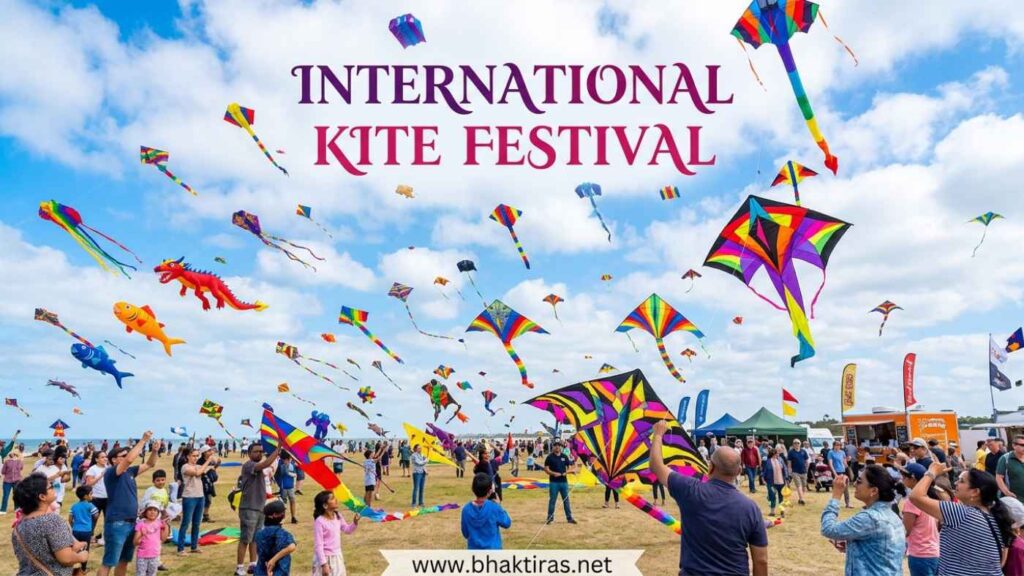
The International Kite Festival is Gujarat’s headline winter event, staged by Gujarat Tourism each January to mark Uttarayan, the day the sun begins its northward journey. Held chiefly at the Sabarmati Riverfront in Ahmedabad, it draws master kite-flyers from more than 40 countries who launch giant, novelty and formation kites while local families crowd the rooftops. The 2027 edition runs about 11 to 14 January, building up to Uttarayan itself on 14 January, when the sky over the city turns into one continuous canvas of colour.
International Kite Festival 2026-2028: Dates & Calendar
The 2027 festival runs about 11 to 14 January, anchored on Uttarayan (Makar Sankranti) on 14 January. Because Uttarayan follows the sun’s entry into Capricorn rather than the moon, its date barely moves and lands on 14 January almost every year.
| Year | Festival dates | Uttarayan (main day) | Notes |
|---|---|---|---|
| 2026 | 10-14 January | Wednesday 14 January | Riverfront programme held over five days |
| 2027 | 11-14 January | Thursday 14 January | Next occurrence |
| 2028 | around 11-14 January | Friday 14 January | Dates confirmed by Gujarat Tourism nearer the time |
Exact opening and closing days are announced by Gujarat Tourism a few weeks ahead, but the peak is always Uttarayan on 14 January, followed by Vasi Uttarayan on 15 January when flying continues.
Why the International Kite Festival Is Held
The festival celebrates Uttarayan, the turn of the sun northward, and has grown since 1989 into Gujarat’s biggest tourism draw. It joins an ancient solar observance to a modern global gathering of kite artists.
Uttarayan marks the moment the sun enters Capricorn and begins moving north, a shift Hindus read as the return of longer, warmer days and an auspicious time to fly kites toward the sky. The custom of flooding the rooftops with patang on this day is centuries old in Gujarat, tied to the harvest and to Surya, the sun.
Gujarat Tourism launched the international edition in 1989, opening the local tradition to visiting flyers from Japan, Italy, France, Indonesia, the United States and dozens of other countries. What began as a religious calendar day is now a four-day cultural showcase watched by millions.
A solar festival
Uttarayan follows Makar Sankranti, when the sun crosses into Capricorn. Flying a kite skyward is a joyful salute to Surya and the lengthening days of the new solar cycle.
A global stage since 1989
The first international edition in 1989 invited master flyers from around the world. It turned a family rooftop custom into a headline event that puts Gujarat on the global kite map.
The sky-battle of kites
Neighbours duel to cut each other’s lines with sharpened string. A successful cut is met with the famous cry of kai po che, Gujarati for “I have cut it”, roared across the rooftops.
What Happens at the Festival, Day by Day
The programme mixes an official international showcase with the age-old rooftop tradition that fills every Gujarati home.
- Opening at the Riverfront. Gujarat Tourism launches the event at the Sabarmati Riverfront, where visiting teams unfurl giant and themed kites in a formal display.
- International flyers take the field. Master kite-makers from more than 40 countries show formation kites, animal and cartoon shapes, and enormous single kites that need several people to launch.
- Rooftop flying across the city. From dawn on Uttarayan, families climb to their terraces with bundles of patang and spools of firki, and the sky over Ahmedabad fills edge to edge.
- The kite duels. Flyers try to cross and cut rival lines; every successful cut brings the shout of kai po che and a fresh kite sent up to replace the lost one.
- Food and music between flights. Rooftops carry snacks and loudspeakers; food courts at the riverfront sell undhiyu, chikki and jalebi through the day.
- Night tukkal. After dark, illuminated kites and paper lanterns called tukkal rise on the wind, dotting the black sky with points of light.
- Vasi Uttarayan. On 15 January, the “stale” second day, keen flyers return to the terraces to finish the last of their kites.
Special Foods of Uttarayan
Uttarayan has its own rooftop menu, built around sesame, jaggery and winter vegetables that suit the cool January mornings.
Undhiyu
A slow-cooked winter mix of surti beans, small aubergines, potatoes, yam and muthiya dumplings, spiced with green masala. It is the signature dish of the day, often eaten with puri.
Chikki
A crisp brittle of peanuts or sesame set in jaggery. Sesame and jaggery are traditional Sankranti foods, thought to warm the body in the cold season.
Jalebi
Coils of fermented batter deep-fried and soaked in syrup, sold hot at every festival stall and a classic pairing with fafda on the morning of Uttarayan.
Ponk
Tender roasted green sorghum, a winter delicacy of the Surat region, tossed with sev and lime and shared on the terraces during the festival weeks.
Where the Festival Is Held
Ahmedabad is the centre, but Gujarat Tourism runs parallel displays across the state so visitors can watch closer to home.
Ahmedabad
The main venue is the Sabarmati Riverfront, whose long banks hold huge crowds who lie back to watch the sky. The Ahmedabad Police Stadium is a second popular viewing point.
Vadodara
Vadodara hosts its own riverside and open-ground displays, drawing visiting teams and large local crowds during the same days.
Surat
Surat’s flat riverfront and the winter ponk season make it a lively second city for the festival, with dense rooftop flying across old neighbourhoods.
Rajkot & Statue of Unity
Rajkot in Saurashtra fields strong local flyers, while the Statue of Unity at Kevadia adds a scenic riverside venue on the Narmada for the international displays.
International Kite Festival Do's and Don'ts
A few simple habits keep the day safe for flyers, birds and passers-by.
Do
- Use plain cotton thread instead of glass-coated string
- Fly early morning or late afternoon when winds are steady
- Keep a firm hand on children near terrace edges
- Carry water, sunscreen and a cap for the long day outdoors
- Try the riverfront food courts for undhiyu, chikki and jalebi
Avoid
- Do not buy or use glass-coated or Chinese manja, which is banned in Gujarat
- Do not fly near power lines, roads or crowded lanes
- Do not leave cut string lying loose, as it injures birds and animals
- Do not lean over unguarded rooftop parapets to chase a kite
- Do not ignore the bird-rescue helplines if you find an injured bird
Frequently Asked Questions
When is the International Kite Festival 2027 in Gujarat?
The International Kite Festival 2027 runs from about 11 to 14 January in Gujarat, with the peak on Uttarayan (Makar Sankranti) on 14 January. Organised by Gujarat Tourism, the main venue is the Sabarmati Riverfront in Ahmedabad. Exact opening and closing dates are confirmed a few weeks ahead.
When was the festival held in 2026 and when is it in 2028?
In 2026 the festival ran from about 10 to 14 January, and in 2028 it is expected around 11 to 14 January, both anchored on Uttarayan on 14 January. Because the event follows the sun’s entry into Capricorn, the main day stays fixed at 14 January almost every year.
Is the International Kite Festival the same as Uttarayan?
The International Kite Festival is the tourism event that Gujarat Tourism stages around Uttarayan, while Uttarayan itself is the religious solar festival of Makar Sankranti. The festival brings global flyers, giant kites and formal displays to the riverfront, whereas Uttarayan is the traditional rooftop kite-flying day observed by every Gujarati household. The two overlap on 14 January.
Where can I attend the festival?
The main venue is the Sabarmati Riverfront in Ahmedabad, with the Ahmedabad Police Stadium as a second viewing point. Gujarat Tourism also runs displays at Vadodara, Surat, Rajkot and the Statue of Unity at Kevadia, so visitors can watch closer to wherever they are staying.
Why is the festival celebrated?
The festival celebrates Uttarayan, the moment the sun turns north into Capricorn, which Hindus read as an auspicious time of longer days and new beginnings. Flying kites toward the sky honours Surya, the sun. Gujarat Tourism opened the day to the world in 1989, growing it into a four-day international showcase.
What are tukkal or night kites?
Tukkal are illuminated kites and paper lanterns flown after dark on Uttarayan night. Once the daytime flying ends, white and lit kites carrying small lanterns rise into the black sky, turning the darkness into a field of drifting lights across the city.
Is glass-coated manja allowed at the festival?
No, glass-coated and Chinese manja are banned in Gujarat because the sharp string injures birds, animals and people. The Gujarat High Court has ordered strict action against its sale and use, and flyers are urged to use plain cotton thread instead.
What foods are eaten during Uttarayan?
The signature dish is undhiyu, a slow-cooked winter vegetable mix, usually eaten with puri and jalebi. Sesame-and-jaggery chikki is the traditional Sankranti sweet, and Surat adds its seasonal roasted ponk. Food courts at the riverfront sell all of these through the festival.
However you spend the day, may your kites fly high and your line stay uncut. Happy Uttarayan, and kai po che!