
Uttarayan 2027 – Gujarat's Great Kite Festival
उत्तरायण
When is Uttarayan in 2027?
Uttarayan falls on 14 January 2027, followed by Vasi Uttarayan on 15 January. It is Gujarat’s name for Makar Sankranti, marking the day the sun begins its northward journey. The state celebrates with mass kite flying from rooftops across Ahmedabad, Surat, Vadodara and Rajkot.
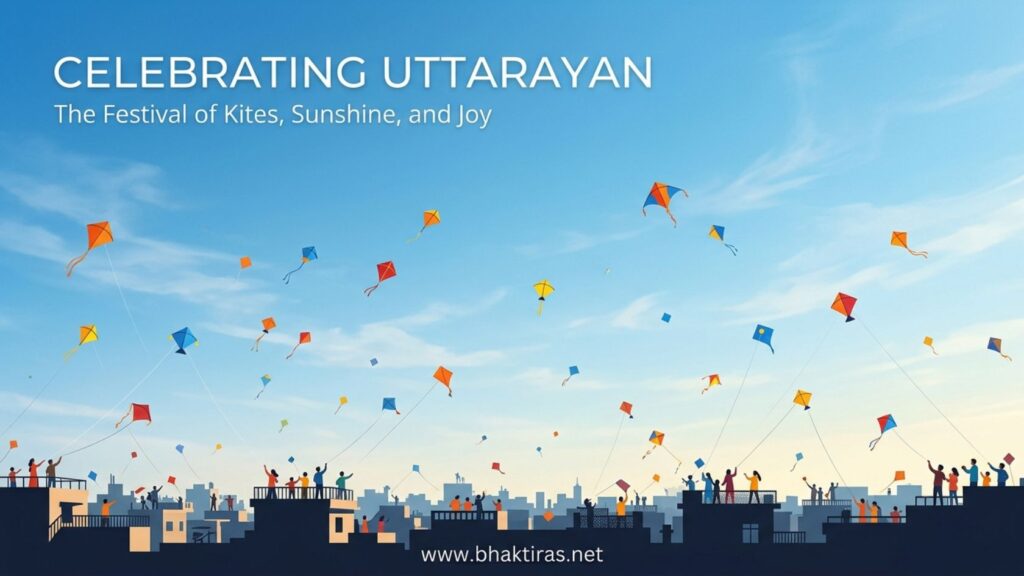
Uttarayan is Gujarat’s name for Makar Sankranti, the day the sun turns north and days start to lengthen. What sets the Gujarati version apart is the sky: from before dawn on 14 January, rooftops across Ahmedabad, Surat, Vadodara and Rajkot fill with families flying kites, and cries of “kai po che!” ring out as strings cross and rivals are cut loose. It is at once a solar-harvest observance, a Surya worship day and the state’s biggest community sport, running into a second day called Vasi Uttarayan.
Uttarayan 2026-2028: Dates & Calendar
The next Uttarayan is 14 January 2027, with Vasi Uttarayan on 15 January. Because it tracks the sun’s entry into Makara (Capricorn) rather than the moon, the date barely moves and sits around 14 January each year.
| Year | Date | Day | Notes |
|---|---|---|---|
| 2026 | 14-15 January | Wednesday-Thursday | Passed – Uttarayan 14th, Vasi Uttarayan 15th |
| 2027 | 14-15 January | Thursday-Friday | Next occurrence – main kite day 14th |
| 2028 | 14-15 January | Friday-Saturday | Uttarayan 14th, Vasi Uttarayan 15th |
Day one (14 January) is Uttarayan itself, the peak kite-flying day. Day two (15 January) is Vasi Uttarayan, literally “stale Uttarayan”, when families finish leftover festive food and take to the roofs again for a more relaxed round of flying.
Why Uttarayan Is Celebrated
Uttarayan celebrates the sun beginning its northward path (uttarayan) as it enters Makara, a solar shift linked to the winter harvest and the return of longer, warmer days.
The sun turns north
The word uttarayan means the sun’s northward journey. Astronomically the festival marks Surya moving into Makara (Capricorn), the point after which daylight hours grow longer. Hindus regard this turn as an auspicious, life-affirming phase of the year.
A harvest thanksgiving
Coming at the close of the winter cropping season, Uttarayan is a harvest festival at heart. Farming families mark the gathered crop with sesame-and-jaggery sweets and shared meals, thanking the sun that ripened the fields.
Community on the rooftops
Over generations the day has grown into Gujarat’s defining community sport. Neighbours call across terraces, children learn to fly and cut kites, and whole streets look upward together – a rare festival built around play in the open sky.
Deities & Figures Worshipped
Uttarayan is dedicated to Surya, the sun god, whose changing course the day marks. Devotees offer prayers and water to the sun and take holy dips at first light.
Surya
Surya, the sun god, is central to Uttarayan. As the sun enters Makara, worshippers face the rising sun, offer arghya (water poured from cupped hands) and recite prayers, giving thanks for warmth, harvest and the lengthening days ahead.
Key Rituals, Step by Step
The day mixes devotion at dawn with hours of kite flying, sweets and giving.
- Holy dip and Surya worship. Many begin before sunrise with a bath, ideally in a river or tank, then offer water and prayers to the rising sun as it enters Makara.
- Til-gud and daan. Sesame-and-jaggery sweets (til-gud) are shared, and donations of grain, sesame, blankets and food are made to the needy, a practice held to be especially meritorious on this day.
- Preparing the kites and manja. Families ready their patang (kites) and wind the firki (spool) with manja, the sharp glass-coated cutting string used for kite battles.
- Rooftop flying from dawn. As light breaks, terraces fill and kites go up across the city. The steady January wind keeps them aloft through the morning.
- The kite battles. Flyers manoeuvre to saw through a rival’s string; when a kite is cut free the crowd erupts with “kai po che!” as the loose kite drifts away.
- Feasting between rounds. Undhiyu, jalebi, chikki and ponkh are eaten on the roof through the day, fuelling flyers between contests.
- Night flying with tukkals. After dark, illuminated paper lanterns called tukkals are strung along the line so glowing kites float against the night sky.
- Vasi Uttarayan. On day two the roofs fill again for a gentler round of flying, with leftover festive food finished off.
Special Foods of Uttarayan
Uttarayan food pairs winter-vegetable feasting with the sesame-and-jaggery sweets common across the Sankranti festivals.
Undhiyu
The signature dish: a slow-cooked mixed casserole of winter vegetables, surti papdi beans, muthiya (fenugreek dumplings) and spices. It is the centrepiece of the Uttarayan table.
Jalebi
Crisp, syrup-soaked jalebi is the classic Uttarayan breakfast pairing with undhiyu, sold hot from sweet shops across the state on the morning of the festival.
Til-gud & chikki
Sesame and jaggery sweets – til-gud laddoo and brittle chikki – are shared as tokens of goodwill, tying Uttarayan to the wider Makar Sankranti tradition of sesame treats.
Ponkh
Fresh green millet (ponkh), tossed with spices, is a seasonal Surat speciality eaten around Uttarayan when the young jowar is at its tender best.
Kite Flying Across Gujarat
Uttarayan is a state-wide affair, but each city gives it a slightly different flavour, and Ahmedabad hosts a global gathering.
Ahmedabad
The heart of the festival. The city’s old-town rooftops are shoulder to shoulder with flyers, and the Sabarmati riverfront hosts the International Kite Festival, drawing kite-makers and designers from around the world with giant show kites and displays.
Surat
Surat is known for fierce, competitive flying and for its strong local manja, alongside the seasonal ponkh eaten between rounds. Terraces here take their kite battles seriously.
Vadodara & Rajkot
Vadodara and Rajkot join in with the same rooftop energy, packed markets selling patang and firki in the days before, and family gatherings that run from dawn well past dusk.
Night tukkals
Across all these cities the celebration continues after sunset, when illuminated tukkals – paper lanterns fixed to the kite line – turn the dark sky into a field of drifting lights.
Uttarayan Do's and Don'ts
A few habits keep the day safe for flyers, passers-by and birds.
Do
- Fly from a stable rooftop and watch the edge; keep young children back from parapets.
- Offer water and prayers to the rising sun and share til-gud with neighbours.
- Use cotton manja and clear up cut strings so they do not litter streets or trees.
- Cover your fingers with tape or a guard – cutting string can slice hands badly.
- Keep water and a first-aid kit on the terrace, and enjoy undhiyu and jalebi between rounds.
Avoid
- Do not use nylon or Chinese manja – it does not snap, and it maims birds and cuts people; many states ban it.
- Do not fly near overhead power lines or on unguarded, railing-free roofs.
- Do not leave loose glass-coated string hanging – it traps and injures birds, so gather it up.
- Do not chase a cut kite across busy roads or rooftops.
- Do not overcrowd a small terrace or lean out over the edge for a drifting kite.
Frequently Asked Questions
When is Uttarayan in 2027?
Uttarayan is on 14 January 2027, with Vasi Uttarayan following on 15 January. It marks the sun entering Makara and its northward journey, and is Gujarat’s headline kite-flying day.
When is Uttarayan in 2026 and 2028?
Uttarayan fell on 14-15 January 2026 (already passed) and will again be on 14-15 January 2028. Because it is a solar festival tied to the sun entering Makara, the date stays close to 14 January every year.
Is Uttarayan the same as Makar Sankranti?
Yes. Uttarayan is simply the Gujarati name for Makar Sankranti as observed in Gujarat. The core meaning – the sun beginning its northward journey into Makara – is identical; what makes Uttarayan distinct is its signature focus on mass kite flying. See our Makar Sankranti page for the wider, pan-Indian festival.
Why is Uttarayan celebrated?
Uttarayan is celebrated to mark the sun’s shift northward as it enters Makara, which brings longer days and coincides with the winter harvest. It is a day of Surya worship, thanksgiving, giving to the needy, and joyous community kite flying across Gujarat.
Which god is worshipped on Uttarayan?
Surya, the sun god, is worshipped on Uttarayan. Devotees take a holy dip at dawn, offer water to the rising sun and give thanks as Surya begins its northward course, the astronomical event the whole festival marks.
What is Vasi Uttarayan?
Vasi Uttarayan is the second day of the festival, on 15 January 2027, literally meaning “stale Uttarayan”. Families finish leftover festive food and return to the rooftops for a more relaxed round of kite flying to round off the celebration.
What foods are eaten on Uttarayan?
The classic Uttarayan spread is undhiyu (a mixed winter-vegetable casserole) paired with hot jalebi for breakfast. Sesame-and-jaggery treats like til-gud laddoo and chikki are shared, and fresh millet (ponkh) is a seasonal favourite, especially in Surat.
Why is nylon manja banned during Uttarayan?
Nylon or Chinese manja is banned in many states because it does not snap under tension. It severely injures birds that collide with it and can cut the throats and hands of people below. Cotton manja is the safer, legal choice for kite flying.
However high your kites fly this year, we wish you a joyful and safe Uttarayan – happy Uttarayan and kai po che!