
Attukal Pongala 2027 – The World's Largest Gathering of Women
ആറ്റുകാൽ പൊങ്കാല
When is Attukal Pongala in 2027?
Attukal Pongala 2027 falls on or around 22 February, on the Pooram star day of the ten-day festival at the Attukal Bhagavathy Temple in Thiruvananthapuram, Kerala. On this day lakhs of women line the city’s streets for kilometres and cook a sweet rice offering in the open for the Goddess. The temple fixes the exact date each year, so treat February 22 as approximate until it is announced.
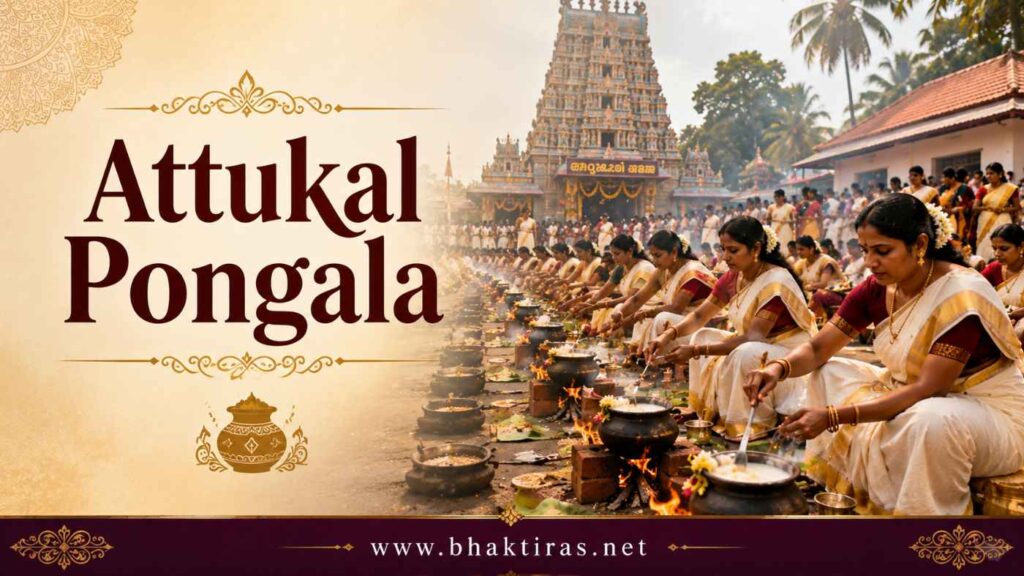
Attukal Pongala is the single largest gathering of women for a religious event anywhere on earth, a distinction the Guinness records have twice recognised. On the ninth, Pooram-star day of a ten-day festival at Thiruvananthapuram’s Attukal Bhagavathy Temple, lakhs of women fill roads, pavements and rooftops for kilometres in every direction, each tending a small brick hearth to cook pongala, a sweet offering of rice, jaggery and coconut, for the Goddess Attukal Amma. In 2027 it falls on or around 22 February.
Attukal Pongala 2026-2028: Dates & Calendar
The next Attukal Pongala is on or around 22 February 2027, the Pooram-star day of the festival. The date shifts each year because it follows the Malayalam lunar month of Kumbham, not the Gregorian calendar.
| Year | Pongala Day (approx) | Day | Notes |
|---|---|---|---|
| 2026 | 1 March | Sunday | Festival ran roughly 23 Feb – 4 March |
| 2027 | 22 February | Monday | Next occurrence – Pooram day |
| 2028 | 10 March | Friday | Later Kumbham this year |
The Pongala itself is a single morning, but the temple observes ten days of rituals leading up to it, beginning with the ceremonial kappukettu that opens the festival and the retelling of the Goddess’s story on the flag-hoisting night.
Why Attukal Pongala Is Celebrated
Attukal Pongala honours the Goddess Attukal Bhagavathy, worshipped here as a mother who protects her devotees. The pongala offering is a way for women to thank her and ask for the wellbeing of their families.
Local tradition links Attukal Amma to Kannaki, the wronged heroine of the ancient Tamil epic Silappadikaram, who burned down the city of Madurai in her grief and rage before being received as a goddess. The Attukal temple is often called the Sabarimala of women, a counterpoint to the famous men’s pilgrimage, because here the ritual belongs almost entirely to women.
An offering of gratitude
Pongala means ‘to boil over’. When the pot spills over, it is read as the Goddess accepting the offering and abundance flowing back to the household. Women cook it for health, family, children’s futures and answered prayers.
The story of Kannaki
The Goddess is identified with Kannaki, who avenged her husband’s unjust execution and was deified for her purity and devotion. The festival’s ninth night stages her story in song and enactment, tying the offering to a tale of justice and a woman’s power.
Equality on the street
On Pongala morning caste, wealth and status fall away. A judge and a fisherwoman kneel at neighbouring hearths on the same pavement, cooking the same rice in the same clay pots, which is much of why devotees hold the day so dear.
Deities & Figures Worshipped
The festival is dedicated to Attukal Bhagavathy, a fierce yet motherly form of Devi. She is closely associated with Kannaki of the Tamil epic tradition.
Attukal Bhagavathy
Attukal Amma is worshipped as a form of the Great Goddess Devi, both a warrior and a protective mother. Devotees address her simply as Amma, mother, and the whole festival is an act of trust in her care.
Kannaki
The Goddess is identified with Kannaki, the heroine of Silappadikaram, whose story of loyalty, loss and justice is retold on the ninth night. This link gives Attukal Amma her reputation as a defender of the wronged.
Key Rituals, Step by Step
The ten days build from a quiet opening ceremony to the roar of Pongala morning and a final procession. Here is how the days unfold.
- Kappukettu and flag hoisting. The festival opens with the ceremonial tying of the sacred thread and the raising of the temple flag, formally beginning the ten days.
- Retelling the story of Kannaki. Over the nights, singers narrate the Goddess’s story in the traditional Thottampattu, culminating in the episode where she confronts injustice.
- Preparing the ground. In the days before, women scout and reserve their small patch of roadside, laying out bricks for a three-stone hearth and gathering firewood, rice, jaggery and coconut.
- Lighting the aduppu. On Pongala morning women fast, bathe and sit by their hearths from dawn, pots washed and waiting, the whole city hushed in anticipation.
- The pandara aduppu is lit. The head priest lights the main hearth inside the temple, and that sacred fire is passed hearth to hearth outward through the crowd until the whole city is cooking at once.
- Cooking the pongala. Rice is boiled with jaggery, coconut, ghee and cardamom in fresh earthen pots. Women watch for the pot to boil over, the sign the Goddess has accepted it.
- Sanctifying the offering. Priests move through the crowd sprinkling holy water to bless the cooked pongala, after which it becomes prasadam to be shared and taken home.
- Kuthiyottam and the closing procession. Young boys complete the kuthiyottam ritual, and on the final day the deity is carried in procession, drawing the festival to a close.
Special Foods of Attukal Pongala
The whole festival turns on one dish, cooked in the open in fresh clay pots, though a few related preparations join it.
Pongala
The offering itself: rice slowly boiled with jaggery, grated coconut, ghee and cardamom into a soft, sweet payasam-like porridge. It is cooked only in a new earthen pot over a wood fire, and the moment it boils over is the heart of the day.
Therali and vella payasam
Alongside the main pongala, many women also prepare therali (sweet rice dumplings steamed in leaf cups) and a white rice-and-coconut payasam, all offered together to the Goddess.
Manda puttu and sweet appam
Some households add jaggery-sweetened rice cakes and small fried appams to the offering plate, homely sweets that carry the same intention of thanks and abundance.
Where It's Celebrated
Attukal Pongala is centred on one temple in Thiruvananthapuram, but its reach now stretches across Kerala and into the Malayali diaspora.
Attukal, Thiruvananthapuram
The heart of it all is the Attukal Bhagavathy Temple. On Pongala day the hearths radiate outward from the temple for many kilometres, spilling into surrounding towns as the crowd has grown year on year.
Across Kerala
Sister celebrations now take place at other Devi temples and neighbourhood grounds around the state, so women who cannot travel to Attukal can still light a hearth and offer pongala locally.
Malayali diaspora
Malayali communities in the Gulf, and in cities across India and abroad, hold their own smaller Pongala offerings on the same day, keeping the ritual alive far from home.
Attukal Pongala Do's and Don'ts
A few simple observances keep the day respectful and safe amid enormous crowds.
Do
- Reserve your hearth spot early and use a fresh, unused earthen pot.
- Keep a physical fast until the pongala is cooked and blessed.
- Wait for the temple fire to reach you before lighting your hearth.
- Watch for the pot to boil over, the sign the offering is accepted.
- Share the blessed pongala as prasadam with family and neighbours.
Avoid
- Do not taste the pongala before priests have sanctified it.
- Do not use an old or previously used cooking pot.
- Do not leave a lit hearth unattended in the packed crowd.
- Do not bring non-vegetarian food into the offering space.
- Do not block emergency lanes or ignore crowd-control instructions.
Frequently Asked Questions
When is Attukal Pongala in 2027?
Attukal Pongala 2027 falls on or around 22 February, the Pooram-star day of the ten-day festival at the Attukal Bhagavathy Temple in Thiruvananthapuram. The temple sets the exact date by the Malayalam calendar each year, so confirm it before travelling.
When is Attukal Pongala in 2026 and 2028?
Attukal Pongala 2026 was on or around 1 March, and in 2028 it is expected on or around 10 March. The date moves because it follows the Malayalam lunar month of Kumbham rather than the Gregorian calendar, and the temple’s astrologers fix the ninth-day Pongala each year.
Why is Attukal Pongala celebrated?
Attukal Pongala is celebrated to honour the Goddess Attukal Bhagavathy and to thank her for the wellbeing of one’s family. Women cook a sweet rice offering, called pongala, in the open and offer it when it boils over, a gesture of gratitude and prayer linked to the story of Kannaki.
Which goddess is worshipped at Attukal Pongala?
The festival is dedicated to Attukal Bhagavathy, a motherly and warrior form of the Goddess Devi, worshipped as Amma. She is closely identified with Kannaki, the heroine of the Tamil epic Silappadikaram, which is why the temple is often called the Sabarimala of women.
Why is Attukal Pongala a Guinness World Record?
Attukal Pongala holds a Guinness World Record as the single largest gathering of women for a religious activity. On Pongala day lakhs of women line the streets of Thiruvananthapuram for kilometres, each cooking pongala at her own small hearth, with crowd estimates running into the millions.
What is pongala made of?
Pongala is made of rice slowly boiled with jaggery, grated coconut, ghee and cardamom into a soft, sweet porridge. It is cooked only in a fresh earthen pot over a wood fire, and the moment the pot boils over is taken as the Goddess accepting the offering.
Can men take part in Attukal Pongala?
The pongala offering itself is made only by women, which is what gives the festival its identity as a women’s celebration. Men support the day by helping arrange hearths, firewood and water and by taking part in the temple’s other rituals, but they do not cook the offering.
How long does the Attukal Pongala festival last?
The Attukal festival lasts ten days, beginning with a flag-hoisting and the ceremonial kappukettu and building through nightly retellings of the Goddess’s story. The famous mass Pongala offering takes place on the ninth day, the Pooram-star morning, followed by a closing procession.
May Attukal Amma bless every hearth and every home. Pongala nanmayai bhavikkatte.