
Ashadha Gupt Navratri 2026 – The Secret Nine Nights of the Goddess
आषाढ़ गुप्त नवरात्रि
When is Ashadha Gupt Navratri in 2026?
Ashadha Gupt Navratri 2026 runs from 15 July to 23 July. It is one of the two gupt (hidden) Navratris of the year, nine nights of Shakti worship in the month of Ashadha that are followed quietly rather than in public. Unlike the well-known Chaitra and Sharadiya Navratris, these nights are dear to Tantric sadhaks who worship the ten Mahavidyas through private mantra practice.
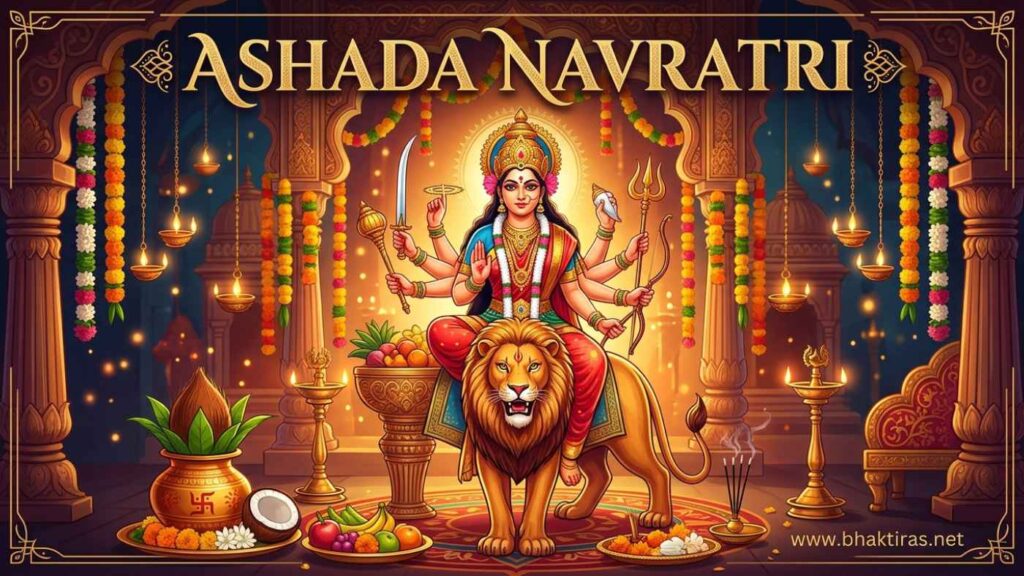
Ashadha Gupt Navratri is the quieter of Hinduism’s two secret Navratris, kept during the bright fortnight of the Ashadha month (June-July). While most people know the spring and autumn Navratris of the nine Durgas, this one is worked privately – the word gupt simply means hidden. Serious devotees and Tantric sadhaks turn inward for nine nights, worshipping the ten Mahavidyas with fasting, japa and disciplined sadhana rather than public celebration. In 2026 it begins on 15 July and closes on 23 July.
Ashadha Gupt Navratri 2026-2028: Dates & Calendar
Ashadha Gupt Navratri 2026 starts on 15 July. The festival is tied to the lunar calendar – it opens on Ashadha Shukla Pratipada each year, so the Gregorian date shifts from one year to the next.
| Year | Dates | Start day | Notes |
|---|---|---|---|
| 2026 | 15-23 July | Wednesday | This year’s observance |
| 2027 | 4-12 July | Sunday | Nine nights |
| 2028 | 23-30 June | Friday | Approximate – confirm nearer the date |
The count of nine nights can vary by a day in some years when a tithi is skipped or repeated, which is why local panchangs occasionally show an eight-night or overlapping schedule. For fasting and Ghatasthapana timings, follow the muhurat given in your regional almanac.
Why Ashadha Gupt Navratri Is Kept Secret
Ashadha Gupt Navratri is celebrated as a private, high-intensity period of Shakti sadhana. The secrecy is deliberate – practitioners believe hidden effort deepens concentration and protects the sadhana from distraction.
The meaning of 'gupt'
Gupt means hidden or concealed. Where the Chaitra and Sharadiya Navratris fill temples and streets, these nights are kept behind closed doors. The idea, carried down in Tantric and Shakta traditions, is that a vow spoken about loses some of its force, so devotees keep their practice, their fast and even their chosen mantra to themselves.
A season for serious sadhaks
These nine nights are held to be especially potent for spiritual effort. Tantric practitioners take up intensive japa, night-long vigils and specific rituals during Ashadha, treating the period as a window when disciplined practice bears fruit more readily. It is less a family festival and more a personal spiritual retreat.
The ten Mahavidyas at the centre
The distinctive feature of Gupt Navratri is the worship of the ten Mahavidyas – Kali, Tara, Tripura Sundari, Bhuvaneshwari, Chhinnamasta, Bhairavi, Dhumavati, Bagalamukhi, Matangi and Kamala. These are ten wisdom-goddesses, each a different face of the one Shakti, and the nights are an invitation to approach the Goddess in these deeper, less familiar forms.
Deities & Figures Worshipped
The presiding power of Ashadha Gupt Navratri is Durga as Adi Shakti, but the practice centres on her ten Mahavidya forms rather than the nine Durgas of the popular Navratris.
Durga / Adi Shakti
The whole nine nights are dedicated to Durga as the primal feminine energy behind creation. In the gupt observance she is approached not through public arati but through inward worship, mantra and fasting.
The ten Mahavidyas
Kali, Tara, Tripura Sundari, Bhuvaneshwari, Chhinnamasta, Bhairavi, Dhumavati, Bagalamukhi, Matangi and Kamala are honoured across the nine nights. Each Mahavidya carries her own mantra, iconography and gift – from Kali’s fierce liberation to Kamala’s abundance – and a sadhak often chooses one form to focus on.
Bagalamukhi
In parts of North India the goddess Bagalamukhi, who stills enemies and quarrels, draws particular devotion during Ashadha. Her yellow-clad worship and turmeric offerings are a common thread in these secret nights.
Key Rituals, Step by Step
The rituals follow the familiar Navratri frame – a sown-barley pot, a daily discipline, a closing offering – but scaled down to a private, sustained sadhana.
- Ghatasthapana (Day 1). On Ashadha Shukla Pratipada the devotee installs a kalash of water topped with mango leaves and a coconut, and often sows barley seeds in a clay bowl beside it. This is done at the muhurat given in the local panchang, usually in the first part of the morning.
- Taking the sankalpa. The sadhak makes a quiet vow for the nine nights – the fast to be kept, the deity chosen, the mantra to be recited – and, in keeping with the gupt spirit, does not announce it.
- Daily japa and paath. Each day is given to mantra repetition on a rudraksha or crystal mala, along with recitation of texts such as the Durga Saptashati or a Mahavidya stotra. Consistency of count and timing matters more than display.
- Fasting and restraint. Many observe a fruit-and-milk fast or a single sattvic meal a day, avoiding grains, onion, garlic and non-vegetarian food, and keeping to simple, disciplined living through the period.
- Evening lamp and offerings. A ghee or oil lamp is lit before the deity each evening, with flowers, kumkum and a few unfussy offerings. Bagalamukhi worshippers often use yellow flowers and turmeric.
- Tending the barley shoots. The sown grains are watered daily; their fresh green growth is read as a sign of the Goddess’s blessing on the household.
- Kanya puja and Navami. On the eighth or ninth night some honour young girls as living forms of the Goddess with food and small gifts, mirroring the older Navratri custom.
- Udyapan and visarjan. On the concluding day the vow is completed with a final hawan or offering, and the kalash and barley shoots are respectfully immersed in flowing water, closing the sadhana.
Special Foods of Ashadha Gupt Navratri
The kitchen follows vrat (fasting) rules for nine days, so meals are grain-free, light and sattvic – the same fare kept during other Navratris.
Kuttu and singhara dishes
Buckwheat (kuttu) and water-chestnut (singhara) flour replace wheat during the fast. They are cooked into simple pooris, pakoras and rotis eaten with potato curry cooked in sendha namak (rock salt).
Sabudana
Tapioca pearls are a fasting staple – sabudana khichdi tossed with peanuts and cumin, or sweet sabudana kheer, gives energy through long days of japa and vigil.
Vrat ke chawal (samak)
Barnyard millet, often called samak or vrat ke chawal, stands in for rice. It is steamed plain or made into a light khichdi with vegetables and rock salt.
Fruit, milk and dry fruits
Those keeping a stricter fast rely on seasonal fruit, milk, curd and a handful of soaked almonds or makhana, keeping the body light for sustained practice.
Ashadha Gupt Navratri Do's and Don'ts
A few simple customs keep the secret sadhana focused and sincere.
Do
- Keep your vow, mantra and practice private, in keeping with the gupt spirit
- Fix a daily time and mala count for japa and hold to it for all nine nights
- Eat sattvic vrat food and keep the puja space clean and simple
- Light the evening lamp and tend the sown barley each day
- Follow your regional panchang for the Ghatasthapana muhurat
Avoid
- Do not broadcast your fast or chosen deity – discretion is the whole point
- Avoid grains, onion, garlic and non-vegetarian food during the fast
- Do not begin serious Tantric or Mahavidya sadhana without proper guidance
- Avoid anger, gossip and quarrels that break the day’s concentration
- Do not leave the barley shoots or kalash unattended once installed
Frequently Asked Questions
When is Ashadha Gupt Navratri in 2026?
Ashadha Gupt Navratri 2026 runs from 15 July to 23 July, nine nights beginning on Ashadha Shukla Pratipada. It is one of the two hidden (gupt) Navratris of the Hindu year and is observed quietly rather than publicly.
When is Ashadha Gupt Navratri in 2027 and 2028?
Ashadha Gupt Navratri falls from 4 to 12 July in 2027 and, approximately, from 23 to 30 June in 2028. Because the festival is tied to the lunar month of Ashadha, the Gregorian dates shift each year; the 2028 dates should be confirmed against a panchang nearer the time.
What does 'gupt' mean in Gupt Navratri?
Gupt means hidden or secret. In these Navratris the worship is kept private – devotees do not announce their fast, chosen deity or mantra – because the tradition holds that concealed effort deepens the sadhana and guards it from distraction.
Which goddesses are worshipped during Ashadha Gupt Navratri?
Ashadha Gupt Navratri centres on Durga as Adi Shakti through her ten Mahavidya forms: Kali, Tara, Tripura Sundari, Bhuvaneshwari, Chhinnamasta, Bhairavi, Dhumavati, Bagalamukhi, Matangi and Kamala. This is different from the nine Durgas honoured in the more familiar Chaitra and Sharadiya Navratris.
How is Gupt Navratri different from regular Navratri?
Gupt Navratri is observed privately by serious devotees and Tantric sadhaks, while the Chaitra and Sharadiya Navratris are public, family-wide festivals. The gupt observance emphasises the ten Mahavidyas, intense mantra practice and secrecy rather than open celebration and garba.
How many Gupt Navratris are there in a year?
There are two Gupt Navratris each year – one in the month of Ashadha (June-July) and one in the month of Magha (January-February). Together with the widely celebrated Chaitra and Sharadiya Navratris, they make up the four Navratris of the Hindu calendar.
How is Ashadha Gupt Navratri observed?
It is observed with Ghatasthapana on the first day, a daily discipline of fasting, mantra japa and scripture recitation over nine nights, and a closing hawan and kalash immersion. Many worship a chosen Mahavidya, keeping the practice quiet and consistent throughout.
Can ordinary devotees observe Ashadha Gupt Navratri?
Yes, ordinary devotees can observe Ashadha Gupt Navratri with simple fasting, daily lamp offerings and the recitation of familiar hymns such as the Durga Saptashati. Advanced Tantric or Mahavidya rituals, however, are best undertaken only under the guidance of an experienced teacher.
May these hidden nights bring quiet strength and the Goddess’s grace to your practice. Jai Mata Di.