
Magha Gupt Navratri 2027 – The Winter Secret Navratri
माघ गुप्त नवरात्रि
When is Magha Gupt Navratri in 2027?
Magha Gupt Navratri 2027 runs from Sunday, 7 February to Tuesday, 16 February. It is the winter “secret” Navratri, nine nights of the Goddess in the cold Magha month, kept mostly private and prized by Tantric sadhaks who worship the ten Mahavidyas. Basant Panchami, the day for Saraswati, falls within it.
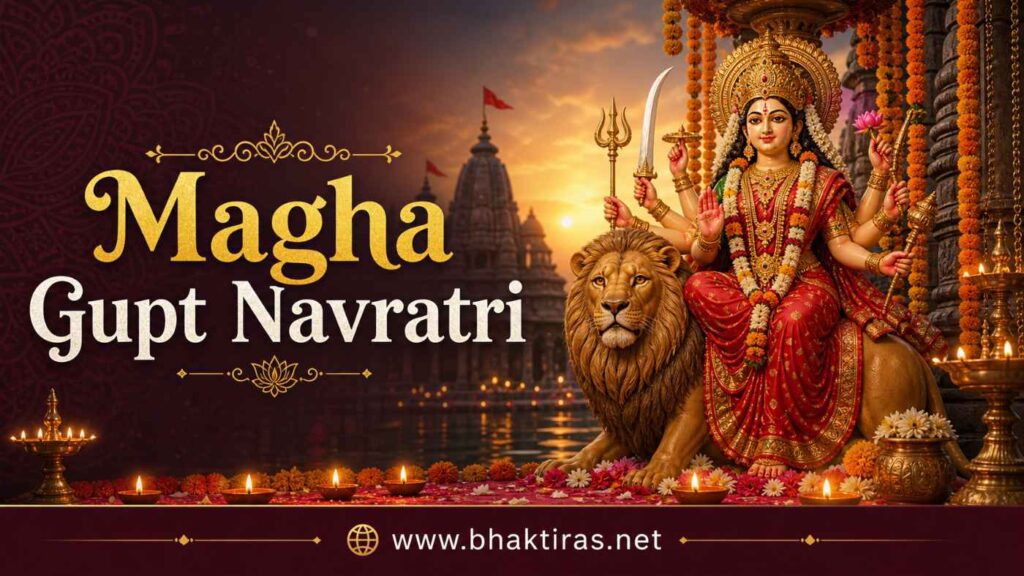
Magha Gupt Navratri is the winter half of the two hidden, or “gupt”, Navratris that fall away from the well-known spring and autumn ones. It arrives in Magha, the coldest stretch of the Hindu year, from Shukla Pratipada to Navami – in 2027 that means 7 to 16 February. Where Sharadiya Navratri fills streets with pandals and garba, this one is deliberately quiet. It belongs to Shakta and Tantric practitioners who spend the nine nights in private worship of Durga and the ten Mahavidyas, and to households seeking spiritual strength, protection and the quiet fulfilment of long-held wishes.
Magha Gupt Navratri 2026-2028: Dates & Calendar
The next Magha Gupt Navratri begins on 7 February 2027. The dates shift each year because they follow the lunar month of Magha, tied to the moon rather than the fixed Gregorian calendar.
| Year | Dates | Days | Notes |
|---|---|---|---|
| 2026 | 19-27 January | Monday-Tuesday | Ghatasthapana on 19 Jan (past) |
| 2027 | 7-16 February | Sunday-Tuesday | Next occurrence; Basant Panchami falls within |
| 2028 | 27 January-5 February | Thursday-Saturday | Earlier in Magha |
The first day, Magha Shukla Pratipada, is when many observers perform Ghatasthapana – the ritual installation of the sacred pot and barley sowing that begins the nine-day vow.
Why Magha Gupt Navratri Is Celebrated
Magha Gupt Navratri is celebrated as a hidden season of Shakti worship, when devotees turn inward for private sadhana rather than public festivity. The word “gupt” means secret, reflecting both the low-key observance and the esoteric Tantric practice it is known for.
The hidden Navratri
Of the four Navratris in the Hindu year, two are prakat (open and public) and two are gupt (hidden). This Magha one is a gupt Navratri: no processions, no crowds, worship kept within the home or shrine. The privacy is the point – many believe sadhana done quietly, without display, carries more weight.
Season of the Mahavidyas
The gupt Navratris are especially linked to the ten Mahavidyas, the fierce and wise forms of the Goddess. Serious Shakta and Tantric practitioners use these nine nights for concentrated mantra japa and Devi upasana, seeking siddhi, protection and inner strength that ordinary festival days are not thought to grant.
Strength in the cold months
Magha is deep winter in North India, a still and austere time well suited to disciplined practice. Undertaking a vow now – fasting, silence, japa – is seen as building spiritual reserves for the year ahead, before the louder festivals of spring return.
Basant Panchami within it
Basant Panchami, the day of Saraswati and the first breath of spring, falls in the Magha Shukla fortnight and so lands inside this Navratri. For many families it softens the austerity with a bright day of learning, music and yellow flowers.
Deities & Figures Worshipped
Magha Gupt Navratri centres on Durga in her many forms, but its signature is the worship of the ten Mahavidyas – a set of Goddess forms drawn from the Tantric tradition.
Durga / Adi Shakti
The Goddess as the supreme power stands behind the whole observance. Households that keep it more simply worship the nine Durga forms (Navadurga), one for each night, much as in the better-known Navratris.
The ten Mahavidyas
The distinctive practice of the gupt Navratris. The ten are Kali, Tara, Tripura Sundari, Bhuvaneshwari, Chhinnamasta, Bhairavi, Dhumavati, Bagalamukhi, Matangi and Kamala. Each carries her own mantra, form and blessing, from Kali’s fierce liberation to Kamala’s abundance.
Bagalamukhi
Among the Mahavidyas, Bagalamukhi is a common focus in these nine nights – invoked for the stilling of enemies, obstacles and legal or personal troubles. Her yellow-clad worship is a familiar sight in North Indian shrines during Magha.
Key Rituals, Step by Step
The observance is personal and can be as simple or as intensive as the devotee chooses. A common shape over the nine days looks like this.
- Sankalpa and Ghatasthapana. On the first morning, take a vow for the nine days and install the kalash (sacred pot), often sowing barley seeds in soil beside it to watch them sprout through the festival.
- Choose your deity. Fix on one form – a Navadurga sequence, a single Mahavidya, or the full set of ten – and keep to that practice each day rather than switching about.
- Daily puja. Light a lamp, offer flowers, fruit, kumkum and incense to the Goddess morning and evening, keeping the same clean, undisturbed space throughout.
- Mantra japa. The heart of the vow. Repeat the chosen deity’s mantra a set number of rounds daily on a rudraksha or other mala, ideally at the same hour each day.
- Fasting. Keep a fast to your capacity – fruit and milk only, one sattvic meal a day, or full nirjala on chosen days – avoiding grains, onion, garlic and tamasic food.
- Path and stotra. Many read the Durga Saptashati (Chandi Path) or the Mahavidya stotras over the nine days, completing the recitation by Navami.
- Observe Basant Panchami. When the day arrives within the fortnight, honour Saraswati alongside the Goddess with yellow offerings, books and instruments.
- Havan and udyapan. Close the vow on the final day with a small homa (fire offering), feed and honour young girls or a Brahmin, and formally end the sankalpa with gratitude.
Special Foods of Magha Gupt Navratri
Because most observers fast, the food is vrat (fasting) fare – simple, grain-free and sattvic. What you eat depends on how strict a fast you keep.
Kuttu and singhara dishes
Buckwheat (kuttu) and water-chestnut (singhara) flours replace wheat during the fast, cooked into puris, pakoras and simple rotis eaten with potato curry made without onion or garlic.
Sabudana
Sago is a Navratri mainstay – as khichdi tempered with peanuts and cumin, or as a sweet kheer. It is filling, easy to digest and permitted on most fasts.
Samak rice
Barnyard millet, called samak or mordhan, stands in for rice. It is boiled plain, made into a light pulao or set as kheer for those keeping a stricter grain-free vow.
Fruit, milk and dry fruits
The gentlest fasts run on phalahar alone – seasonal fruit, milk, curd, makhana and nuts. In cold Magha weather many add warm milk with a few almonds or dates.
Where It's Observed
Magha Gupt Navratri is felt most strongly across North India and in Shakta and Tantric circles, though it stays quieter than the mainstream Navratris everywhere.
North Indian plains
Uttar Pradesh, Haryana, Punjab, Himachal Pradesh and Uttarakhand keep this Navratri most actively, with Ghatasthapana in homes and steady worship at local Devi temples through the nine days.
Shakti Peethas and Devi temples
Major Goddess shrines, especially those tied to the Mahavidyas, see a rise in serious pilgrims and sadhaks who come to perform their vows where the Shakti is felt to be strongest.
Tantric and Shakta practitioners
Beyond region, the festival belongs to a community of practice – initiated sadhaks and devout Shakta households anywhere who reserve these nights for intensive, private Mahavidya sadhana.
Magha Gupt Navratri Do's and Don'ts
A few simple observances help keep the nine-day vow sincere and unbroken.
Do
- Take a clear sankalpa on day one and hold to the same practice throughout
- Keep your puja space and your body clean; bathe before worship each day
- Do your mantra japa at a fixed hour daily, calmly and without haste
- Eat sattvic vrat food and keep the fast within your real capacity
- Honour young girls (kanya pujan) and close the vow with gratitude
Avoid
- Do not treat it as a public show; the practice is meant to be quiet
- Avoid grains, onion, garlic and tamasic or non-vegetarian food while fasting
- Do not break the daily japa or leave the vow unfinished before Navami
- Avoid anger, gossip and quarrels that disturb the mind’s focus
- Do not begin fierce Tantric or Mahavidya sadhana without proper guidance from a guru
Frequently Asked Questions
When is Magha Gupt Navratri in 2027?
Magha Gupt Navratri 2027 runs from Sunday, 7 February to Tuesday, 16 February. The nine nights begin on Magha Shukla Pratipada and end on Navami, following the lunar month of Magha. Basant Panchami falls within this fortnight.
When is Magha Gupt Navratri in 2026 and 2028?
In 2026 Magha Gupt Navratri fell earlier, from 19 to 27 January. In 2028 it runs from 27 January to 5 February. The dates move each year because they track the lunar Magha month rather than a fixed calendar date.
Why is it called Gupt Navratri?
“Gupt” means hidden or secret. It is called Gupt Navratri because it is observed quietly and privately, without the public processions of the well-known Navratris, and because it is associated with esoteric Tantric sadhana of the ten Mahavidyas.
Which goddess is worshipped during Magha Gupt Navratri?
Durga in her many forms is worshipped, but the season is especially devoted to the ten Mahavidyas – Kali, Tara, Tripura Sundari, Bhuvaneshwari, Chhinnamasta, Bhairavi, Dhumavati, Bagalamukhi, Matangi and Kamala. Simpler households worship the nine Navadurga forms, one each night.
How is Magha Gupt Navratri different from Sharadiya Navratri?
Sharadiya (autumn) Navratri is public and festive, filled with garba, pandals and Durga Puja. Magha Gupt Navratri is one of the two hidden Navratris – kept private, austere and centred on personal Tantric or Shakta sadhana rather than community celebration.
What is the connection with Basant Panchami?
Basant Panchami, the day of Goddess Saraswati and the start of spring, falls in the Magha Shukla fortnight and so lands within Magha Gupt Navratri. Many observers honour Saraswati on that day alongside their Devi worship.
What do people eat during Magha Gupt Navratri?
Those who fast eat vrat food that avoids grains, onion and garlic – kuttu and singhara flour dishes, sabudana, samak rice, and phalahar of fruit, milk and dry fruits. The strictness varies from a single sattvic meal a day to a fruit-and-milk fast.
Can anyone observe Magha Gupt Navratri?
Yes, anyone can keep a simple vow of daily Durga puja, fasting and mantra japa during these nine days. However, the intensive Tantric worship of the fierce Mahavidyas is best undertaken only under the guidance of a qualified guru.
May the Goddess grant you strength and quiet resolve through these nine nights. Jai Mata Di.