
Makaravilakku 2027 – The Sacred Light of Sabarimala
മകരവിളക്ക്
When is Makaravilakku in 2027?
Makaravilakku falls on 14 January 2027 (Makara Sankranti), the day the sun begins its northward journey into Makaram (Capricorn). It is the closing high point of the Mandala-Makaravilakku pilgrimage season at the Sabarimala hill shrine in Kerala, when devotees of Lord Ayyappa gather to witness the Makara Jyothi star and the Makaravilakku light on the far Ponnambalamedu hill.
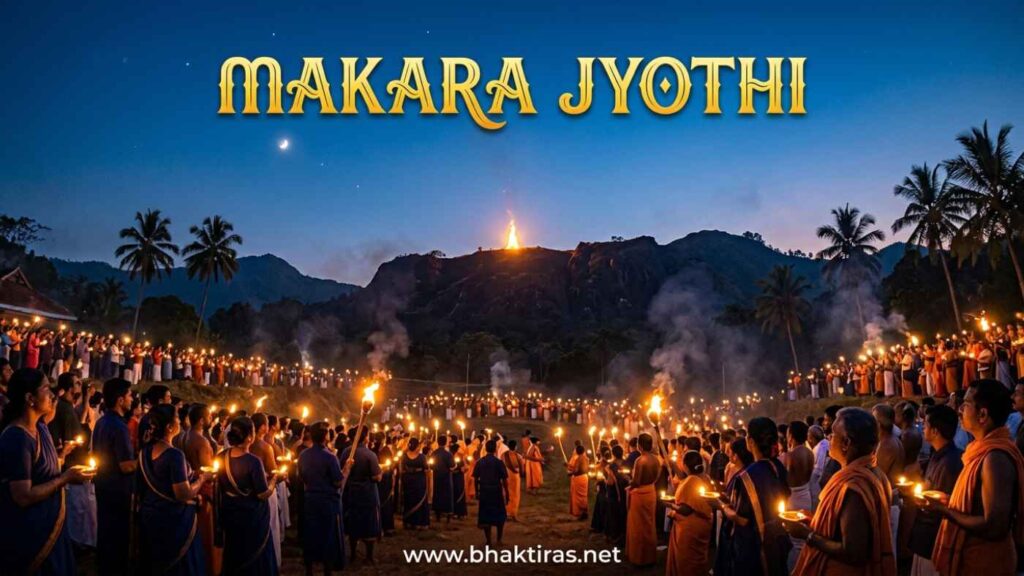
Makaravilakku is the great annual festival of Sabarimala, the forest shrine of Lord Ayyappa in Kerala’s Pathanamthitta district. It falls on Makara Sankranti, 14 January, when the sun turns north into Capricorn and the long pilgrimage season reaches its close. On this evening the deity is adorned with the Thiruvabharanam, his golden ornaments carried up the hills in procession, the Makara Jyothi star is sighted, and lakhs of black-clad devotees chanting Swamiye Saranam Ayyappa watch for the Makaravilakku light on the distant Ponnambalamedu ridge.
Makaravilakku 2026-2028: Dates & Calendar
The next Makaravilakku falls on 14 January 2027. The date is fixed to Makara Sankranti, the solar transition into Capricorn, so it lands on nearly the same Gregorian day each year.
| Year | Date | Day | Notes |
|---|---|---|---|
| 2026 | 14 January | Wednesday | Season just concluded |
| 2027 | 14 January | Thursday | Next occurrence |
| 2028 | 14 January | Friday | Following year |
The wider Mandala-Makaravilakku pilgrimage runs from mid-November to mid-January. The Mandala Puja closes the first phase in late December, the shrine reopens for the final days, and Makaravilakku on 14 January brings the season to its end.
Why Makaravilakku Is Celebrated
Makaravilakku honours Lord Ayyappa and marks the moment the sun turns north on Makara Sankranti. It is the spiritual summit of a pilgrimage built on 41 days of discipline.
The sun's turn north
Makara Sankranti is the day the sun enters Makaram, Capricorn, and begins Uttarayana, its northward course. Across India this solar shift is treated as a threshold of light and renewal. At Sabarimala it becomes the frame for the year’s most sacred evening.
The Thiruvabharanam
Ayyappa’s golden ornaments, the Thiruvabharanam, are kept at Pandalam and carried on foot to Sabarimala over three days. When they reach the sanctum and adorn the idol on Makara Sankranti evening, the deity is seen in his full royal form, the sight devotees walk for days to receive.
Reward for the vratham
Pilgrims prepare with a 41-day vratham of celibacy, simple food, black or blue clothing and daily prayer. Makaravilakku is the culmination they carry through the forest path for, the darshan and the distant light standing as the answer to weeks of austerity.
The Makaravilakku light
As dusk settles, devotees watch the Ponnambalamedu hill about four kilometres away, where a light appears three times. This is the Makaravilakku that gives the festival its name, witnessed together by the vast gathering as the high moment of the day.
Deities & Figures Worshipped
The festival centres wholly on Lord Ayyappa, worshipped at Sabarimala as Dharma Sastha, the celibate forest lord.
Lord Ayyappa
Ayyappa, also called Dharma Sastha, is the presiding deity of Sabarimala, seated in the meditative yoga posture as a lifelong celibate. Devotees address him as Swami and greet one another as Ayyappa during the season, a mark of the equality the pilgrimage teaches.
Malikappurathamma
A short walk from the main shrine sits the temple of Malikappurathamma, a goddess closely tied to Ayyappa’s story. Many pilgrims complete their darshan here, and her shrine takes part in the season’s rituals.
Key Rituals, Step by Step
The Makaravilakku evening follows a set sequence, from the arrival of the ornaments to the final darshan.
- The 41-day vratham. Devotees begin weeks ahead, wearing black or blue, keeping celibacy and simple food, and taking the tulsi or rudraksha mala that marks a pilgrim.
- The forest trek. Pilgrims climb the traditional path to the shrine, many carrying the irumudi, the two-part cloth bundle of offerings balanced on the head, chanting Swamiye Saranam Ayyappa.
- The eighteen holy steps. Those who have kept the full vratham and carry the irumudi ascend the Pathinettam Padi, the eighteen sacred steps that lead to the sanctum.
- The Thiruvabharanam procession. Ayyappa’s golden ornaments are carried on foot from Pandalam to Sabarimala over three days and reach the shrine on Makara Sankranti.
- Adorning the deity. On the evening of 14 January the ornaments are placed on the idol, and the deity is revealed to the waiting crowd in full form.
- The Makara Jyothi. Devotees look to the sky for the Makara Jyothi, the star sighted at dusk that signals the sacred hour.
- The Makaravilakku light. All eyes then turn to Ponnambalamedu hill, where the Makaravilakku appears three times as the gathered lakhs offer their prayers.
- Deeparadhana and departure. The lamp worship completes the darshan, and pilgrims begin the descent, their vow fulfilled.
Special Foods of Makaravilakku
Sabarimala’s offerings are famous in their own right, and the pilgrimage food is deliberately simple and vegetarian.
Aravana Payasam
A dark, sweet pudding of rice, jaggery and ghee, Aravana is Sabarimala’s most sought-after prasadam, sealed in tins and carried home by devotees as a blessing from the shrine.
Appam
Small round fritters of rice and jaggery fried in ghee, the Sabarimala Appam is offered alongside Aravana and shared among family after the pilgrimage.
Satvik pilgrim meals
During the vratham devotees keep to plain vegetarian food without onion, garlic or intoxicants, cooking simple rice and vegetable meals that match the discipline of the season.
Where It Is Celebrated
Makaravilakku is a Sabarimala festival, but its pull reaches far beyond Kerala.
Sabarimala, Kerala
The shrine at Sabarimala in Pathanamthitta district is the single centre of the festival, where the Thiruvabharanam procession, the Makara Jyothi and the hill light all take place.
Across South India
Pilgrims travel to Sabarimala from Tamil Nadu, Karnataka, Andhra Pradesh, Telangana and beyond, so the vratham and the black clothing become a familiar sight across the southern states through the season.
The wider diaspora
Ayyappa devotees in other parts of India and abroad keep the vratham and hold prayers on Makaravilakku day, following the Sabarimala rituals from afar when they cannot make the journey.
Makaravilakku Do's and Don'ts
The pilgrimage rests on a code of discipline that shapes the whole season.
Do
- Keep the 41-day vratham sincerely if you intend to make the pilgrimage
- Wear the black or blue pilgrim clothing and your mala with respect
- Carry the irumudi correctly if you plan to climb the eighteen steps
- Greet fellow pilgrims as Ayyappa and treat all as equals
- Follow crowd-safety instructions from the temple board and police on the day
Avoid
- Do not break celibacy, tobacco, alcohol or non-vegetarian food during the vratham
- Do not climb the eighteen holy steps without the irumudi and completed vow
- Do not push or rush in the darshan queue, patience is part of the practice
- Do not litter the forest path or shrine surroundings
- Do not treat the pilgrimage as tourism, it is a vow undertaken with intent
Frequently Asked Questions
When is Makaravilakku in 2027?
Makaravilakku is on 14 January 2027, falling on Makara Sankranti when the sun enters Capricorn. It is the closing festival of the Sabarimala pilgrimage season, marked by the Thiruvabharanam procession, the Makara Jyothi and the Makaravilakku hill light.
When is Makaravilakku in 2026 and 2028?
Makaravilakku is on 14 January in both 2026 and 2028, as it is fixed to the solar Makara Sankranti each year. The date stays almost constant because it tracks the sun’s entry into Makaram rather than a shifting lunar tithi.
Why is Makaravilakku celebrated?
Makaravilakku is celebrated to honour Lord Ayyappa on Makara Sankranti, the day the sun turns north. It marks the summit of a pilgrimage built on 41 days of austerity, when the deity is adorned with his golden ornaments and devotees witness the sacred light on Ponnambalamedu hill.
Which god is worshipped at Makaravilakku?
Lord Ayyappa, also known as Dharma Sastha, is the deity worshipped at Makaravilakku. He is the presiding lord of Sabarimala, revered as a celibate forest deity whom pilgrims address as Swami throughout the season.
What is the Makara Jyothi?
The Makara Jyothi is a star sighted in the evening sky at Sabarimala on Makara Sankranti, taken as the signal of the sacred hour. Its appearance precedes the Makaravilakku light on the distant hill and draws the gathered devotees to prayer.
What is the Thiruvabharanam?
The Thiruvabharanam is the set of sacred golden ornaments of Lord Ayyappa, kept at Pandalam and carried on foot to Sabarimala over three days. On Makara Sankranti evening the ornaments adorn the idol, revealing the deity in full form to the waiting pilgrims.
Is the Makaravilakku a natural or a lit flame?
The Makaravilakku is the light seen three times on Ponnambalamedu hill during the festival. The Travancore Devaswom Board, which administers Sabarimala, has stated that it is a lamp lit on the hill as part of the ritual rather than a spontaneous celestial event. For devotees the light remains a deeply revered part of the darshan.
What is the 41-day vratham?
The 41-day vratham is the period of austerity Ayyappa devotees keep before the Sabarimala pilgrimage. It involves celibacy, simple vegetarian food, black or blue clothing, daily prayer and abstaining from intoxicants, preparing the pilgrim in body and mind for the darshan.
May the light of Makaravilakku steady your path through the coming year. Swamiye Saranam Ayyappa.