
Wangala Festival 2026 – The Garo Hundred Drums Harvest
When is the Wangala festival in 2026?
Wangala, the Garo Hundred Drums festival, is expected in the second week of November 2026 (around 6-8 November). Village celebrations run anywhere from September to December, but the big official Wangala at Asanang near Tura is a fixed calendar event held in early-to-mid November. It is the Garo people’s main post-harvest thanksgiving, offering the first crops to Misi Saljong, the sun god who gives the harvest.
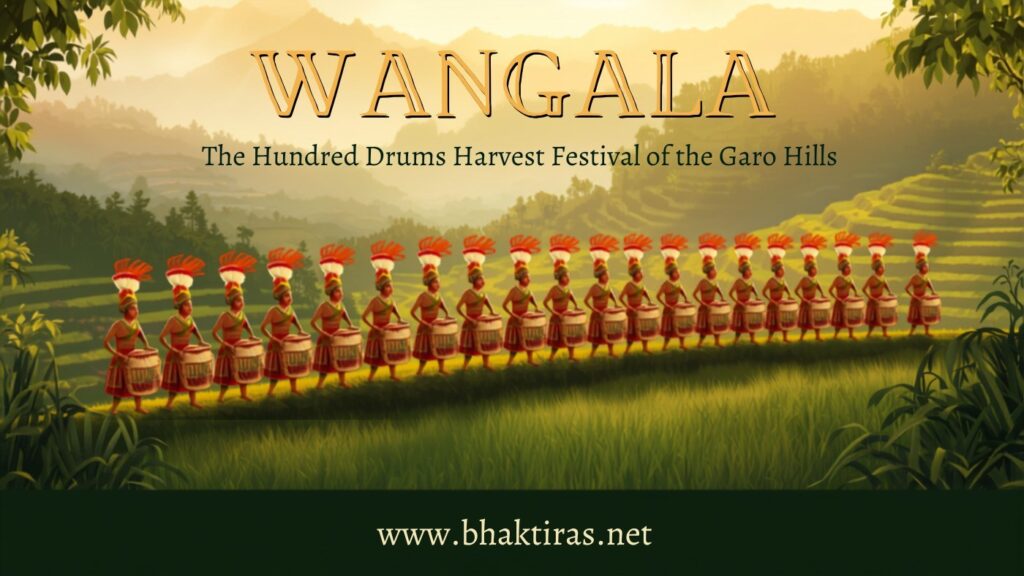
Wangala is the biggest festival of the Garo people of Meghalaya and the Garo areas of Assam – a post-harvest thanksgiving that closes the farming year. Once the rice and millet are in, the community gives its first crops to Misi Saljong, the sun god believed to have given the harvest, and thanks him for a year of plenty. It is best known for the Hundred Drums: long columns of drummers and feather-crowned dancers moving as one to a deep, rolling beat. The largest gathering, at Asanang near Tura, draws thousands each November.
Wangala 2026-2028: Dates & Calendar
The main Asanang Wangala is usually held in the second week of November; the next celebration falls around early-to-mid November 2026. Individual villages hold their own Wangala any time from September to December, so dates vary by place.
| Year | Dates (approx) | Where | Notes |
|---|---|---|---|
| 2025 | Second week November | Asanang, near Tura | Held as usual after the harvest |
| 2026 | Second week November (approx) | Asanang & Garo villages | Next occurrence – confirm with Meghalaya Tourism |
| 2027 | Second week November (approx) | Asanang & Garo villages | Pattern repeats; exact dates announced nearer the time |
Because village Wangala can happen any time between September and December, travellers wanting the grand version with the hundred-drum formation should aim for the official Asanang festival in November and check the announced schedule before booking.
Why Wangala Is Celebrated
Wangala is a thanksgiving to Misi Saljong, the sun god who is believed to give the harvest. It marks the end of the farming season and the shift from hard field work to rest, feasting and community celebration.
Thanking the sun god
In Garo belief, Misi Saljong is the giver of crops and fertility. Wangala offers him the season’s first grain and drink as thanks, acknowledging that the year’s food came from his blessing on the fields.
Closing the farming year
The festival comes only after the rice and millet are harvested and stored. It signals that the toil of clearing, planting and reaping is done, and that the community can now gather to celebrate the year’s yield.
Holding the community together
Wangala is led by the nokma, the village chief, and pulls the whole village into shared rituals, music and dance. It renews Garo identity and passes the songs, drum patterns and dress on to the next generation.
Deities & Figures Worshipped
Wangala centres on Misi Saljong, the Garo sun god of harvest and fertility. The rituals are carried out by the nokma, the village chief, who acts on the community’s behalf.
Misi Saljong
The sun god of the Garos, honoured as the giver of the harvest and of fertility to the land. Wangala’s core offerings – the first cooked rice and rice beer – are made to him in gratitude for the year’s crops.
The nokma
The nokma, head of the village, leads the sacred rituals rather than a separate priest. He performs the Rugala offering and the Sasat Sowa, standing between the community and Misi Saljong.
Key Rituals, Step by Step
Wangala moves from quiet, sacred offerings in the nokma’s house out into the open ground where the drums and dances take over. The sequence broadly runs as follows.
- Rugala. The opening offering. The nokma pours out the first rice, cooked food and rice beer to Misi Saljong inside his house, giving the sun god the first share of the harvest before anyone eats.
- Sasat Sowa. Incense made from burning rice powder is offered to the deity, a purifying and honouring rite that follows the Rugala and prepares the community for the celebrations.
- Kakkat. Dancers put on their festival dress and headgear, including tall feather plumes, and gather to begin the public part of Wangala.
- The Hundred Drums. Rows of men take up the long dama drums while others play flutes and gongs. The drummers and dancers form long, moving lines, keeping a single deep rhythm that gives the festival its Hundred Drums name.
- Dance formations. Men and women dance in parallel columns, the men often carrying drums and spears, the women in bright striped cloth and ornaments, wheeling and advancing in step with the beat.
- Feasting and rice beer. The community shares food and traditional rice beer, celebrating together late into the day as the formal offerings give way to open festivity.
- Closing. The celebrations wind down after the main days, with the largest and most watched version taking place at the official Asanang festival near Tura.
Special Foods of Wangala
Wangala food is Garo harvest food: freshly milled rice, home-brewed rice beer and dishes built around the year’s own crops and local meats.
Chu (rice beer)
Home-brewed rice beer is central to Wangala. It is first offered to Misi Saljong in the Rugala and then shared through the celebrations, so brewing it well is part of preparing for the festival.
Fresh harvest rice
The new season’s rice is the heart of the feast, and the first cooked grain is offered to the sun god before the community eats. Sticky and plain rice dishes anchor the shared meals.
Nakham bitchi
A strong, warming soup made with dried fish (nakham), a Garo staple that often appears at large gatherings and feasts alongside the festival meals.
Meat and bamboo-shoot dishes
Pork and other meats cooked with bamboo shoot, local herbs and chilli are common festive dishes, reflecting everyday Garo cooking scaled up for the celebration.
Where Wangala Is Celebrated
Wangala belongs to the Garo people and is celebrated wherever they live, above all in the Garo Hills of Meghalaya and the Garo-inhabited areas of Assam.
West Garo Hills (Asanang)
The most famous Wangala is held at Asanang, near Tura, where villages come together for the grand Hundred Drums celebration. This November gathering draws large crowds and is the version most visitors travel to see.
Across the Garo Hills
Individual villages throughout the Garo Hills of Meghalaya hold their own Wangala any time from September to December, timed to their own harvest, so celebrations are spread over several months.
Garo areas of Assam
Garo communities living in the neighbouring Garo-inhabited districts of Assam also observe Wangala, keeping the same harvest thanksgiving, drums and dances alive outside Meghalaya.
Wangala Do's and Don'ts
A short guide for visitors and participants who want to enjoy Wangala respectfully.
Do
- Confirm the official Asanang dates with Meghalaya Tourism before travelling
- Ask before photographing dancers, elders or ritual moments
- Dress modestly and comfortably for outdoor, all-day events
- Try the shared food and rice beer if it is offered to you
- Learn a little about Misi Saljong and the nokma’s role before you go
Avoid
- Don’t treat the Rugala and Sasat Sowa offerings as a photo backdrop; watch quietly
- Don’t touch drums, headgear or ritual items without permission
- Don’t push into the dance formations or block the drummers’ lines
- Don’t assume every village celebrates on the same day
- Don’t drink to excess or behave in a way that disrupts the ceremony
Frequently Asked Questions
When is the Wangala festival in 2026?
Wangala is expected in the second week of November 2026, around 6-8 November, at the main Asanang celebration near Tura. Exact dates are set by the organisers each year, so confirm with Meghalaya Tourism before planning a trip. Individual Garo villages may hold their own Wangala any time from September to December.
What is the Wangala or Hundred Drums festival?
Wangala is the most important post-harvest thanksgiving festival of the Garo people of Meghalaya and the Garo areas of Assam. It offers the first crops to Misi Saljong, the sun god who gives the harvest, and marks the end of the farming season. It is famous for the Hundred Drums – long lines of drummers and feather-crowned dancers moving in a single rhythm.
Why is Wangala celebrated?
Wangala is celebrated to thank Misi Saljong, the Garo sun god, for the year’s harvest and fertility of the fields. It comes after the rice and millet are gathered, closing the farming season and turning the community from hard field work to feasting, music and dance. The first cooked rice and rice beer are offered to the sun god before anyone eats.
Which god is worshipped during Wangala?
Wangala honours Misi Saljong, the sun god of the Garo people, seen as the giver of the harvest and of fertility. The offerings are led by the nokma, the village chief, who performs the Rugala and Sasat Sowa rituals on the community’s behalf rather than a separate priest.
Where is the biggest Wangala celebration held?
The largest and most famous Wangala is held at Asanang, near Tura in the West Garo Hills of Meghalaya. Villages gather there for the grand Hundred Drums celebration in November, drawing thousands of people. Smaller village Wangala celebrations take place across the Garo Hills and in Garo areas of Assam.
Why is Wangala called the Hundred Drums festival?
Wangala is called the Hundred Drums festival because of its signature spectacle: rows of men playing long dama drums while dancers move in step to one deep, rolling beat. The drummers and dancers form long lines, and the sound of so many drums together gives the festival its popular name.
What are the main rituals of Wangala?
The main sacred rituals are the Rugala, when the nokma offers the first rice, food and rice beer to Misi Saljong, and the Sasat Sowa, an incense offering that follows it. After these come the public Hundred Drums, the dances in feathered dress, and communal feasting with rice beer.
Who leads the Wangala rituals?
The Wangala rituals are led by the nokma, the head of the village, rather than a separate priest. He performs the Rugala offering and the Sasat Sowa, standing between the community and Misi Saljong, and his household is where the sacred part of the festival begins.
May your fields be full and your Wangala joyful – a warm harvest greeting to the Garo people and everyone who joins the Hundred Drums.