
Sitalsasthi 2027 – Sambalpur's Great Wedding of Shiva and Parvati
ଶୀତଳଷଷ୍ଠୀ
When is Sitalsasthi in 2027?
Sitalsasthi falls on Wednesday, 10 June 2027 (approximate, pending the local Odia panchang), on Jyeshtha Shukla Shashthi in the hottest stretch of summer. In Sambalpur, western Odisha, families formally perform the wedding of Shiva and Parvati and carry it into a huge night procession, or Baraat, of decorated tableaux and folk artists.
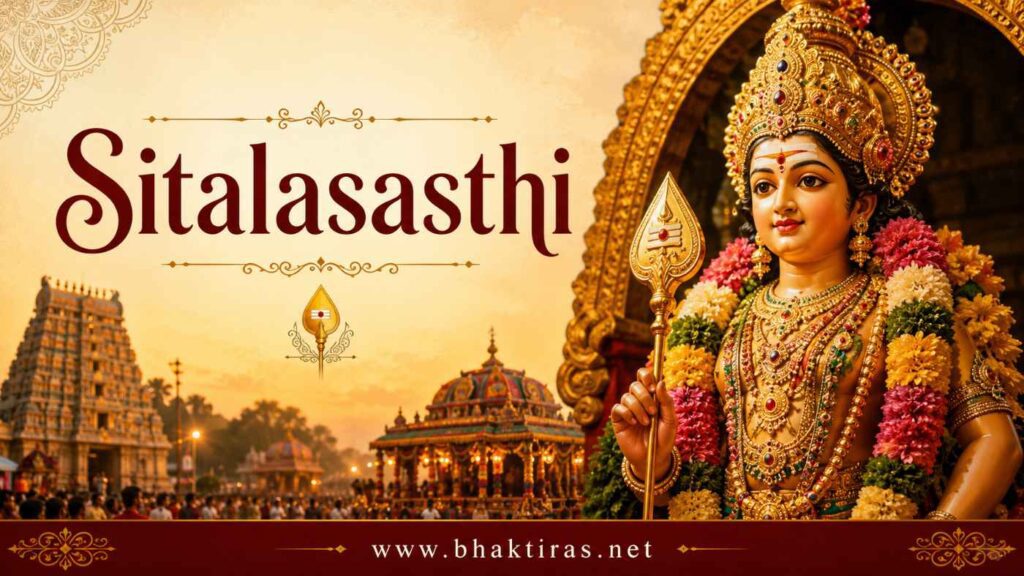
Sitalsasthi is western Odisha’s most spectacular summer festival, and Sambalpur turns it into something between a temple ritual and a street carnival. Held on Jyeshtha Shukla Shashthi, in the fiercest heat of June, it stages the marriage of Shiva and Parvati as a full Odia wedding: one family gives away Parvati as their daughter, another receives Shiva as their son, and the whole town becomes wedding kin. The days of ritual end in a night-long procession of tableaux, lamps and folk performers that draws lakhs of onlookers.
Sitalsasthi 2026-2028: Dates & Calendar
The next Sitalsasthi is expected on 10 June 2027. The date shifts each year because it follows the Hindu lunar month of Jyeshtha, not the Gregorian calendar.
| Year | Marriage Day (Shashthi) | Day | Notes |
|---|---|---|---|
| 2026 | 20 June | Saturday | Already observed |
| 2027 | 10 June | Wednesday | Next occurrence (approx) |
| 2028 | 29 May | Monday | Approximate |
In practice Sitalsasthi is not a single-day event. The wedding rituals – the betrothal, the turmeric anointing and the marriage itself – are spread across several days leading up to Shashthi, and the grand Baraat procession spills well past midnight into the following morning.
Why Sitalsasthi Is Celebrated
Sitalsasthi celebrates the marriage of Shiva and Parvati, known together in Odisha as Hara-Gouri, and enacts it as a living human wedding rather than a distant myth.
The festival’s timing is deliberate. It arrives at the peak of summer, and its very name links Shiva and Parvati with sital, meaning cool or soothing – a prayer for relief from the heat and for the monsoon that follows. Marrying the divine couple at this hard, dry moment is a way of asking the gods to bring balance back to the land.
A wedding the whole town joins
Two local families take on the roles of the bride’s and groom’s households. One gives away Parvati as though she were their own daughter; the other welcomes Shiva as a son-in-law. Through this, ordinary Sambalpur families become relatives of the gods, and the marriage bonds are treated with real emotional weight.
Hara-Gouri, cool amid the heat
Shiva as Hara and Parvati as Gouri stand for the reunion of the ascetic and the mother goddess. Celebrating their union in the searing days of Jyeshtha carries a quiet plea for coolness, rain and the calming of summer’s harshness.
Faith turned into public art
Over more than a century the yatra has grown from a temple rite into one of eastern India’s largest folk-culture gatherings. Troupes travel from across the country, and the procession becomes a stage where devotion, dance and craftsmanship are shown to enormous crowds.
Deities & Figures Worshipped
Sitalsasthi centres on Shiva and Parvati, worshipped together as the newly married Hara-Gouri.
Shiva (Hara)
Shiva is honoured as the bridegroom of the festival. Devotees bring him through the marriage rites as a family son-in-law, softening the great ascetic into a householder for the occasion.
Parvati (Gouri)
Parvati, worshipped as Gouri, is the daughter given away in marriage. Her anointing with turmeric, her adornment and her ceremonial departure are among the most tender moments of the yatra.
Key Rituals, Step by Step
The festival unfolds like a real wedding, with each stage carried out over the days leading up to Shashthi.
- Ghata sthapana and invitation. The observance opens with the installation of the sacred pot and formal invitations, as the two host families accept their roles as the bride’s and groom’s households.
- Nimantran and betrothal. Elders exchange the ritual promise, fixing the marriage of Shiva and Parvati and beginning the round of visits between the families.
- Haldi and adornment. Parvati as Gouri is anointed with turmeric, bathed and dressed as a bride; Shiva too is prepared as the groom.
- Vivah, the marriage. On Shashthi the wedding is solemnised with mantras, fire and the joining of the divine couple, the emotional heart of the whole festival.
- The Baraat assembles. After the marriage, the grand night procession forms up – decorated floats, deities on palanquins, lamps and long lines of folk artists.
- Folk performances on the move. Ghumura drummers, mask dancers, stilt-walkers, fire acrobats and dance troupes from across India perform through the streets as the procession advances.
- Bidai and return. As dawn nears, Parvati is given her farewell, or bidai, and the couple are taken to their symbolic home, closing the yatra.
Special Foods of Sitalsasthi
Being a wedding, Sitalsasthi is marked by festive Odia sweets and cooling summer dishes shared among the host families and visitors.
Pitha
Steamed and fried rice cakes such as chakuli and arisa pitha are prepared for the celebrations, offered to guests as part of the wedding hospitality.
Khiri
A rice-and-milk pudding sweetened and lightly spiced, khiri is a common festive offering and a soothing dish for the hot season.
Cooling summer fare
With the festival landing in peak heat, families lean on cooling foods – buttermilk, watermelon and other seasonal fruit – to keep guests and performers refreshed through the long night.
Where It Is Celebrated
Sitalsasthi is above all a Sambalpur festival, though its reach extends across western Odisha and into neighbouring Chhattisgarh.
Sambalpur, western Odisha
Sambalpur is the beating heart of the festival. Several localities host rival wedding celebrations, and the competing Baraat processions – each trying to outdo the others in tableaux and performers – are what draw the largest crowds.
Western Odisha
Towns across the Sambalpur region observe their own smaller versions of the Hara-Gouri marriage, tying the whole belt together in a shared summer tradition.
Chhattisgarh
In parts of neighbouring Chhattisgarh, communities with cultural links to western Odisha also mark Sital Sasthi, celebrating the marriage of Shiva and Parvati in their own way.
Sitalsasthi Do's and Don'ts
A few simple courtesies help you take part respectfully in this crowded, community-run festival.
Do
- Treat it as a real wedding and greet the host families warmly
- Carry water and dress for intense summer heat
- Arrive early for the night Baraat to find a safe viewing spot
- Respect the folk performers and give processions room to pass
- Support local artisans and troupes who travel to perform
Avoid
- Do not block or crowd the moving procession
- Avoid disrespecting the marriage rituals or the deities
- Do not ignore heat and dehydration in the daytime crowds
- Avoid littering the streets during the yatra
- Do not push into ritual spaces reserved for the host families
Frequently Asked Questions
When is Sitalsasthi in 2027?
Sitalsasthi is expected on Wednesday, 10 June 2027, on Jyeshtha Shukla Shashthi. This is the main marriage day; the wedding rituals run over the preceding days and the night procession continues into the following morning. The date is approximate until confirmed by the local Sambalpur panchang.
When is Sitalsasthi in 2026 and 2028?
Sitalsasthi was observed on Saturday, 20 June 2026, and is expected on Monday, 29 May 2028. Both follow Jyeshtha Shukla Shashthi, so the Gregorian date shifts each year with the Hindu lunar calendar. The 2028 date is approximate.
Why is Sitalsasthi celebrated?
Sitalsasthi is celebrated to mark the marriage of Shiva and Parvati, worshipped together as Hara-Gouri. Held in peak summer, it enacts their wedding as a full human ceremony and carries a prayer for coolness and the coming monsoon. In Sambalpur it has grown into one of western Odisha’s largest cultural festivals.
Which god is worshipped during Sitalsasthi?
Sitalsasthi worships Shiva and Parvati as a divine married couple. Shiva is honoured as the groom, Hara, and Parvati as the bride, Gouri. The whole festival is built around performing and celebrating their wedding.
Where is Sitalsasthi celebrated most famously?
Sitalsasthi is celebrated most famously in Sambalpur, in western Odisha, where it is a major community event. It is also observed across the wider western Odisha region and in parts of neighbouring Chhattisgarh.
What is the Sitalsasthi Baraat?
The Sitalsasthi Baraat is the grand night procession held after the wedding of Shiva and Parvati. It features hundreds of decorated tableaux, deities on palanquins and folk artists including Ghumura drummers, mask dancers, stilt-walkers and fire acrobats, drawing enormous crowds through the streets of Sambalpur.
How long does Sitalsasthi last?
Sitalsasthi is not a single-day festival. The wedding rituals – the invitation, betrothal, turmeric anointing and marriage – are spread over several days, ending on Jyeshtha Shukla Shashthi, and the Baraat procession stretches through that night into the next morning.
What does the name Sitalsasthi mean?
The name combines sital, meaning cool or soothing, with sasthi, the sixth lunar day on which it falls. It reflects the festival’s summer timing and the wish for coolness and rain as Shiva and Parvati are married in the hottest part of the year.
May the wedding of Hara and Gouri bring cool days, easy rains and joy to your home this Sitalsasthi.