
Shigmo 2027 – Goa's Spring Festival of Folk Parades
शिगमो
When is Shigmo in 2027?
Shigmo (Shigmotsav) in 2027 falls around 22 March to 5 April (approximate), with the government-organised street parades usually held in late March. It is Goa’s spring festival in the Hindu month of Phalguna, celebrated with folk dances, colour and giant mythological floats. Exact parade days differ by town and are announced afresh each year.
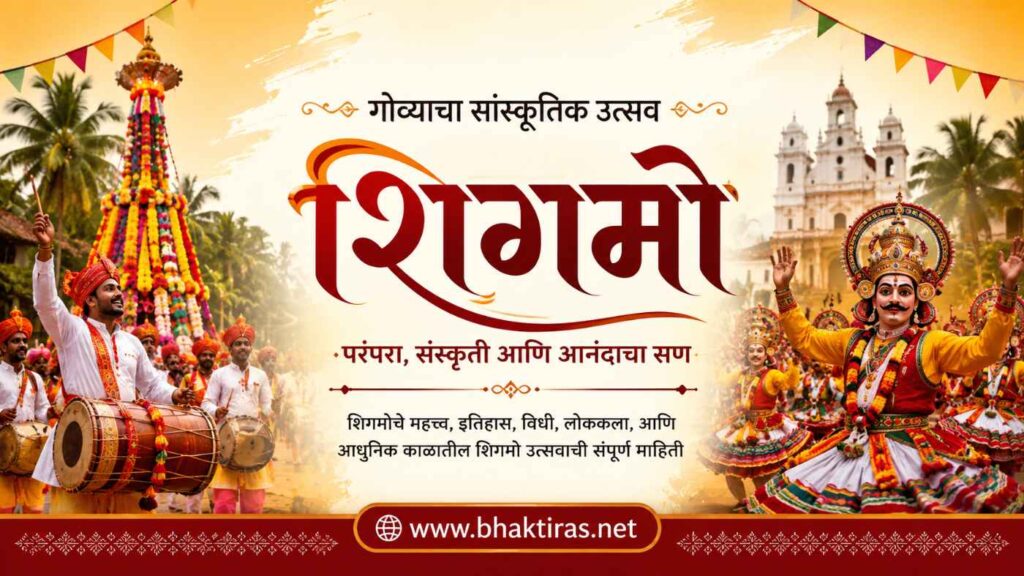
Shigmo, also written Shigmotsav, is Goa’s own spring festival and its version of Holi, held in the Hindu month of Phalguna as the harvest ends and the fields go quiet. It runs in two forms over roughly two weeks: a quieter village Shigmo of farmers and labourers, and a bigger public Shigmo of street parades, folk troupes and towering mythological floats. Villagers honour their local deities and Krishna, play with gulal on the closing days, and welcome the warrior-farmers home. The exact parade dates are lunar and fixed by the government each year, so they shift.
Shigmo 2026-2028: Dates & Calendar
Shigmo follows the lunar month of Phalguna, so the dates move each year; the next main run is around late March 2027. Because it is a state festival, the public parade days are announced yearly and vary from town to town.
| Year | Approx dates | Parades | Notes |
|---|---|---|---|
| 2026 | Early to mid March | Mid-March (approx) | Approximate; town schedules announced by the government |
| 2027 | Approx 22 March – 5 April | Late March (approx) | Next occurrence; parade days vary by town and are notified yearly |
| 2028 | Mid March | Mid-March (approx) | Approximate; confirm with the local panchayat or temple |
Panaji, Margao, Vasco, Mapusa and Ponda each hold their own official parade on different days, so a single fixed calendar date is misleading – always check the year’s notified schedule for the town you plan to visit.
Why Shigmo Is Celebrated
Shigmo marks the arrival of spring in Goa and honours the village deities, while historically welcoming warrior-farmers back after the season of work.
Welcoming spring
Falling in Phalguna as winter loosens and the harvest is gathered, Shigmo is a seasonal thanksgiving. Colour, drums and dance mark the turn of the year in the Konkani countryside.
Honouring village deities
Each village centres its celebration on its own gramdevata (guardian deity), with temple rituals, flags and folk troupes performing before the shrine. Krishna and Vishnu themes run through many of the songs and floats.
Return of the warriors
By tradition Shigmo also welcomed home the men who had gone out as soldiers or seasonal labourers. The martial energy survives in the vigorous horse dance and drumming of the parades.
Goan folk culture
Beyond ritual, Shigmo is the great annual showcase of Goan Hindu folk arts – Ghode Modni, Fugdi, Talgadi and Romtamel – passed down and performed by whole communities.
Deities & Figures Worshipped
Shigmo is dedicated to the village guardian deities of Goa, with Krishna and Vishnu themes woven through the songs, dances and float tableaux.
Village deities (gramdevata)
The heart of Shigmo is the local guardian deity of each village, honoured with temple flag and umbet rituals before the folk troupes perform. The celebration is organised around the shrine and its community.
Krishna and Vishnu
Krishna and Vishnu appear throughout Shigmo in the play of colour, in devotional songs and in the mythological scenes staged on the great parade floats. Their stories are a common thread across many towns.
Key Rituals, Step by Step
The village Shigmo opens with temple rites and folk performance, and the public Shigmo builds to the parades and colour of the final days.
- Temple flag and umbet rites. The festival begins at the village temple, where the deity’s flag is raised and traditional umbet offerings mark the start of Shigmo.
- Folk troupes gather. Village groups assemble with drums and colour, forming the troupes that will perform and, later, walk in the town parades.
- Romtamel and folk songs. Performers play Romtamel and sing devotional and seasonal songs before the deity and through the village lanes.
- Ghode Modni and dances. The striking horse dance (Ghode Modni) along with Fugdi and Talgadi is performed, recalling the martial spirit of the returning warriors.
- Public parades. On the notified days the big Vhadlo Shigmo parades move through Panaji, Margao, Vasco, Mapusa and Ponda with troupes, drums and crowds.
- Float competitions. Enormous floats staging mythological scenes are built and judged, a highlight of the government-organised Shigmotsav.
- Colour play. On the closing days people smear gulal and play with colour, the Goan counterpart to Holi.
- Festive meal. Families gather for Goan-Konkani vegetarian dishes to round off the celebration.
Special Foods of Shigmo
Shigmo tables carry Goan-Konkani vegetarian festive food, from steamed rice cakes to sweet stuffed parcels.
Sannas
Soft, slightly sweet steamed rice-and-coconut cakes, a staple of Goan Hindu festive meals and a natural pairing with the day’s vegetarian dishes.
Patoleo
Rice-flour parcels filled with jaggery and coconut and steamed in turmeric leaves, which lend a gentle fragrance. A much-loved seasonal Konkani sweet.
Ukdiche modak
Steamed rice-flour dumplings stuffed with coconut and jaggery, offered and shared during the celebration.
Goan-Hindu vegetarian spread
The festive meal stays vegetarian, with local curries, rice and coconut-based dishes served to family and troupes over the Shigmo days.
Shigmo Across Goa
Shigmo takes two broad shapes across Goa, from quiet temple villages to the big civic parades of the main towns.
Dhakto Shigmo (small)
The ‘little’ Shigmo of farmers and labourers is the older, village-rooted form, centred on the local temple with folk troupes, songs and simpler observance away from the crowds.
Vhadlo Shigmo (big)
The ‘big’ public Shigmo is the grand civic celebration of processions, competing floats and mass colour play that most visitors picture when they think of Shigmotsav.
Ponda temple belt
The temple-rich taluka around Ponda keeps some of the most traditional Shigmo observance, with village deities and folk performance at the centre of the rites.
Panaji and Margao parades
The state capital Panaji and the commercial hub Margao host the largest government-organised parades, drawing troupes from across Goa on their notified days, along with Vasco, Mapusa and Ponda.
Shigmo Do's and Don'ts
A few simple pointers to enjoy Shigmo respectfully, especially if you are visiting Goa for the parades.
Do
- Check the year’s official parade schedule for your chosen town before travelling.
- Reach the parade route early, as roads fill quickly on notified days.
- Respect temple rituals and follow local customs at village celebrations.
- Carry water and sun protection for the long daytime processions.
- Enjoy the folk dances and floats, and ask locals about their meaning.
Avoid
- Do not assume a fixed calendar date – parade days vary by town and change yearly.
- Do not use harsh chemical colours; stick to skin-safe gulal.
- Do not obstruct or crowd the performing troupes and floats.
- Do not litter along the parade routes and temple grounds.
- Do not expect non-vegetarian fare at the traditional Hindu festive meal.
Frequently Asked Questions
When is Shigmo in 2027?
Shigmo in 2027 falls around 22 March to 5 April (approximate), with the main government-organised parades usually held in late March. It is a lunar festival of the month of Phalguna, so the dates shift each year and the exact parade days differ from town to town.
When is Shigmo in 2026 and 2028?
Shigmo is expected in early to mid March in 2026 and around mid March in 2028, both approximate. As a lunar festival its dates move every year, and the public parade schedule is announced afresh by the Goa government, so confirm locally before planning.
Do Shigmo parade dates change every year?
Yes. Shigmo follows the lunar month of Phalguna, and the state parade days are notified by the government each year. Panaji, Margao, Vasco, Mapusa and Ponda hold their parades on different dates, so there is no single fixed calendar day – always check the current year’s schedule for the town you plan to visit.
Why is Shigmo celebrated?
Shigmo is celebrated to welcome spring in Goa and to honour the village guardian deities in the month of Phalguna. It also historically marked the return of warrior-farmers after their season away, and today it is the great showcase of Goan Hindu folk culture, colour and dance.
What is the difference between Dhakto and Vhadlo Shigmo?
Dhakto Shigmo is the ‘small’ Shigmo of farmers and labourers, a quieter, village-based observance centred on the local temple. Vhadlo Shigmo is the ‘big’ public Shigmo of grand parades, competing floats and mass colour play in the main towns.
Which god is worshipped during Shigmo?
Shigmo centres on the village guardian deities (gramdevata) of Goa, honoured at each community’s temple. Krishna and Vishnu themes also run through the festival’s songs, dances and the mythological scenes staged on the parade floats.
What are the main folk dances of Shigmo?
The signature Shigmo folk arts are Ghode Modni, the vigorous horse dance recalling Goa’s warriors, along with Fugdi, Talgadi and the Romtamel drumming and song. Whole village troupes perform these before the deity and in the town parades.
What foods are eaten during Shigmo?
Shigmo meals are Goan-Konkani and vegetarian, featuring sannas (steamed rice-and-coconut cakes), patoleo (jaggery-coconut parcels steamed in turmeric leaves) and ukdiche modak, alongside local curries and rice dishes shared with family and troupes.
How is Shigmo related to Holi?
Shigmo is Goa’s spring festival and its counterpart to Holi, celebrated in the same Phalguna season with the play of gulal on the closing days. It differs in adding grand folk parades, floats and dances built around the village deities.
However you take in the drums, colour and floats of Goa’s spring, may your Shigmo be joyful – Shigmyachi Parab tumkam boreponn magta.