
Shakambhari Purnima 2027 – The Full Moon of the Vegetable Goddess
शाकम्भरी पूर्णिमा
When is Shakambhari Purnima in 2027?
Shakambhari Purnima falls on Friday, 22 January 2027. It is the full moon of the Hindu month of Pausha and the closing day of Shakambhari Navratri, honouring the goddess Shakambhari, who fed a famine-stricken world with vegetables, greens and fruit grown from her own body.
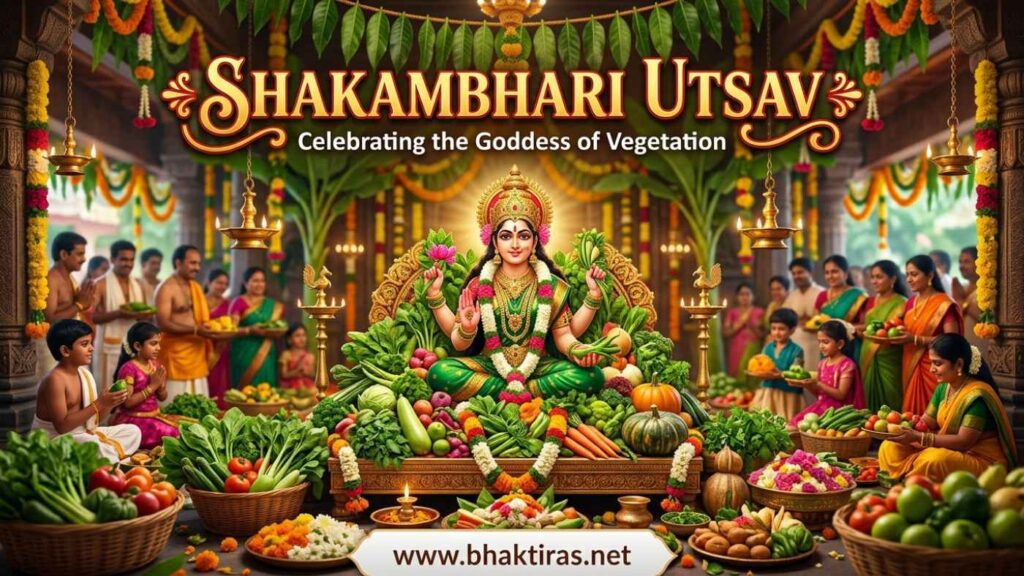
Shakambhari Purnima is the full moon day of Pausha, the January lunar month, and it brings Shakambhari Navratri to a close. The name means “she who bears the green vegetables and herbs.” On this day devotees honour the goddess Shakambhari, a gentle famine-ending form of Durga, by piling fresh vegetables, leafy greens and fruit before her image and giving food away in charity. In 2027 it is observed on Friday, 22 January, and it is celebrated with special warmth at the Shakambhari shrines of Uttar Pradesh, Rajasthan and Karnataka.
Shakambhari Purnima 2026-2028: Dates & Calendar
The next Shakambhari Purnima is on Friday, 22 January 2027. Because it is tied to the Pausha full moon, the Gregorian date shifts a little each year, landing in early-to-mid January.
| Year | Date | Day | Notes |
|---|---|---|---|
| 2026 | 3 January | Saturday | Pausha Purnima |
| 2027 | 22 January | Friday | Next occurrence |
| 2028 | 12 January | Wednesday | Pausha Purnima |
The full moon is the eighth and final day of Shakambhari Navratri, which opens on the Ashtami (eighth) tithi of the bright half of Pausha and closes on this Purnima. The same day is also widely observed as Pausha Purnima, a full moon prized for the holy bath (snan) that begins the month-long Magha observances.
Why Shakambhari Purnima Is Celebrated
Shakambhari Purnima marks the day the goddess fed a starving world with food grown from her own body, ending a devastating famine described in the Devi Mahatmya.
The story belongs to the Devi Mahatmya, the great scripture of the goddess. A terrible drought is said to have gripped the earth for a hundred years, drying the rivers, cracking the fields and leaving people and animals to starve. Moved by the suffering, the goddess took the form of Shakambhari.
Food from her own body
From her body Shakambhari brought forth vegetables, leafy greens, fruit and edible roots, and she wept a hundred eyes of compassion (one of her names is Shatakshi, “she of a hundred eyes”). The rains returned, the land turned green again, and the famine ended. Her worship is a thanksgiving for the food that sustains life.
The nourishing face of Durga
Shakambhari is a peaceful, life-giving form of Durga, close in spirit to Annapurna, the goddess of food. Where Durga is often shown slaying demons, Shakambhari is remembered for feeding the hungry, which is why the offerings to her are baskets of raw produce rather than cooked feasts alone.
Close of Shakambhari Navratri
The Purnima is the last of the eight nights of Shakambhari Navratri. Each night leads towards this full moon, when the story reaches its climax and the goddess is thanked for the harvest and prayed to for enough food in the year ahead.
Deities & Figures Worshipped
The day belongs to the goddess Shakambhari, worshipped as a nourishing form of Durga and Shakti.
Shakambhari
The vegetable goddess, “she who bears the greens.” She is shown seated amid vegetables, fruit and flowers, often four-armed and holding produce, a lotus and sometimes a bow. She is honoured as the giver of food and the ender of famine.
Durga / Shakti
Shakambhari is counted among the forms of Durga, the supreme goddess. Devotees who keep the Navratri fast see her as Shakti herself, taking a gentle shape to save her children from hunger.
Shatakshi
“She of a hundred eyes.” This name recalls the tears the goddess shed for the starving world, from which, in some tellings, the rains and rivers were restored.
Key Rituals, Step by Step
Worship centres on offering fresh, uncooked produce to the goddess and sharing food generously with others.
- Morning bath and fast. Devotees rise early, bathe (many take a holy dip in a river or temple tank, as it is also Pausha Purnima), and keep a fast or a light satvik diet until the evening puja.
- Cleaning and decorating the shrine. The home altar or temple image is cleaned, dressed in fresh cloth, and decorated with flowers, tulsi and green leaves.
- Offering vegetables and fruit. The heart of the day: heaps of fresh vegetables, leafy greens, seasonal fruit and roots are arranged before the goddess as bhog, thanking her for the harvest.
- Puja and aarti. Lamps are lit, incense is offered, and the family recites the Durga Saptashati or Shakambhari stotras, ending with aarti to the goddess.
- Reading the Devi Mahatmya story. The account of the famine and the goddess who ended it is read or retold, so the meaning of the offerings is remembered.
- Giving food in charity (anna daan). Grain, vegetables, fruit and cooked meals are given to the poor, to pilgrims and at temples, echoing the goddess’s own act of feeding the hungry.
- Sharing the prasad. After the puja, the offered produce and cooked prasad are distributed to family, neighbours and visitors, so that no one goes without food on this day.
Special Foods of Shakambhari Purnima
Fittingly for the goddess of greens, the day’s food leans on fresh vegetables, fruit and simple satvik cooking.
Raw vegetable and fruit offerings
Baskets of uncooked produce – gourds, spinach and other leafy greens, radish, carrot, seasonal fruit and roots – are laid before the goddess. This is the day’s signature offering, given exactly as it grows.
Mixed vegetable dishes
After the puja many families cook a satvik meal built around several vegetables together, a simple way of honouring the food the goddess is said to have provided.
Khichdi and simple grains
Since it is Pausha Purnima, plain khichdi, rice and light grain dishes are common, especially for those breaking a fast after the holy bath.
Fresh seasonal fruit
Winter fruit such as guava, oranges and bananas are offered and shared, reflecting the season in which the festival falls.
Sweets and kheer
A little sweetness rounds off the meal – kheer, halwa or jaggery-based sweets are made to offer to the goddess and share as prasad.
Regional Names & Variations
The day is kept most fervently at the Shakambhari Shakti Peethas, each with its own local flavour.
Saharanpur, Uttar Pradesh
The Shakambhari Devi temple in the Shivalik foothills near Saharanpur is among the best-known shrines. A large fair gathers here around the Navratri and Purnima, with long queues of pilgrims bringing vegetables and fruit for the goddess.
Sakrai / Shakambhari, Rajasthan
In the Sikar region of Rajasthan, the Shakambhari (Sakrai) shrine draws devotees from across the Shekhawati area. The Pausha full moon is a major day of worship, with fairs and community feeding.
Badami, Karnataka
The Banashankari (Banada Shankari) temple near Badami honours the same goddess as Shakambhari, the deity of the forest and greens. Her worship here is old and much loved, tied to the same idea of the goddess who provides food.
Homes across North India
Beyond the great temples, many families simply keep the fast, offer greens and fruit at the home altar, and give food in charity, marking the day quietly as the close of Shakambhari Navratri.
Shakambhari Purnima Do's and Don'ts
Simple guidance to keep the day in its true spirit of nourishment and giving.
Do
- Offer fresh vegetables, greens and fruit to the goddess
- Give food or grain in charity to the needy
- Take an early bath, ideally in a river or temple tank
- Keep a satvik diet and, if you can, a fast until the evening puja
- Share the prasad with family, neighbours and visitors
Avoid
- Avoid meat, eggs, onion and garlic on this day
- Do not waste food; the day is about honouring and sharing it
- Avoid alcohol and intoxicants
- Do not turn away anyone who comes hungry to your door
- Avoid arguments and harsh speech while observing the fast
Frequently Asked Questions
When is Shakambhari Purnima in 2027?
Shakambhari Purnima in 2027 is on Friday, 22 January. It is the full moon of the Hindu month of Pausha and the final day of Shakambhari Navratri.
When is Shakambhari Purnima in 2026 and 2028?
Shakambhari Purnima was on Saturday, 3 January 2026 and will fall on Wednesday, 12 January 2028. The date moves with the Pausha full moon, so it shifts within early-to-mid January each year.
Why is Shakambhari Purnima celebrated?
Shakambhari Purnima is celebrated to honour the goddess Shakambhari, who, according to the Devi Mahatmya, ended a hundred-year famine by producing vegetables, greens and fruit from her own body to feed all beings. The day gives thanks for food and prays for a good harvest.
Who is the goddess Shakambhari?
Shakambhari is “she who bears the green vegetables and herbs,” a nourishing form of the goddess Durga. She is worshipped as the giver of food and the ender of famine, and is closely linked with Annapurna, the goddess of nourishment.
What is offered to Shakambhari on this day?
On Shakambhari Purnima, devotees offer heaps of fresh, uncooked vegetables, leafy greens, seasonal fruit and roots to the goddess, along with flowers and lamps. Food is then given in charity and shared as prasad, echoing the goddess’s own act of feeding the hungry.
Where is Shakambhari Purnima celebrated?
Shakambhari Purnima is celebrated most fervently at the Shakambhari Shakti Peethas: the Shakambhari Devi temple near Saharanpur in Uttar Pradesh, the Sakrai (Shakambhari) shrine in Sikar, Rajasthan, and the Banashankari temple near Badami in Karnataka, as well as in homes across North India.
How is Shakambhari Purnima connected to Shakambhari Navratri?
Shakambhari Purnima is the eighth and final day of Shakambhari Navratri, which begins on the Ashtami of the bright half of Pausha and ends on this full moon. Each night builds towards the Purnima, when the goddess is thanked for the harvest.
Is Shakambhari Purnima the same as Pausha Purnima?
Yes, Shakambhari Purnima falls on the same day as Pausha Purnima, the full moon of the Pausha month. Many devotees take a holy bath on this day, which also marks the start of the month-long Magha austerities.
May the goddess who fed a starving world keep your home and community well nourished this Shakambhari Purnima. Jai Shakambhari Maa.