
Manipur Sangai Festival 2026 – Ten Days of Culture by Loktak Lake
সাংগাই ফেস্টিভেল
When is the Manipur Sangai Festival in 2026?
The Manipur Sangai Festival runs from 21 to 30 November 2026. It is the state’s flagship tourism festival, organised by Manipur Tourism across Imphal and venues around Loktak Lake. Over ten days it puts Manipuri dance, martial arts, indigenous sports, handloom, cuisine and water sports on one stage.
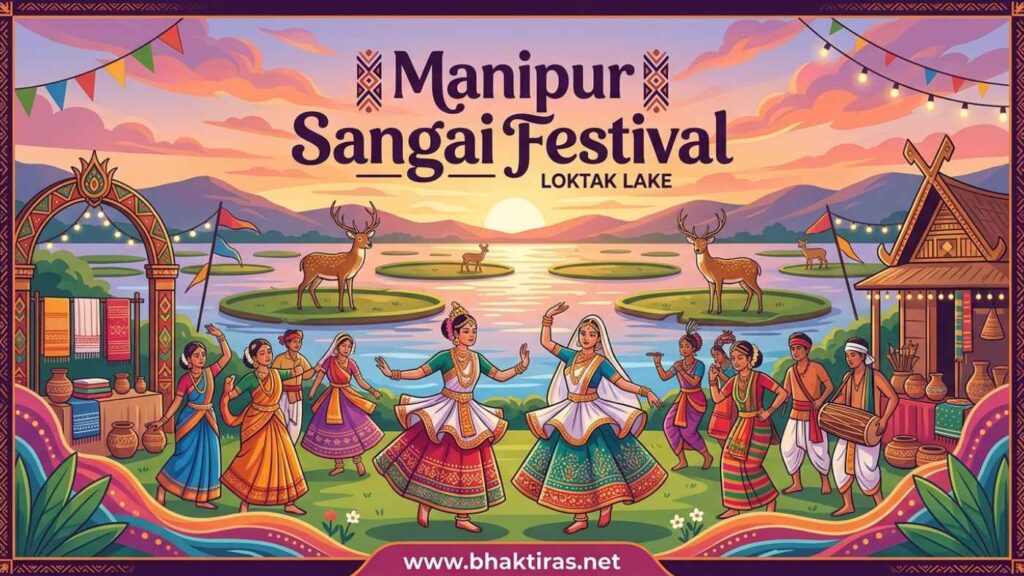
The Sangai Festival is Manipur’s biggest cultural and tourism event, held every year from 21 to 30 November. It takes its name from the sangai, the shy brow-antlered “dancing deer” that survives only on the floating meadows of Keibul Lamjao National Park on Loktak Lake and serves as the state animal. Organised by Manipur Tourism, the ten days gather the classical grace of Ras Leela, the edge of Thang-Ta, village sports, handloom, food stalls and water sport into one long invitation to the world.
Sangai Festival 2026-2028: Dates & Calendar
The next edition of the Sangai Festival runs from 21 to 30 November 2026. Unlike lunar Hindu festivals, its dates barely move – Manipur Tourism has anchored it to the same November window each year.
| Year | Dates | Days | Notes |
|---|---|---|---|
| 2026 | 21-30 November | Sat to Mon | Next occurrence |
| 2027 | 21-30 November | Sun to Tue | Same fixed window |
| 2028 | 21-30 November | Tue to Thu | Same fixed window |
The festival is a largely fixed-date event rather than a tithi-based one, so you can plan a late-November trip well in advance. Programmes, venue lists and cultural line-ups are released closer to the dates.
Why the Sangai Festival Is Held
The Sangai Festival exists to show Manipur to the wider world – its people, arts and landscape – and to build tourism around them. It began in 2010 and grew into the state’s signature annual event.
A festival named for a deer
The sangai is a rare brow-antlered deer found only in Keibul Lamjao, the world’s single floating national park, on the phumdi meadows of Loktak Lake. Naming the festival after this endangered state animal ties the celebration to Manipur’s natural heritage and to the effort to protect it.
One stage for a whole state
Manipur’s culture is not one thing. The valley Meitei tradition of Ras Leela sits alongside the folk music and dance of dozens of hill communities. The festival gives all of them a shared platform across ten days rather than a single showpiece.
Tourism with a purpose
Run by Manipur Tourism, the event is designed to draw visitors to a state that many travellers overlook, and to give local weavers, cooks, artisans and performers a wide audience. Craft sales and homestay bookings often follow the festival crowd.
What Happens Over the Ten Days
The Sangai Festival is a programme rather than a ritual, so here is the shape of a typical edition, from the opening to the closing evening.
- Grand opening. The festival opens in Imphal, usually at Hapta Kangjeibung or the Bhagyachandra Open Air Theatre, with a formal ceremony and a large cultural showcase.
- Classical Manipuri dance. Ras Leela, the graceful Krishna-themed dance of the Meitei, and the drum-driven Pung Cholom are performed by trained troupes on the main stages.
- Thang-Ta and Mukna. The indigenous sword-and-spear martial art of Thang-Ta and the Manipuri wrestling form Mukna are demonstrated as competitive, high-energy events.
- Indigenous sports and games. Traditional games of the valley and the hills are played, from Yubi Lakpi to local archery and other village contests.
- Handloom and handicraft bazaar. Stalls fill with Manipuri weaves, phanek and shawls, bamboo and cane work, and pottery, sold directly by the makers.
- Food courts. Ethnic food stalls serve the cuisine of the state and its communities, from eromba to singju, letting visitors taste Manipur in one place.
- Loktak Lake and adventure. Water sports, boating and adventure activities are staged on and around Loktak, with trips out to see the floating phumdi.
- Hill and folk evenings. Folk music and dance of the Naga, Kuki and other hill tribes are given dedicated evenings before the festival closes with a final cultural night.
Food to Try at the Sangai Festival
The festival food courts are one of the easiest ways to meet Manipuri cuisine, which leans on fermented fish, herbs and clean, direct flavours rather than heavy spice.
Eromba
A homely mash of boiled vegetables, often potato, with fermented fish (ngari) and roasted chillies. It is pungent, warming and central to a Manipuri meal.
Singju
A fresh salad of finely shredded vegetables and herbs bound with roasted chickpea flour and fermented fish. It is served cool and is a favourite street snack across the valley.
Chak-hao kheer
A pudding made from Manipur’s fragrant black rice, chak-hao, cooked slowly with milk until it turns deep purple. It is the sweet most associated with the state.
Ngari dishes
Ngari, sun-dried fermented fish, flavours much of Manipuri cooking. Stalls use it in stews and chutneys that give the food its distinctive depth.
Hill-tribe plates
Alongside valley food, hill communities bring smoked meats, bamboo-shoot dishes and fiery king-chilli preparations, giving visitors a taste of Manipur’s uplands.
Main Venues Around Imphal & Loktak
The festival is spread across several sites rather than a single ground, with the core cultural events in Imphal and nature and adventure elements out by the lake.
Hapta Kangjeibung, Imphal
A historic open ground in Imphal that often hosts the main stage, the handicraft bazaar and the food courts.
Bhagyachandra Open Air Theatre (BOAT)
A large open-air venue used for classical dance and major evening cultural programmes.
Loktak Lake & Sendra
The setting for boating, water sports and views of the floating phumdi, with the Sendra viewpoint a common stop for visitors.
Khuman Lampak & other grounds
Sports complexes and additional grounds around Imphal take the indigenous games, martial-arts demonstrations and overflow events.
Sangai Festival Travel Tips: Do's and Don'ts
A few practical notes to get the most out of a late-November trip to Manipur.
Do
- Book flights and stays early, as Imphal fills up during the festival week.
- Carry warm layers – late-November evenings in Imphal are cool.
- Try the food courts; they are the quickest way into Manipuri cuisine.
- Set aside a full day for Loktak Lake and Keibul Lamjao National Park.
- Check the official Manipur Tourism programme for daily timings and venues.
Avoid
- Do not expect to actually spot a wild sangai at the festival; the deer live protected in the park, not at the venues.
- Do not skip cash, as smaller craft stalls may not take cards.
- Do not photograph performers or locals without asking first.
- Do not treat it as a religious festival; it is a cultural and tourism event.
- Do not leave planning to the last minute during peak travel season.
Frequently Asked Questions
When is the Sangai Festival in 2026?
The Sangai Festival is held from 21 to 30 November 2026. It is Manipur’s flagship tourism festival, organised by Manipur Tourism across Imphal and venues near Loktak Lake, running for ten days.
What are the Sangai Festival dates in 2027 and 2028?
The Sangai Festival is scheduled for 21 to 30 November in both 2027 and 2028. It is a largely fixed-date event, held in the same late-November window each year rather than shifting with a lunar calendar.
Why is it called the Sangai Festival?
The festival is named after the sangai, the rare brow-antlered “dancing deer” that is the state animal of Manipur. This endangered deer survives only in Keibul Lamjao National Park, the floating park on Loktak Lake, so the name links the event to Manipur’s natural heritage.
Where is the Sangai Festival held?
The Sangai Festival is held in and around Imphal, the capital of Manipur, with core events at grounds such as Hapta Kangjeibung and the Bhagyachandra Open Air Theatre. Nature and adventure activities take place at Loktak Lake and nearby venues.
What can you see and do at the Sangai Festival?
At the Sangai Festival you can watch classical Ras Leela and Pung Cholom dance, Thang-Ta martial arts and Mukna wrestling, browse handloom and handicraft stalls, taste Manipuri food, and enjoy water sports on Loktak Lake. Folk music and dance of the valley and hill tribes feature across the ten days.
Is the Sangai Festival a religious festival?
No, the Sangai Festival is a cultural and tourism festival, not a religious one. It is organised by Manipur Tourism to present the whole of Manipuri heritage, arts and natural beauty to visitors from India and abroad.
When did the Sangai Festival start?
The Sangai Festival began in 2010 and has since grown into Manipur’s signature annual event. It was created to promote tourism and to give the state’s performers, weavers and artisans a wide platform each November.
Can you see the sangai deer at the festival?
You cannot see wild sangai deer at the festival venues, as the animals live protected in Keibul Lamjao National Park on Loktak Lake. Visitors can, however, take a trip to the park and lake during the festival for a chance to see the floating phumdi habitat where the deer survive.
Whether you come for the dance, the food or the deer it is named after, the Sangai Festival is Manipur’s warmest welcome to the world. Khurumjari.