
Minjar Mela 2026 – Chamba's Week of Silk Tassels and the River Ravi
मिंजर मेला
When is Minjar Mela in 2026?
Minjar Mela 2026 runs from Sunday 26 July to Sunday 2 August in the town of Chamba, Himachal Pradesh. It opens on the second Sunday of Shravana with worship of Lord Raghuvira and closes a week later with a grand procession to the river Ravi, where a silk-thread minjar is offered to the water.
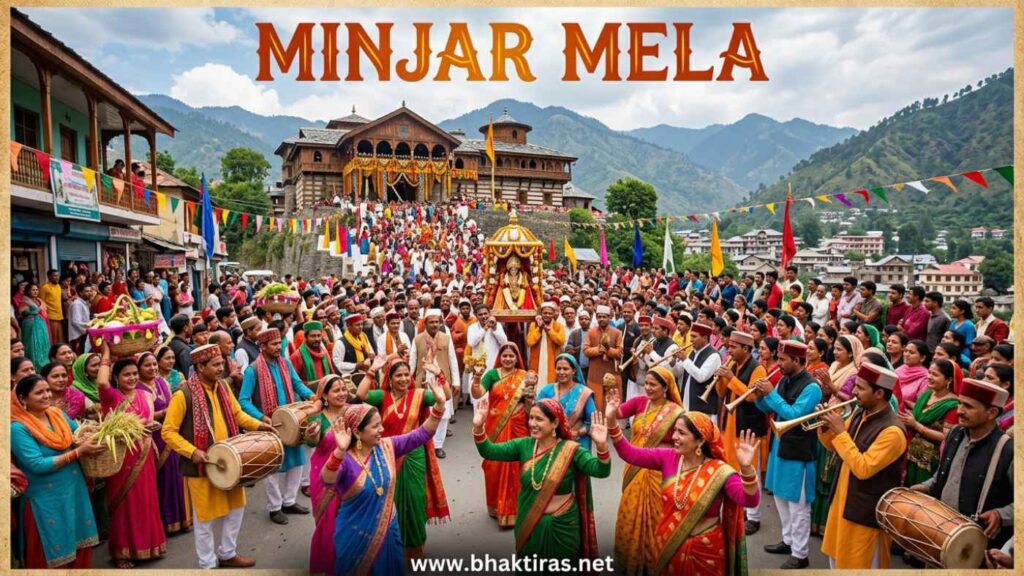
Minjar Mela is a week-long summer fair in the old hill town of Chamba, Himachal Pradesh, held from the second Sunday of the month of Shravana (July-August). The minjar is a small tassel of silk threads shaped like the flowering shoot of maize and paddy, and people pin it to their clothes to mark the season when the crops come into ear. The fair opens with worship of Lord Raghuvira, a form of Rama, and ends with a procession to the river Ravi, where the minjar is floated on the water to thank the river and ask it not to flood. Chamba has kept this custom alive for roughly nine centuries.
Minjar Mela 2026-2028: Dates & Calendar
Minjar Mela 2026 begins on Sunday 26 July and closes with the river procession on Sunday 2 August. Because it is tied to the second Sunday of the lunar month of Shravana, the calendar date shifts by a couple of weeks each year.
| Year | Opening (worship) | Closing procession | Notes |
|---|---|---|---|
| 2026 | Sun, 26 July | Sun, 2 August | Next occurrence – confirmed |
| 2027 | mid-July (approx) | one week later | Approximate; awaits official notice |
| 2028 | late July / early Aug (approx) | one week later | Approximate; awaits official notice |
The festival always spans one week. The opening Sunday centres on temple worship in Chamba, and the final Sunday brings the shobha yatra (grand procession) down to the banks of the Ravi. On the days in between the town hosts folk performances, craft stalls and cultural evenings on the Chowgan ground.
Why Minjar Mela Is Celebrated
Minjar Mela celebrates the maize and paddy crops coming into flower and gives thanks to the river Ravi, which waters Chamba’s fields. The silk minjar tassel stands in for the real crop-tassel of the season.
The most-repeated local story links the fair to a victory of the Chamba raja over the ruler of Trigarta (Kangra) in the tenth century. When the king returned home in the month of Shravana, townspeople are said to have greeted him with sheaves of paddy and maize, and that welcome slowly grew into the yearly minjar custom.
A second thread is purely agricultural. Shravana is the moment the young crop puts out its flowering shoot, so wearing a minjar is a small, hopeful gesture: may the ear fill, may the harvest be good, and may the Ravi give water without anger.
Thanking the river
Chamba grew up on the banks of the Ravi, and the fair is in large part a thank-you to the water that feeds the valley. Offering the minjar to the river is a request for a steady flow and protection from floods.
Blessing the crop
The tassel mirrors the flowering shoot of maize and paddy. Pinning it on is a wish for a full ear and a good yield, tying the festival firmly to the farming calendar.
A memory of victory
Folk tradition also remembers a Shravana homecoming of the Chamba raja after a campaign against Kangra, when he was welcomed with fresh sheaves – an origin story locals still recount.
Deities & Figures Worshipped
The fair opens with worship of Lord Raghuvira, a form of Rama, and its closing rite honours the river Ravi, revered as a living, life-giving presence.
Lord Raghuvira
Raghuvira is a form of Rama (Vishnu) and the presiding deity of the fair. The first minjar of the season is offered to him, and his image leads the later procession through the town.
The river Ravi
The Ravi is treated as a giver of life and, at times, a force to be calmed. The minjar, a coconut, a rupee and seasonal fruit are floated on the water to thank the river and ask it to hold back its floods.
Chamba's guardian deities
Local gods and goddesses from surrounding temples are carried in decorated palanquins in the shobha yatra, joining Raghuvira on the walk down to the river.
Key Rituals, Step by Step
The week moves from a quiet temple opening to a loud, colourful river procession. Here is how it unfolds.
- Offering the first minjar. On the opening Sunday a minjar and a flag are ceremonially offered to Lord Raghuvira, formally beginning the fair.
- Wearing the minjar. Townspeople and visitors pin the silk-thread tassel to their clothes and wear it through the week as a mark of the season.
- Raising the fair flag. The festival flag is hoisted on the Chowgan, the large open ground where the stalls, folk stages and cultural events are set up.
- Days of folk culture. Through the week Chamba fills with Kunjari Malhar and other Himachali folk dances, singing, craft stalls and evening cultural programmes.
- The shobha yatra. On the final Sunday a grand procession sets out, with Raghuvira and the local deities in decorated palanquins, drummers and dancers, winding through the town toward the Ravi.
- Offering to the Ravi. At the riverbank the gathered minjars, along with a coconut, a rupee and seasonal fruit, are floated on the water to thank the river and seek protection from floods.
- Closing the fair. With the river offering made, the week-long mela draws to a close and people carry their blessings home.
Special Foods of Minjar Mela
Fair days in Chamba mean Pahari home cooking and stalls of hill sweets and snacks on the Chowgan.
Chamba Madra
A slow-cooked chickpea or kidney-bean curry set in a yoghurt base with ghee and whole spices. It is a signature dish of the Chamba kitchen and a natural centrepiece for festive meals.
Babru
Soft stuffed fried breads, a Himachali cousin of kachori, sold warm at the fair stalls and eaten with chutney or a simple curry.
Pahari sweets
Jalebi, sweet fried snacks and local mithai draw crowds along the mela ground, especially in the cool of the evening programmes.
Festive thali at home
Many Chamba families cook a full Pahari spread for the week – madra, rice, dal and seasonal vegetables – to share with visiting relatives and guests.
Minjar Mela Do's and Don'ts
A few simple points help you take part respectfully and enjoy the week.
Do
- Pin on a minjar tassel and wear it through the fair
- Join the opening worship of Lord Raghuvira
- Follow the shobha yatra down to the river on the final Sunday
- Watch the Kunjari Malhar and other folk performances on the Chowgan
- Support local artisans and Chamba craft stalls
Avoid
- Do not treat the river offering as ordinary sightseeing – it is a prayer
- Do not litter or drop plastic on the Ravi’s banks
- Do not push into the deities’ palanquins during the procession
- Do not block the path of the drummers and dancers
- Do not ignore local crowd and safety guidance near the water
Frequently Asked Questions
When is Minjar Mela in 2026?
Minjar Mela 2026 is held from Sunday 26 July to Sunday 2 August in Chamba, Himachal Pradesh. It opens on the second Sunday of Shravana with worship of Lord Raghuvira and closes a week later with a procession to the river Ravi.
When is Minjar Mela in 2027 and 2028?
Minjar Mela is set by the second Sunday of the lunar month of Shravana, so it moves each year and falls in July-August. The 2027 and 2028 dates are close to late July but are confirmed by the Chamba administration nearer the time, so treat any earlier date as approximate.
Where is Minjar Mela celebrated?
Minjar Mela is celebrated in the town of Chamba in Himachal Pradesh, on the banks of the river Ravi. Much of the fair takes place on the large open Chowgan ground, and the closing procession moves through the town down to the riverside.
What is a minjar?
A minjar is a small tassel of silk threads made to look like the flowering shoot of maize and paddy. People pin it to their clothes during the fair as a wish for a good, full harvest, and the tassels are later offered to the river Ravi.
Why is Minjar Mela celebrated?
Minjar Mela is celebrated to mark the maize and paddy crops coming into flower and to thank the river Ravi for watering Chamba’s fields. Local tradition also links it to a Shravana homecoming of the Chamba raja after a victory over Kangra, when he was welcomed with fresh sheaves of grain.
Which god is worshipped at Minjar Mela?
Lord Raghuvira, a form of Rama, is the presiding deity of Minjar Mela and receives the first minjar of the season. The closing rite honours the river Ravi, to which the minjar, a coconut, a rupee and seasonal fruit are offered.
How old is the Minjar Mela tradition?
The Minjar Mela tradition in Chamba is roughly nine centuries old, with local accounts tracing it to about the tenth century. It has been kept up as a yearly week-long fair, and today it is one of Himachal Pradesh’s best-known festivals.
What happens on the last day of Minjar Mela?
On the final Sunday of Minjar Mela a grand procession, or shobha yatra, carries Lord Raghuvira and the local deities down to the river Ravi. There the collected minjars, a coconut, a rupee and seasonal fruit are floated on the water to thank the river and seek protection from floods.
May the crops flower and the Ravi flow gently – a warm welcome to Chamba for Minjar Mela.