
Ganga Dussehra 2027 – The Day the Ganga Came to Earth
गंगा दशहरा
When is Ganga Dussehra in 2027?
Ganga Dussehra falls on Sunday, 13 June 2027. It marks the day the river Ganga is believed to have descended from heaven to earth. Devotees bathe in the Ganga, offer puja to Goddess Ganga and attend riverside aartis, and it is held that a dip on this day washes away ten sins.
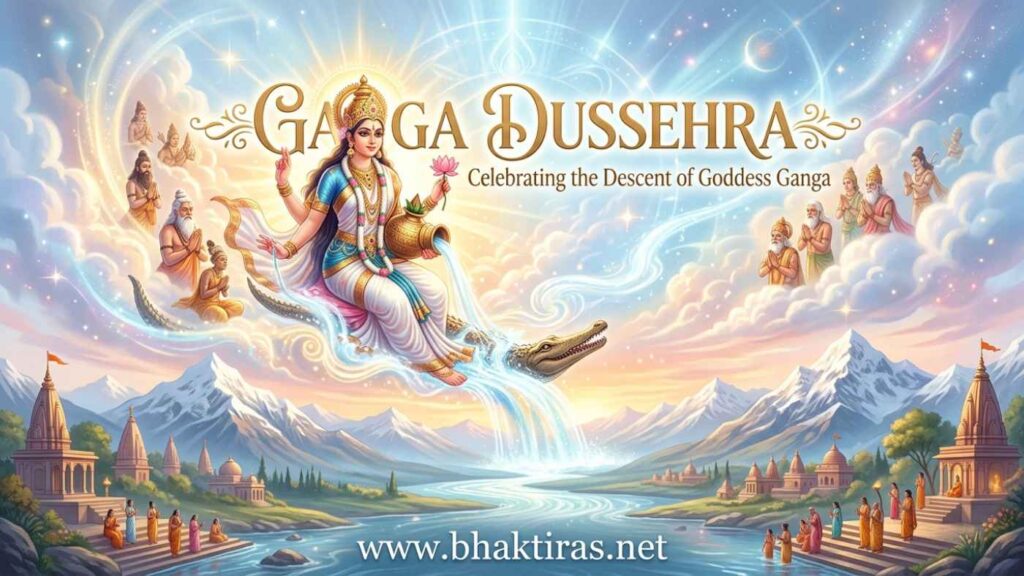
Ganga Dussehra celebrates the day the river Ganga is said to have come down from heaven to earth, passing through Shiva’s matted locks before flowing across the plains of northern India. Observed on the tenth day (Dashami) of the bright half of the Hindu month of Jyeshtha, it usually falls in late May or June. The word Dussehra here means ten: a devout bath in the Ganga on this day is believed to wash away ten kinds of sin. Haridwar, Rishikesh, Varanasi, Prayagraj and Garhmukteshwar draw the largest crowds.
Ganga Dussehra 2026-2028: Dates & Calendar
The next Ganga Dussehra falls on Sunday, 13 June 2027. Because it follows the Hindu lunar calendar, the Gregorian date shifts each year between late May and mid-June.
| Year | Date | Day | Notes |
|---|---|---|---|
| 2026 | 25 May | Monday | Already passed this year |
| 2027 | 13 June | Sunday | Next occurrence |
| 2028 | 2 June | Friday | Dashami tithi current at sunrise |
The exact tithi start and end times vary by a few hours across the country, so local panchangs may list bathing muhurats slightly differently. Always confirm the snan timing with a trusted regional calendar.
Why Ganga Dussehra Is Celebrated
Ganga Dussehra celebrates Gangavataran, the descent of the Ganga from the heavens to the earth. It honours both the sacred river and the long penance that is said to have brought her down.
The descent of the Ganga
The festival marks the day the celestial river reached the earth after King Bhagiratha’s long penance. To spare the ground from the force of her fall, Shiva is said to have caught the Ganga in his matted hair and released her gently, so she could flow across the plains without destroying them.
Why 'Dussehra' means ten
Here Dussehra comes from dasha (ten) and hara (to remove). A sincere dip in the Ganga on this day is believed to cleanse ten kinds of wrongdoing – three of the body, four of speech and three of the mind – making the bath itself the central act of the festival.
Bhagiratha's resolve
The story is also a lesson in perseverance. Bhagiratha undertook austerities across generations to bring the Ganga down and free the souls of his ancestors, which is why an unrelenting effort is still called a ‘Bhagirath prayas’ in India today.
Deities & Figures Worshipped
The day centres on Goddess Ganga, the river personified as a mother and giver of purity. Shiva and King Bhagiratha are remembered alongside her for their role in the descent.
Goddess Ganga
Ganga is worshipped as Ganga Maiya, the divine river-mother. Devotees offer flowers, milk, lit lamps and coconuts to the water, and many recite the Ganga stotra or chant ‘Har Har Gange’ at the riverbank.
Shiva
Shiva is honoured for receiving the falling Ganga in his locks and softening her descent. In many temples the day includes abhishek of the Shiva linga with Ganga water.
Bhagiratha
The king whose penance brought the Ganga to earth is remembered for his devotion and patience. His story is retold at riverside gatherings and in katha readings on the day.
Key Rituals, Step by Step
The heart of Ganga Dussehra is the holy dip, followed by puja and charity. Here is how the day usually unfolds along the river.
- Wake before dawn. Devotees reach the ghat in the early morning while the water is calm and the crowds are lighter.
- Take the holy dip. A bath in the Ganga (or in any river or clean water while remembering the Ganga) is the central act, taken with a sankalp to wash away ten sins.
- Offer Ganga puja. Flowers, milk, sandal paste, roli and a coconut are offered to the flowing water, often with an earthen lamp set adrift.
- Light a diya and float it. Small leaf boats carrying a lit lamp are released onto the current at dusk, a quiet offering to the river.
- Recite prayers. Worshippers chant the Ganga stotra, the Gange cha line from the sacred-rivers verse, or simply ‘Har Har Gange’.
- Give in charity. Donating water pots, hand fans, fruit, sattu and umbrellas to the needy is considered especially auspicious in the summer heat of Jyeshtha.
- Attend the Ganga aarti. The day ends with grand riverside aartis at Haridwar’s Har Ki Pauri, Varanasi’s Dashashwamedh Ghat and other major ghats.
Special Foods of Ganga Dussehra
Being an early-summer festival, the food leans towards cooling, simple offerings. Many observe a light fast until the puja is done.
Sattu drink
Roasted gram flour mixed with water, a little salt or jaggery and lemon is drunk to beat the Jyeshtha heat. It is also a common item of charity on this day.
Aam panna & sharbat
Cooling drinks made from raw mango, khus or bel fruit are prepared at home and shared, in keeping with the season.
Kheer & seasonal fruit
Rice or vermicelli kheer is offered as prasad, along with summer fruit such as mango, muskmelon and watermelon that are also given away in charity.
Sabudana & fasting food
Those who fast take light satvik dishes such as sabudana khichdi, fruit and singhara-flour preparations until the river puja is complete.
Where It's Celebrated
Ganga Dussehra is observed most fervently along the course of the river through the north Indian plains.
Haridwar & Rishikesh
The ghats of Uttarakhand, especially Har Ki Pauri in Haridwar and Triveni Ghat in Rishikesh, see huge gatherings for the dawn snan and the evening aarti.
Varanasi
Pilgrims line the ghats of Kashi for the bath and the famous Ganga aarti at Dashashwamedh Ghat, with lamps set afloat across the river at dusk.
Prayagraj
At the Sangam, the confluence of the Ganga, Yamuna and the mythical Saraswati, devotees bathe and offer prayers at one of Hinduism’s most sacred water sites.
Garhmukteshwar
This town on the Ganga in Uttar Pradesh hosts a large fair around Ganga Dussehra, drawing bathers and pilgrims from across the region.
Ganga Dussehra Do's and Don'ts
A few simple practices keep the observance meaningful and the river clean.
Do
- Take the holy dip early, with a calm mind and a clear sankalp.
- Offer only biodegradable items – flowers, a coconut, an earthen lamp.
- Give water, sattu, fruit or hand fans in charity during the summer.
- Chant the Ganga stotra or ‘Har Har Gange’ at the riverbank.
- Respect crowd and safety instructions at busy ghats.
Avoid
- Do not throw plastic, polythene or non-degradable offerings into the river.
- Avoid wasting or dirtying the water you have come to honour.
- Do not venture into deep or fast-flowing water for the dip.
- Avoid arguments, harsh speech and meat or alcohol on the day.
- Do not pour oil, soap or synthetic colours into the Ganga.
Frequently Asked Questions
When is Ganga Dussehra in 2027?
Ganga Dussehra in 2027 falls on Sunday, 13 June. It is observed on the Dashami (tenth day) of the bright half of the Hindu month of Jyeshtha, the day associated with the Ganga’s descent to earth.
When is Ganga Dussehra in 2026 and 2028?
Ganga Dussehra was on Monday, 25 May 2026, and will fall on Friday, 2 June 2028. The date shifts each year because it follows the Hindu lunar calendar, usually landing between late May and mid-June.
Why is Ganga Dussehra celebrated?
Ganga Dussehra celebrates Gangavataran, the day the river Ganga is believed to have descended from heaven to earth through Shiva’s locks after King Bhagiratha’s penance. It honours the sacred river and the belief that a dip on this day removes ten kinds of sin.
Why is it called Dussehra?
The name comes from dasha (ten) and hara (to remove). A devout bath in the Ganga on this day is said to cleanse ten sins – three of the body, four of speech and three of the mind – which is why the day is called Ganga Dussehra.
Which deity is worshipped on Ganga Dussehra?
Goddess Ganga, the river personified as a divine mother, is the main deity worshipped on Ganga Dussehra. Shiva, who caught her in his hair, and King Bhagiratha, whose penance brought her down, are also remembered on the day.
What do people do on Ganga Dussehra?
On Ganga Dussehra people take a holy dip in the Ganga at dawn, offer flowers, milk and lamps to the river, recite prayers, and give water, fruit and fans in charity. The day ends with grand riverside aartis at ghats such as Haridwar and Varanasi.
How is Ganga Dussehra different from Vijayadashami (Dussehra)?
Ganga Dussehra and Vijayadashami are two separate festivals. Ganga Dussehra, in Jyeshtha (May-June), marks the Ganga’s descent, while Vijayadashami in Ashwin (September-October) celebrates Rama’s victory over Ravana and the end of Navratri.
Where is Ganga Dussehra celebrated most?
Ganga Dussehra is celebrated most fervently along the river in Haridwar, Rishikesh, Varanasi, Prayagraj and Garhmukteshwar. These ghats draw large crowds for the dawn bath and the evening Ganga aarti.
May the Ganga’s waters carry your prayers this Ganga Dussehra – Har Har Gange.