
Nirjala Ekadashi 2026 – The Waterless Vishnu Fast
निर्जला एकादशी
When is Nirjala Ekadashi in 2027?
Nirjala Ekadashi falls on Monday, 14 June 2027. It is the strictest of the year’s 24 Ekadashi fasts, kept to Lord Vishnu without food and even water from sunrise until the next morning’s parana. It lands on the Ekadashi (eleventh day) of the bright half of Jyeshtha month.
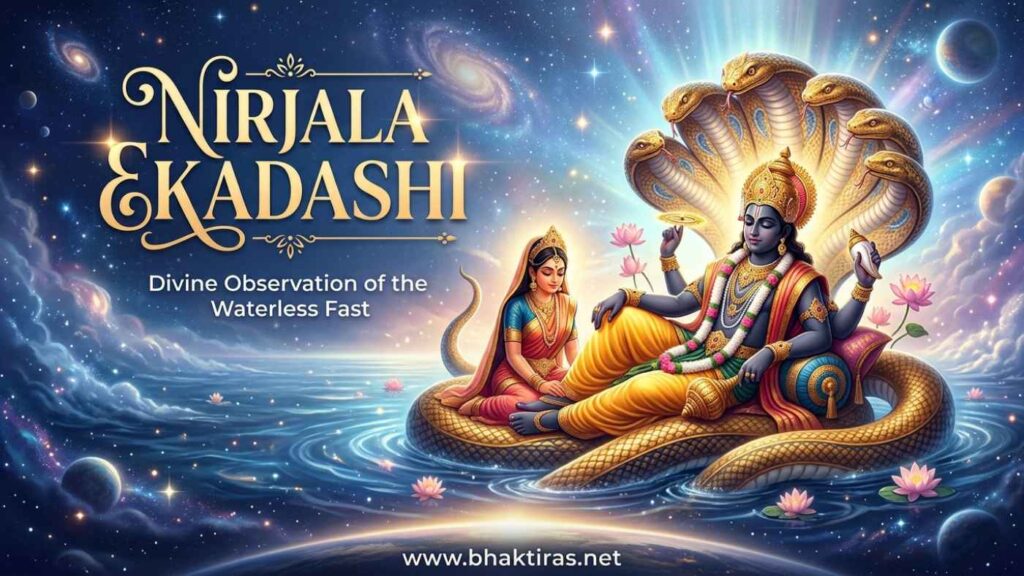
Nirjala Ekadashi is the most demanding of the twenty-four Ekadashi fasts kept through the Hindu year, observed for Lord Vishnu on the eleventh day of the bright fortnight of Jyeshtha (late May or June). The name says it plainly: nir-jala means “without water”. Devotees take neither food nor a single sip of water from sunrise until the fast is broken the following morning. Because it arrives in the peak of the Indian summer, keeping it is genuinely hard – and that difficulty is exactly the point. Tradition holds that this one fast, done sincerely, carries the reward of all the others combined.
Nirjala Ekadashi 2026-2028: Dates & Calendar
The next Nirjala Ekadashi is on Monday, 14 June 2027. The date shifts each year because it is fixed to the lunar tithi – Ekadashi of Jyeshtha Shukla Paksha – not to the Gregorian calendar.
| Year | Date | Day | Notes |
|---|---|---|---|
| 2026 | 25 June | Thursday | Jyeshtha Shukla Ekadashi |
| 2027 | 14 June | Monday | Next occurrence |
| 2028 | 3 June | Saturday | Jyeshtha Shukla Ekadashi |
The fast is broken on Dwadashi, the day after Ekadashi, within a set parana window that opens after sunrise. Breaking it correctly and on time is considered part of the observance, so many families note the local parana timing in advance.
Why Nirjala Ekadashi Is Celebrated
Nirjala Ekadashi is kept because a single sincere waterless fast is believed to earn the spiritual merit of all twenty-four Ekadashis of the year.
The story of Bhima
The most-loved account comes from the Mahabharata. Bhima, the mighty second Pandava, loved his food and found it impossible to give up eating for the twenty-four Ekadashis. Troubled that he alone among his brothers could keep none of them, he went to the sage Vyasa. Vyasa told him to observe just this one fast, completely without water, and it would count for all the rest. This is why the day is also called Bhima Ekadashi or Bhimseni Ekadashi.
The hardest fast, the fullest reward
Ekadashi fasting for Vishnu is a year-round discipline, but most people cannot manage every one. Nirjala Ekadashi is offered as a merciful shortcut: the difficulty of a full day without even water in the summer heat is said to balance the merit of the many fasts skipped, making it especially valued by working households and the elderly.
Charity as the heart of the day
Because thirst defines the fast, giving water is its signature act of virtue. Devotees donate earthen water pots (kalash), hand fans, umbrellas, seasonal fruit and cooling foods to Brahmins and the needy. The gift mirrors the fast itself – offering relief from summer heat to others while going without oneself.
Deities & Figures Worshipped
Nirjala Ekadashi is dedicated to Lord Vishnu, the preserver, worshipped here in his role as the granter of liberation to sincere devotees.
Vishnu
The whole fast is an offering to Vishnu, often in his forms as Narayana or Hari. Devotees read or hear the Vishnu Sahasranama, chant “Om Namo Bhagavate Vasudevaya”, and keep a night vigil in his honour. Tulsi leaves, which are dear to Vishnu, are used in the puja.
Bhima
Bhima is not worshipped as a god, but he is central to the day’s lore. His inability to fast and the sage Vyasa’s remedy give the observance its alternate names, Bhima Ekadashi and Pandava Nirjala Ekadashi, and its reputation as the one fast anyone can keep for the merit of all.
Key Rituals, Step by Step
The observance runs from the Dashami evening before to the parana on Dwadashi morning after.
- Prepare on Dashami. Eat a light, simple meal the evening before, avoiding grains, onion and garlic, and resolve (sankalpa) to keep the fast the next day.
- Rise early and bathe. Wake before sunrise, bathe, and take the formal vow to keep the fast without food or water for the full day.
- Worship Vishnu. Set up or clean the home shrine, offer flowers, tulsi, incense and a lamp to Vishnu, and read or listen to his prayers and the story of the fast.
- Hold the fast strictly. Take no food and no water from sunrise through the day and night – this total abstention is what sets Nirjala apart from other Ekadashis.
- Give in charity. Donate water-filled pots, hand fans, umbrellas, fruit and other cooling items to Brahmins and the poor, the day’s most meritorious act.
- Keep a night vigil. Many devotees stay awake through the night in bhajan and japa, remembering Vishnu.
- Break the fast at parana. On Dwadashi morning, after sunrise and within the prescribed parana window, first drink water, then eat a simple meal to complete the observance correctly.
Special Foods of Nirjala Ekadashi
There is no feasting during the fast itself – food matters most in what is given away and in the light, cooling meal that breaks it.
Charity food and water
Water pots, sherbet, seasonal fruit such as mango and melon, and sweets like sugar and jaggery are given to Brahmins and the needy. Offering cooling food and drink to others is the day’s defining generosity.
Parana meal
The fast is broken gently. Devotees drink water first, then eat sattvic, grain-free or light food – fruit, soaked chana, or a simple khichdi once the parana window allows grains, depending on family custom.
Panchamrit and prasad
Panchamrit (milk, curd, ghee, honey and sugar) with tulsi is offered to Vishnu and later taken as prasad. It is considered purifying and gentle on the stomach after a full day of fasting.
Regional Names & Variations
The fast is kept across India, with different names and slightly different customs by region and community.
North India
In states such as Uttar Pradesh, Bihar, Rajasthan and Delhi, it is widely known as Nirjala or Bhimseni Ekadashi and is one of the year’s most observed Ekadashi vrats, marked by large-scale donation of water pots and fans.
Gujarat & Maharashtra
Devotees keep the waterless fast for Vishnu and hold temple worship and bhajans. Charity of shade-giving items like umbrellas and fans is common as the fast falls in the hottest weeks.
ISKCON & Vaishnava tradition
Gaudiya Vaishnavas and ISKCON observe it as Pandava Nirjala Ekadashi, tying it directly to Bhima’s story, with kirtan, scripture reading and a strict fast broken at parana.
Nirjala Ekadashi Do's and Don'ts
A few simple guidelines help keep the fast both correct and safe.
Do
- Take the sankalpa (vow) at sunrise and keep the fast sincerely.
- Worship Vishnu with tulsi, a lamp and his prayers.
- Donate water pots, fans, umbrellas and fruit to the needy.
- Break the fast on Dwadashi within the correct parana window.
- Assess your health honestly – the elderly, unwell, pregnant and children may keep a partial or fruit fast instead.
Avoid
- Do not eat grains, rice, beans or common table salt during the fast.
- Avoid onion, garlic and tamasic foods around the observance.
- Do not delay breaking the fast past the parana window.
- Avoid anger, gossip and quarrels through the day.
- Do not force a total waterless fast if it risks your health in the summer heat.
Frequently Asked Questions
When is Nirjala Ekadashi in 2027?
Nirjala Ekadashi in 2027 is on Monday, 14 June. It falls on the Ekadashi tithi of the bright half (Shukla Paksha) of the Hindu month of Jyeshtha, and the fast is broken the next morning on Dwadashi.
When is Nirjala Ekadashi in 2026 and 2028?
Nirjala Ekadashi is on Thursday, 25 June 2026 and on Saturday, 3 June 2028. The date moves each year because it follows the lunar tithi of Jyeshtha Shukla Ekadashi rather than the Gregorian calendar.
Why is Nirjala Ekadashi called the waterless fast?
It is called the waterless fast because nir-jala means “without water”. Unlike other Ekadashis where fruit or water is allowed, on Nirjala Ekadashi devotees take neither food nor water from sunrise until the next morning’s parana, making it the strictest of the 24 Ekadashi fasts.
Why is Nirjala Ekadashi also called Bhima Ekadashi?
It is called Bhima or Bhimseni Ekadashi after Bhima of the Mahabharata. Unable to keep the other twenty-three Ekadashi fasts, Bhima was told by the sage Vyasa to observe this single waterless fast, which grants the merit of all of them. This is why it is also known as Pandava Nirjala Ekadashi.
Which god is worshipped on Nirjala Ekadashi?
Lord Vishnu is worshipped on Nirjala Ekadashi. Devotees offer tulsi, flowers and a lamp, recite his prayers such as the Vishnu Sahasranama, and keep the fast as an act of devotion to him.
What is done as charity on Nirjala Ekadashi?
Because the fast is defined by thirst, giving water is its central act of charity. Devotees donate earthen water pots, hand fans, umbrellas, seasonal fruit and sweets to Brahmins and the poor, offering others relief from the summer heat while going without themselves.
How is the Nirjala Ekadashi fast broken?
The fast is broken on Dwadashi, the day after Ekadashi, within a prescribed parana window that opens after sunrise. Devotees drink water first, then eat a light, simple meal to complete the observance correctly.
Can everyone keep a full waterless fast?
A full waterless fast is demanding, especially in the summer heat, so it is not advised for everyone. The elderly, unwell, pregnant women and children may keep a lighter fruit or water fast instead – sincerity of devotion is considered more important than strictness that risks health.
May this fast bring you the grace of Lord Vishnu and the peace of a sincere vow well kept. Jai Shri Hari.