
Kullu Dussehra 2026 – Himachal's Week-Long Festival of Gods
कुल्लू दशहरा
When is Kullu Dussehra in 2026?
Kullu Dussehra begins on Vijayadashami, Tuesday 20 October 2026, and runs for seven days until 26 October. Unlike the rest of India, Kullu’s celebration starts on the day Dussehra ends elsewhere. There is no burning of Ravana’s effigy; instead more than 200 village devtas and devis travel in palanquins to the Dhalpur maidan to honour Lord Raghunath ji.
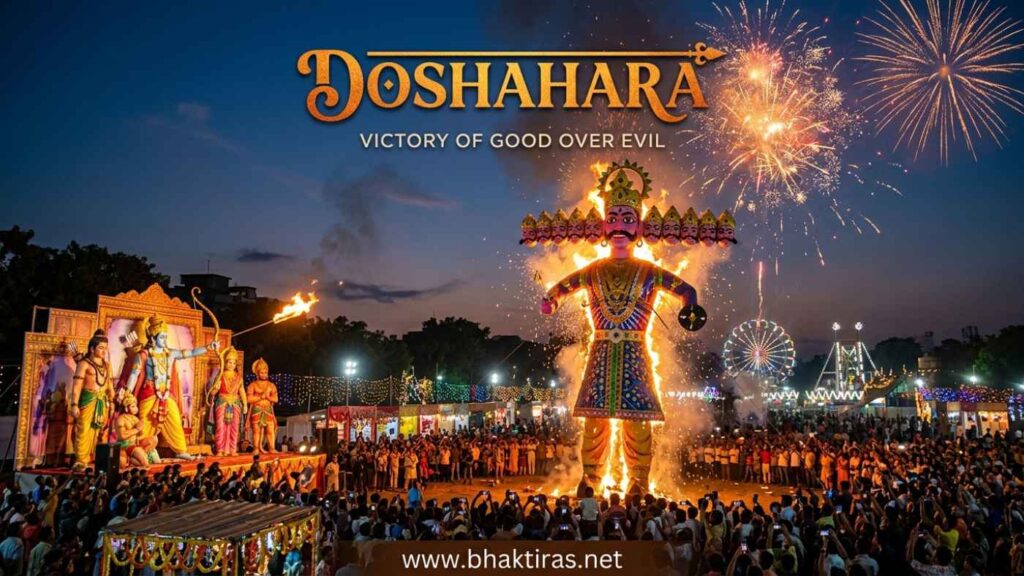
Kullu Dussehra is a seven-day festival held on the Dhalpur maidan in Himachal Pradesh’s Kullu valley, and it works quite unlike the Dussehra celebrated across the rest of India. It opens on Vijayadashami, the very day the plains conclude their festivities, and it never burns an effigy of Ravana. At its centre is the rath yatra of Lord Raghunath ji, joined by a great assembly of more than 200 village deities carried down from their home hamlets in flower-decked palanquins. In 2026 it runs from 20 to 26 October.
Kullu Dussehra 2026-2028: Dates & Calendar
Kullu Dussehra always begins on Vijayadashami, the tenth day of the bright half of Ashvin, so its start date shifts each year with the Hindu lunisolar calendar. The festival then continues for seven days.
| Year | Starts (Vijayadashami) | Day | Festival window |
|---|---|---|---|
| 2026 | 20 October | Tuesday | 20-26 October (next occurrence) |
| 2027 | 9 October | Saturday | 9-15 October |
| 2028 | 27 September | Wednesday | 27 September – 3 October |
The opening day is marked by the rath yatra, when Lord Raghunath ji’s chariot is pulled across the maidan; the closing day features the Lanka Dahan ritual on the bank of the Beas river.
Why Kullu Dussehra Is Celebrated
Kullu Dussehra honours Lord Raghunath ji, the presiding deity of the valley, and gathers the region’s village gods to pay him homage. It also celebrates the victory of good over evil that Vijayadashami marks across India.
The festival grew out of a 17th-century royal tradition. Raja Jagat Singh of Kullu installed an idol of Raghunath ji, brought from Ayodhya, as the ruling deity of his kingdom, and made him the supreme figure to whom every local god owed allegiance. What began as an act of royal devotion became a valley-wide gathering that has continued for over three centuries.
Rather than staging the death of Ravana with an effigy, Kullu treats Dussehra as a reunion of deities. The living tradition of carrying hundreds of household and village gods to a single ground is what gives the festival its character and its International Kullu Dussehra billing.
A royal legacy
The celebration traces to Raja Jagat Singh in the 17th century, who enthroned Lord Raghunath ji as the sovereign deity of Kullu. The reigning royal family still plays a ceremonial role in opening the festival each year.
Assembly of the gods
More than 200 devtas and devis are carried from villages across the valley to the Dhalpur maidan. They arrive to greet Raghunath ji, a gesture of loyalty that turns the ground into a meeting place of the whole region’s deities.
Good over evil
As with Dussehra everywhere, the festival marks the triumph of righteousness. The closing Lanka Dahan by the Beas symbolises the burning of Lanka rather than any effigy of Ravana.
Deities & Figures Worshipped
The central figure is Lord Raghunath ji, the form of Rama who presides over Kullu. He is joined by the goddess Hadimba of Manali and the many village deities of the valley.
Lord Raghunath ji
Raghunath ji, an idol of Rama brought from Ayodhya in the 17th century, is the sovereign god of Kullu. His chariot leads the opening rath yatra and every visiting deity comes to honour him.
Goddess Hadimba
The Hadimba Devi of Dhungri, near Manali, is regarded as the grandmother deity of the Kullu royal line. Her palanquin traditionally must arrive before the rath yatra can begin.
The village devtas
Hundreds of local gods and goddesses, each with their own bearers, musicians and standards, descend from their villages. Their gathering is the living heart of the festival.
Key Rituals, Step by Step
The seven days follow a set rhythm, opening with the chariot procession and closing with the ritual on the Beas.
- Arrival of the deities. In the days around the start, village gods are carried in palanquins from across the valley towards the Dhalpur maidan, their bearers accompanied by drums, shehnais and long ceremonial horns.
- Hadimba’s homage. The palanquin of Goddess Hadimba of Dhungri reaches Kullu; by custom the rath yatra cannot commence until she has arrived to bless the proceedings.
- The rath yatra. On Vijayadashami, the idol of Lord Raghunath ji is placed on a towering wooden chariot and devotees pull it with thick ropes across the maidan, the opening act of the festival.
- Homage of the gods. Through the following days the assembled devtas and devis are brought before Raghunath ji to offer their respects, forming a grand darbar of the valley’s deities.
- The fair and folk performances. A large trade fair and cultural programme fill the ground – Himachali folk dances such as Nati, music, craft and produce stalls draw visitors from across the state and abroad.
- Mohalla gathering. Midway through the week the deities assemble together in a formal congregation, one of the most sacred moments of the festival.
- Lanka Dahan. On the final day the deities move to the bank of the Beas river, where a symbolic Lanka Dahan is performed and Raghunath ji is escorted back to his temple, closing the festival.
Special Foods of Kullu Dussehra
The festival fair is a chance to taste Himachali mountain cooking, served warm against the October chill of the valley.
Siddu
A steamed wheat-flour bun with a savoury or sweet stuffing, siddu is a Kullu-Manali staple eaten with ghee or a walnut-and-poppy chutney. Warm stalls at the fair sell it fresh.
Dham
The traditional festive meal of the hills, served on leaf plates – rice with a sequence of dals, rajma, a curd-based madra and a sweet, cooked by the community botis.
Babru & sweets
Babru, a Himachali stuffed fried bread, along with jalebi, gulab jamun and local barfi, fill the many sweet and snack stalls that line the Dhalpur ground.
Where It Is Celebrated
Kullu Dussehra is specific to the Kullu valley, though its fame draws visitors from far beyond Himachal.
Dhalpur maidan, Kullu
The entire festival is centred on the broad Dhalpur maidan in Kullu town, where the rath yatra, the deity gathering and the fair all take place.
Across the Kullu valley
The visiting deities come from hamlets throughout the valley and neighbouring areas, so villages empty out as their gods and attendants travel down to Kullu.
A draw for wider India
Marketed as the International Kullu Dussehra, the festival pulls tourists, traders and cultural troupes from across India and abroad, making it one of Himachal’s largest annual events.
Kullu Dussehra Do's and Don'ts
A few pointers help visitors take part respectfully and comfortably.
Do
- Reach the Dhalpur maidan early on Vijayadashami to see the rath yatra clearly.
- Dress warmly – October evenings in Kullu turn cold.
- Show respect as the deity palanquins pass, and give the bearers space.
- Try local Himachali food from the fair stalls.
- Book stay well ahead, as Kullu fills up during the week.
Avoid
- Do not expect a Ravana effigy burning – Kullu has no such ritual.
- Do not touch or climb the deity chariots or palanquins.
- Do not litter the maidan or the Beas riverbank.
- Do not block the procession route or crowd the rope-pullers.
- Do not photograph deity rituals where bearers ask you not to.
Frequently Asked Questions
When is Kullu Dussehra in 2026?
Kullu Dussehra begins on Vijayadashami, Tuesday 20 October 2026, and continues for seven days until 26 October. It is held on the Dhalpur maidan in Kullu, Himachal Pradesh.
When is Kullu Dussehra in 2027 and 2028?
Kullu Dussehra starts on Vijayadashami each year. In 2027 that falls on Saturday 9 October (running 9-15 October), and in 2028 on Wednesday 27 September (running 27 September to 3 October). The start date shifts with the Hindu lunisolar calendar.
Why does Kullu Dussehra start when Dussehra ends everywhere else?
Kullu Dussehra begins on Vijayadashami, the tenth day when the rest of India concludes its Dussehra. This is a distinct valley tradition centred on gathering the region’s deities to honour Lord Raghunath ji, rather than on the single-day victory rite observed in the plains.
Is Ravana's effigy burned at Kullu Dussehra?
No, there is no burning of a Ravana effigy at Kullu Dussehra. Instead the festival closes with a symbolic Lanka Dahan on the bank of the Beas river, and its focus throughout is the assembly of village gods before Lord Raghunath ji.
Which god is worshipped at Kullu Dussehra?
The presiding deity of Kullu Dussehra is Lord Raghunath ji, a form of Rama whose idol was brought from Ayodhya in the 17th century. He is joined by Goddess Hadimba of Manali and more than 200 village devtas and devis who come to pay homage.
Where is Kullu Dussehra held?
Kullu Dussehra is held on the Dhalpur maidan in Kullu town, in the Kullu valley of Himachal Pradesh. The rath yatra, the gathering of deities and the trade fair all take place on this open ground.
How long does Kullu Dussehra last?
Kullu Dussehra lasts seven days, beginning on Vijayadashami. The days are filled with the deity gathering, folk dances, a large trade fair and the closing river ritual.
How old is the Kullu Dussehra tradition?
Kullu Dussehra dates to the 17th century, when Raja Jagat Singh enthroned Lord Raghunath ji as the sovereign deity of Kullu. The festival has been celebrated as a valley-wide gathering for more than three hundred years.
May the gathering of the gods at Kullu bring you the blessings of Lord Raghunath ji. Jai Shri Ram.