
Bastar Dussehra 2026 – The World's Longest Festival
बस्तर दशहरा
When is Bastar Dussehra in 2026?
Bastar Dussehra 2026 begins around mid-July, on Hareli Amavasya in the month of Shravan, and culminates on Vijayadashami, 20 October 2026. Running for roughly 75 days, it is often called the world’s longest festival. Unlike Dussehra elsewhere, it has nothing to do with Rama or Ravana; it honours Danteshwari Devi, the guardian goddess of Bastar, along with the region’s tribal deities.
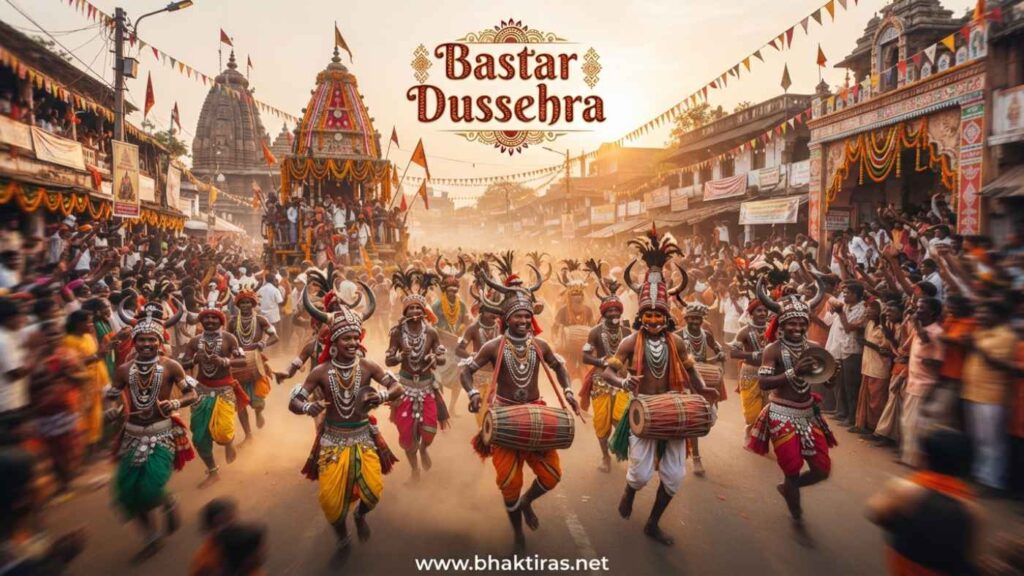
Bastar Dussehra is a tribal-Hindu festival held in Jagdalpur and across the Bastar region of Chhattisgarh, widely described as the longest festival in the world at around 75 days. It has no connection to the Rama-Ravana story that defines Dussehra elsewhere in India. Instead it centres on Danteshwari Devi, the tutelary goddess of Bastar, and gathers dozens of village and forest deities for weeks of worship. A tradition roughly 600 years old, it was shaped by the Kakatiya rulers of Bastar and blends Adivasi belief with mainstream Hindu practice.
Bastar Dussehra 2026-2028: Dates & Calendar
Bastar Dussehra 2026 opens around mid-July on Hareli Amavasya and closes with Vijayadashami on 20 October. Because it follows the Hindu lunar calendar, both the start and the culmination shift by a few weeks each year.
| Year | Approx. start (Hareli Amavasya) | Culmination (Vijayadashami) | Notes |
|---|---|---|---|
| 2026 | Mid-July (approx.) | Tuesday, 20 October | Next occurrence – about 75 days |
| 2027 | Early August (approx.) | Saturday, 9 October | Roughly 75 days |
| 2028 | Mid-July (approx.) | Wednesday, 27 September | Roughly 75 days |
The festival is a chain of many named rituals rather than a single day. The opening Paat Jatra falls on Hareli Amavasya, while the best-known public events – the great chariot processions, Nisha Jatra and Muria Durbar – cluster around the Navratri and Vijayadashami period in October.
Why Bastar Dussehra Is Celebrated
Bastar Dussehra is celebrated to honour Danteshwari Devi, the guardian goddess of the Bastar region, and to bring together the many tribal and village deities under her care. It marks divine sovereignty over the land, not the victory of Rama over Ravana.
Homage to Danteshwari
The whole festival is an act of devotion to Danteshwari Devi, whose main shrine is at Dantewada. Her sacred umbrella (chhatra) travels in the chariot, and every ritual seeks her blessing for the region and its people.
A gathering of deities
Hundreds of village and forest gods and goddesses are carried from across Bastar to Jagdalpur during the festival. This coming together of Adivasi deities under one goddess is the heart of the celebration and gives it its distinctive tribal character.
A 600-year royal tradition
The festival is credited to the Kakatiya dynasty that ruled Bastar and is often dated to the 15th century. What began as a royal observance grew into a shared civic and religious event that still binds the old ruling family, priests and tribal communities together.
Not the Rama story
Elsewhere Dussehra recalls Rama defeating Ravana or Durga slaying Mahishasura. Bastar keeps the name but not the myth: there is no Ravana effigy and no Ramlila. The focus stays firmly on the goddess and on tribal worship.
Deities & Figures Worshipped
Bastar Dussehra is built around Danteshwari Devi, joined by the region’s tribal and village deities and a few figures unique to Bastar’s rituals.
Danteshwari Devi
The tutelary deity of Bastar, worshipped chiefly at Dantewada. Her chhatra rides the chariot through Jagdalpur, and the festival exists to honour her.
Kachhan Devi
A local goddess whose permission must be sought before the festival can proceed. Her blessing is given through the Kachhan Gaadi ritual, in which a girl is seated on a swing of thorns.
Village & forest deities
Deities from villages across the Bastar plateau are brought to Jagdalpur so they can share in the worship, reflecting the Adivasi belief that the land is watched over by many local gods.
Key Rituals, Step by Step
Bastar Dussehra unfolds through a sequence of named rituals spread over about 75 days, each with its own custodians and meaning.
- Paat Jatra. On Hareli Amavasya the festival opens as a sal-wood log, brought from the forest, is worshipped and the timber for the great chariot is ritually sanctioned.
- Deri Gadhai. Wooden posts are installed near the Sirasar (assembly hall) in Jagdalpur to mark the sacred ground where the coming rituals will be held.
- Kachhan Gaadi. Permission for the festival is sought from the goddess Kachhan, who speaks through a young girl seated on a swing made of thorns.
- Jogi Bithai. A jogi (ascetic) sits in continuous penance and fasting for several days, a vow taken for the well-being and success of the festival.
- Rath Yatra. A huge, heavy wooden chariot carrying Danteshwari’s chhatra is pulled through the streets of Jagdalpur by hundreds of tribal people over several days.
- Nisha Jatra. A night ritual of animal offerings and worship held during the Navratri period, one of the more intense stages of the festival.
- Muria Durbar. A traditional assembly where tribal headmen (manjhis and chalkis) meet the old ruling family to raise the concerns of their villages, a custom running since the 19th century.
- Ohadi (farewell). The visiting village deities are given a ceremonial send-off and return to their home shrines, bringing the long festival to a close.
Where It's Celebrated
Bastar Dussehra is a deeply local festival, focused on Jagdalpur and the tribal districts of the Bastar region in southern Chhattisgarh.
Jagdalpur
The main stage of the festival. The chariot procession, Muria Durbar and the central rituals all take place here, drawing huge crowds into the old town around the Danteshwari temple and Sirasar.
Dantewada
Home to the principal Danteshwari shrine. The goddess’s presence at Dantewada anchors the festival’s meaning, and her symbols are central to the Jagdalpur ceremonies.
Bastar's villages
Communities across the Bastar plateau send their deities and headmen to Jagdalpur. For many tribal families the journey to Dussehra is the great social and religious gathering of the year.
Bastar Dussehra Do's and Don'ts
A short guide for visitors who want to experience the festival respectfully.
Do
- Plan around October, when the chariot processions, Nisha Jatra and Muria Durbar take place.
- Ask locals or organisers before photographing rituals or tribal participants.
- Dress modestly and cover your shoulders and legs at temple sites.
- Learn the names of the main rituals so you understand what you are watching.
- Respect barricades and the instructions of ritual custodians during the chariot pull.
Avoid
- Do not expect a Ravana effigy or Ramlila – Bastar’s festival is about the goddess, not Rama.
- Do not touch the chariot, deity umbrellas or ritual objects without permission.
- Do not treat tribal ceremonies as a photo backdrop or interrupt them for pictures.
- Do not enter restricted ritual areas reserved for priests and headmen.
- Do not assume every day has a public spectacle – many of the 75 days are quiet preparatory rites.
Frequently Asked Questions
When is Bastar Dussehra in 2026?
Bastar Dussehra 2026 begins around mid-July on Hareli Amavasya in the month of Shravan and culminates on Vijayadashami, Tuesday 20 October 2026. Spanning roughly 75 days, it is one of the longest festivals in the world. Exact local start dates can vary slightly from the panchang.
When is Bastar Dussehra in 2027 and 2028?
Bastar Dussehra will culminate on Vijayadashami on 9 October 2027 and on 27 September 2028, with the festival opening about 75 days earlier around late July or early August each year. The precise start tracks Hareli Amavasya and shifts with the Hindu lunar calendar, so treat the opening dates as approximate.
Why is Bastar Dussehra celebrated?
Bastar Dussehra is celebrated to honour Danteshwari Devi, the guardian goddess of the Bastar region, and to gather the area’s many tribal and village deities in her worship. It is a roughly 600-year-old tradition begun under the Kakatiya rulers. It marks the goddess’s sovereignty over the land rather than any victory of Rama over Ravana.
Which god is worshipped during Bastar Dussehra?
The presiding deity of Bastar Dussehra is Danteshwari Devi, whose main temple is at Dantewada. Her sacred umbrella travels in the festival chariot. Alongside her, hundreds of tribal and village gods and goddesses from across Bastar are brought to Jagdalpur to join the worship.
Is Bastar Dussehra really the world's longest festival?
Yes, Bastar Dussehra is widely described as the world’s longest festival, running for about 75 days. It begins on Hareli Amavasya in Shravan (around July) and ends with Vijayadashami in Ashwin (September or October). The long span comes from its chain of many separate rituals rather than a single celebration day.
What are the main rituals of Bastar Dussehra?
The main rituals of Bastar Dussehra include Paat Jatra (the opening rite), Kachhan Gaadi (seeking the goddess Kachhan’s permission from a girl seated on thorns), Jogi Bithai, the Rath Yatra chariot procession, Nisha Jatra and the Muria Durbar assembly. Each has its own custodians and takes place at set points across the 75-day festival.
Where is Bastar Dussehra celebrated?
Bastar Dussehra is celebrated mainly in Jagdalpur, the principal town of the Bastar region in southern Chhattisgarh, with the goddess Danteshwari’s chief shrine at nearby Dantewada. Tribal communities from villages across the Bastar plateau bring their deities and headmen to Jagdalpur for the festival.
How is Bastar Dussehra different from normal Dussehra?
Bastar Dussehra shares the name of the national festival but not its story. There is no burning of a Ravana effigy and no Ramlila. Instead it honours Danteshwari Devi and the region’s tribal deities, and it lasts about 75 days rather than a single day, making it unique among India’s Dussehra celebrations.
However you mark the season, may Danteshwari Maa watch over you. Jai Danteshwari Maa.