
Ali Ai Ligang 2027 – The Mishing Spring Sowing Festival
আলি আয়ে লিগাং
When is Ali Ai Ligang in 2027?
Ali Ai Ligang 2027 is expected around mid-February (approximately 17 February), falling on Lakki Gang, the first Wednesday of the Mishing month of Ginmur. It is the spring sowing festival of the Mishing (Mising) tribe of Assam, marking the ceremonial start of the paddy-sowing season in the Brahmaputra valley.
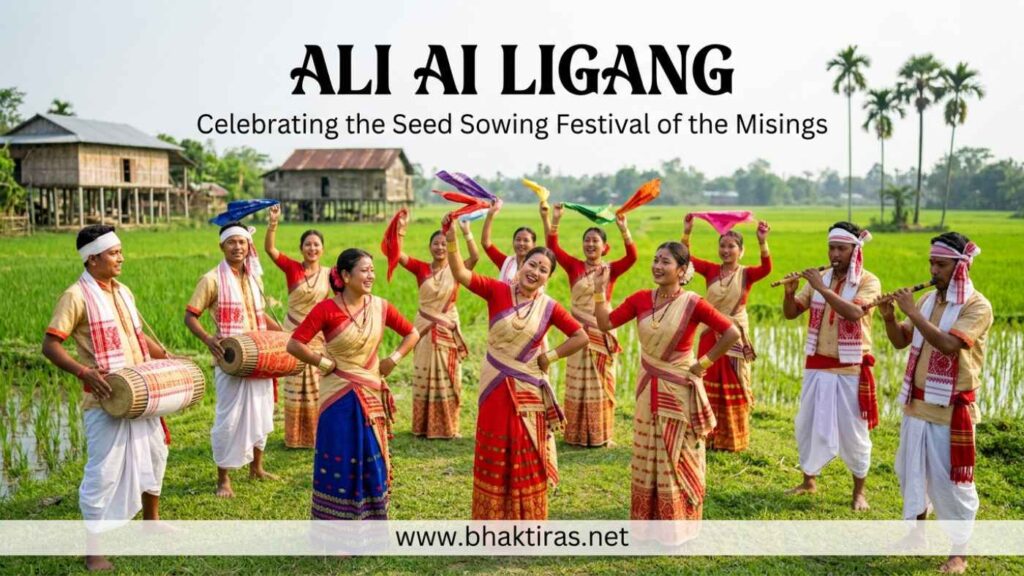
Ali Ai Ligang is the spring sowing festival of the Mishing (also written Mising) people, one of the largest riverine communities of Assam’s Brahmaputra valley. Its name joins three Mishing words – Ali (root or seed), Ai (fruit) and Ligang (to sow) – and it ceremonially opens the season for planting Ahu paddy. Held on Lakki Gang, the first Wednesday of the month of Ginmur (around mid-February), the festival blends farming, feasting and the community’s Donyi-Polo faith in the sun and moon.
Ali Ai Ligang 2026-2028: Dates & Calendar
Ali Ai Ligang always falls on Lakki Gang, the first Wednesday of the Mishing month of Ginmur, so the English-calendar date shifts a little each year within February. The 2026 celebration on 18 February has passed; the next observance is in February 2027.
| Year | Date | Day | Notes |
|---|---|---|---|
| 2026 | 18 February | Wednesday | First Wednesday of Ginmur |
| 2027 | 17 February (approx) | Wednesday | Next occurrence – to be confirmed |
| 2028 | 16 February (approx) | Wednesday | Approximate; first Wednesday of Ginmur |
The opening day is called Lakki Gang, meaning the sowing day. Celebrations traditionally ran for five days but are now often kept to three, ending with feasting and dance.
Why Ali Ai Ligang Is Celebrated
Ali Ai Ligang is celebrated to bless the first sowing of the year and to ask the earth, sun and moon for a good Ahu paddy harvest. For the Mishing, it is both an agricultural ritual and a renewal of community and faith.
Start of the sowing season
The festival marks the day the first seeds are ceremonially placed in the soil. A senior member of the household sows a handful of paddy in the field, and only after this ritual does regular sowing begin across the village.
Donyi-Polo belief
The Mishing worship Donyi-Polo, the sun and the moon, as the guiding powers of life and nature. Ali Ai Ligang carries prayers to these forces along with the ancestors, seeking protection for the crop and the people who tend it.
Rest for the earth
For a few days after the sowing, the community observes a taboo on cutting trees, felling bamboo or tilling the land. This pause honours the earth at the moment it receives seed and reflects a careful, seasonal relationship with the land.
Deities & Figures Worshipped
Ali Ai Ligang is centred on Donyi-Polo, the sun and moon, worshipped by the Mishing as the source of light, life and truth. Ancestors and the spirits of the land are also honoured during the sowing rites.
Donyi-Polo
Donyi (the sun) and Polo (the moon) are revered as the supreme guiding powers in Mishing belief. Prayers at Ali Ai Ligang are offered to them for a fertile season and the well-being of the community.
Ancestors and land spirits
Offerings of rice beer and food are made in remembrance of forefathers and to the spirits associated with the fields, seeking their blessing on the newly sown seed.
Key Rituals, Step by Step
The day follows a clear order – a first ceremonial sowing, prayers to Donyi-Polo, feasting, and finally the Gumrag dance that carries on into the night.
- Preparing the home. Houses are cleaned and tidied, and families brew apong (rice beer) and cook special dishes in the days leading up to Lakki Gang.
- The first sowing. On the morning of the first Wednesday of Ginmur, an elder of the family sows a small quantity of Ahu paddy in the field as the ceremonial opening of the season.
- Prayers to Donyi-Polo. The community offers prayers to the sun and moon and to the ancestors, asking for a healthy crop and protection from harm.
- Offerings. Apong, pona, pork, dried fish and rice preparations are offered and then shared among family and neighbours.
- The Gumrag Soman dance. Young men and women perform the vigorous Gumrag Soman, a rhythmic dance set to drums (dhol) and cymbals that moves through the village.
- Community feasting. Households host and visit one another, sharing food and rice beer through the day and into the evening.
- The rest period. For a few days after the sowing, cutting trees, felling bamboo and tilling are avoided, closing the festival with a quiet respect for the land.
Special Foods of Ali Ai Ligang
The festival table is built around rice, pork, fish and home-brewed drinks – the everyday harvest of Mishing riverside life, prepared with care for the occasion.
Apong
A traditional rice beer brewed at home, apong is central to Mishing hospitality and is shared freely among guests through the festival. Two common types are the white nogin apong and the darker poro apong made with rice-husk ash.
Pona
A distilled rice drink stronger than ordinary apong, pona is prepared for special occasions and offered to guests and to the ancestors during the sowing rites.
Pork dishes
Pork is a festive favourite, often cooked simply with local herbs, bamboo shoot or leafy greens and eaten with rice.
Fish and dried fish
Living beside the rivers, the Mishing serve fresh and dried fish (namsing) prepared with local vegetables, a staple that features prominently at the feast.
Purang apin and rice cakes
Rice-based preparations such as purang apin (rice packed and cooked in leaves) and other steamed rice items round out the meal shared among families.
Where It's Celebrated
Ali Ai Ligang is a festival of the Mishing people, so it is observed most strongly in the districts where they live along the Brahmaputra and its tributaries.
Upper Assam districts
Dhemaji, Lakhimpur, Dibrugarh, Tinsukia, Jorhat, Sivasagar and Majuli, the river island, see the largest gatherings, with village grounds hosting Gumrag dances and community feasts.
Riverine Mishing villages
In the char and riverbank settlements of the Brahmaputra valley, the festival keeps its farming heart, with the first sowing performed field by field across each village.
Mishing diaspora
Mishing communities settled in parts of Arunachal Pradesh and in towns beyond Assam mark the day with cultural programmes, dance and shared meals to stay connected to their roots.
Ali Ai Ligang Do's and Don'ts
A few simple customs guide how the festival is observed with respect.
Do
- Perform the first ceremonial sowing before general planting begins
- Offer prayers to Donyi-Polo and remember the ancestors
- Share apong, food and hospitality with neighbours and guests
- Join or make space for the Gumrag Soman dance
- Respect the post-sowing rest period for the land
Avoid
- Do not cut trees or fell bamboo during the rest days after sowing
- Do not till or dig the fields in the taboo period
- Do not treat the sowing ritual casually – it opens the season
- Do not waste the offered food or drink
- Do not disturb the communal dance and gatherings
Frequently Asked Questions
When is Ali Ai Ligang in 2027?
Ali Ai Ligang 2027 is expected around mid-February, approximately 17 February, on Lakki Gang – the first Wednesday of the Mishing month of Ginmur. The exact day is confirmed by the community closer to the time, so the 2027 date is approximate.
When was Ali Ai Ligang in 2026 and when is it in 2028?
Ali Ai Ligang was observed on 18 February 2026. In 2028 it is expected around 16 February (approximate), again on the first Wednesday of the month of Ginmur. As the date is fixed to a Wednesday in February, it shifts slightly each year.
Why is Ali Ai Ligang celebrated?
Ali Ai Ligang is celebrated to open the paddy-sowing season and to seek blessings for a good harvest. It is the spring sowing festival of the Mishing people of Assam, combining a first ceremonial sowing with prayers to Donyi-Polo, feasting and dance.
What does the name Ali Ai Ligang mean?
The name Ali Ai Ligang comes from three Mishing words: Ali (root or seed), Ai (fruit) and Ligang (to sow). Together they signal the sowing of seeds and fruit, marking the start of the agricultural year.
Who celebrates Ali Ai Ligang?
Ali Ai Ligang is celebrated by the Mishing (Mising) tribe, a large riverine community of Assam’s Brahmaputra valley. It is observed in upper Assam districts such as Dhemaji, Lakhimpur, Majuli and Dibrugarh, and among Mishing communities elsewhere.
What is the Gumrag Soman dance?
Gumrag Soman is the vigorous folk dance performed during Ali Ai Ligang. Young men and women dance in rhythm to drums and cymbals, and it is one of the most recognisable features of the festival.
What foods are eaten during Ali Ai Ligang?
Ali Ai Ligang is marked by apong (rice beer), pona (a stronger rice drink), pork, fresh and dried fish, and rice-based dishes. These reflect the riverside farming and fishing life of the Mishing people.
How long does Ali Ai Ligang last?
Ali Ai Ligang traditionally lasted five days but is now commonly observed over about three days. It begins on Lakki Gang, the first Wednesday of Ginmur, and is followed by a short period when cutting trees and tilling the land are avoided.
May the first seeds of the season take deep root – warm greetings to all who celebrate Ali Ai Ligang.