
Bohag Bihu 2027 – Assam's Joyous New Year & Spring Festival
বহাগ বিহু
When is Bohag Bihu in 2027?
Bohag Bihu (Rongali Bihu) begins on 14 April 2027, with Goru Bihu on the 14th and Manuh Bihu on the 15th. It marks the Assamese New Year and the start of spring and the sowing season, and is celebrated across Assam over roughly seven days with the Bihu dance, dhol and pepa music, feasting and Husori visits.
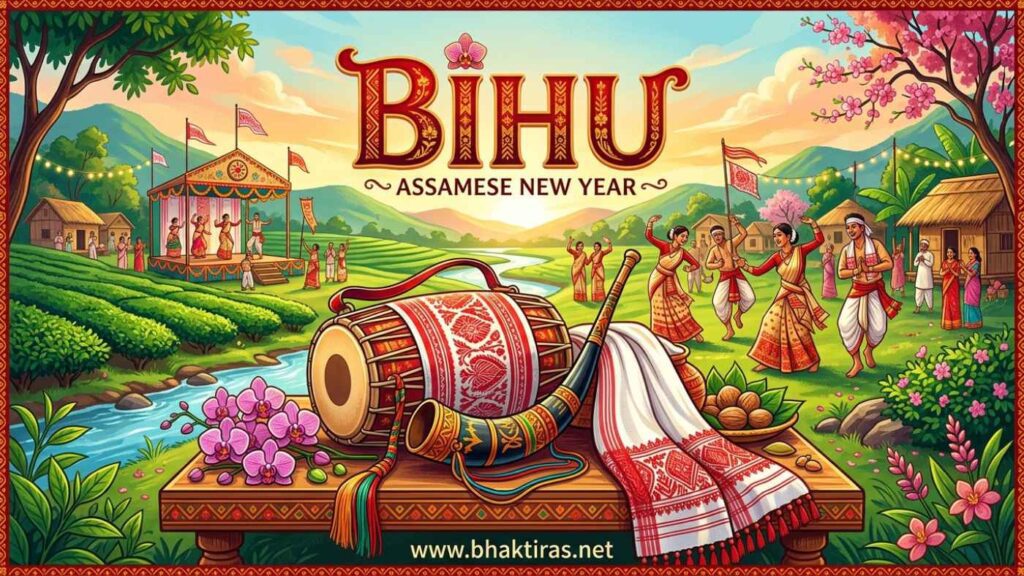
Bohag Bihu, also called Rongali Bihu, is the Assamese New Year and the happiest of Assam’s three Bihus. Falling in mid-April as the fields are readied for sowing, it welcomes spring rather than honouring a single deity – the days are given over to cattle, the land and community. Over roughly a week people bathe and garland their cows, wear the woven gamosa, dance the Bihu with dhol and pepa, and go house to house singing Husori. It is as much a celebration of Assamese identity as of the turning year.
Bohag Bihu 2026-2028: Dates & Calendar
Bohag Bihu is a solar festival tied to the Sun’s entry into Mesha (Aries), so it falls in mid-April every year – around 14-15 April – rather than shifting with the moon like most Hindu festivals. The next celebration is 14-15 April 2027.
| Year | Dates | Goru Bihu | Manuh Bihu |
|---|---|---|---|
| 2026 | 14-15 April | 14 April (Tue) | 15 April (Wed) |
| 2027 | 14-15 April | 14 April (Wed) | 15 April (Thu) |
| 2028 | 13-14 April | 13 April (Thu) | 14 April (Fri) |
Traditionally Rongali Bihu ran for seven days, sometimes described as the seven Bihus, blending cattle worship, new-year rites, feasting and courtship dances into one extended spring celebration.
Why Bohag Bihu Is Celebrated
Bohag Bihu is celebrated as the Assamese New Year and the arrival of spring, giving thanks to the cattle and the land at the start of the sowing season.
A new agricultural year
Bohag opens the Assamese calendar just as the ground is prepared for the first crops. The festival is a hopeful start point – the community pauses to mark the turning year before the hard work of planting begins.
Gratitude to cattle and land
Farming in Assam has long depended on cattle, and Goru Bihu sets aside a whole day to honour them. Washing, garlanding and feeding the cows is a direct thanks to the animals that pull the plough and the earth that feeds everyone.
Spring and fertility
Arriving as the trees flower and the fields green, Bohag Bihu carries the mood of renewal and fertility. The lively Bihu dance and songs, often between young men and women, echo this theme of new life and courtship.
Assamese identity
More than a calendar event, Bihu is the cultural heartbeat of Assam. The gamosa, the dhol and pepa, and the Bihu dance have become emblems of Assamese identity celebrated by the whole community regardless of background.
Key Rituals, Step by Step
Rongali Bihu unfolds over several distinct days, each with its own focus – from the cattle to the people to the wider community.
- Goru Bihu (the cow’s day). Cattle are taken to the river or pond, bathed, smeared with turmeric, and gently struck with sprigs of dighloti and makhioti plants for good health. They are garlanded and fed special treats of gourd and brinjal.
- Manuh Bihu (people’s day). The following day people bathe, wear new clothes, and seek the blessings of elders. Younger family members touch the feet of their seniors and exchange the woven gamosa as a mark of respect and affection.
- Wearing and gifting the gamosa. The white cotton gamosa with its red border, the festival’s emblem, is offered to elders, guests and deities, and draped by dancers during performances.
- Bihu dance and music. Troupes perform the energetic Bihu dance to the beat of the dhol, the drone of the pepa (buffalo-horn pipe), and the toka and taal, in courtyards, fields and open grounds.
- Husori visits. Groups of singers, the Husori troupes, move from house to house offering blessings through song and receiving hospitality in return, weaving the whole neighbourhood into the celebration.
- Feasting and sweets. Homes prepare pitha, laru and jolpan, and families share meals of masor tenga and other seasonal dishes throughout the days of Bihu.
Special Foods of Bohag Bihu
Bihu tables lean on rice, coconut, sesame and jaggery, with sweets prepared in advance and shared with every visitor.
Pitha
Rice-flour cakes are the signature Bihu treat. Til pitha is rolled with sesame and jaggery, while ghila pitha is a fried, ring-shaped cake – both made in large batches for guests and Husori troupes.
Laru
Round laddoos of coconut or sesame bound with jaggery, laru is offered to visitors and kept ready throughout the festival days.
Jolpan
A traditional light meal of flattened or puffed rice served with curd (doi) and jaggery or cream, jolpan is the everyday comfort food of the Bihu mornings.
Masor tenga
A tangy, light Assamese fish curry soured with tomato, lemon or elephant-apple, masor tenga is a festive favourite served with plain rice.
Coconut sweets
Beyond laru, grated coconut is cooked with sugar or jaggery into simple sweets that round off the Bihu spread.
The Days of Rongali Bihu
Rongali Bihu is really a sequence of linked days and customs, each carrying its own name and purpose across Assam.
Goru Bihu
The cow’s day, when cattle are washed, garlanded and fed. It sets the festival’s tone of gratitude to the animals central to farming life.
Manuh Bihu
People’s day, marked by new clothes, ritual bathing, and paying respect to elders with the gift of a gamosa.
Husori
Community singing troupes travel from house to house offering blessings in song, binding neighbourhoods together over the festive days.
Bihu dance
The famous folk dance of young men and women, performed to dhol and pepa, expressing the spring themes of joy, fertility and courtship.
Bohag Bihu Do's and Don'ts
A few simple customs make the festival respectful and enjoyable.
Do
- Wash, garland and feed cattle with care on Goru Bihu
- Wear the gamosa and offer one to elders and guests
- Seek the blessings of elders on Manuh Bihu
- Welcome Husori troupes warmly with sweets and hospitality
- Prepare and share pitha, laru and jolpan with visitors
Avoid
- Do not overwork or mistreat cattle on their special day
- Do not skip greeting or honouring elders in the family
- Do not turn Husori singers away empty-handed
- Do not treat the gamosa carelessly – it is an emblem of respect
- Do not let the courtship dances lose their traditional grace and decorum
Frequently Asked Questions
When is Bohag Bihu in 2027?
Bohag Bihu (Rongali Bihu) in 2027 falls on 14-15 April, with Goru Bihu on 14 April and Manuh Bihu on 15 April. It marks the Assamese New Year and the arrival of spring, and is celebrated across Assam over roughly seven days.
When is Bohag Bihu in 2026 and 2028?
In 2026 Bohag Bihu falls on 14-15 April, and in 2028 it falls on 13-14 April. Because it is a solar festival tied to the Sun’s entry into Mesha (Aries), it always lands in mid-April rather than shifting with the moon.
Why is Bohag Bihu celebrated?
Bohag Bihu is celebrated as the Assamese New Year and the start of spring and the sowing season. It gives thanks to cattle and the land, expresses hope for a good harvest, and is a joyful celebration of Assamese culture and identity.
What is the difference between Goru Bihu and Manuh Bihu?
Goru Bihu is the cow’s day, when cattle are bathed, garlanded and fed as thanks for their role in farming. Manuh Bihu, the next day, is people’s day, when families wear new clothes, honour elders and exchange the gamosa.
What is the gamosa in Bihu?
The gamosa is a white cotton cloth with a red woven border that is the emblem of Bihu and of Assamese identity. It is offered to elders, guests and deities as a mark of respect and draped by Bihu dancers during performances.
What foods are eaten during Bohag Bihu?
Bohag Bihu tables feature pitha (rice cakes such as til pitha and ghila pitha), laru (coconut and sesame laddoos), and jolpan (flattened rice with curd and jaggery). Savoury dishes like masor tenga, a tangy fish curry, are also popular.
What is Husori during Bihu?
Husori is the custom of community singing troupes going from house to house during Bihu, offering blessings through song and receiving hospitality in return. It brings the whole neighbourhood together and is a defining feature of Rongali Bihu.
How many Bihus does Assam celebrate?
Assam celebrates three Bihus in the year – Bohag (Rongali) Bihu in April, Kati (Kongali) Bihu in October, and Magh (Bhogali) Bihu in January. Bohag Bihu is the most joyous, marking the New Year and spring.
May the dhol and pepa fill your home with joy this Bohag Bihu – Rongali Bihur xubhessa!