
Khatu Shyam Mela 2027 – Rajasthan's Phalguna Lakhi Mela
खाटू श्याम मेला
When is the Khatu Shyam Mela in 2027?
The Khatu Shyam Mela peaks on Thursday, 18 March 2027, on Phalguna Shukla Ekadashi, with the crowds continuing through Dwadashi on 19 March. Devotees begin arriving several days earlier, so the wider mela runs for roughly a week at the Khatu Shyam Ji temple in Sikar district, Rajasthan.
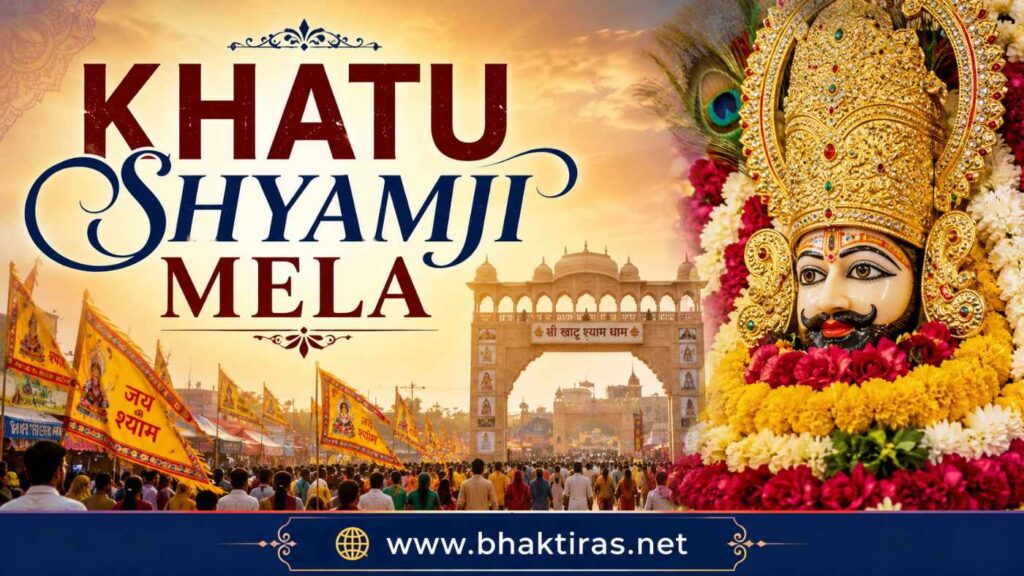
The Khatu Shyam Mela, also called the Phalguna Lakhi Mela, is the biggest annual gathering at the Khatu Shyam Ji temple in Khatu village, Sikar district of Rajasthan. It honours Barbarika, the grandson of Bhima, whom Krishna blessed to be worshipped as Shyam in the age of Kali Yuga. Held around Phalguna Shukla Ekadashi, usually in February or March just before Holi, it pulls millions of devotees who walk in flag-carrying processions, sing bhajans through the night and queue for a glimpse of Baba Shyam.
Khatu Shyam Mela 2026-2028: Dates & Calendar
The mela peaks on Phalguna Shukla Ekadashi, which lands on 18 March in 2027. Because it follows the Hindu lunar calendar, the Gregorian date shifts each year between late February and mid-March.
| Year | Ekadashi Peak | Day | Notes |
|---|---|---|---|
| 2026 | 27 February | Friday | Ekadashi peak; Dwadashi on 28 February |
| 2027 | 18 March | Thursday | Next occurrence; Dwadashi on 19 March |
| 2028 | 7 March | Tuesday | Ekadashi peak; Dwadashi on 8 March |
The full mela stretches over roughly a week. Crowds swell from Shashthi onward, the flag processions build through Dashami, and darshan reaches its heaviest on Ekadashi and Dwadashi, just days before Holi.
Why the Khatu Shyam Mela Is Celebrated
The mela marks the annual worship of Barbarika, the young warrior whose severed head Krishna promised would be honoured as Shyam in Kali Yuga. It celebrates a deity known for standing by anyone who feels defeated or helpless.
The warrior Barbarika
Barbarika was the son of Ghatotkacha and grandson of Bhima. Blessed by Shiva with three infallible arrows, he became known as Teen Baan Dhaari, the bearer of three arrows, and vowed always to fight for the weaker side in any battle.
The head donation
On the eve of the Kurukshetra war, Krishna reasoned that a warrior sworn to the losing side would keep switching sides and never let the war end. Disguised as a Brahmin, he asked Barbarika for the ultimate charity: his own head. Barbarika gave it without hesitation, which is why he is also called Sheesh ke Daani, the donor of his head.
Krishna's boon
Moved by the sacrifice, Krishna granted Barbarika a boon: in Kali Yuga he would be worshipped by Krishna’s own name, Shyam. His head was placed on a hill to watch the whole war, and devotees believe he still watches over those who call on him.
Haarey ka Sahara
Baba Shyam is loved as Haarey ka Sahara, the support of the defeated. Because he pledged to back whoever was losing, people who feel beaten by illness, debt or misfortune come to Khatu believing he lifts the fallen. This is the heart of the mela’s pull.
Deities & Figures Worshipped
The central figure is Khatu Shyam, the deified head of Barbarika, worshipped as a form of Krishna. Krishna himself is honoured as the giver of the boon.
Khatu Shyam (Barbarika)
The presiding deity is the self-manifested head of Barbarika, found buried at Khatu after a cow began pouring her milk over the spot each day. Enshrined in the temple, it is worshipped as Shyam Baba, complete with lotus eyes and a peacock-feathered crown.
Krishna
Krishna is revered as the one who accepted Barbarika’s sacrifice and gave him his own name. Shyam is one of Krishna’s names, so devotees see Baba Shyam and Krishna as deeply linked, and Krishna bhajans are sung alongside Shyam bhajans.
Key Rituals, Step by Step
Most pilgrims combine a walking pilgrimage with darshan, an offering of bhog, and an all-night session of devotional singing.
- Nishan yatra on foot. Groups of devotees, called Shyam premis, walk for miles carrying a triangular flag known as the nishan. Barefoot padyatras set out from Ringas railway station and from towns across Rajasthan, chanting the name of Baba Shyam.
- Reaching Khatu. The 17 kilometre stretch from Ringas to Khatu fills with walkers day and night during the mela. Volunteers set up bhandaras offering free food and water along the route.
- Presenting the nishan. On arrival, devotees hand their flag to be raised over the temple, a symbol of a vow fulfilled and a wish carried to Baba’s court.
- Darshan in the temple. Pilgrims join the long managed queues for a view of the deity. During the mela the darshan lines run around the clock, and the district administration adds barricades and extra timings.
- Offering bhog. Devotees offer churma, kheer and other sweets as bhog, along with fresh flowers, and many present a coconut or a simple prasad.
- Bhajan sandhya. Night-long bhajan gatherings fill the town, where singers and devotees perform Shyam bhajans and the popular chant of Baba’s names until dawn.
Special Foods of the Khatu Shyam Mela
Food at the mela mixes temple bhog offered to Baba Shyam with the hearty Rajasthani meals served at community bhandaras.
Churma
Coarsely crushed wheat cooked with ghee and jaggery or sugar, churma is a favourite bhog for Baba Shyam and is shared as prasad after darshan.
Dal bati
Baked wheat baatis dunked in ghee and served with spiced dal, this staple of the region feeds pilgrims at the free bhandaras that line the walking route.
Panchamrit
A blend of milk, curd, honey, ghee and sugar, panchamrit is used in the deity’s worship and distributed as a sacred taste to devotees.
Kheer bhog
Rice simmered slowly in milk with sugar and cardamom, kheer is offered as bhog and handed out as prasad through the mela days.
Where It Is Celebrated
The mela is centred on one town, but its following has spread far beyond Rajasthan in recent decades.
Khatu, Sikar
The heart of everything is Khatu village in Sikar district, where the temple stands. During the mela the small town hosts millions, with the Ringas to Khatu road turning into a river of walkers.
Across Rajasthan
Shyam mandals, or devotee groups, set out from Jaipur, Sikar, Reengus and towns throughout the state, organising padyatras and bhandaras that keep the pilgrim routes fed and lit.
Pan-India following
Baba Shyam now draws crowds from Delhi, Haryana, Gujarat, Madhya Pradesh and beyond. Shyam temples and bhajan groups in many cities send flags and pilgrims to Khatu each Phalguna.
Khatu Shyam Mela Do's and Don'ts
The mela is one of India’s most crowded gatherings, so a little planning keeps the visit safe and smooth.
Do
- Check the official darshan timings and any online slot booking before you travel, as they change during the mela.
- Start the walk early and carry water, especially on the Ringas to Khatu stretch.
- Keep children and elderly companions close and agree on a meeting point in case you get separated.
- Follow the barricades and instructions from police and temple volunteers in the queues.
- Carry only light luggage and secure your phone and valuables in the dense crowds.
Avoid
- Do not rush or push in the darshan lines; the crowd moves better when everyone stays calm.
- Do not carry large bags, and avoid leaving belongings unattended.
- Do not walk the padyatra without proper footwear and rest if you feel unwell.
- Do not block the main routes or bhandara points for photographs.
- Do not rely on last-minute accommodation; rooms in Khatu fill up well before Ekadashi.
Frequently Asked Questions
When is the Khatu Shyam Mela in 2027?
The Khatu Shyam Mela peaks on Thursday, 18 March 2027, on Phalguna Shukla Ekadashi, with heavy crowds continuing through Dwadashi on 19 March. The wider mela runs for about a week, as devotees start arriving several days earlier.
When is the Khatu Shyam Mela in 2026 and 2028?
The mela peaks on Friday, 27 February 2026, and on Tuesday, 7 March 2028, each on Phalguna Shukla Ekadashi. The dates shift every year because the festival follows the Hindu lunar calendar and falls just before Holi.
Why is the Khatu Shyam Mela celebrated?
The Khatu Shyam Mela is celebrated to honour Barbarika, the warrior grandson of Bhima who donated his head before the Kurukshetra war. Krishna blessed him to be worshipped as Shyam in Kali Yuga, and the mela marks the annual gathering of his devotees at Khatu.
Who is Khatu Shyam and how is he linked to Krishna?
Khatu Shyam is the deified head of Barbarika, worshipped as a form of Krishna. Krishna gave Barbarika his own name, Shyam, as a boon for his sacrifice, so devotees worship Baba Shyam as inseparable from Krishna.
What does Haarey ka Sahara mean?
Haarey ka Sahara means the support of the defeated. Barbarika had vowed to fight for the weaker side, so Baba Shyam is believed to stand by anyone who feels beaten or helpless, which is why struggling devotees flock to Khatu.
Where is the Khatu Shyam temple?
The Khatu Shyam temple is in Khatu village, Sikar district, in the state of Rajasthan. Many pilgrims reach it by walking the roughly 17 kilometre route from Ringas railway station during the mela.
What is the nishan yatra?
The nishan yatra is a procession in which devotees carry a triangular flag, the nishan, on foot to the temple. Presenting the flag over the shrine is treated as a vow fulfilled and a wish placed at Baba Shyam’s feet.
What food is offered at the Khatu Shyam Mela?
Devotees offer churma, kheer and panchamrit as bhog to Baba Shyam, and receive them back as prasad. Community bhandaras along the walking route serve Rajasthani meals such as dal bati to feed the pilgrims.
May Baba Shyam lift every heavy heart that reaches Khatu. Jai Shri Shyam.