
Ram Navami 2027 – Birth of Lord Rama
राम नवमी
When is Ram Navami in 2027?
Ram Navami falls on Thursday, 15 April 2027. It marks the birth of Lord Rama, the seventh avatar of Vishnu, born at noon to King Dasharatha and Queen Kausalya in Ayodhya. The festival lands on the ninth day (Navami) of the bright fortnight of Chaitra, closing the nine days of Chaitra Navratri.
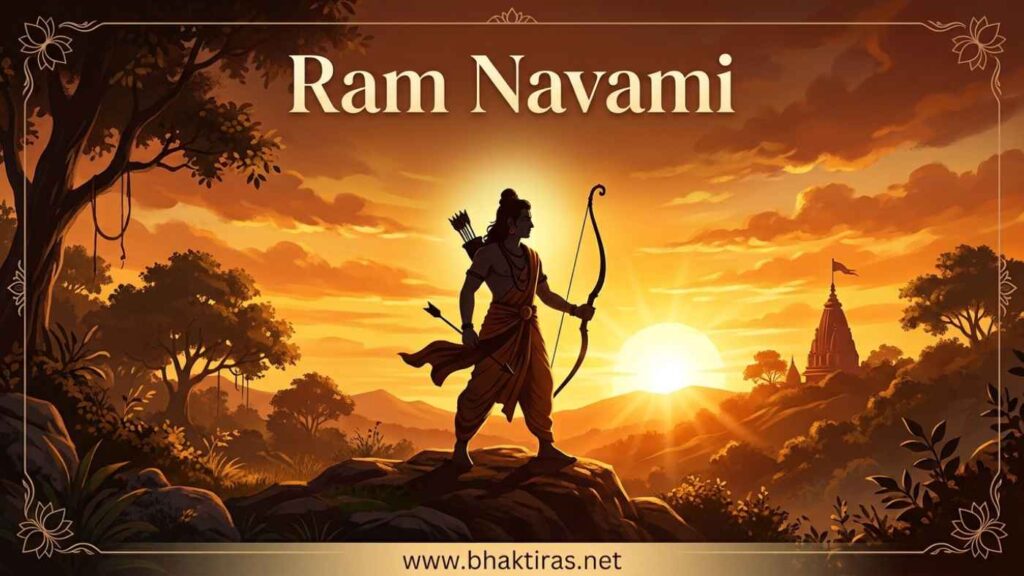
Ram Navami celebrates the birth of Lord Rama, the seventh avatar of Vishnu, who was born to King Dasharatha and Queen Kausalya at Ayodhya. Hindus mark the day on Chaitra Shukla Navami, the ninth and final day of Chaitra Navratri, when spring is at its height. Tradition holds that Rama arrived at midday, so the noon hour carries the main worship. In 2027 the festival falls on 15 April, observed with fasting, readings from the Ramayana, and joyful processions across India.
Ram Navami 2026-2028: Dates & Calendar
The next Ram Navami is on Thursday, 15 April 2027. The date shifts each year because it follows the Hindu lunar calendar rather than the fixed Gregorian one.
| Year | Date | Day | Notes |
|---|---|---|---|
| 2026 | 26 March | Thursday | Passed |
| 2027 | 15 April | Thursday | Next occurrence |
| 2028 | 4 April | Tuesday | Chaitra Navratri closes |
The birth ceremony is timed to Madhyahna, the midday window when Rama is believed to have been born; temples announce the local muhurat in their panchang for each year.
Why Ram Navami Is Celebrated
Ram Navami is celebrated as the birthday of Lord Rama, revered as the ideal of dharma and remembered as Maryada Purushottam, the perfect upholder of duty and virtue.
The birth at Ayodhya
The day recalls Rama’s birth to King Dasharatha and Queen Kausalya in Ayodhya. His arrival answered years of longing for an heir, and Hindus honour it as the descent of Vishnu into human form to restore righteousness on earth.
The ideal life
Rama is held up as a model son, husband, king, and friend. His conduct in the Ramayana – patience in exile, loyalty, and fairness as a ruler – gives the festival its deeper meaning as a celebration of moral character, not just a birthday.
Triumph of righteousness
Because Rama later defeats the demon king Ravana, the day also stands for the victory of good over evil. Worshippers see his birth as the beginning of that story, a promise that dharma will prevail.
Deities & Figures Worshipped
The central figure is Lord Rama, the seventh avatar of Vishnu, often worshipped alongside his wife Sita, his brother Lakshmana, and his devoted companion Hanuman.
Lord Rama
The prince of Ayodhya and seventh avatar of Vishnu, whose birth the festival honours. Images of the infant Rama are placed in a cradle and rocked at noon.
Sita
Rama’s consort and the ideal of devotion. At Bhadrachalam the day features the Sita-Rama Kalyanam, a celestial re-enactment of their wedding.
Hanuman
Rama’s greatest devotee, worshipped for his strength and loyalty. Many recite the Hanuman Chalisa during Ram Navami as an act of devotion to Rama through his servant.
Key Rituals, Step by Step
Observance ranges from a quiet home fast to grand temple processions, but the noon birth ceremony is the shared heart of the day.
- Fasting (vrat). Devotees begin the day with a bath and a vow to fast; many take only fruit, milk, and vrat-friendly foods until the noon puja or the evening.
- Home and temple decoration. Altars and shrines are cleaned and adorned with flowers, tulsi, and images of Rama, Sita, Lakshmana, and Hanuman.
- Recitation of the Ramayana. Families and congregations read or listen to the Ramayana and Ram Katha, recalling episodes from Rama’s life.
- The noon birth ceremony. At Madhyahna, the moment of Rama’s birth, an idol of the infant Rama is placed in a decorated cradle and gently rocked while devotees sing.
- Bhajans and Ram Naam. Continuous chanting of Rama’s name and devotional singing fill temples and homes through the day.
- Shobha Yatra processions. In many towns a decorated procession carries images of Rama through the streets, accompanied by music and chanting.
- Sita-Rama Kalyanam. At Bhadrachalam and other Rama temples, the celestial wedding of Sita and Rama is performed as the highlight of the celebration.
- Prasad and breaking the fast. The offerings – panakam, kosambari, and fruit – are shared as prasad, and fasting devotees eat after the puja.
Special Foods of Ram Navami
Because many people fast, the food is light, cooling, and suited to spring, with a few dishes made specially to be offered to Rama.
Panakam
A cooling drink of jaggery, dry ginger, black pepper, and cardamom in water. It is offered to Rama and shared as prasad, prized for its refreshing taste in the spring heat.
Kosambari
A fresh salad of soaked moong dal or chana dal tossed with grated cucumber, coconut, and coriander. Simple, raw, and cooling, it is a classic Ram Navami offering.
Neer mor
Spiced buttermilk seasoned with ginger, green chilli, curry leaves, and asafoetida. It is served to guests and devotees to beat the midday warmth.
Fasting fare
Those keeping vrat eat sabudana khichdi, fruit, potatoes, and other vrat-friendly items that avoid grains, onion, and garlic.
Regional Names & Variations
Ram Navami is observed across India, but the scale and style of celebration change from place to place.
Ayodhya
Rama’s birthplace draws huge crowds to the Ram Janmabhoomi and Saryu river. Devotees bathe in the river and join processions through the city on the birth day.
Bhadrachalam
This Telangana temple town is famous for the Sita-Rama Kalyanam, the ceremonial wedding of Sita and Rama, performed with great splendour on Ram Navami.
Sitamarhi
In Bihar, believed to be Sita’s birthplace, the day is marked with special worship of Sita and Rama and large gatherings at local temples.
Rameswaram
In Tamil Nadu, linked to Rama’s journey to Lanka, the festival is observed at the Ramanathaswamy temple with abhishekam, recitations, and processions.
Ram Navami Do's and Don'ts
A few simple observances help keep the day devotional and in step with tradition.
Do
- Wake early, bathe, and keep the fast with a clear intention if you choose to observe vrat.
- Read or listen to the Ramayana and chant Rama’s name through the day.
- Time your main worship to the noon Madhyahna window for the birth ceremony.
- Offer panakam and kosambari and share them as prasad.
- Keep the home and altar clean and decorated for the puja.
Avoid
- Do not eat grains, onion, or garlic if you are keeping the fast.
- Avoid non-vegetarian food and alcohol on the day.
- Do not rush the noon puja; the midday hour is the main moment.
- Avoid quarrels and harsh speech, which run against Rama’s example of restraint.
- Do not treat prasad or offerings carelessly.
Frequently Asked Questions
When is Ram Navami in 2027?
Ram Navami is on Thursday, 15 April 2027. It marks the birth of Lord Rama on Chaitra Shukla Navami, the ninth day of the bright fortnight of Chaitra and the final day of Chaitra Navratri.
When is Ram Navami in 2026 and 2028?
Ram Navami was on 26 March 2026 and will fall on 4 April 2028. The date changes each year because it follows the Hindu lunar calendar, always landing on Chaitra Shukla Navami.
Why is Ram Navami celebrated?
Ram Navami is celebrated to mark the birth of Lord Rama, the seventh avatar of Vishnu, at Ayodhya. Hindus honour him as Maryada Purushottam, the ideal of dharma, and the day also symbolises the triumph of righteousness over evil.
Which god is worshipped on Ram Navami?
Lord Rama, the seventh avatar of Vishnu, is the main deity worshipped on Ram Navami. He is often honoured together with his wife Sita, his brother Lakshmana, and his devotee Hanuman.
At what time is the Ram Navami puja performed?
The main Ram Navami puja is performed at noon, the Madhyahna window, because Lord Rama is believed to have been born at midday. Temples announce the exact local muhurat in their panchang each year.
How is Ram Navami celebrated?
Ram Navami is celebrated with fasting, recitation of the Ramayana, and the noon birth ceremony in which an idol of the infant Rama is rocked in a cradle. Devotees also sing bhajans, chant Rama’s name, and join Shobha Yatra processions.
What foods are eaten on Ram Navami?
Ram Navami foods are light and cooling, suited to spring and to fasting. Common offerings include panakam, a jaggery-ginger-pepper drink, kosambari lentil salad, neer mor spiced buttermilk, fruit, and vrat items like sabudana.
Is Ram Navami part of Navratri?
Yes, Ram Navami is the ninth and final day of Chaitra Navratri, the spring Navratri. The nine nights honour the Goddess, and the festival closes with the celebration of Lord Rama’s birth on Navami.
May the birth of Lord Rama fill your home with peace and courage – Jai Shri Ram.