
Hanuman Jayanti 2026 – The Birth of the Mighty Devotee
हनुमान जयंती
When is Hanuman Jayanti in 2027?
Hanuman Jayanti falls on Tuesday, 20 April 2027 in North India, on the full-moon day (Purnima) of the Hindu month of Chaitra. It marks the birth of Lord Hanuman, the vanara devotee of Rama, and devotees observe it with early-morning aarti, recitation of the Hanuman Chalisa and fasting. South Indian regions follow different dates.
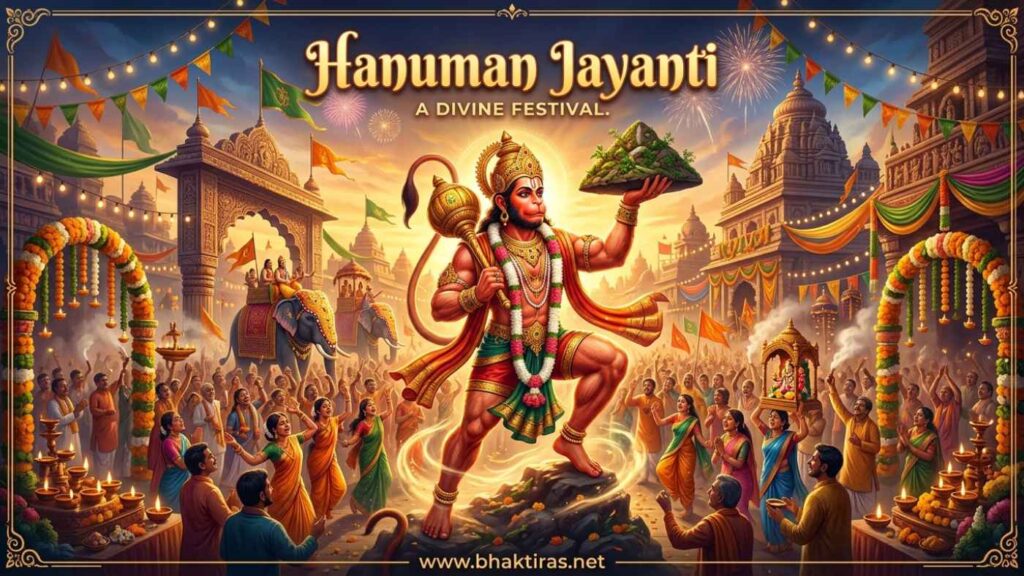
Hanuman Jayanti celebrates the birth of Lord Hanuman, the vanara born to Anjana and the wind-god Vayu, whose devotion to Rama has made him one of the most loved figures in Hindu worship. Across North India it falls on Chaitra Purnima, the full moon of the spring month of Chaitra, which lands on 20 April in 2027. Temples fill before sunrise, idols are freshly robed in orange, and the Hanuman Chalisa is chanted through the day as a prayer for strength and protection.
Hanuman Jayanti 2026-2028: Dates & Calendar
In North India the next Hanuman Jayanti is Tuesday, 20 April 2027, on the full moon of Chaitra. Because the festival follows the lunar calendar, the Gregorian date shifts by a couple of weeks each year.
| Year | Date | Day | Notes |
|---|---|---|---|
| 2026 | 1 April | Wednesday | Chaitra Purnima |
| 2027 | 20 April | Tuesday | Next occurrence |
| 2028 | 9 April | Sunday | Chaitra Purnima |
These dates apply to the widely observed North Indian reckoning. In Tamil Nadu, Hanumath Jayanthi is kept in the month of Margazhi (December-January), while in Andhra Pradesh and Telangana it runs as a 41-day period ending on Krishna Dashami in the month of Vaishakha. Always confirm your regional panchang, as the tithi can start on the previous evening.
Why Hanuman Jayanti Is Celebrated
Hanuman Jayanti is celebrated as the birth anniversary of Lord Hanuman, honoured as the embodiment of strength, courage, unshakeable devotion and selfless service to Rama.
Birth of a devotee
The day recalls the birth of Hanuman to Anjana, an apsara reborn as a vanara, and Vayu, the wind-god, whose share in the divine offering brought about the child. From infancy Hanuman showed extraordinary power, once leaping toward the sun mistaking it for a ripe fruit.
The ideal of bhakti
Hanuman is the model of devotion (bhakti). His loyalty to Rama and Sita is complete and without any thought of reward, which is why he is worshipped as the perfect servant-devotee whose strength always serves a higher purpose.
Strength and protection
Devotees turn to Hanuman for physical and mental strength, courage in hardship and protection from fear and misfortune. Reciting his praises is believed to steady the mind and remove obstacles.
Deities & Figures Worshipped
Hanuman is the central figure of the day, and he is almost always worshipped alongside Rama, whom he serves.
Lord Hanuman
The vanara son of Anjana and Vayu, celebrated for his strength, wisdom and devotion. Idols are bathed, marked with sindoor and dressed in an orange chola, and offered laddoos and garlands.
Lord Rama
Hanuman’s devotion is directed entirely to Rama, so images of Rama, Sita and Lakshmana are often honoured together with him. The bond between Rama and Hanuman is at the heart of the festival’s meaning.
Key Rituals, Step by Step
Observances begin before dawn, since Hanuman is believed to have been born at sunrise, and continue through the day at home and in temples.
- Wake before dawn. Devotees rise early, bathe and gather at Hanuman temples for the first aarti as the sun rises.
- Bathe and robe the idol. The Hanuman murti is cleaned and dressed, then coated with a chola of sindoor mixed with oil, giving the deity his characteristic orange colour.
- Apply sindoor. Fresh vermilion is applied to the idol and often to the forehead of devotees, a mark linked to Hanuman’s own devotion to Rama and Sita.
- Recite the Hanuman Chalisa. The forty-verse hymn is chanted, frequently 108 times, either alone or in group recitation through the day.
- Read the Sundarkand. Many read the Sundarkand from the Ramcharitmanas, the section recounting Hanuman’s journey to Lanka in search of Sita.
- Observe a fast. Devotees keep a fast, breaking it after prayers, and some maintain it until evening.
- Offer prasad. Boondi laddoos, besan laddoos and other sweets are offered to Hanuman and then shared as prasad.
- Visit the temple. The day is spent visiting Hanuman temples for darshan, joining bhajans and receiving blessings.
Special Foods of Hanuman Jayanti
Sweet offerings dominate the day, with laddoos the most closely associated prasad for Hanuman.
Boondi laddoo
Round sweets made from fried gram-flour pearls bound in sugar syrup, offered in large quantities and among Hanuman’s best-known prasad.
Besan laddoo
Roasted gram flour cooked in ghee with sugar and shaped into balls, a rich and popular offering.
Halwa
A warm semolina or gram-flour halwa is cooked in ghee and offered as bhog, then shared among devotees.
Panchamrit
A mix of milk, curd, ghee, honey and sugar used to bathe the idol and distributed as a sanctified offering.
Jaggery-roasted gram
Simple roasted gram sweetened with jaggery, an everyday offering that suits the modest, energetic spirit of Hanuman worship.
Regional Names & Variations
While North India keeps Hanuman Jayanti on Chaitra Purnima, the timing changes significantly across the south.
North India
Observed on the full-moon day of Chaitra (April), with early-morning aarti, Chalisa recitation and temple visits. This is the most widely followed reckoning.
Tamil Nadu
Here Hanumath Jayanthi is kept in the month of Margazhi, falling in December or January, rather than in spring.
Andhra Pradesh & Telangana
The celebration extends over a 41-day period that begins on Chaitra Purnima and ends on Krishna Dashami in the month of Vaishakha, with dedicated deeksha observed by many devotees.
Maharashtra & the west
Temples hold pre-dawn kirtans and the birth is marked at sunrise, with the Chalisa and Maruti Stotra recited and laddoos distributed as prasad.
Hanuman Jayanti Do's and Don'ts
A few simple customs help keep the day devotional and respectful.
Do
- Rise early and bathe before the pre-dawn aarti.
- Recite the Hanuman Chalisa, ideally with a steady, sincere mind.
- Offer sindoor, an orange chola and laddoos to the idol.
- Read or listen to the Sundarkand or other episodes of Hanuman’s devotion.
- Share prasad with family, neighbours and those in need.
Avoid
- Do not consume non-vegetarian food or alcohol on the day.
- Avoid anger, harsh words and quarrels, which go against Hanuman’s spirit of service.
- Do not skip cleanliness of body and worship space before prayers.
- Avoid guessing regional dates – check your local panchang.
- Do not treat the fast or vow casually if you have taken one.
Frequently Asked Questions
When is Hanuman Jayanti in 2027?
Hanuman Jayanti in 2027 falls on Tuesday, 20 April, in North India, on the full-moon day of Chaitra. It celebrates the birth of Lord Hanuman and is marked with pre-dawn aarti and recitation of the Hanuman Chalisa.
When is Hanuman Jayanti in 2026 and 2028?
In North India, Hanuman Jayanti was on 1 April 2026 (Wednesday) and will be on 9 April 2028 (Sunday). The date follows Chaitra Purnima, so it shifts within April each year according to the lunar calendar.
Why is Hanuman Jayanti celebrated?
Hanuman Jayanti is celebrated to honour the birth of Lord Hanuman, the vanara devotee of Rama. He is revered as the embodiment of strength, courage, devotion and selfless service, and the day is dedicated to seeking his blessings for these qualities.
Which god is worshipped on Hanuman Jayanti?
Lord Hanuman, son of Anjana and the wind-god Vayu, is worshipped on Hanuman Jayanti. He is honoured alongside Lord Rama, whom he serves, and idols are dressed in an orange chola and offered laddoos and sindoor.
Why is Hanuman Jayanti celebrated on different dates in South India?
Hanuman Jayanti is kept on different dates in the south because regional traditions follow different calendars. Tamil Nadu observes Hanumath Jayanthi in the month of Margazhi (December-January), while Andhra Pradesh and Telangana observe a 41-day period ending on Krishna Dashami in Vaishakha, unlike the North Indian Chaitra Purnima date.
How is Hanuman Jayanti celebrated?
Hanuman Jayanti is celebrated by rising before dawn, bathing and attending the sunrise aarti at Hanuman temples. Devotees recite the Hanuman Chalisa, often 108 times, read the Sundarkand, keep a fast, and offer sindoor, an orange chola and laddoos to the deity.
What food is offered on Hanuman Jayanti?
Sweets are the main offerings on Hanuman Jayanti, especially boondi and besan laddoos. Devotees also prepare halwa, panchamrit and jaggery-roasted gram, which are offered to Hanuman and then shared as prasad.
What is the significance of the Hanuman Chalisa on this day?
The Hanuman Chalisa is central to Hanuman Jayanti because it praises the strength and devotion of Hanuman in forty verses. Reciting it, often 108 times, is believed to bring courage, protection and peace of mind, which is why it is chanted throughout the day.
May Lord Hanuman grant you strength, courage and unwavering devotion this Hanuman Jayanti. Jai Bajrangbali!