
Goddess Mutharamman
முத்தாரம்மன்
Mutharamman is a powerful Amman, or mother goddess, of Tamil Nadu, worshipped as a form of Shakti who guards villages and grants health and prosperity. Her most famous home is the Kulasekharapatnam temple near Thoothukudi, celebrated for its spectacular Dasara festival of kaavadi and colourful disguises.
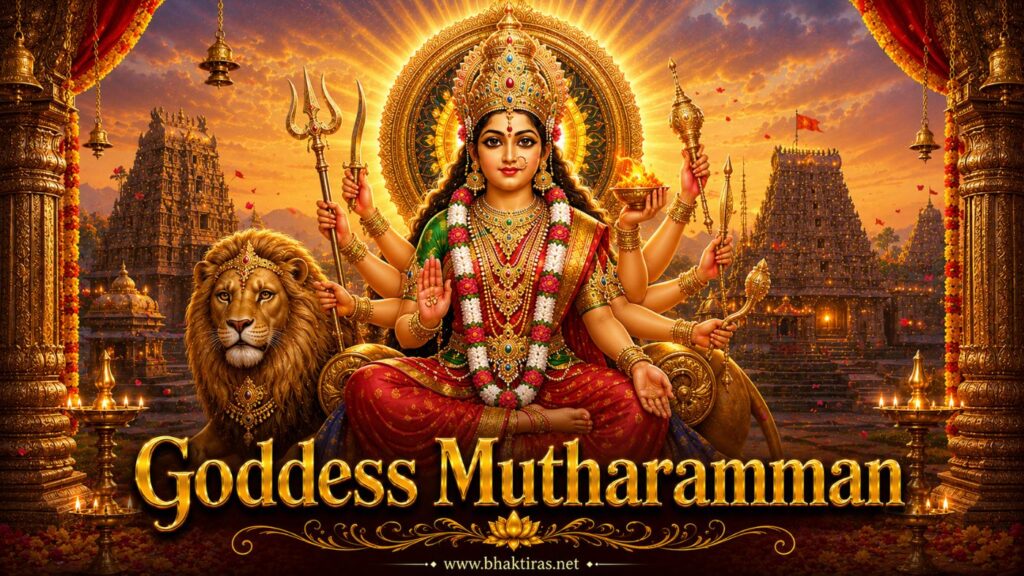
Who Is Goddess Mutharamman?
Mutharamman is a beloved village mother goddess of Tamil Nadu, one of the many Amman deities who watch over the fields, homes and health of the people who live around them. To her devotees she is not a distant power but a caring mother who listens to everyday worries and answers the prayers of farmers, families and the sick.
She is understood as a form of Shakti, the primal feminine energy, and shares the protective, demon-quelling nature of Durga. In her the fierce guardian and the gentle mother meet – she can drive away disease and danger, yet she also blesses the land with good harvests and the household with peace.
Her worship is tied closely to rural life. Paddy fields, seasonal rains and the well-being of the whole village fall within her care, and communities turn to her at planting, harvest and in times of illness, trusting her to keep them safe and provided for.
Mutharamman in the Amman Tradition
The Amman goddesses of Tamil Nadu are the great mothers of the village world, guardians who are honoured with deep affection and direct, heartfelt worship rather than distant ceremony. Mutharamman belongs to this living tradition, standing among goddesses like Mariamman as a protector of health and a giver of prosperity. As a form of Shakti she carries the strength to overcome sickness, drought and misfortune, and villagers call on her when disease threatens or when the land needs rain. Her worship often centres on vows – a devotee promises an offering or an act of penance in exchange for a cure, a child, or relief from hardship, and returns to fulfil that vow when the prayer is answered. This bond of promise and grace makes her feel intimately present in people’s lives. Around her temple the rhythms of farming, family and community come together, and her blessing is sought for everything from a good paddy crop to the safety of children.
Kulasekharapatnam and the Dasara Festival
The best-known temple of the goddess is the Mutharamman temple at Kulasekharapatnam near Thoothukudi on the southern Tamil coast, famous across the region for its grand Dasara celebration.
The Coastal Temple
The Kulasekharapatnam Mutharamman temple is an old and much-visited shrine near the sea in Thoothukulam district. It draws devotees from across southern Tamil Nadu who come to seek the mother’s blessing.
Dasara of Disguises
Its Dasara festival is famous for devotees who take on elaborate disguises and painted forms as part of their vows, moving through the town in a striking display of faith that runs late into the night.
Kaavadi and Vows
Worshippers carry the kaavadi and perform acts of penance to fulfil promises made to the goddess, offering their effort and devotion in thanks for prayers she has granted.
Worship of Mutharamman
Devotees worship Mutharamman for good health, protection from disease, prosperity and the welfare of their families and fields. Offerings of pongal, flowers, fruit and lamps are made before her, and many keep vows that they fulfil during her festivals through kaavadi, penance or gifts to the temple. Tuesdays and Fridays, along with the Tamil month of the Dasara celebration, are considered especially auspicious for her worship. As a village mother she is approached with the closeness of family – people speak to her of their sicknesses, their harvests and their hopes for their children, trusting her to guard the whole community. Her role as a healer is especially cherished, and countless families credit her grace for recovery from illness and for the return of good fortune to their homes and lands.
Legends of Mutharamman
The mother who guards the fields
Village tradition remembers Mutharamman as a goddess who took her seat among the paddy fields to shield the farming people from harm. When disease or drought threatened, the community would gather before her, offer pongal cooked from the new grain, and beg her protection – and the fields would flourish again. Through such stories she came to be seen as the mother of the harvest, whose grace turns hard labour into plenty and whose watchful eye keeps sickness from the doors of those who honour her.
The vows of Dasara
The tradition of disguises and penance at the Kulasekharapatnam Dasara is bound up with the goddess’s power to answer prayers. Devotees who received a cure, a child or relief from trouble would vow to appear before her in a chosen form or to carry the kaavadi as thanks, and each year they return to keep their word. Over generations these countless personal vows have grown into the vast, colourful festival, a living testimony to the many prayers the mother is believed to have granted.
Frequently Asked Questions
Who is Goddess Mutharamman?
Mutharamman is a mother goddess (Amman) of Tamil Nadu, worshipped as a form of Shakti and Durga. She is revered as a protector of villages and a giver of health, prosperity and safety to her devotees.
Where is the most famous Mutharamman temple?
Her best-known temple is at Kulasekharapatnam near Thoothukudi in southern Tamil Nadu, celebrated for its grand Dasara festival.
What is special about the Kulasekharapatnam Dasara?
The festival is famous for devotees who wear elaborate disguises and painted forms and carry the kaavadi to fulfil vows made to the goddess, creating one of the region's most colourful celebrations.
What does Mutharamman bless her devotees with?
She is worshipped for good health, protection from disease, prosperity, good harvests and the welfare of families and villages. Many turn to her especially as a healer in times of sickness.
How is Mutharamman worshipped?
Devotees offer pongal, flowers, fruit and lamps, and often keep vows fulfilled through kaavadi and penance during her festivals. Tuesdays and Fridays are considered especially auspicious for her worship.
May Goddess Mutharamman bless every home with health, plenty and her steadfast care.