
Torgya Festival 2027 – Tawang's Masked Dance to Banish Evil
When is the Torgya Festival in 2027?
The Torgya Festival is expected around late January 2027 (approximately 28-30 January), held over three days at Tawang Monastery in Arunachal Pradesh. The exact dates follow the Monpa/Tibetan lunar calendar (28th to 30th of the 11th lunar month), so they shift each year and are confirmed by the monastery closer to the time. It is a Buddhist festival built around Cham masked dances meant to drive away evil and secure a good year ahead.
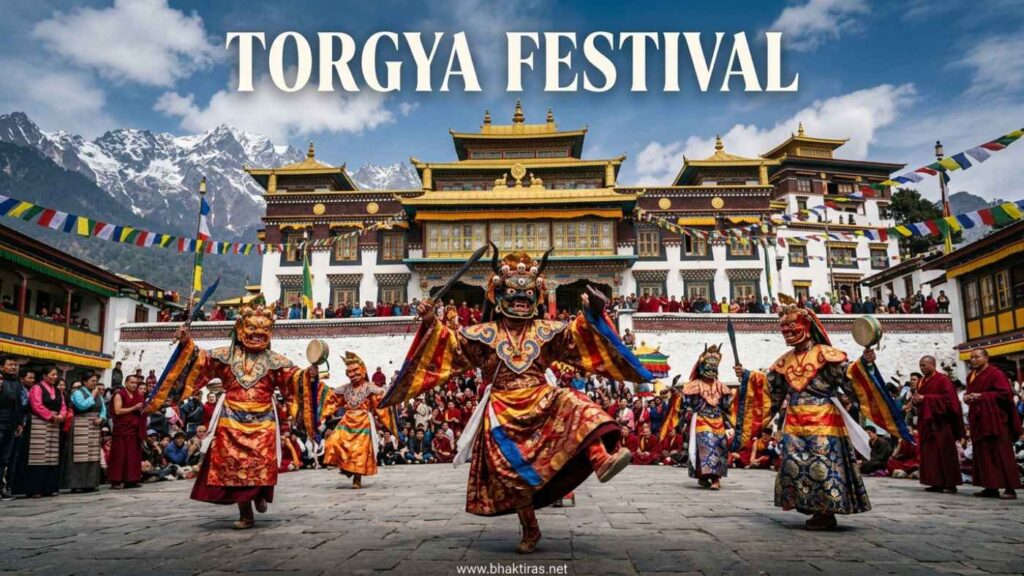
Torgya is a three-day monastic festival held each year at the roughly 400-year-old Tawang Monastery in Arunachal Pradesh, the spiritual centre of the Monpa people. Falling in the eleventh month of the Tibetan lunar calendar, usually in the second half of January, it exists to drive out evil spirits and misfortune and to invite prosperity, protection and good harvests for the year ahead. Its heart is the Cham, a set of slow, deliberate masked dances performed by the monastery’s lamas.
Torgya Festival 2026-2028: Dates & Calendar
The next Torgya is expected around late January 2027. Because it is fixed to the Monpa/Tibetan lunar calendar (28th to 30th of the 11th month), the Gregorian date moves each year, so treat the dates below as approximate until the monastery announces them.
| Year | Approx. dates | Duration | Notes |
|---|---|---|---|
| 2026 | Late January (approx. 28-30) | 3 days | Held earlier in 2026 – now passed |
| 2027 | Late January (approx. 28-30) | 3 days | Next occurrence – dates to be confirmed |
| 2028 | Late January (approx.) | 3 days | Lunar date to be announced |
The festival always runs for three consecutive days. The main day of the masked Cham dances is usually the middle or final day, when the crowd at the monastery courtyard is largest.
Why Torgya Is Celebrated
Torgya is celebrated to expel evil spirits and negative forces from the community and to bring peace, protection and a prosperous, healthy year for the Monpa people.
Warding off evil
The central purpose is protective. Through prayer, ritual and dance the monks are believed to gather up the year’s misfortune, disease and hostile energy and destroy it, clearing the way for a safe year.
Prosperity and good harvests
Beyond protection, the festival is a communal prayer for abundance – good crops, healthy livestock and general wellbeing for the farming Monpa villages around Tawang.
Faith kept alive
Torgya is one of the most important events in the Monpa Buddhist year. It draws families from surrounding valleys to the monastery, renewing their bond with the 400-year-old institution at the centre of their religious life.
Key Rituals, Step by Step
The three days blend private monastic prayer with public spectacle in the monastery courtyard.
- Preparatory prayers. In the days before, the lamas hold recitations and rituals inside the monastery to prepare and consecrate the festival.
- Assembling the crowd. On the festival days, Monpa families from Tawang and nearby villages gather in and around the monastery courtyard in their finest traditional dress.
- The Cham begins. Monks perform the sacred masked dances, moving slowly to horns, drums and cymbals while wearing brocade robes and large carved masks of deities and demons.
- Enacting the victory over evil. The choreography dramatises protective deities subduing harmful forces, a visual retelling of good overcoming evil.
- Burning the effigy. A central rite is the destruction of an effigy that represents evil and the year’s accumulated misfortune, symbolically ending its power.
- Blessings and offerings. Devotees receive blessings, make offerings and pray for protection and prosperity for the coming year.
- Feasting and community. Alongside the rituals, families share food and the wider gathering takes on the feel of a village fair around the monastery.
Special Foods of Torgya
Food at Torgya reflects everyday Monpa mountain cooking – warming, simple and made to share in the cold Tawang winter.
Butter tea
Salty tea churned with butter, a staple across the high Buddhist Himalaya, served hot to keep out the January cold during the long days at the monastery.
Zan
A traditional Monpa dish of thick millet or buckwheat porridge eaten with vegetables or fermented sides, one of the everyday foods of the Tawang region.
Momos and thukpa
Steamed dumplings and hearty noodle soup are common festive comfort foods across the Buddhist belt and are widely eaten around Tawang during winter gatherings.
Local brew
Fermented grain drinks such as the local millet or rice beer are part of Monpa hospitality and community celebration in the region.
Where It Is Celebrated
Torgya is unusually specific to one place, which is part of what makes it distinctive.
Tawang Monastery
The festival is held exclusively at Tawang Monastery, the largest monastery in India and one of the largest in the world, set high in the mountains of western Arunachal Pradesh.
The Monpa community
It belongs to the Monpa Buddhist people of the Tawang and West Kameng districts, whose villages send families up to the monastery for the three days.
Torgya and Dungyur
The annual event is Torgya (also called Tawang-Torgya). A grander related festival, Dungyur, is held every three years, so some years feature the larger celebration in its place.
Torgya Do's and Don'ts
A short guide for visitors attending the festival at the monastery.
Do
- Dress warmly – Tawang is bitterly cold in late January
- Confirm the exact dates with local tourism or the monastery before travelling
- Arrange Arunachal Pradesh permits and accommodation well in advance
- Watch the Cham dances respectfully and quietly from the crowd
- Ask before photographing monks, rituals or individuals closely
Avoid
- Do not assume fixed calendar dates – they shift with the lunar month
- Do not walk into restricted or ritual areas of the courtyard
- Do not interrupt or step into the space of the masked dancers
- Do not treat the ceremony as mere entertainment – it is a religious rite
- Do not litter or disturb the monastery grounds
Frequently Asked Questions
When is the Torgya Festival in 2027?
The Torgya Festival in 2027 is expected around late January (approximately 28-30 January), running for three days at Tawang Monastery in Arunachal Pradesh. The exact dates follow the Monpa/Tibetan lunar calendar and are confirmed by the monastery nearer the time, so they should be verified before planning travel.
Where is the Torgya Festival held?
The Torgya Festival is held exclusively at Tawang Monastery in Arunachal Pradesh, India, which is the largest monastery in the country. It is celebrated by the Monpa Buddhist community whose villages surround the monastery in the western Himalayas.
Why is the Torgya Festival celebrated?
Torgya is celebrated to drive away evil spirits and misfortune and to invite prosperity, protection and good harvests for the year ahead. It is one of the most important events in the Monpa Buddhist calendar and is centred on protective ritual and dance.
What are the Cham dances at Torgya?
The Cham are sacred masked dances performed by the monastery’s lamas, who wear elaborate brocade costumes and large carved masks depicting deities and demons. Moving slowly to horns, drums and cymbals, the dancers enact the victory of protective forces over evil.
What is the difference between Torgya and Dungyur?
Torgya is the annual three-day festival at Tawang Monastery, while Dungyur is a grander related celebration held every three years. In the years when Dungyur falls, the larger festival is observed in place of the usual annual Torgya.
How long does the Torgya Festival last?
The Torgya Festival lasts for three consecutive days. The days combine monastic prayers with the public masked Cham dances and the ritual burning of an effigy that represents evil.
Who celebrates the Torgya Festival?
The Torgya Festival is celebrated by the Monpa people, a Tibetan Buddhist community of the Tawang and West Kameng regions of Arunachal Pradesh. Families travel from surrounding villages to gather at Tawang Monastery for the event.
Can tourists attend the Torgya Festival?
Yes, tourists can attend the Torgya Festival at Tawang Monastery, but visiting Arunachal Pradesh requires an Inner Line Permit and travel to Tawang is remote and cold in January. Visitors should confirm the lunar dates and arrange permits and accommodation well ahead of time.
If you make it up to Tawang for those three January days, you will understand why the Monpa treasure it – may the new year bring you protection and plenty.