
Losar 2026 – Ladakh's New Year of Fire and Feasting
ལོ་གསར་
When is Ladakhi Losar in 2026?
Ladakhi Losar in 2026 falls on 9 December. It is the New Year festival of Ladakh’s Buddhist community, marked by the Metho torch procession, ibex-shaped dough figures, offerings to household and monastery deities, and family feasts. Ladakhi Losar is held roughly two months earlier than the main Tibetan Losar (February to March).
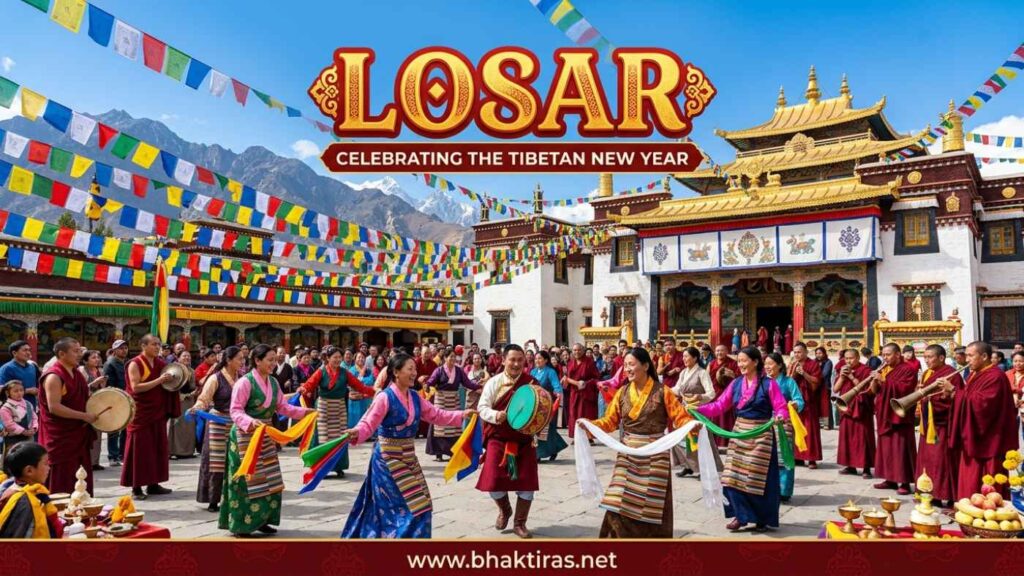
Losar is the New Year of Ladakh’s Tibetan Buddhist community, a bright winter festival of fire, feasting and fresh beginnings. Ladakhi Losar carries a distinctive quirk: it arrives about two months before the main Tibetan Losar, landing in early December rather than February. Families light lamps, raise new prayer flags, shape dough figures for the year ahead, and carry flaming torches through the lanes to chase off the previous year’s misfortune. In 2026 the celebration begins on 9 December.
Ladakhi Losar 2026-2028: Dates & Calendar
Ladakhi Losar 2026 falls on 9 December. Because it follows the Tibetan lunar calendar, the Gregorian date shifts each year, so figures for 2027 and 2028 are approximate until fixed by monastery astrologers.
| Year | Date (approx.) | Day | Notes |
|---|---|---|---|
| 2026 | 9 December | Wednesday | Next occurrence |
| 2027 | late December (approx.) | – | Confirmed nearer the time by lunar reckoning |
| 2028 | late December (approx.) | – | Confirmed nearer the time by lunar reckoning |
Ladakhi Losar is not one day but a stretch of celebration that can run for two weeks or more, with the first two to three days being the most important for families and monasteries.
Why Ladakhi Losar Is Celebrated
Ladakhi Losar marks the start of the new year for Ladakh’s Buddhist community and a symbolic cleansing of the old year’s ill fortune. Its early winter timing traces back to a 17th-century military decision.
The festival blends New Year renewal with pre-Buddhist customs of driving away evil and honouring protective spirits. Offerings, torch processions and dough figures all point towards prosperity and safety in the year to come.
A king's early New Year
Ladakhi tradition holds that King Jamyang Namgyal moved Losar forward to the 1st day of the 11th Tibetan month, roughly December, so that his soldiers could celebrate the New Year with their families before setting out on a winter campaign. The shifted date stuck, and Ladakh has kept it ever since.
Clearing the old year
Much of Losar is about sweeping away the residue of the past year. Homes are cleaned, torches are carried out to the edge of the village, and the Metho procession symbolically carries off bad luck and lingering evil so the new year can begin clean.
Prosperity and fertility
Ibex-shaped dough figures, fresh prayer flags and offerings to household and monastery deities all express hopes for a fertile, prosperous and protected year. The ibex is an old Ladakhi emblem of abundance and good fortune.
Key Rituals, Step by Step
Ladakhi Losar unfolds over several days, moving from home preparation to the dramatic Metho fire procession and shared feasts.
- Cleaning and decorating. Families thoroughly clean their homes and hang colourful decorations, butter lamps and fresh symbols to welcome the new year.
- Shaping dough figures. Ibex-shaped dough figures are moulded for fertility and prosperity, alongside other ritual dough offerings prepared in the kitchen.
- Offerings to deities. Households make offerings to their local and family protective deities, while people visit gompas to present offerings before the monastery deities.
- The Metho procession. After dark, people carry lit torches through the lanes, calling out to drive away evil spirits and the misfortune of the passing year.
- Raising prayer flags. New prayer flags are hoisted on rooftops and hillsides so that prayers for the year ahead ride out on the wind.
- Family feasts. Relatives gather for shared meals, exchanging greetings and traditional dishes over the most important first days of the festival.
- Monastery visits. Over the wider fortnight, families continue to visit monasteries, light butter lamps and take part in prayers and community gatherings.
Special Foods of Losar
Losar tables in Ladakh lean on warming, hearty winter fare shared across large family gatherings.
Ritual dough figures
Ibex-shaped and other symbolic dough figures are made specially for Losar, standing for fertility, prosperity and good fortune in the new year.
Thukpa
A nourishing noodle soup with vegetables or meat, thukpa is a staple of Ladakhi winters and a natural comfort food for the cold Losar season.
Momos
Steamed dumplings filled with vegetables or meat are a favourite at family gatherings, often prepared together by relatives during the festival.
Butter tea and chhang
Salted butter tea keeps guests warm through visits, while chhang, a local barley brew, is shared in many households as part of the New Year hospitality.
Where It's Celebrated
Losar is most closely associated with Ladakh’s Buddhist heartland, though the wider Tibetan Buddhist world keeps its own timing.
Leh and central Ladakh
The towns and villages around Leh see the fullest celebrations, with the Metho torch procession, home offerings and monastery visits at their most vivid.
Monastic communities
Gompas across Ladakh host prayers, butter-lamp offerings and gatherings, drawing families in from surrounding villages over the festival fortnight.
The wider Tibetan world
Tibet, Bhutan, Nepal, Sikkim and Arunachal Pradesh also observe Losar, but on the mainstream date in February or March, which is why Ladakh’s early December Losar stands apart.
Losar Do's and Don'ts
A few simple courtesies help visitors take part respectfully in Ladakh’s New Year.
Do
- Clean and tidy your surroundings before the new year begins
- Accept butter tea or food offered by hosts as a gesture of goodwill
- Join the Metho procession respectfully if invited by locals
- Light butter lamps and offer prayers when visiting a gompa
- Greet people warmly and share in the family spirit of the festival
Avoid
- Do not confuse Ladakhi Losar with the February to March Tibetan Losar
- Avoid disturbing prayer flags or ritual dough figures
- Do not enter monastery prayer halls without removing shoes and staying quiet
- Avoid loud or disruptive behaviour during the Metho procession
- Do not treat sacred offerings or torches as mere photo props
Frequently Asked Questions
When is Ladakhi Losar in 2026?
Ladakhi Losar in 2026 is on 9 December. It marks the New Year for Ladakh’s Tibetan Buddhist community and opens a celebration that can last around two weeks, with the first two to three days being the most important.
When is Ladakhi Losar in 2027 and 2028?
Ladakhi Losar in 2027 and 2028 is expected in late December, but the exact dates are approximate. Because the festival follows the Tibetan lunisolar calendar, its Gregorian date shifts each year and is confirmed nearer the time by monastery astrologers.
Why is Ladakhi Losar celebrated earlier than Tibetan Losar?
Ladakhi Losar is celebrated about two months earlier than the main Tibetan Losar because tradition credits King Jamyang Namgyal with moving it to the 1st day of the 11th Tibetan month, around December. This let his army celebrate the New Year with their families before departing on a winter campaign, and the earlier date has been kept ever since.
What is the Metho procession?
The Metho is a torch procession held during Ladakhi Losar in which people carry lit torches through the lanes after dark. It is meant to drive away evil spirits and the misfortune of the old year, clearing the way for a fresh start.
Why are ibex-shaped dough figures made at Losar?
Ibex-shaped dough figures are made at Ladakhi Losar as symbols of fertility, prosperity and good fortune. The ibex is a long-standing Ladakhi emblem of abundance, and the figures form part of the household offerings for the new year.
How long does Ladakhi Losar last?
Ladakhi Losar can last around two weeks, though the first two to three days are the most significant for families and monasteries. The wider period involves continued monastery visits, prayers, feasts and community gatherings.
How is Ladakhi Losar different from the main Tibetan Losar?
Ladakhi Losar differs from the main Tibetan Losar chiefly in timing: Ladakh celebrates in early December, roughly two months before the Tibetan Losar of February to March. The rituals overlap in spirit, but Ladakh’s version carries its own local customs such as the Metho procession and ibex dough figures.
Which community celebrates Ladakhi Losar?
Ladakhi Losar is celebrated by the Tibetan Buddhist community of Ladakh. It is centred on homes and monasteries around Leh and the villages of central Ladakh, blending New Year renewal with offerings to household and monastery deities.
However you mark the turning of the year, may Ladakh’s lamps and prayer flags carry good fortune your way. Losar Tashi Delek.