
Shivaji Jayanti 2027 – Birth Anniversary of Chhatrapati Shivaji Maharaj
शिवजयंती
When is Shivaji Jayanti in 2027?
Shivaji Jayanti in 2027 falls on Friday, 19 February. It marks the birth anniversary of Chhatrapati Shivaji Maharaj, the founder of the Maratha empire, who was born at Shivneri Fort on 19 February 1630. The Maharashtra government observes the Gregorian 19 February date as an official state holiday, while some groups also mark the traditional Hindu tithi (Phalguna Krishna Tritiya), which falls on a different day each year.
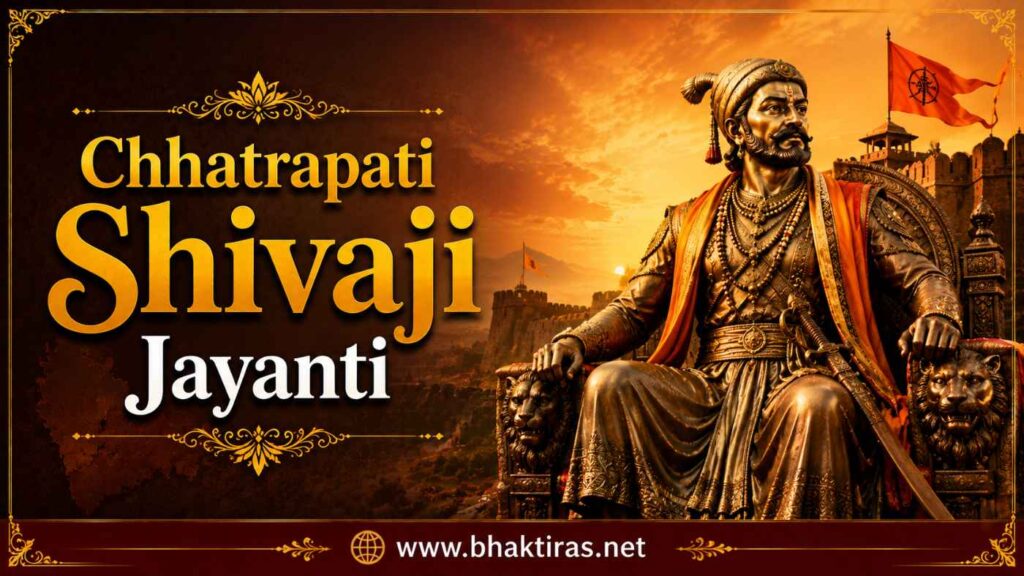
Shivaji Jayanti is the birth anniversary of Chhatrapati Shivaji Maharaj, the warrior-king who founded Swarajya and the Maratha empire in the 17th century. Born at Shivneri Fort on 19 February 1630, he is remembered across Maharashtra for his valour, his network of hill forts and a young navy, and a model of governance built on justice and religious tolerance. The day is a state holiday marked by processions under saffron flags, garlanding of his statues, powada ballads, and children dressed as his Mavla soldiers.
Shivaji Jayanti 2026-2028: Dates & Calendar
The next Shivaji Jayanti is on 19 February 2027. Maharashtra’s official state holiday follows the fixed Gregorian date of 19 February every year, while the traditional Hindu tithi shifts with the lunar calendar.
| Year | Date (official) | Day | Notes |
|---|---|---|---|
| 2026 | 19 February | Thursday | Tithi observed around 6 March |
| 2027 | 19 February | Friday | Next occurrence |
| 2028 | 19 February | Saturday | State holiday in Maharashtra |
The two-date system reflects a long-running debate. The Maharashtra government fixed the Gregorian 19 February 1630 as the birth date for official commemoration, so the state holiday stays on that day. Many traditional and religious groups instead observe the Hindu tithi on which Shivaji was born, Phalguna Krishna Tritiya, which moves through the calendar each year. Both dates honour the same event.
Why Shivaji Jayanti Is Celebrated
Shivaji Jayanti is celebrated to honour Chhatrapati Shivaji Maharaj, who founded Swarajya (self-rule) and built the Maratha empire from a landscape of hill forts. For Maharashtra he is a symbol of courage, fair governance and self-respect.
Founder of Swarajya
Shivaji carved out an independent Hindavi Swarajya at a time when large parts of the Deccan were under the Adilshahi, Nizamshahi and Mughal powers. From a scattering of forts he built a sovereign Maratha state, and his 1674 coronation at Raigad established him as a crowned king rather than a rebel chieftain.
A model of good governance
He is remembered as much for administration as for war. His revenue reforms, his eight-minister Ashta Pradhan council, and his emphasis on the welfare of farmers and ordinary subjects shaped a state that valued order and justice. This ideal of accountable rule is central to why the day is marked.
Valour and military skill
Shivaji pioneered guerrilla tactics suited to the Sahyadri hills, using speed, terrain and fortifications against much larger armies. His escapes, sieges and campaigns are retold every year in songs and skits, keeping the memory of Maratha resistance alive.
Religious tolerance
Though a devout Hindu, Shivaji is widely remembered for respecting other faiths, protecting places of worship and employing people of different communities in his army and administration. This reputation for tolerance is often highlighted during the celebrations.
The Figure Honoured
Shivaji Jayanti honours a historical king, not a deity. The day commemorates the life and legacy of Chhatrapati Shivaji Maharaj.
Chhatrapati Shivaji Maharaj
Shivaji Bhonsle was born at Shivneri Fort near Junnar to Shahaji Bhonsle and Jijabai, whose guidance shaped his early ideals. He rose from a regional Maratha leader to the founder of an empire, crowned Chhatrapati at Raigad in 1674. He is honoured as a statesman, military strategist and protector of his people rather than as an object of worship.
His forts and navy
The Sahyadri forts were the backbone of Shivaji’s power. Shivneri marks his birth, Raigad his capital and coronation, and Pratapgad, Rajgad, Sinhagad and Torna his campaigns. He also built a Maratha navy with coastal forts such as Sindhudurg, an unusual step for an inland-born ruler, earning him a place as an early builder of Indian sea power.
How Shivaji Jayanti Is Celebrated, Step by Step
The day usually begins with tributes at Shivaji’s statues and unfolds into processions, performances and public events across Maharashtra.
- Morning garlanding. Statues of Shivaji Maharaj in towns and cities are cleaned and garlanded, and civic and political leaders offer floral tributes.
- Shobha yatra processions. Community processions move through the streets carrying saffron bhagwa flags and portraits of Shivaji, accompanied by dhol-tasha drum troupes and lezim performers.
- Children as Mavlas. School and neighbourhood children dress as Maratha warriors, or Mavlas, some wearing saffron turbans and carrying prop swords, and take part in the processions and stage events.
- Powada performances. Traditional powada ballads and Shiv-charitra readings retell episodes from Shivaji’s life, from his birth at Shivneri to his forts, administration and coronation.
- Fort visits and events. Enthusiasts travel to Shivneri, Raigad, Pratapgad and other forts for talks, cultural shows and treks that connect the day to the places Shivaji built and defended.
- Speeches and cultural programmes. Public meetings, skits, rangoli, costume competitions and classical singing are held at schools, colleges and community grounds, celebrating his ideals of Swarajya and good governance.
- Community meals. Families and organisations share Maharashtrian festive food, and the day ends with the memory of Shivaji renewed through song and story.
Foods Associated with Shivaji Jayanti
There is no fixed ritual menu, but Maharashtrian festive dishes are commonly prepared for community gatherings and family meals on the day.
Puran poli
A sweet flatbread stuffed with a soft filling of jaggery and cooked chana dal, flavoured with cardamom. It is a signature Maharashtrian festive sweet and a common choice for celebratory meals on the day.
Shrikhand
A thick, sweetened strained-yoghurt dessert scented with cardamom and saffron, often served with puris. It appears on many festive Maharashtrian tables and pairs well with a celebratory lunch.
Maharashtrian festive thali
A full spread may include bhakri or chapati, varan-bhaat, a seasonal vegetable, koshimbir salad and a sweet, reflecting everyday Maharashtrian home cooking dressed up for the occasion.
Where and How It Is Marked
Shivaji Jayanti is strongest in Maharashtra, but it is also observed by Marathi communities elsewhere in India and abroad.
Maharashtra
The day is a state holiday, and celebrations are held in almost every town and city. Government offices, schools and community groups organise processions, tributes and cultural programmes, with the largest gatherings at the forts linked to Shivaji’s life.
The forts
Shivneri, Raigad, Pratapgad and other Sahyadri forts become focal points, drawing history enthusiasts, trekkers and families for commemorations at the very sites where Shivaji was born, crowned and fought.
The date debate
Across the state, some organisations mark the fixed Gregorian date of 19 February while others observe the Hindu tithi, Phalguna Krishna Tritiya. Both commemorations coexist, and it is common to see the anniversary marked twice in a single year.
Marathi diaspora
Marathi cultural associations in other Indian states and in countries with a large Marathi community hold their own Shiv Jayanti events, with speeches, powada and children in Mavla dress keeping the tradition alive far from Maharashtra.
Shivaji Jayanti Do's and Don'ts
A few simple points help mark the day with the respect it deserves.
Do
- Offer respectful tributes and garlands at Shivaji Maharaj’s statue if you attend a local event.
- Learn about his history from reliable sources, including his forts, navy and coronation at Raigad.
- Take part in or watch powada and Shiv-charitra performances to understand his life.
- Encourage children to learn the values behind the Mavla dress rather than only the costume.
- Keep processions safe, orderly and considerate of traffic and neighbours.
Avoid
- Do not treat the day as a deity festival, as it honours a historical king, not a god.
- Do not confuse Shivaji Jayanti with Bendur, which is a separate bullock-worship festival.
- Do not spread unverified stories or dates; the date itself is debated, so cite your source.
- Do not let processions block emergency access or endanger participants.
- Do not use the occasion to disrespect other communities, which runs against Shivaji’s own reputation for tolerance.
Frequently Asked Questions
When is Shivaji Jayanti in 2027?
Shivaji Jayanti in 2027 is on Friday, 19 February. This is the fixed Gregorian date observed by the Maharashtra government as a state holiday, marking the birth of Chhatrapati Shivaji Maharaj at Shivneri Fort on 19 February 1630.
When is Shivaji Jayanti in 2026 and 2028?
By the official calendar, Shivaji Jayanti falls on 19 February 2026 (Thursday) and 19 February 2028 (Saturday), the same fixed Gregorian date each year. The tithi-based observance is separate; in 2026 it was marked around 6 March, and it shifts with the Hindu lunar calendar.
Why is Shivaji Jayanti celebrated?
Shivaji Jayanti is celebrated to honour Chhatrapati Shivaji Maharaj, who founded Swarajya and the Maratha empire in the 17th century. He is remembered for his valour, his network of hill forts, his fair administration and his reputation for religious tolerance, and the day commands deep pride in Maharashtra.
Is Shivaji Jayanti on 19 February or on the Hindu tithi?
Both dates are used. The Maharashtra government fixed 19 February 1630 as the official birth date, so the state holiday stays on 19 February every year. Many traditional groups instead observe the Hindu tithi on which Shivaji was born, Phalguna Krishna Tritiya, which falls on a different day each year, so the anniversary is sometimes marked twice.
How is Shivaji Jayanti different from Bendur?
Shivaji Jayanti and Bendur are completely separate observances. Shivaji Jayanti is the birth anniversary of Chhatrapati Shivaji Maharaj on 19 February, while Bendur is an agricultural festival of Maharashtra on which farmers bathe, decorate and worship their bullocks. They share no connection beyond both being observed in Maharashtra.
Where was Shivaji Maharaj born?
Shivaji Maharaj was born at Shivneri Fort near Junnar in present-day Pune district, Maharashtra, on 19 February 1630. His parents were Shahaji Bhonsle and Jijabai, and the fort remains a key site of Shivaji Jayanti pilgrimages and events.
Is Shivaji Jayanti a public holiday?
Yes, Shivaji Jayanti is an official state holiday in Maharashtra, observed on 19 February. Government offices, schools and many businesses in the state close, and public commemorations, processions and cultural programmes are held across cities and towns.
How is Shivaji Jayanti celebrated?
Shivaji Jayanti is celebrated with morning garlanding of Shivaji’s statues, Shobha yatra processions under saffron bhagwa flags, and children dressed as Mavla warriors. Powada ballads, lezim and dhol-tasha performances, speeches and events at forts such as Shivneri and Raigad round out the day.
Shivaji Jayanti keeps alive the memory of a king who put self-rule and the welfare of his people first. Jai Shivaji, Jai Maharashtra.