
Sekrenyi 2027 – The Angami Naga Festival of Purification
When is Sekrenyi in 2027?
Sekrenyi is celebrated from 25 to 27 February 2027 by the Angami Naga community, chiefly around Kohima in Nagaland. Also called Phousanyi, it is a festival of purification and renewal that cleanses body and spirit and readies the village for the year ahead.
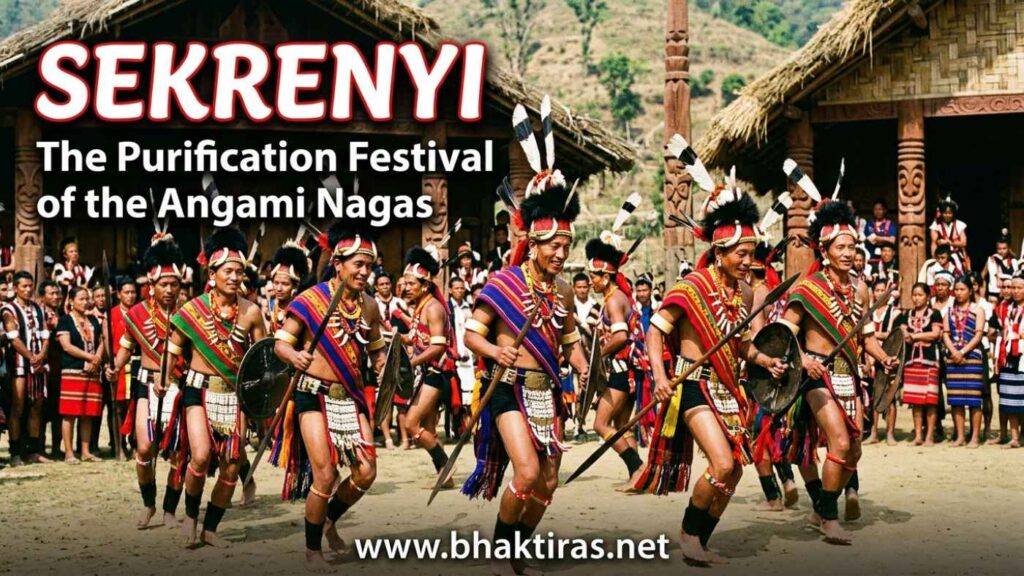
Sekrenyi, also called Phousanyi, is the purification festival of the Angami Naga and one of the most important dates in the Kohima calendar. Held over three main days in late February, it is less about worshipping a single deity and more about cleansing the body and soul, settling the year’s quarrels, and starting fresh as a village. Ritual bathing, sanctified food, long community songs and a bridge-pulling ceremony carry a household from one year into the next.
Sekrenyi 2026-2028: Dates & Calendar
Sekrenyi falls on a near-fixed window each year, with the main observance on 25-27 February. The next celebration is 25-27 February 2027.
| Year | Dates | Main day | Notes |
|---|---|---|---|
| 2026 | 25-27 February | Wednesday | Passed for this year |
| 2027 | 25-27 February | Thursday | Next occurrence |
| 2028 | 25-27 February | Friday | Same fixed window |
The first day, Kizie, is the household purification; the second, Dzuseva, brings the men’s ritual bath at the village well and the sanctified feast; the days that follow are given to singing, visiting and the bridge-pulling ceremony.
Why Sekrenyi Is Celebrated
Sekrenyi is celebrated to purify the village and each household after the closing year, washing away sickness, ill-feeling and misfortune so the community can begin the new cycle clean and united.
Cleansing body and soul
The heart of the festival is sanctification. Households sprinkle rice-water at the hearth and men bathe at the well before dawn, an act meant to strip off the past year’s impurity and illness. What remains is a person, and a village, considered fit to start again.
Renewing the community
Old disputes are meant to be laid to rest during Sekrenyi. Neighbours share sanctified food, visit one another and sing together, so the festival works as an annual reset for relationships as much as for the body.
Binding villages together
The Bridge-Pulling ceremony, where men from different villages haul on a length of wood or vine, dramatises friendship between settlements. It turns a private household rite into a public promise of goodwill across the wider Angami country.
Coming of age
Sekrenyi is also when young men are recognised as adults of the village. Their participation in the ritual bath and the men’s ceremonies marks their formal step into the responsibilities of grown Angami life.
Key Rituals, Step by Step
Sekrenyi unfolds over three linked days, moving from the household hearth outward to the whole village.
- Kizie (household purification). On the first morning the woman of the house draws rice-water and sprinkles a few drops at the three points of the hearth, sanctifying the home before anything else begins.
- The pre-dawn walk to the well. Before sunrise the men of the household make their way in silence to the village well or spring, the source that the whole settlement shares.
- Dzuseva (the ritual bath). At the well the men wash the upper body, sometimes touching water to the chest and knees, in the central purifying act of Sekrenyi. Married and unmarried men take part according to custom.
- Dressing in new or best cloth. After bathing, men put on clean shawls and finery, signalling the renewed self that the bath is meant to produce.
- The sanctified feast. Each household slaughters a cockerel or pig and prepares sanctified meat and rice; portions are set aside and shared so that the whole family eats from the same blessed food.
- Thekra Hie (community songs). Young men and women gather to sing the long traditional Thekra Hie through the day, seated together and taking the verses in turn, a sound that carries across the village for hours.
- Visiting and reconciliation. People move between houses to eat, drink rice-beer and settle any lingering ill-feeling, closing the year’s accounts with neighbours.
- The Bridge-Pulling ceremony. In the closing days, men from neighbouring villages pull together on a shared length of wood, a ritual tug that seals friendship and cooperation between settlements for the year to come.
Special Foods of Sekrenyi
Food during Sekrenyi is sanctified before it is shared, and the table leans on smoked meat, rice and the local rice-beer.
Sanctified meat
A cockerel or pig is killed for each household and the meat is treated as blessed. Portions are divided among family members so everyone partakes of the same purified food.
Zutho / Zu (rice-beer)
The mildly fermented rice-beer of the Angami is poured freely for guests who visit through the festival, and features in the toasts of reconciliation between neighbours.
Smoked pork with bamboo shoot
Smoked pork simmered with fermented bamboo shoot and axone is a staple of Angami celebration, its sharp, smoky flavour anchoring the Sekrenyi feast.
Sticky rice and boiled greens
Steamed local rice with simply boiled seasonal greens and a fiery raja-chilli chutney rounds out the meal, the plain foundation beneath the richer meat dishes.
Sekrenyi Do's and Don'ts
A few points of respect if you are marking Sekrenyi or visiting an Angami village during the festival.
Do
- Take the purification rites seriously and let the household lead them
- Accept sanctified food and rice-beer graciously when it is offered
- Ask permission before photographing the well bath or private rituals
- Join or listen quietly to the Thekra Hie community songs
- Use the days to settle disputes and greet neighbours warmly
Avoid
- Do not treat the ritual bath at the well as a tourist spectacle
- Do not disturb or pollute the village well or spring
- Do not push into household hearth rituals uninvited
- Do not carry old quarrels or ill-feeling into the festival
- Do not confuse Sekrenyi with other Naga festivals; it is specifically Angami
Frequently Asked Questions
When is Sekrenyi in 2027?
Sekrenyi is celebrated from 25 to 27 February 2027. The Angami Naga purification festival keeps a near-fixed window each year, with the main rites falling on and just after 25 February.
When is Sekrenyi in 2026 and 2028?
Sekrenyi falls on 25-27 February in both years, on a Wednesday in 2026 and a Friday in 2028. The 2026 celebration has already passed, so the next occurrence is 25-27 February 2027.
Why is Sekrenyi celebrated?
Sekrenyi is celebrated to purify and renew the Angami village after the old year. Ritual bathing and sanctified food are believed to wash away sickness, misfortune and ill-feeling, letting the community begin the new cycle clean and united.
What does the name Sekrenyi mean?
Sekrenyi is the Angami name for the festival of sanctification or purification; it is also called Phousanyi. The word points to the cleansing rites, above all the men’s ritual bath at the village well, that give the festival its purpose.
What is the Dzuseva ritual?
Dzuseva is the men’s ritual bath at the village well, performed before dawn during Sekrenyi. Men wash the upper body at the shared spring as the central purifying act of the festival, then dress in clean cloth for the sanctified feast.
What is the Bridge-Pulling ceremony?
The Bridge-Pulling ceremony is a closing rite of Sekrenyi in which men from neighbouring villages pull together on a shared length of wood. The shared effort dramatises and seals friendship and cooperation between settlements for the coming year.
Who celebrates Sekrenyi?
Sekrenyi is celebrated by the Angami Naga community, concentrated around Kohima in Nagaland. It is regarded as one of the strongest identity markers of the Angami and is also a coming-of-age occasion for their young men.
Is Sekrenyi the same as the Hornbill Festival?
No. Sekrenyi is the specific purification festival of the Angami Naga, held every February. The Hornbill Festival is a larger December event near Kohima that showcases all the Naga tribes together, a very different occasion.
May this Sekrenyi wash the year clean and carry your household into the next with good health and good faith. Kuknalim.