
Raksha Bandhan 2026 – The Sacred Thread of Sibling Love
रक्षाबंधन
When is Raksha Bandhan in 2026?
Raksha Bandhan falls on Friday, 28 August 2026. It is observed on Shravan Purnima, the full-moon day of the month of Sawan, when sisters tie a rakhi on their brothers’ wrists and pray for their long life, and brothers vow to protect them. The rakhi should be tied only after the inauspicious Bhadra period has ended.
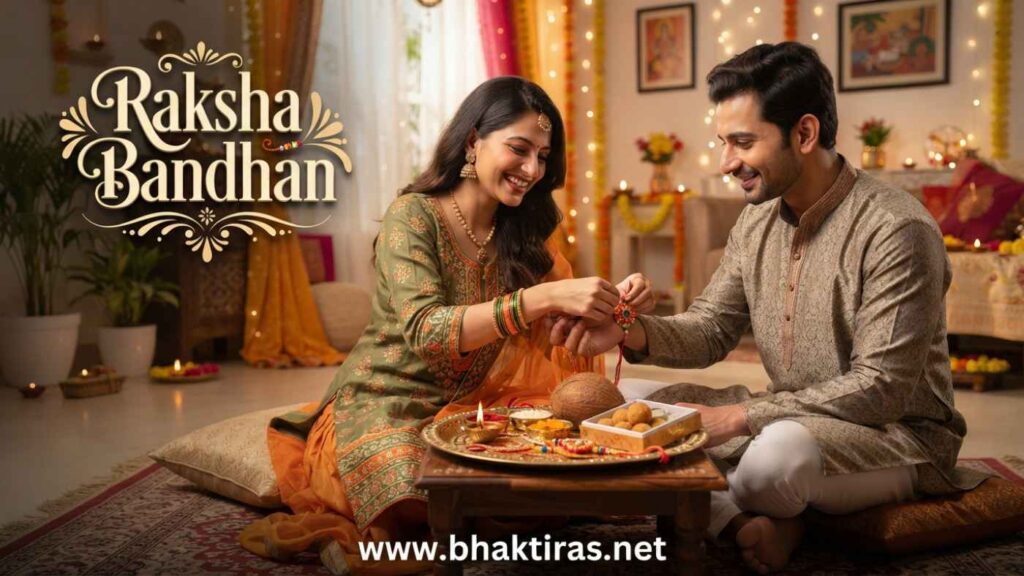
Raksha Bandhan, popularly called Rakhi, is the north-Indian festival of the brother-sister bond. Its name means “the bond of protection”: on the full-moon day of Sawan, a sister ties a decorated thread or amulet on her brother’s wrist, applies a tilak on his forehead and prays for his wellbeing, while he gives her a gift and promises to guard her through life. Rooted in Rig-Vedic and pauranic references to protective threads, the day has grown into a warm celebration of family loyalty rather than the worship of any single deity.
Raksha Bandhan 2026-2028: Dates & Calendar
The next Raksha Bandhan is on Friday, 28 August 2026. The date shifts each year because it follows the Hindu lunar calendar, always landing on Shravan Purnima, the full moon of Sawan.
| Year | Date | Day | Notes |
|---|---|---|---|
| 2026 | 28 August | Friday | Next occurrence – Shravan Purnima |
| 2027 | 17 August | Tuesday | Shravan Purnima |
| 2028 | 5 August | Saturday | Shravan Purnima |
The rakhi is traditionally tied only after the Bhadra period of the tithi has passed, since Bhadra is considered inauspicious for auspicious acts. Families usually check the local panchang for the day’s clear window rather than following a fixed clock time, as the exact muhurat varies by city and year.
Why Raksha Bandhan Is Celebrated
Raksha Bandhan celebrates the protective bond between siblings. The thread a sister ties is a prayer for her brother’s long life, and the promise he returns is one of lifelong care.
The festival has old roots. The Rig Veda and later puranic texts mention raksha threads tied for protection before a journey or a battle, and over centuries the custom settled into the sibling ceremony celebrated today across northern and western India.
A bond of protection
The heart of the day is simple: the sister ties the rakhi and prays for her brother’s welfare, and the brother accepts a duty to protect and support her. It reaffirms a relationship rather than marking a mythological event.
Threads in the scriptures
References to protective threads appear in early Hindu texts, where a raksha was bound on the wrist to ward off harm. This older idea of a sacred, protective thread is the ancestor of the modern rakhi.
Beyond blood ties
Over time the rakhi has come to express bonds beyond birth siblings. Cousins, close friends and neighbours exchange rakhis, and the gesture is widely read as a promise of mutual respect and safekeeping.
Key Rituals, Step by Step
The ceremony is short and heartfelt, usually performed in the morning after the family has bathed and, where observed, waited for the Bhadra period to end.
- Prepare the thali. The sister arranges a plate with the rakhi, a diya or lamp, roli or kumkum, rice grains (akshat) and sweets.
- Wait out Bhadra. Families check the panchang and begin the tying only after the inauspicious Bhadra window of the tithi has passed.
- Aarti and tilak. The sister performs a small aarti before her brother and applies a tilak of kumkum and rice on his forehead.
- Tie the rakhi. She ties the rakhi on his right wrist while praying for his health, prosperity and long life.
- Sweeten the moment. She offers him a sweet and he offers one in return, sharing the first bite of the celebration.
- The brother’s vow and gift. The brother promises to protect and support her, and gives a gift or token of money as a sign of that pledge.
- Blessings from elders. Elders bless the siblings, and in many homes the day continues with a festive family meal.
Special Foods of Raksha Bandhan
There is no single fixed menu, but homes prepare a spread of sweets and rich dishes to mark the day, with regional favourites appearing on the thali.
Ghevar
This disc-shaped, honeycomb-textured sweet soaked in sugar syrup is the signature Rakhi treat in Rajasthan and much of the north, often topped with rabri.
Kaju katli & barfi
Cashew and milk-based fudge sweets are the standard gift-box fare, exchanged between families along with rakhis.
Home-made laddoo
Besan and boondi laddoos are made or bought in large quantities so the household has plenty to offer guests through the day.
Festive savouries
Alongside the sweets, families fry namkeen and prepare puris and a special lunch, turning the ceremony into a full family feast.
Regional Names & Variations
Though strongest across the north and west, Shravan Purnima carries different names and layered customs in different parts of India.
North & West India
In Rajasthan, Gujarat, Uttar Pradesh, Madhya Pradesh, Haryana and neighbouring states it is the mainstream Rakhi celebration, with the tie-and-tilak ceremony at its centre.
Maharashtra & coastal west
The same full moon is observed as Narali Purnima, when coastal communities offer coconuts to the sea; the rakhi custom is folded into the same day.
Southern states
In parts of the south the day is Avani Avittam, when many Brahmin men change their sacred thread; the sibling rakhi is a later, now widely shared north-Indian addition.
The diaspora
Indian communities in the Gulf, the UK, the US and elsewhere post rakhis across borders and hold family video calls, keeping the sibling ritual alive far from home.
Raksha Bandhan Do's and Don'ts
A few simple customs help keep the day auspicious and warm.
Do
- Check the local panchang and tie the rakhi after Bhadra ends.
- Prepare the aarti thali with rakhi, tilak, rice and sweets beforehand.
- Have the brother sit facing east or north during the tying, as many families prefer.
- Share sweets and a meal together to complete the bond.
- Include cousins, close friends and those without siblings so no one is left out.
Avoid
- Do not tie the rakhi during the Bhadra period of the tithi.
- Do not rush the aarti and tilak; the gesture matters more than speed.
- Do not treat the brother’s gift as the point of the day – the vow is what counts.
- Do not use a soiled or broken thread; keep the rakhi clean and whole.
- Do not discard an old rakhi carelessly; many keep or respectfully set it aside.
Frequently Asked Questions
When is Raksha Bandhan in 2026?
Raksha Bandhan 2026 falls on Friday, 28 August. It is celebrated on Shravan Purnima, the full-moon day of the month of Sawan, when sisters tie a rakhi on their brothers and pray for their wellbeing.
When is Raksha Bandhan in 2027 and 2028?
Raksha Bandhan is on Tuesday, 17 August 2027 and on Saturday, 5 August 2028. The date changes every year because it follows the lunar calendar and always falls on Shravan Purnima.
Why is Raksha Bandhan celebrated?
Raksha Bandhan is celebrated to honour the protective bond between siblings. “Raksha Bandhan” means “the bond of protection”: a sister’s rakhi is a prayer for her brother’s long life, and the brother in turn vows to protect and support her.
Which god is worshipped on Raksha Bandhan?
Raksha Bandhan has no single presiding deity; it celebrates the sibling relationship rather than a god. Its custom of tying a protective thread traces back to Rig-Vedic and puranic references to the raksha thread bound on the wrist for safety.
What does the rakhi thread mean?
The rakhi is a sacred thread or amulet that symbolises protection and love. When a sister ties it on her brother’s wrist she is offering a prayer for his welfare, and by accepting it he takes on a promise to keep her safe.
What is the Bhadra rule on Raksha Bandhan?
The rakhi should be tied only after the Bhadra period of the tithi has ended, because Bhadra is considered inauspicious for auspicious acts. Families check the day’s panchang to find the clear window rather than relying on a fixed time, as it varies by year and place.
On which tithi is Raksha Bandhan observed?
Raksha Bandhan is observed on Shravan Shukla Purnima, the full-moon day of the month of Sawan. This usually falls in August in the Gregorian calendar.
Is Raksha Bandhan only for brothers and sisters?
Raksha Bandhan is traditionally a brother-sister festival, but the rakhi has come to express many protective bonds. Cousins, close friends and neighbours also exchange rakhis as a promise of mutual care and respect.
May the thread you tie this Shravan Purnima carry a lifetime of protection and love. Happy Raksha Bandhan.