
Raja Parba 2027 – Odisha's Festival of Womanhood and the Earth
ରଜ ପର୍ବ
When is Raja Parba in 2027?
Raja Parba is expected to fall on 14-16 June 2027, with the fourth-day Basumati Snana on 17 June. It is a three-day Odia festival honouring womanhood, the first rains and the fertility of the earth, timed to the sun’s passage into Mithuna (the Mithuna Sankranti). Dates for 2027 are approximate and should be confirmed against the Odia panji closer to the time.
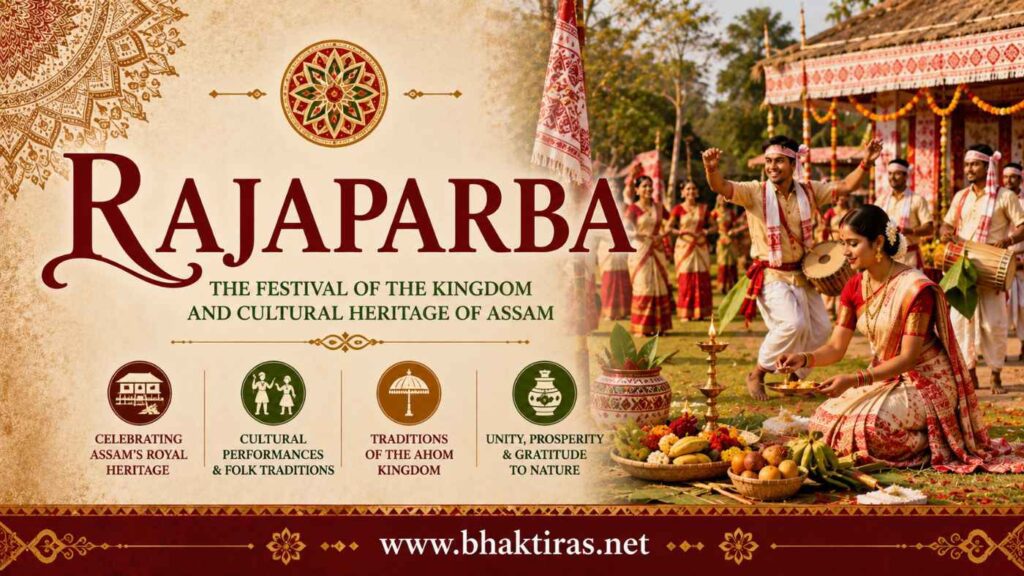
Raja Parba, often written Raja Sankranti, is one of Odisha’s most-loved festivals – three days (with a preparatory day before and a closing bath after) given over to girls, women and the earth herself. It falls in mid-June as the sun moves into Mithuna and the first monsoon showers arrive. The belief at its centre is tender and unusual: that Bhudevi, the earth goddess, is menstruating, so the soil is allowed to rest while women take a holiday of their own, on swings, in new saris, with cakes and song.
Raja Parba 2026-2028: Dates & Calendar
The next Raja Parba is expected around 14-16 June 2027, with Basumati Snana on the fourth day. The festival tracks the sun entering Mithuna rashi (Mithuna Sankranti), so the dates shift by only a day or two each year.
| Year | Dates | Sankranti day | Notes |
|---|---|---|---|
| 2026 | 14-16 June | 15 June | Already observed |
| 2027 | 14-16 June | 15 June (approx) | Next occurrence; Basumati Snana 17 June |
| 2028 | 14-16 June (approx) | 15 June (approx) | Around Mithuna Sankranti |
The three named days are Pahili Raja (the first day, also called Sajabaja or the day of preparation), Raja Sankranti or Mithuna Sankranti (the main middle day), and Basi Raja (the third day). The morning after, Basumati Snana, closes the festival with a ceremonial bathing of the earth.
Why Raja Parba Is Celebrated
Raja Parba honours womanhood, the arriving monsoon and the fertility of the earth. The belief is that Bhudevi, the earth goddess, passes through her menstrual cycle in these days, so the soil is rested and women are celebrated.
The name ‘Raja’ comes from ‘Rajaswala’, a woman during her monthly period. For these three days the earth is treated the way a menstruating woman was traditionally cared for at home: given rest, kept off her feet, honoured rather than put to work. No ploughing, digging, sowing or grinding is done, because the ground is thought to be readying itself for the season of planting ahead.
In turning the earth’s fertility into a festival of joy, Raja quietly reframes menstruation as something natural and worth celebrating rather than hiding. Unmarried girls in particular become the centre of attention, freed from chores for three days of swings, songs and sweets.
The earth at rest
The soil is believed to be menstruating and therefore fertile, preparing for the monsoon sowing. Out of respect no one ploughs, digs or breaks the ground during the three days.
A holiday for women
Girls and women set aside household work, wear new clothes and alta, and spend the days playing, singing and swinging. It is one of the few festivals built entirely around their rest and enjoyment.
Welcoming the monsoon
Raja marks the turn of the seasons, when the first rains soften the parched summer ground. Celebrating it is a way of greeting the rains that will feed the year’s crops.
Deities & Figures Worshipped
Raja Parba centres on Bhudevi, the earth goddess and a consort of Vishnu, who in Odisha is closely tied to Lord Jagannath of Puri. The soil itself is the honoured presence throughout the festival.
Bhudevi
Bhudevi (Bhumi) is the goddess of the earth and a wife of Vishnu. Raja Parba treats her monthly cycle as the reason for the festival, and Basumati Snana on the final day is a bath offered to her in the form of the grinding stone.
Bhudevi and Jagannath
In Odia tradition Bhudevi is linked to Lord Jagannath of Puri, whose worship colours much of the state’s devotional life. Raja falls only days before the Puri Rath Yatra, so the two festivals sit close together in the calendar.
Key Rituals, Step by Step
Raja unfolds over three named days and a closing bath, moving from preparation to play to the honouring of the earth.
- The day before (Sajabaja). Homes are cleaned, spices ground, and pithas prepared in advance, since no grinding or cutting is done once the festival begins. Girls oil and wash their hair and set out new clothes.
- Pahili Raja. The first day opens the festival. Girls and women bathe, dress in new saris and put alta on their feet, and step out to the swings; from now the earth is left undisturbed.
- Raja Sankranti. The main middle day, when the sun enters Mithuna. Swinging, singing Raja songs, indoor games like puchi and ludo, and visiting between homes fill the day, with poda pitha shared all round.
- Basi Raja. The third day continues the play and feasting. Families gather, girls return to their swings, and the mood of holiday carries on undimmed.
- Doli, the decorated swings. Ropes are slung from mango and banyan branches and dressed with flowers; girls swing high while singing traditional Raja songs to one another.
- Alta and no bare feet. Women redden their feet with alta and avoid walking barefoot on the bare ground, a mark of respect to the resting, menstruating earth.
- Basumati Snana. On the fourth morning the earth, represented by a grinding stone (silapua), is bathed, smeared with turmeric and sandal, dressed with flowers and vermilion, and offered fruit and pitha – the ritual close of Raja.
Special Foods of Raja Parba
Raja is a festival of cakes and sweets, above all the beloved poda pitha, prepared ahead so no one has to grind or cut during the days of rest.
Poda pitha
The signature Raja cake: a slow-baked rice-and-lentil pitha, sweetened with jaggery and studded with coconut and spices, cooked until the outside is deeply browned (poda means burnt). Every household has its own version.
Assorted pithas
Alongside poda pitha come chakuli, arisa, kakara, chandrakanti and manda pithas – a spread of rice cakes fried, steamed or filled with coconut and jaggery.
Paan (betel)
Chewing paan is part of the Raja mood, especially for the young. Elaborately folded betel leaves with areca, sweet fillings and gulkand are shared through the three days.
Where Raja Parba Is Celebrated
Raja is above all an Odia festival, kept most warmly across Odisha and by Odia families wherever they have settled.
Odisha
Across the state, from coastal districts to the interior, Raja is a village-wide holiday of swings, songs and pitha. Rural areas keep the earth-rest rules most strictly, while towns and cities mark it with family gatherings and feasts.
Odia diaspora
Odia communities in other Indian states and abroad recreate Raja with home-made poda pitha, Raja songs and gatherings, keeping the festival’s spirit alive away from Odisha.
Raja Parba Do's and Don'ts
A few gentle customs shape the three days, most of them about respecting the resting earth and letting women enjoy their holiday.
Do
- Let girls and women rest from household chores and enjoy the swings and games
- Prepare poda pitha and other cakes a day ahead, before the festival begins
- Wear new clothes and apply alta on the feet
- Share sweets and visit between homes in a spirit of holiday
- Sing traditional Raja songs together on the doli swings
Avoid
- Do not plough, dig, sow or break the ground during the three days
- Avoid grinding, cutting or crushing, which is why cooking is done in advance
- Try not to walk barefoot on bare earth, out of respect for the resting soil
- Do not treat it as an ordinary workday for the women of the house
- Avoid speaking of menstruation with shame; Raja frames it as natural and joyful
Frequently Asked Questions
When is Raja Parba in 2027?
Raja Parba is expected to fall on 14-16 June 2027, with Basumati Snana on 17 June. The festival is tied to the sun’s entry into Mithuna rashi (Mithuna Sankranti), so these dates are approximate and best confirmed against the Odia panji nearer the time.
When is Raja Parba in 2026 and 2028?
Raja Parba fell around 14-16 June in 2026 and is expected around the same dates, 14-16 June, in 2028. Because it follows the solar Mithuna Sankranti rather than the moon, the dates move by only a day or two from year to year.
Why is Raja Parba celebrated?
Raja Parba is celebrated to honour womanhood, the arriving monsoon and the fertility of the earth. The belief is that Bhudevi, the earth goddess, undergoes her menstrual cycle in these days, so the soil is rested while girls and women enjoy a three-day holiday of swings, songs and sweets.
Which goddess is worshipped during Raja Parba?
Raja Parba honours Bhudevi, the earth goddess and a consort of Vishnu, closely linked in Odisha to Lord Jagannath. On the fourth day, Basumati Snana, the earth in the form of a grinding stone is ceremonially bathed and adorned as an offering to her.
What are the three days of Raja Parba called?
The three days are Pahili Raja (the first day, also called Sajabaja or preparation), Raja Sankranti or Mithuna Sankranti (the main middle day), and Basi Raja (the third day). A fourth-day ritual, Basumati Snana, closes the festival with the ceremonial bathing of the earth.
What is the special food of Raja Parba?
The signature food of Raja Parba is poda pitha, a slow-baked rice-and-lentil cake sweetened with jaggery and coconut and cooked until deeply browned. A wider spread of pithas – chakuli, arisa, kakara and manda – is prepared ahead of the festival, along with paan.
Why is the earth not ploughed during Raja Parba?
The earth is not ploughed, dug or sown during Raja Parba because Bhudevi, the earth goddess, is believed to be menstruating and therefore in need of rest. Just as a menstruating woman was traditionally given a break from work, the soil is left undisturbed as it readies itself for the monsoon sowing.
What is Basumati Snana?
Basumati Snana is the ritual bathing of the earth on the morning after the three days of Raja. A grinding stone, standing for Bhudevi, is washed, smeared with turmeric and sandal, dressed with flowers and vermilion, and offered fruit and pitha, bringing the festival to a gentle close.
However you mark the days of swings and song, may Bhudevi’s rest bless your home with a full harvest. Subha Raja!