
Mopin 2027 – The Galo Festival of Rice Flour & Harvest
When is Mopin in 2027?
Mopin falls on 5 April 2027. It is the largest festival of the Galo people of Arunachal Pradesh, a harvest and prosperity celebration held to honour the goddess Mopin Ane and to seek good health, wealth and a rich harvest. The date is fixed every year on 5 April.
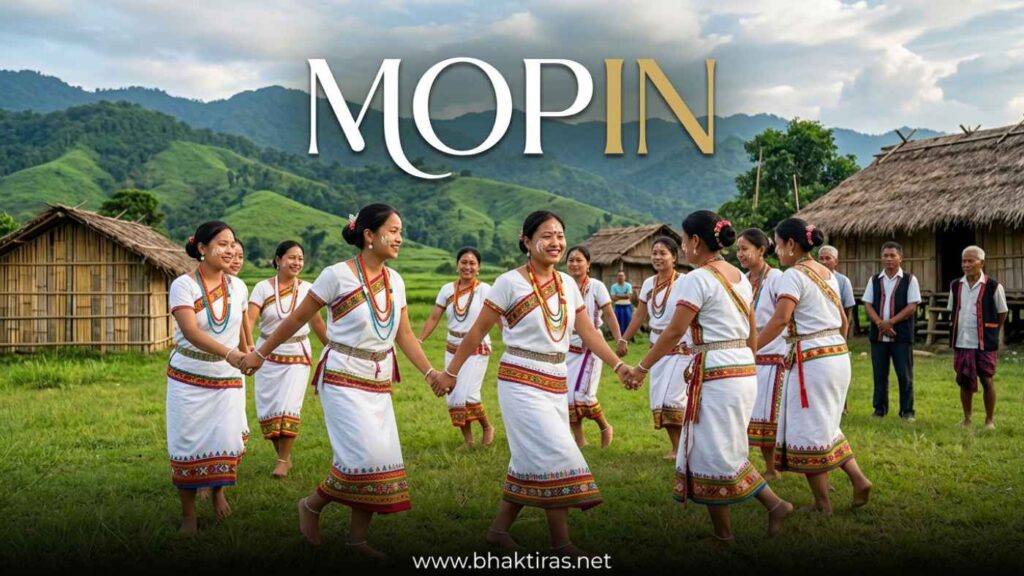
Mopin is the biggest festival of the Galo people, one of the Tani tribes of Arunachal Pradesh, celebrated chiefly around Aalo in West Siang. Held on 5 April each year once the harvest is in, it is an appeal to the goddess Mopin Ane for wealth, health and a bountiful crop, and a rite to sweep away evil and misfortune. Its signature image is white: neighbours smear soft rice flour, called ipin, across one another’s faces until the whole crowd glows pale, a gesture of purity and shared goodwill.
Mopin 2026-2028: Dates & Calendar
Mopin is a fixed-date festival, always observed on 5 April. The next occurrence is 5 April 2027; the 2026 celebration has already passed.
| Year | Date | Day | Notes |
|---|---|---|---|
| 2026 | 5 April | Sunday | Already observed |
| 2027 | 5 April | Monday | Next occurrence |
| 2028 | 5 April | Wednesday | Same fixed date |
The main public celebration centres on Aalo (Along) in West Siang district, though Galo communities across Arunachal Pradesh and beyond mark the day together. Preparations, including brewing apong and gathering rice flour, begin in the days before.
Why Mopin Is Celebrated
Mopin is celebrated to thank and invoke the goddess Mopin Ane for prosperity, good health and an abundant harvest, and to drive evil spirits and bad luck away from the community.
A harvest of thanks
Mopin comes after the crop is gathered, so the mood is one of relief and gratitude. Families give thanks for what the fields yielded and ask that the next cycle be just as generous. The offerings and prayers are a way of settling the year’s account with the powers that govern the harvest.
Mopin Ane, the giver of plenty
The festival is named for Mopin Ane, the mother goddess associated with wealth, wellbeing and fertility of the land. The Nyibo, the community priest, chants long invocations calling on her to bless every household with health and abundance. She is the reason the day exists and the figure the whole celebration is addressed to.
Cleansing away misfortune
Beyond thanksgiving, Mopin is a protective rite. The rituals are meant to expel evil, sickness and ill luck from homes and fields so the community can begin the new agricultural year cleanly. The white rice flour smeared on everyone reads as a visible sign of that purity and fresh start.
Binding the community
Because people smear flour on one another, share apong and dance in a single line, Mopin knits neighbours together. Old quarrels are set aside for the day, and hospitality is extended freely to guests and strangers alike. The festival is as much about social goodwill as it is about the harvest.
Deities & Figures Worshipped
Mopin is dedicated to Mopin Ane, the Galo goddess of prosperity and wellbeing, with the Nyibo priest leading the prayers on the community’s behalf.
Mopin Ane
Mopin Ane is the mother goddess of wealth, health and a good harvest in Galo belief. The entire festival is her invocation, asking her to fill homes with plenty and keep sickness and misfortune away. Her name gives the festival its own.
The Nyibo (priest)
The Nyibo is the traditional Galo priest who conducts the rituals and recites the sacred chants that call on Mopin Ane. He guides the offerings and the sequence of the ceremony, acting as the link between the community and the goddess. Nothing of ritual importance proceeds without him.
Key Rituals, Step by Step
Mopin unfolds through a set of community rites led by the Nyibo, from morning prayers to the flour-smearing and dance that everyone joins.
- Preparing apong and ipin. In the days before, households brew apong, the local rice beer, and grind rice into the soft white flour called ipin that gives the festival its look.
- Setting up the ceremonial ground. The community readies an open space with a ritual altar and platform where the Nyibo will make the offerings and the goddess will be invoked.
- Invocation by the Nyibo. The priest opens the day with long chants calling on Mopin Ane for health, wealth and a rich harvest, and asking that evil be kept away.
- Animal offerings. Offerings, including animal sacrifice in the traditional manner, are made to the goddess as part of the appeal for prosperity and protection.
- Smearing of rice flour. People take handfuls of ipin and smear it on each other’s faces and clothes until the crowd is dressed in white, a sign of purity and goodwill.
- The Popir dance. Young women in white robes perform the graceful Popir dance in a line, moving in slow unison to mark the joy of the occasion.
- Sharing apong. Apong is poured and passed around freely, and hospitality is offered to every guest as a mark of the day’s open spirit.
- Community feast. The celebration closes with everyone eating together, sharing rice, meat and the season’s food in a shared meal that seals the goodwill of the festival.
Special Foods of Mopin
Mopin food is built around rice in every form, from the flour smeared on faces to the beer poured for guests and the meat shared at the feast.
Apong
Apong is the traditional rice beer of the Galo and other Arunachali tribes, brewed at home in the days before Mopin. It is offered to the goddess, shared with guests and poured generously through the celebration. No Mopin gathering is complete without it.
Ipin (rice flour)
Ipin is the soft white rice flour that people smear on one another during the festival. Though it is central to the ritual rather than a dish, it comes straight from the same rice harvest the day gives thanks for. Its white colour stands for purity and good wishes.
Rice and meat dishes
The feast leans on freshly harvested rice served alongside meat, often pork or chicken, cooked in the smoky, lightly spiced Galo style. Bamboo shoot and local greens usually round out the plate. Everything is shared in a common meal at the day’s end.
Smoked and boiled preparations
Galo cooking favours boiling and smoking over heavy frying, so the festival table carries simply cooked meat and vegetables that let the ingredients speak. Fermented flavours and bamboo shoot add the region’s characteristic tang. The food is hearty and made for a crowd.
Where Mopin Is Celebrated
Mopin is above all a Galo festival of West Siang, though it is now observed by Galo communities across Arunachal Pradesh and by their neighbours.
Aalo, West Siang
The largest and best known Mopin celebration takes place at Aalo, also spelled Along, the district headquarters of West Siang and the heartland of the Galo people. Thousands gather here for the flour-smearing, the Popir dance and the public feast. It is the reference point for how the festival looks.
Across Galo areas of Arunachal
Galo villages throughout West Siang, Lower Siang and neighbouring districts hold their own Mopin gatherings on the same day. Each community follows the shared pattern of prayer, offerings, flour and dance. The scale varies but the spirit is the same.
Among the wider Tani tribes
The Galo belong to the larger Tani group, whose other members hold their own harvest and nature festivals. Mopin is often celebrated alongside these communities in a spirit of shared identity, and members of neighbouring tribes join in as guests. The day has become a marker of Tani cultural pride.
Mopin Do's and Don'ts
A few simple courtesies help you take part in Mopin with the right spirit.
Do
- Accept the rice flour smeared on you gracefully – it is a blessing of purity and goodwill
- Wear white or light clothing you don’t mind getting powdered
- Try the apong when it is offered, or decline politely if you don’t drink
- Watch and appreciate the Popir dance quietly rather than interrupting the line
- Join the community feast and thank your hosts warmly
Avoid
- Don’t refuse the flour-smearing rudely – it is meant kindly, not as mischief
- Don’t treat the Nyibo’s rituals or the altar as a photo backdrop; ask before filming closely
- Don’t wear anything precious that flour or apong could spoil
- Don’t push into the Popir dance uninvited; wait to be welcomed in
- Don’t waste food at the feast – the meal marks a hard-won harvest
Frequently Asked Questions
When is Mopin in 2027?
Mopin is on 5 April 2027, a Monday. It is a fixed-date festival, so it always falls on 5 April regardless of the lunar calendar. It is the biggest festival of the Galo tribe of Arunachal Pradesh.
When is Mopin in 2026 and 2028?
Mopin fell on 5 April 2026 (a Sunday) and will fall on 5 April 2028 (a Wednesday). The date does not move because Mopin is fixed to 5 April every year rather than to a shifting lunar tithi.
Why is Mopin celebrated?
Mopin is celebrated as a harvest and prosperity festival to honour the goddess Mopin Ane and seek wealth, good health and a bountiful crop. It is also a rite to drive away evil and misfortune so the community can begin the new farming year cleanly. It comes after the harvest is gathered.
Which goddess is worshipped during Mopin?
Mopin honours Mopin Ane, the Galo mother goddess of prosperity, wellbeing and a good harvest. The festival is her invocation, and the community priest, the Nyibo, leads the chants that call on her. The festival takes its name from her.
Which community celebrates Mopin?
Mopin is the biggest festival of the Galo tribe, one of the Tani group of Arunachal Pradesh. Its main celebrations centre on Aalo in West Siang district, though Galo communities across the state observe it. Neighbouring Tani communities often join as guests.
Why do people smear rice flour on each other during Mopin?
During Mopin people smear soft white rice flour, called ipin, on one another’s faces until everyone is dressed in white. The white colour stands for purity and goodwill, and the act carries a blessing between neighbours. It is the festival’s most recognisable custom.
What is the Popir dance?
The Popir is a graceful traditional dance performed at Mopin by young Galo women dressed in white. They move in a slow line in unison to celebrate the harvest and the goddess’s blessings. It is one of the visual highlights of the day.
What food and drink are part of Mopin?
Mopin centres on rice: apong, the home-brewed rice beer, is shared freely, while ipin rice flour is used in the smearing ritual. The community feast serves freshly harvested rice with pork or chicken, bamboo shoot and local greens in the smoky Galo style.
However you mark the day, may Mopin Ane fill your home with health and plenty – a joyful Mopin to all who celebrate.