
Gotmar Mela 2026 – Pandhurna's Stone-Pelting Fair
गोटमार मेला
When is Gotmar Mela in 2026?
Gotmar Mela falls on Saturday, 12 September 2026, the day after Pola (Bhadrapada Amavasya). It is a one-day folk fair held at Pandhurna in Chhindwara district, Madhya Pradesh, where two riverside villages pelt stones across the Jam river to seize a flag on a palas tree, then offer prayers at the Chandika Mata temple.
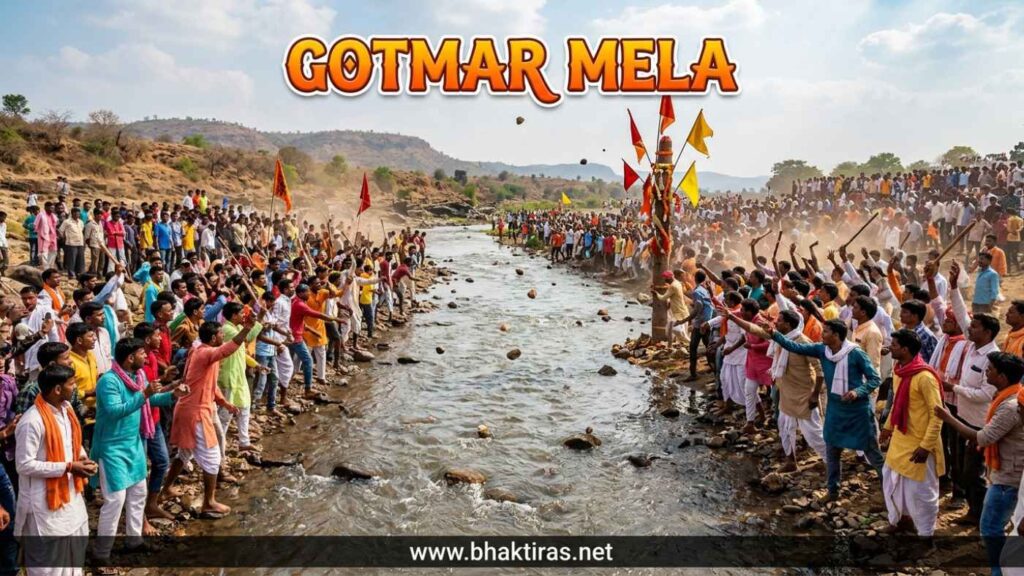
Gotmar Mela is a one-day folk fair at Pandhurna in Chhindwara district, Madhya Pradesh, held the morning after Pola on Bhadrapada Amavasya (September 2026). Two communities, from Pandhurna and Sawargaon on opposite banks of the Jam river, hurl stones at each other to reach a flag hoisted on a palas branch planted mid-stream. Whichever side pulls down the jhanda first is declared the winner and walks to the Chandika Mata temple to give thanks. It is one of India’s most contested folk customs, remembered as much for its injuries as its devotion.
Gotmar Mela 2026-2028: Dates & Calendar
The next Gotmar Mela is on Saturday, 12 September 2026. The fair is tied to the lunar calendar – always the day after Pola, which falls on Bhadrapada Amavasya – so it shifts each year between mid-August and mid-September.
| Year | Date | Day | Notes |
|---|---|---|---|
| 2026 | 12 September | Saturday | Next occurrence (day after Pola, 11 Sep) |
| 2027 | 1 September | Wednesday | Day after Pola, 31 Aug |
| 2028 | 21 August | Monday | Day after Pola, 20 Aug |
Local dates can vary by a day where panchangs differ on when Bhadrapada Amavasya ends; confirm with the Pandhurna town committee closer to the fair.
Why Gotmar Mela Is Celebrated
Gotmar Mela grows out of a local tragedy – the death of a young couple in the Jam river – and has hardened over generations into a ritual contest of honour between two villages, sealed by worship of the goddess Chandika Mata.
The legend of the lovers
Elders tell of a boy from Pandhurna and a girl from Sawargaon who fell in love against the wishes of both villages. One Bhadrapada Amavasya they tried to elope and were caught crossing the swollen Jam river. Both sets of villagers pelted them with stones and the couple died in the water. Gotmar, the story goes, began as an act of mourning that never stopped.
A ritual of village rivalry
Over time the mela became a yearly trial of strength between the two banks. Pandhurna and Sawargaon each field their own throwers, and pride rests on which side can seize the flag. Families pass down roles across generations – the Kavle family of Sawargaon has brought the palas flag from the forest for four generations.
Chandika Mata's blessing
The contest is framed as devotion, not sport. The side that pulls down the jhanda first carries it in procession to the Chandika Mata temple, a goddess shrine in Pandhurna, and offers prayers of thanks. The victory is read as the goddess’s favour for the coming year.
Deities & Figures Worshipped
The fair centres on the goddess Chandika Mata, whose temple in Pandhurna receives the winning side, and it also honours the memory of the two lovers whose story gave the mela its meaning.
Chandika Mata
Chandika is a fierce form of the Mother Goddess (Devi), worshipped as the guardian deity of Pandhurna. The winning village carries the seized flag to her temple and offers prayers, treating the day’s outcome as her blessing. The morning rites and the closing procession both turn on her shrine.
The remembered couple
The unnamed lovers of the legend are honoured rather than worshipped as gods. Their death in the Jam river is the origin the community returns to each year, and the fair’s mournful roots are still spoken of by older residents even as the day has grown competitive.
Key Rituals, Step by Step
The mela runs across a single day, from an early-morning flag planting to an evening victory procession.
- Bringing the palas branch. Before dawn, a family from Sawargaon fetches a branch of the sacred palas tree (Flame of the Forest) from the forest and worships it. The same lineage has carried out this duty for generations.
- Planting the jhanda. The branch is fixed upright in the middle of the Jam river and a flag, the jhanda, is hoisted at its top. This flag becomes the prize both sides fight to seize.
- The two sides gather. Throwers from Pandhurna line one bank and those from Sawargaon the other, with the river and the flagpole between them. Crowds watch from bridges and higher ground.
- The stone-pelting begins. From around late morning the two sides hurl stones across the water at each other, traditionally continuing through the afternoon. The pelting is meant to cover anyone trying to wade out to the flag.
- Reaching the flag. Under the barrage, participants push into the river and attempt to climb to the jhanda, cut it down, and carry it back to their bank.
- Declaring the winner. The side that pulls down and captures the flag before the day ends is declared the victor for that year.
- Prayers at Chandika Mata. The winning village carries the flag in procession to the Chandika Mata temple and offers thanksgiving, closing the mela.
Fair Foods at Gotmar Mela
Because Gotmar sits on the Maharashtra-Madhya Pradesh border and follows the harvest festival of Pola, the surrounding fair leans on simple Deccan and Malwa-Berar stall food.
Puran poli
A soft flatbread stuffed with a sweet paste of split chana dal and jaggery, eaten across the Vidarbha-Chhindwara belt around the Pola season. It is a common home sweet in the days on either side of the fair.
Jalebi and pedha
Coils of hot jalebi and milk pedha are staples of the temporary stalls that ring the mela ground, bought by families and spectators through the day.
Bhajji and poha
Deep-fried bhajji (pakora) and Madhya Pradesh’s signature poha are the everyday snacks sold along the route, cheap and quick to eat while watching the crowds.
Where It's Celebrated
Unlike a pan-Indian festival, Gotmar Mela is intensely local – one fair, one town – though it belongs to a wider Pola-season culture shared across the region.
Pandhurna, Chhindwara district
The mela belongs to Pandhurna town (now the headquarters of Pandhurna district, carved out of Chhindwara) in Madhya Pradesh. The contest is between Pandhurna proper and neighbouring Sawargaon, across the Jam river that runs between them.
Part of the Pola season
Gotmar falls the day after Pola, the bullock-thanksgiving festival kept by farming families across Maharashtra, Chhattisgarh and Madhya Pradesh. In the Vidarbha and Berar belt nearby, Pola and its second day are marked in many villages, though only Pandhurna holds the stone fight.
Gotmar Mela Do's and Don'ts
This is an injury-prone event; spectators and visitors should treat safety as the first priority.
Do
- Watch from a safe distance, on a bridge or high ground away from the throwing zone
- Follow police and district-administration barriers and instructions
- Note the location of the medical camps and ambulances on the ground
- Keep children well back from the riverbank
- Support calls to use rubber balls instead of stones
Avoid
- Do not enter the river or the pelting area as a bystander
- Do not encourage or join the stone-throwing
- Do not crowd the ambulance and rescue-boat access routes
- Do not ignore weather or flood warnings on the Jam river
- Do not treat the injuries lightly – some have been serious and even fatal
Frequently Asked Questions
When is Gotmar Mela in 2026?
Gotmar Mela is on Saturday, 12 September 2026. It is always held the day after Pola, which in 2026 falls on 11 September (Bhadrapada Amavasya). The fair lasts a single day at Pandhurna in Madhya Pradesh.
When is Gotmar Mela in 2027 and 2028?
Gotmar Mela is on Wednesday, 1 September 2027 and on Monday, 21 August 2028. The date moves each year because it follows the day after Pola on the Hindu lunar calendar, so it can fall anywhere from mid-August to mid-September.
Where is Gotmar Mela held?
Gotmar Mela is held at Pandhurna, the headquarters of Pandhurna district (formerly part of Chhindwara), in Madhya Pradesh. The contest takes place across the Jam river, between the town of Pandhurna and the neighbouring village of Sawargaon.
What is the legend behind Gotmar Mela?
The legend tells of a boy from Pandhurna and a girl from Sawargaon who fell in love against both villages’ wishes. When they tried to elope across the flooded Jam river, villagers from both sides pelted them with stones and they died. Gotmar Mela is said to have begun as an act of mourning for the couple.
How does the stone-pelting ritual work?
A palas branch is planted in the middle of the Jam river with a flag (jhanda) on top. Throwers from Pandhurna and Sawargaon line opposite banks and pelt stones at each other while participants try to wade out and seize the flag. The side that captures the jhanda first wins and offers prayers at the Chandika Mata temple.
Which deity is worshipped at Gotmar Mela?
The presiding deity is Chandika Mata, a fierce form of the Mother Goddess whose temple stands in Pandhurna. The winning village carries the captured flag in procession to her shrine and offers thanksgiving, reading the victory as the goddess’s blessing.
Is Gotmar Mela dangerous?
Yes, Gotmar Mela is dangerous and injury-prone. Hundreds are hurt in a typical year and at least a dozen deaths have been recorded since 1955, the last in 2011. Large medical camps, ambulances and rescue boats are deployed each year to treat the wounded.
Have authorities tried to make Gotmar Mela safer?
Yes. The district administration and courts have pushed for reform, urging participants to use soft rubber balls instead of stones and proposing alternative cultural events. These efforts have met strong local resistance, and the traditional stone form of the fair has largely continued.
Gotmar Mela is a raw, contested slice of Madhya Pradesh’s folk life – powerful to witness, safest from a distance. Whether you come for the legend or the goddess, keep well back from the river.