
Garia Puja 2027 – Tripura's Seven-Day Harvest Festival
गरिया पूजा
When is Garia Puja in 2027?
Garia Puja begins on 14 April 2027 and runs for seven days into the month of Baisakh. It is the harvest and fertility festival of Tripura’s indigenous Tripuri and Reang (Bru) communities, who worship Lord Garia, the guardian of livestock, wealth and a good crop.
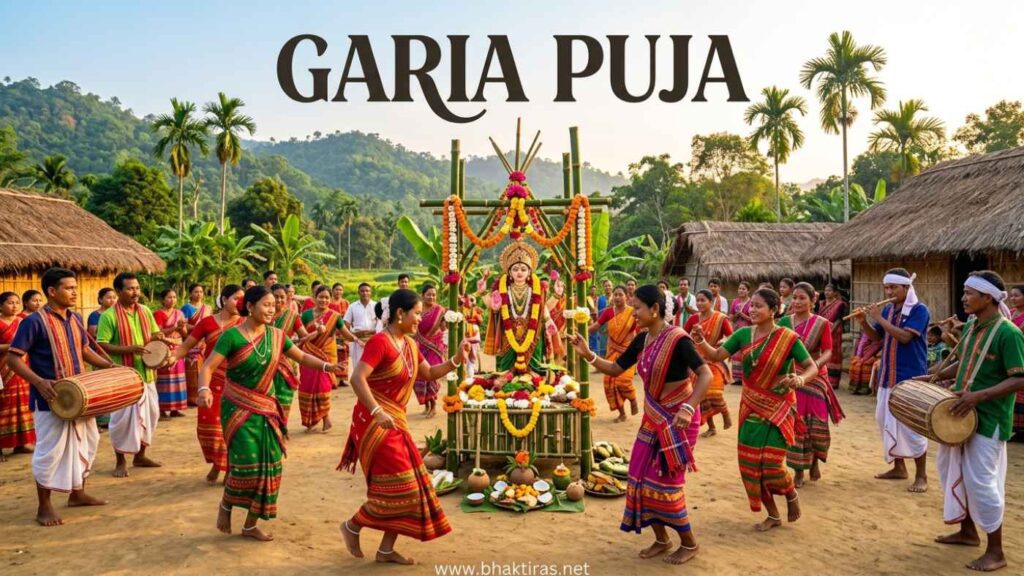
Garia Puja is the great spring festival of Tripura’s indigenous people, kept by the Tripuri and the Reang (Bru) communities as the farming year begins. Held for seven days from the last day of Chaitra into early Baisakh, it centres on Lord Garia, the deity who looks after cattle, household wealth and the fertility of the land. Once the seeds are sown, families raise a decorated bamboo pole as Garia’s living form and pray for healthy livestock, full granaries and protection for the year ahead.
Garia Puja 2026-2028: Dates & Calendar
Garia Puja next begins on 14 April 2027. The festival opens on the last day of Chaitra, close to Chaitra Sankranti in mid-April, and continues for seven days into Baisakh, so the start date shifts only slightly year to year.
| Year | Festival begins | Day | Notes |
|---|---|---|---|
| 2026 | 14 April | Tuesday | Seven-day observance into Baisakh |
| 2027 | 14 April | Wednesday | Next occurrence |
| 2028 | 13 April | Thursday | Seven-day observance into Baisakh |
Garia Puja is tied to the solar Chaitra Sankranti rather than a single lunar tithi, so it lands in mid-April most years. It belongs to the same spring cluster the region calls Boisabi, along with Bihu-style new-year celebrations across Northeast India.
Why Garia Puja Is Celebrated
Garia Puja is celebrated to seek Lord Garia’s blessing for a good harvest, healthy cattle and prosperity for the household, marking the start of the sowing season in Tripura.
For the Tripuri and Reang communities, Garia is not a distant sky-god but a close guardian of everyday livelihood: the cattle in the shed, the wealth of the family and the fertility of the soil. The puja falls at the turn of the year, once the first seeds are in the ground, when a community that lives by farming most needs its crops and animals to thrive.
A prayer for the farming year
Garia Puja opens as the agricultural cycle begins. Households ask Garia to grant rain in season, strong crops and safety for their livestock through the coming months. It is as much a communal hope for plenty as it is an act of worship.
Guardian of cattle and wealth
Garia is honoured as the deity of livestock and household prosperity. Cattle are central to tribal life in Tripura, so blessings for the herd are blessings for the family’s food, labour and security. Wealth here means a full granary and a healthy shed, not coins.
A marker of indigenous identity
The festival is one of the clearest expressions of Tripuri and Reang heritage. The songs, the Garia dance and the bamboo-pole worship are carried down through families, and celebrating them keeps a distinct tribal culture visible and alive.
The Deity: Lord Garia
Garia Puja worships Lord Garia, the indigenous deity of livestock, wealth, fertility and a good harvest revered by the Tripuri and Reang peoples of Tripura.
Lord Garia
Garia is the presiding deity of the festival, worshipped for the well-being of cattle, the prosperity of the home and the fertility of the fields. Rather than an image or idol, he is invoked into a tall bamboo pole dressed with flowers, thread and cloth, which becomes his form for the seven days of worship.
Key Rituals, Step by Step
Garia Puja unfolds over seven days, from raising the bamboo Garia to its farewell, with dance and offerings in between.
- Choosing and cutting the bamboo. A straight, healthy bamboo is selected and cut with care, since it will hold the deity for the whole festival. It is cleaned and prepared as the body of Garia.
- Dressing the pole. The bamboo is decorated with flowers, garlands, cotton and coloured thread, and lengths of cloth are tied around it. This adorned pole is the living emblem of Garia for the days of worship.
- Installing Garia. The pole is set up in the courtyard or a clean sacred spot in the village, often on the last day of Chaitra. The priest invokes the deity into it, and the household gathers before it.
- Making offerings. Rice, rice beer, eggs and, by tradition in many families, a fowl are offered to Garia along with prayers for cattle, crops and health. The offerings reflect the produce of tribal life.
- The Garia dance. Young men and women perform the energetic Garia dance to the beat of drums and flute, singing devotional and folk songs in Kokborok in honour of the deity.
- House-to-house celebration. Over the seven days, dance troupes carry the spirit of Garia from home to home across the village, bringing blessings, music and shared festivity to each household they visit.
- Farewell and immersion. On the concluding day the community bids Garia goodbye, taking down the pole and giving it a respectful farewell, often by immersion, before returning to the season’s work.
Foods & Offerings of Garia Puja
The festival table draws on the everyday tribal kitchen of Tripura, with rice, bamboo shoot and home-brewed rice beer at its heart.
Rice beer (langi / chuak)
Home-fermented rice beer, called langi or chuak, is both an offering to Garia and a drink shared in celebration. Brewed by the community, it is closely tied to tribal ritual and hospitality across the seven days.
Bamboo-shoot dishes
Tender bamboo shoot, fresh or fermented, goes into curries and stews that define Tripuri cooking. It appears often on the festival table alongside seasonal greens and river fish.
Rice and fowl offerings
Rice is the staple offered to Garia, and by tradition many families present eggs or a fowl as part of the puja. After the ritual, a shared meal brings neighbours and kin together.
Mui borok fare
Dishes from the wider Mui Borok style of Tripuri food, lightly cooked with local herbs and berma (fermented fish), round out the feasting, keeping the celebration rooted in indigenous taste.
Community Variations: Tripuri & Reang
Though shared across Tripura’s tribes, Garia Puja is observed with distinct touches by different communities.
Tripuri Garia Puja
Among the Kokborok-speaking Tripuri people, Garia Puja is the major spring festival, marked by the Garia dance, community feasting and organised celebrations such as the well-known Jamatia gathering. It sits within the region’s larger Boisabi new-year season.
Reang (Bru) Garia
The Reang, or Bru, community anchors its Garia worship to Chaitra Sankranti and continues for seven days into Baisakh. Reang observances may add rituals connected with forest spirits, reflecting their close bond with the woodland where they live.
Part of the Boisabi cluster
Across Tripura the spring festivities are collectively called Boisabi, drawing in Bihu-style new-year customs of neighbouring groups. Garia Puja is the Tripuri and Reang expression within this shared seasonal celebration.
Garia Puja Do's and Don'ts
A few points of respect help honour an indigenous tradition that belongs to Tripura’s tribal communities.
Do
- Treat the bamboo Garia pole with reverence as the deity’s living form.
- Join the Garia dance and songs in the spirit of community celebration.
- Share food and rice beer with neighbours, as the festival is built on hospitality.
- Learn the meaning behind the rituals from local Tripuri and Reang hosts.
- Support the farming prayers at the heart of the puja: cattle, crops and rain.
Avoid
- Do not treat the ceremonies or the deity as a tourist spectacle.
- Do not force mainstream customs onto what is an indigenous tribal rite.
- Do not disturb or handle the decorated Garia pole without invitation.
- Do not photograph rituals or people without asking permission first.
- Do not belittle the offerings or the home-brewed rice beer central to the tradition.
Frequently Asked Questions
When is Garia Puja in 2027?
Garia Puja in 2027 begins on 14 April and continues for seven days into the month of Baisakh. It opens on the last day of Chaitra, close to Chaitra Sankranti in mid-April, and is the spring harvest festival of Tripura’s Tripuri and Reang communities.
When is Garia Puja in 2026 and 2028?
Garia Puja begins on 14 April in 2026 and on 13 April in 2028, running seven days each year. Because it is tied to the solar Chaitra Sankranti rather than a single lunar date, its start falls in mid-April most years, though Tripura’s official state holiday for the concluding day is notified separately.
Why is Garia Puja celebrated?
Garia Puja is celebrated to seek Lord Garia’s blessing for healthy cattle, household wealth and a good harvest as the sowing season begins. For the Tripuri and Reang farming communities it is both an act of worship and a communal prayer for a prosperous year.
Which god is worshipped during Garia Puja?
Garia Puja worships Lord Garia, the indigenous deity of livestock, wealth, fertility and a bountiful crop, revered by the Tripuri and Reang peoples of Tripura. He is not represented by an idol but is invoked into a tall bamboo pole decorated with flowers, thread and cloth.
How is Lord Garia represented in the festival?
Lord Garia is represented by a decorated bamboo pole rather than a statue. A straight bamboo is cut, dressed with flowers, garlands, cotton, coloured thread and cloth, and installed in the courtyard, where the priest invokes the deity into it for the seven days of worship.
Who celebrates Garia Puja?
Garia Puja is celebrated chiefly by the indigenous Tripuri and Reang (Bru) communities of Tripura, along with related Kokborok-speaking tribes. It is one of the most important festivals of the state’s tribal population and part of the wider Boisabi spring season.
What is the Garia dance?
The Garia dance is the energetic folk dance performed during Garia Puja by young men and women to drum and flute, with songs sung in Kokborok in honour of the deity. Troupes move from house to house through the village, carrying the festival’s blessings and music to each home.
How long does Garia Puja last?
Garia Puja lasts seven days, beginning on the last day of Chaitra and ending on the seventh day of Baisakh. The final day is observed as a regional holiday in Tripura and closes with the farewell of the Garia pole.
May Lord Garia bless every home in Tripura with healthy cattle, full granaries and a joyful year. Kwrwi Garia!