
Sarhul 2027 – The Adivasi New Year of the Sal Flowers
सरहुल
When is Sarhul in 2027?
Sarhul falls on Friday, 9 April 2027. It is the spring festival and new year of the Sarna-faith Adivasi tribes of Jharkhand and nearby states, held on Chaitra Shukla Tritiya. The village priest, the Pahan, worships Sarna Maa in the sacred grove and offers fresh Sal flowers to mark the union of the sky and the earth.
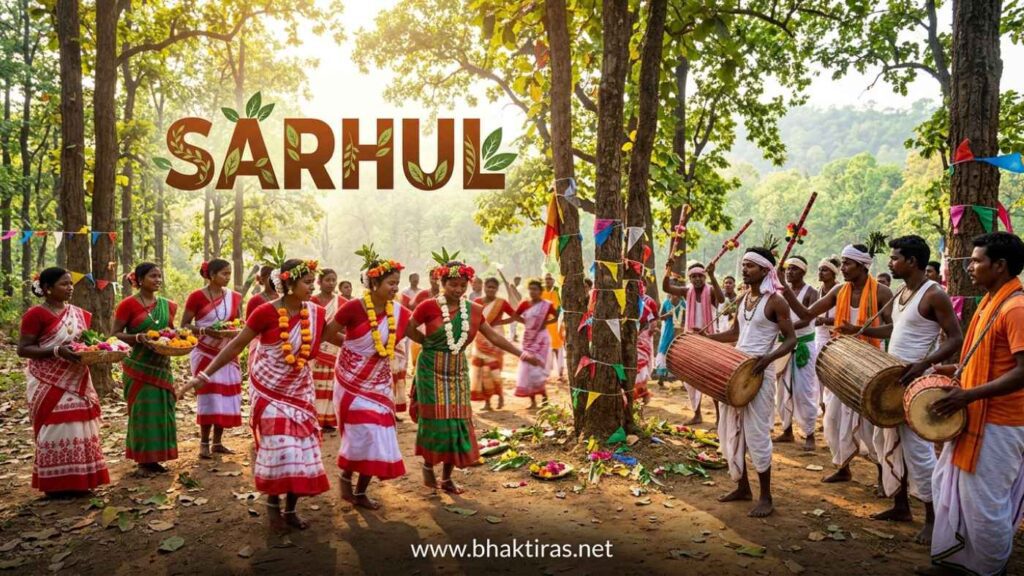
Sarhul is the spring festival and new year of the Sarna-faith Adivasi communities, chiefly the Oraon, Munda, Ho and Santal, who live across Jharkhand, Odisha, West Bengal and Chhattisgarh. The word means worship of the Sal tree, and the whole festival turns on the fresh flowering of the Sal in Chaitra (March to April). In each village the Pahan, the traditional priest, gathers Sal blossoms from the sacred grove and offers them to Sarna Maa, marking the symbolic marriage of the Sun and the Earth before the new farming year begins.
Sarhul 2026-2028: Dates & Calendar
The next Sarhul falls on Friday, 9 April 2027. Because it is fixed to Chaitra Shukla Tritiya in the Hindu lunisolar calendar, its Gregorian date shifts by two to three weeks each year.
| Year | Date | Day | Notes |
|---|---|---|---|
| 2026 | 21 March | Saturday | Already observed |
| 2027 | 9 April | Friday | Next occurrence |
| 2028 | 28 March | Tuesday | Chaitra Shukla Tritiya |
Sarhul is a public holiday in Jharkhand. The main worship happens on Tritiya itself, but preparations such as cleaning the grove and fasting begin a day before, and community dancing often continues for a further day or two.
Why Sarhul Is Celebrated
Sarhul is celebrated to welcome spring, honour Sarna Maa in the sacred grove and open the new agricultural year for the Sarna-faith tribes. It marks the point when the Sal tree flowers and life renews across the forest.
Worship of the Sal tree
The name Sarhul is usually read as worship of the Sal (Shorea robusta). The tree carries deep meaning for Adivasi communities, who see the sacred grove of Sal as the home of their village deity. Its spring flowering is the natural signal that the festival, and the new year, has arrived.
The home of Sarna Maa
Sarna Maa, also called Sarna Burhi, is the guardian deity of the village. She is believed to reside in the Sarna sthal, the untouched grove of Sal trees kept aside for worship. Offering her the first Sal flowers is a way of asking her protection over the fields, the forest and the people for the year ahead.
Marriage of sky and earth
At the heart of Sarhul is the symbolic marriage of the Sun and the Earth. The Pahan is understood to represent the Sun and his wife the Earth, and their union stands for the sunlight meeting the soil so that crops can grow. It is a fertility rite as much as a new-year rite.
New year and identity
For the Oraon, Munda, Ho and Santal, Sarhul is the tribal new year. In recent decades it has also become an occasion to assert Adivasi identity and the distinct Sarna Dharma, including the long-running demand for a separate Sarna column in the national census.
Deities & Figures Worshipped
Sarhul centres on Sarna Maa, the village guardian deity of the sacred grove, honoured through the Pahan, the community priest who conducts every rite.
Sarna Maa (Sarna Burhi)
Sarna Maa is the presiding deity of the grove and the protector of the village against natural calamity and disease. She is worshipped in the open Sarna sthal rather than a built temple, and the fresh Sal flowers offered to her are the central gift of the whole festival.
The Pahan
The Pahan is the traditional Adivasi priest who leads Sarhul. He fasts, cleanses himself, reads the rainfall omen, sacrifices offerings and hands out the blessed Sal flowers. His wife, the Pahen, takes part in the sky-and-earth symbolism, representing the Earth to the Pahan’s Sun.
The Sun and the Earth
Beyond a single named god, Sarhul honours the Sun and the Earth as the two forces whose union sustains all farming. Their symbolic marriage during the festival is what blesses the coming sowing season with rain and a good harvest.
Key Rituals, Step by Step
Sarhul unfolds over one to three days, with the Pahan carrying out each rite in the sacred grove before the whole village joins the celebration.
- Fasting and cleansing. A day or two before, the Pahan begins a fast and purifies himself. Homes and the Sarna sthal are swept clean and decorated, and the grove is readied for worship.
- Fetching water and reading the omen. Earthen pots are filled with water and placed in the grove overnight. The next morning the Pahan checks the water levels to forecast the coming monsoon, a full pot pointing to good rain and a poor one warning of drought.
- Gathering the Sal flowers. The Pahan collects fresh Sal blossoms from the sacred grove. Until this offering is made, custom holds that no one in the village should pluck the new flowers.
- Offering to Sarna Maa. In the grove the Pahan offers the Sal flowers along with vermilion and other traditional gifts to Sarna Maa, the Sun and the ancestors, praying for the prosperity and safety of the village.
- The marriage of sky and earth. Through the offering, the Pahan and Pahen enact the symbolic union of the Sun and the Earth, the moment believed to bless the soil for the new sowing season.
- Distributing the blessed flowers. The Sal flowers are carried from the grove to every home, tucked into roofs and doorways, so that Sarna Maa’s blessing reaches each family.
- Community feast and dance. Villagers share handia, the fermented rice drink, and food, then dance together to the beat of the mandar, nagara and dhol late into the night, opening the new year with joy.
Special Foods of Sarhul
Sarhul food is simple, rooted in rice and the forest, and shared in the open with the whole community.
Handia
Handia is a mildly fermented rice beer, brewed at home and treated as a sacred offering that links the living with their ancestors. It is shared among adults during the feasting and dancing, and a portion is first offered in the grove.
Pakhala
Pakhala, cooked rice left to soak in water overnight and lightly soured, is a cooling everyday dish across eastern India. During the spring warmth of Sarhul it is an easy, refreshing meal eaten with simple sides.
Rice and forest greens
Freshly cooked rice is the base of every Sarhul meal, often paired with seasonal leafy greens and vegetables gathered locally. The food reflects the community’s close bond with the land it is thanking.
Meat dishes
Where families keep the older customs, chicken or goat prepared after the ritual offering is cooked into a festive curry. It is shared communally as part of the celebration that follows the worship.
Regional Names & Variations
Sarhul is kept by several Adivasi communities across eastern and central India, each with its own emphasis while sharing the Sal-flower core.
Oraon
Among the Oraon, Sarhul is one of the central festivals of the year, sometimes called Khaddi. The Pahan’s rainfall omen and the marriage of sky and earth are given great importance, and the community’s dances are a defining feature.
Munda
The Munda observe Sarhul as Baa Parab, the flower festival, marking the new Sal bloom and the start of the farming cycle. As with other communities, the fresh flowers are offered before any are used at home.
Ho
The Ho of Jharkhand and Odisha celebrate the Sal-flower spring festival in their own tradition, honouring the grove deity and the renewal of the land as the new year opens.
Santal
For the Santal, spring nature worship built around fresh Sal blossoms carries a similar spirit, expressed through their own rites, songs and dances honouring the forest and the coming harvest.
Odisha, Bengal & Chhattisgarh
Beyond Jharkhand, Adivasi communities in Odisha, West Bengal and Chhattisgarh keep Sarhul in their villages, so the festival is spread across the wider forested belt of eastern and central India.
Sarhul Do's and Don'ts
A few simple customs guide how the festival is kept.
Do
- Wait for the Pahan’s offering before using any new Sal flowers
- Keep the Sarna sthal clean and treat the grove with respect
- Take part in the community dance and shared feast
- Offer handia and food in the spirit of thanksgiving
- Welcome the blessed Sal flowers into your home
Avoid
- Do not pluck the new Sal flowers before the grove is worshipped
- Do not plough or begin sowing before Sarhul is observed
- Do not cut or damage trees in the sacred grove
- Do not treat the festival as merely a party rather than a worship
- Do not disturb the Pahan during the fasting and rituals
Frequently Asked Questions
When is Sarhul in 2027?
Sarhul in 2027 falls on Friday, 9 April. It is fixed to Chaitra Shukla Tritiya, the third day of the bright fortnight of the Hindu month of Chaitra, so its Gregorian date shifts each year.
When is Sarhul in 2026 and 2028?
Sarhul was observed on Saturday, 21 March 2026, and will fall on Tuesday, 28 March 2028. The date moves because it follows the lunisolar Chaitra Shukla Tritiya rather than a fixed calendar day.
What does Sarhul mean?
Sarhul means worship of the Sal tree. The festival is named for the Sal (Shorea robusta), whose spring flowering marks the tribal new year, and whose fresh blossoms are offered to the village deity Sarna Maa.
Who is worshipped during Sarhul?
Sarhul honours Sarna Maa, also called Sarna Burhi, the guardian deity believed to live in the sacred grove of Sal trees. The festival is led by the Pahan, the village priest, who also honours the Sun, the Earth and the ancestors.
Which communities celebrate Sarhul?
Sarhul is celebrated by the Sarna-faith Adivasi tribes, chiefly the Oraon, Munda, Ho and Santal. They live across Jharkhand, Odisha, West Bengal and Chhattisgarh, and Sarhul is a public holiday in Jharkhand.
Why can no one pluck Sal flowers before Sarhul?
By custom, the new Sal flowers must first be offered to Sarna Maa by the Pahan in the sacred grove. Until that offering is made, villagers do not pluck the fresh flowers or begin ploughing, out of respect for the deity and the renewing season.
What is the sky-and-earth marriage in Sarhul?
The central rite of Sarhul is the symbolic marriage of the Sun and the Earth. The Pahan represents the Sun and his wife the Earth, and their union stands for sunlight meeting the soil so that crops can grow in the new farming year.
What food is eaten during Sarhul?
Sarhul food centres on rice, with handia, a fermented rice drink treated as sacred, shared during the feasting and dancing. Pakhala, seasonal greens and, in some families, chicken or goat curry are also part of the communal meal.
May Sarna Maa keep your village green and your harvest full this Sarhul.