
Basava Jayanti 2026 – Birth of Basavanna, the Lingayat Reformer
ಬಸವ ಜಯಂತಿ
When is Basava Jayanti in 2027?
Basava Jayanti in 2027 falls on Sunday, 9 May. It marks the birth of Basavanna (Basaveshwara), the 12th-century philosopher and social reformer who founded the Lingayat tradition. The day is observed on Vaishakha Shukla Tritiya, the same tithi as Akshaya Tritiya, and is a public holiday in Karnataka.
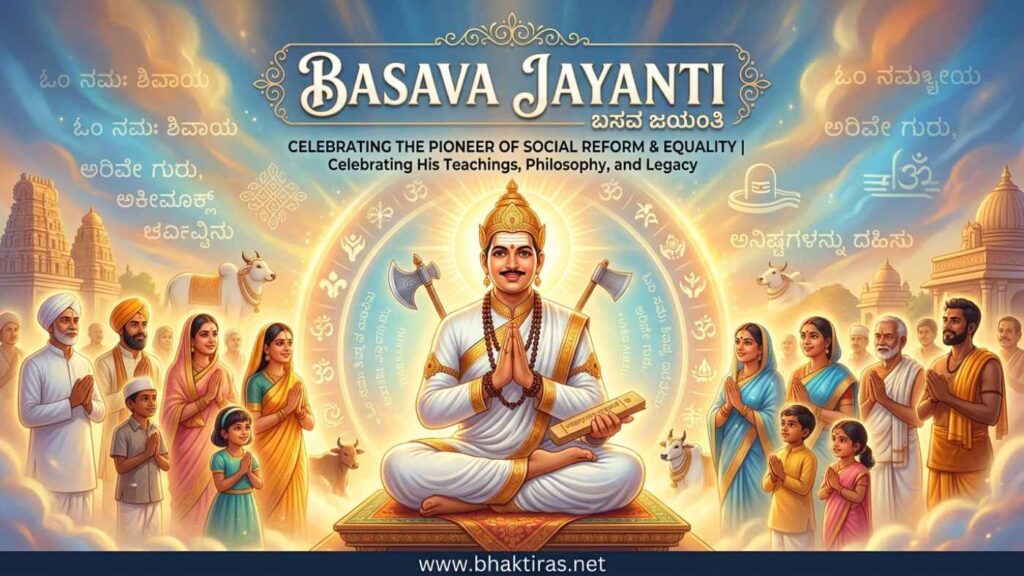
Basava Jayanti honours the birth of Basavanna, also called Basaveshwara, the 12th-century poet, statesman and social reformer who shaped the Lingayat tradition in Karnataka. Falling on Vaishakha Shukla Tritiya – the same day as Akshaya Tritiya – it is a single-day observance marked by processions, discourses on his Vachanas and community meals. Basavanna preached devotion to a personal Ishtalinga, rejected caste hierarchy and empty ritual, and taught that honest work and sharing are themselves forms of worship. Karnataka observes the day as a public holiday.
Basava Jayanti 2026-2028: Dates & Calendar
The next Basava Jayanti falls on Sunday, 9 May 2027. Because it follows the Hindu lunar calendar – Vaishakha Shukla Tritiya – the Gregorian date shifts each year.
| Year | Date | Day | Notes |
|---|---|---|---|
| 2026 | 20 April | Monday | Vaishakha Shukla Tritiya |
| 2027 | 9 May | Sunday | Next occurrence |
| 2028 | 27 April | Thursday | Vaishakha Shukla Tritiya |
The tithi coincides with Akshaya Tritiya, considered an auspicious day for new beginnings, which adds to the significance of celebrating Basavanna’s birth.
Why Basava Jayanti Is Celebrated
Basava Jayanti celebrates the birth and message of Basavanna, whose teachings on equality, devotion and the dignity of labour reshaped medieval Karnataka society.
A reformer's birth
The day marks the birth of Basavanna, born in the 12th century. He grew into a philosopher and statesman whose ideas challenged the social order of his time and gave the Lingayat community its founding voice.
Equality over caste
Basavanna rejected caste and ritual hierarchy, teaching that every devotee stands equal before the divine. His movement opened spiritual life to people of all backgrounds and genders through the gatherings of the Anubhava Mantapa.
Kayaka and Dasoha
He championed Kayaka, the idea that honest work is itself worship, and Dasoha, the sharing of one’s earnings with the community. These twin principles remain central to how Lingayats live and celebrate the day.
The Vachanas
Basavanna composed Vachanas, free-verse spiritual poems in Kannada that spoke directly to ordinary people. Reading and discussing these verses is a core part of the observance.
Who Is Honoured
Basava Jayanti honours a saint-reformer rather than a deity. The central figure is Basavanna, and his teachings point devotees toward the personal Ishtalinga they carry.
Basavanna (Basaveshwara)
The 12th-century reformer, poet and statesman who founded the Lingayat tradition and established the Anubhava Mantapa, a hall of spiritual discussion open to all. His image is carried in palkis and processions on the day.
The Ishtalinga
Basavanna taught devotion to a personal Ishtalinga worn on the body, rather than worship at large temples. This intimate, portable form of the divine defines Lingayat practice and is remembered on his birthday.
Key Rituals, Step by Step
The day blends devotion with community service, echoing Basavanna’s own teachings on work and sharing.
- Morning prayers. Devotees begin with worship of their Ishtalinga and offer prayers before Basavanna’s image at home and in Lingayat mathas.
- Processions and palkis. Decorated palkis carrying Basavanna’s portrait or statue are taken through towns and villages, accompanied by music and devotional singing.
- Discourses on the Vachanas. Scholars and elders read and explain Basavanna’s Vachanas, discussing his ideas on equality, labour and devotion.
- Visits to the Anubhava Mantapa and mathas. Many travel to Lingayat mathas and sites associated with Basavanna to pay respects and take part in gatherings.
- Dasoha community meals. Free vegetarian meals are served to all who come, putting the principle of sharing into practice.
- Cultural programmes. Schools, communities and organisations hold talks, poetry recitals and performances celebrating his life and message.
- Acts of service. Reflecting Kayaka, many mark the day with honest work and charitable acts rather than only ceremony.
Special Foods of Basava Jayanti
Festive vegetarian dishes from Karnataka are prepared at home and served at Dasoha meals.
Panchakajjaya
A traditional sweet made from five ingredients, often including copra, jaggery, roasted gram, sesame and ghee. It is a customary offering and prasada on the day.
Kosambari
A light salad of soaked lentils, grated coconut, cucumber and a tempering of mustard seeds. It is simple, fresh and commonly served during festive meals.
Holige
Also called obbattu or puran poli, this sweet flatbread stuffed with a jaggery-and-lentil filling is a beloved festive treat across the state.
Dasoha prasada
Simple, wholesome vegetarian food served free to everyone at mathas and gatherings, embodying Basavanna’s principle of sharing.
Where It's Celebrated
Basava Jayanti is observed most widely in Karnataka and wherever Lingayat communities live.
Karnataka
The heartland of the observance, where it is a public holiday. Processions, discourses and Dasoha meals take place across cities, towns and villages, and mathas hold special gatherings.
Neighbouring states
Lingayat communities in parts of Maharashtra, Telangana and Andhra Pradesh also mark the day with prayers, readings and community events.
Lingayat diaspora
Lingayat groups abroad hold cultural programmes and readings of Basavanna’s Vachanas, keeping his message of equality and service alive.
Basava Jayanti Do's and Don'ts
A few simple ways to observe the day in keeping with Basavanna’s teachings.
Do
- Read or listen to Basavanna’s Vachanas and reflect on their meaning.
- Take part in or support a Dasoha community meal.
- Honour honest work as a form of devotion, in the spirit of Kayaka.
- Visit a Lingayat matha or join a local procession if you can.
- Share food and help with those in need.
Avoid
- Do not treat the day as a caste or exclusive event; Basavanna welcomed all.
- Do not reduce it to ritual alone while ignoring his message of service.
- Do not spread false or invented stories about his life.
- Do not waste food at community meals.
- Do not neglect the values of equality and humility he taught.
Frequently Asked Questions
When is Basava Jayanti in 2027?
Basava Jayanti in 2027 falls on Sunday, 9 May. It is observed on Vaishakha Shukla Tritiya, the same tithi as Akshaya Tritiya, and marks the birth of Basavanna, founder of the Lingayat tradition.
When is Basava Jayanti in 2026 and 2028?
Basava Jayanti was on 20 April 2026 and will fall on 27 April 2028. The date changes each year because it follows the Hindu lunar calendar, always on Vaishakha Shukla Tritiya.
Why is Basava Jayanti celebrated?
Basava Jayanti is celebrated to honour the birth of Basavanna, the 12th-century reformer who founded the Lingayat tradition. It remembers his message of equality, devotion to a personal Ishtalinga, and the dignity of honest work and sharing.
Who was Basavanna?
Basavanna, also known as Basaveshwara, was a 12th-century philosopher, statesman, poet and social reformer from Karnataka. He founded the Lingayat tradition, established the Anubhava Mantapa, and composed Vachanas, free-verse spiritual poems in Kannada.
Is Basava Jayanti a public holiday?
Yes, Basava Jayanti is a public holiday in Karnataka. Government offices, schools and many businesses close so people can take part in processions, discourses and community meals.
What are Vachanas?
Vachanas are free-verse spiritual poems written in Kannada by Basavanna and other Sharanas. They express devotion, ethics and social reform in simple, direct language, and reading them is central to Basava Jayanti.
What food is eaten on Basava Jayanti?
Karnataka festive vegetarian food is prepared on Basava Jayanti, including panchakajjaya, a five-ingredient sweet, along with kosambari, holige and prasada served at Dasoha community meals.
What are Kayaka and Dasoha?
Kayaka is Basavanna’s teaching that honest work is a form of worship, and Dasoha is the practice of sharing one’s earnings with the community. Both principles are put into practice on Basava Jayanti through service and free community meals.
May Basavanna’s message of equality, honest work and open-hearted sharing guide the year ahead. Basava Jayanti Habbada Shubhashayagalu.