
ॐ
Shukra Chalisa
श्री शुक्र चालीसा
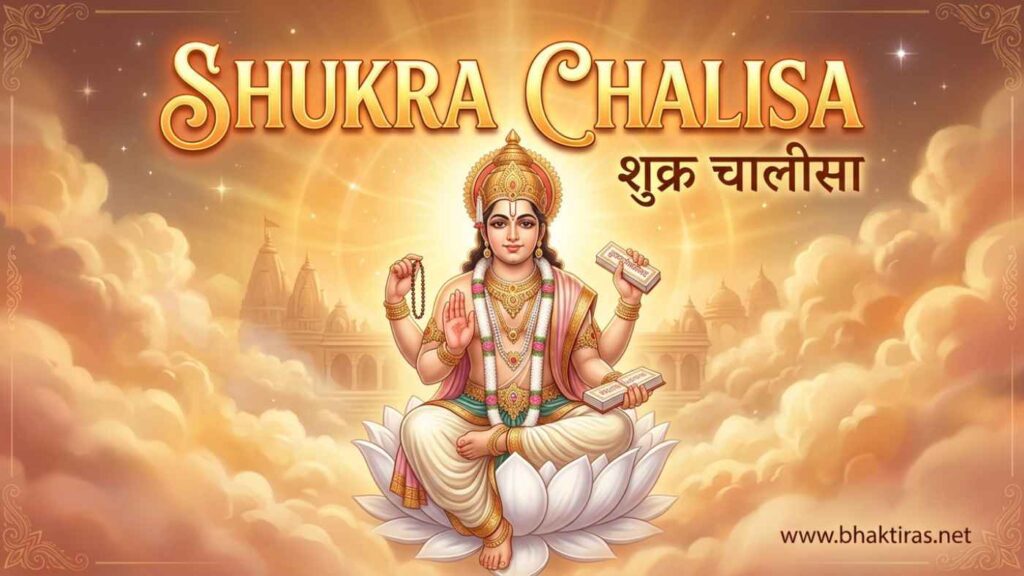
The Shukra Chalisa is a devotional hymn to Shukra Dev (Venus), the Navagraha planet linked with wealth, love, marriage, beauty and the arts. Devotees recite it on Friday, the day ruled by Venus, to ask for a strong, well-placed Shukra in their horoscope and for grace in relationships and material life. This page gives the full Roman-English transliteration of every verse alongside a clear, original meaning for each line, so you can read, understand and chant it without needing the Devanagari script.
Shukra Chalisa Lyrics in English (Transliteration)
Roman transliteration for easy chanting. Tap “Meaning” under any verse for the English translation.
Shri Ganapati Guru Gauri, Shankar Hanumat Keenh
Binvaun Shubh Phal Den Hari, Mud Mangal Deen
Meaning
The reciter first bows to Ganapati, the guru, Mother Gauri, Lord Shankar and Hanuman, asking these deities to grant good fortune, joy and well-being before the prayer to Shukra begins.
Jayati Jayati Shukra Dev Dayala
Karat Sada Jan Pratipala
Meaning
Victory, victory to the merciful Shukra Dev, who constantly cares for and protects those who turn to him.
Shwetambar, Shwet Varan, Shobhit
Mukh Mand, Chandan Hiya Lobhit
Meaning
He is clothed in white, fair of complexion and radiant, with a gentle face and a heart as cool and fragrant as sandalwood.
Sundar Ratna Jatit Aabhushan
Priyahi Madhur, Sheetal Suvasan
Meaning
Adorned with ornaments set with fine jewels, he is fond of sweetness and of cool, pleasant fragrances.
Sapt Bhuj, Sobha Nidhi Lavanya
Karat Sada Jan, Mangal Kanya
Meaning
Shown with seven arms and as a storehouse of grace and beauty, he keeps bestowing auspiciousness on his devotees.
Mangalmay, Sukh Sada Savarth
Deendayalu, Kripa Nidhi Parth
Meaning
Wholly auspicious and ever a giver of comfort, he is kind to the humble and a treasury of compassion.
Shubhra Swachchh, Ganga Jal Jaisa
Darshan Se, Harshaye Manaisa
Meaning
Bright and clear as the water of the Ganga, his very sight gladdens the human heart.
Tribhuvan, Maha Mangal Kari
Deenan Hit, Kripa Nidhi Sari
Meaning
He brings great good across the three worlds and pours out his mercy for the welfare of the poor and lowly.
Dev Danav, Rishi Muni Bhaktan
Kasht Mitavan, Bhanjan Jagatan
Meaning
For gods, demons, sages and devotees alike he removes hardship and breaks the troubles of the world.
Mohbari, Manhar Hiyara
Sarv Vidhi Sukh, Saukhya Phulara
Meaning
He dispels delusion and wins the heart, blossoming every kind of happiness and ease in the lives of his devotees.
Karat Krodh, Chapal Bhuj Dhari
Kasht Nivaran, Sant Dukhari
Meaning
Even when roused to anger, his swift arms act to relieve distress and protect saints who are in pain.
Shubhra Varna, Tanu Mand Suhana
Kasht Mitavan, Harshit Nana
Meaning
With his white complexion and softly beautiful form, he clears away troubles and brings joy to many.
Dusht Haran, Sujanan Hitkari
Sarv Badha, Nivaran Nyari
Meaning
He removes the wicked, works for the good of honest people, and clears away every obstacle in his own distinctive way.
Sur Patihiin, Prabhu Kripa Vilasin
Kasht Nivaran, Shubhra Suvasin
Meaning
Lord even to the chief of the gods, his grace shines forth as he ends suffering and fills life with purity.
Ved Puran, Pathat Jan Swami
Manharan, Mohbari Kami
Meaning
For those who study the Vedas and Puranas he is master; he captivates the mind, removes delusion and fulfils desires.
Sapt Bhuj, Ratna Jatit Mala
Kasht Nivaran, Shubh Phalshala
Meaning
With his seven arms and jewel-studded garland, he removes distress and is a giver of auspicious rewards.
Sukh Rakshak, Sarvasukh Data
Sarv Kamna, Phal Data
Meaning
He guards happiness, grants every comfort, and fulfils all the heartfelt wishes of his devotees.
Manav Krit, Paap Hare Prabhu
Sarv Badha, Nivaran Raghu
Meaning
The Lord washes away the sins committed by people and removes every obstacle from their path.
Rog Nivaran, Dukh Harnakar
Sarv Vidhi, Shubh Phal Denekar
Meaning
He cures illness and takes away sorrow, granting good and auspicious results in every way.
Naman Sakal, Sur Nar Muni Karte
Vrat Upasak, Dukh Harn Karte
Meaning
Gods, humans and sages all bow to him, and those who keep his vow and worship him find their sorrows lifted.
Sharanagat, Kripa Nidhi Soi
Jan Rakshak, Mohe Dukh Hoi
Meaning
To all who take refuge in him he is a treasury of mercy; protector of his people, he is asked to take away the devotee's own grief.
Shuddh Bhav, Se Jo Nit Gavai
Sarv Sukh, Param Pad Pavai
Meaning
Whoever sings this praise daily with a pure heart gains every happiness and reaches the highest state.
Vrindavan Mein, Mandir Nirmit
Jahan Shuddh Bhaktan, Sada Sharanagat
Meaning
A temple to him stands in Vrindavan, where sincere devotees come and take shelter at all times.
Sant Janan Ke, Kasht Mitavat
Bhavbandhan Se, Sahaj Chhudavat
Meaning
He erases the hardships of holy people and easily frees them from the bonds of worldly existence.
Sakal Kamna, Purn Karavat
Mohabhang, Bhavsagar Taravat
Meaning
He brings every wish to fulfilment, breaks the hold of attachment, and carries devotees across the ocean of birth and death.
Jayati Jayati, Kripanidhan
Shukra Dev, Shri Vishwa Vidhan
Meaning
Victory, victory to the storehouse of compassion, Shukra Dev, who orders and sustains the whole universe.
Pranavaun, Nath Sakal Gun Sagar
Vividh Vighn Haran, Sukhdayak
Meaning
I bow to you, Lord, ocean of all virtues, remover of every kind of obstacle and giver of happiness.
Sur Muni Janan, Ati Priya Swami
Shubhra Varna, Rup Manhari
Meaning
Dearly loved master of gods and sages, white of hue and captivating in form.
Jay Jay Jay, Shri Shukra Dayala
Karahun Kripa, Bhav Bandhan Tala
Meaning
Glory, glory, glory to the compassionate Shukra; show your grace and cut away the bonds of worldly life.
Dhyan Dharat, Jan Houm Sukhari
Kripa Drishti, Shanti Hitkari
Meaning
Those who hold him in meditation become content, for his merciful gaze brings peace and well-being.
Adham Kayar, Subuddhi Sudharo
Moh Nivaran, Kasht Nivaro
Meaning
He reforms the mind of the low and the timid, dispels delusion and clears away their distress.
Lakshmipati, Shubh Phal Data
Santjanan, Dukh Bhanjan Rata
Meaning
As lord linked with Lakshmi's wealth he grants auspicious results, ever intent on breaking the sorrows of the devout.
Jay Jay Jay, Kripa Nidhi Shukra
Karahun Kripa, Harahun Sab Dukh
Meaning
Glory, glory, glory to Shukra, treasury of mercy; show your grace and take away all suffering.
Roop Tej Bal, Sampann Sada
Shanti Dayak, Jan Sukh Data
Meaning
Ever full of beauty, brilliance and strength, he gives peace and grants comfort to his devotees.
Tribhuvan Mein, Mangal Kartu
Sarv Badha, Harta Shukra
Meaning
Across the three worlds Shukra is the doer of good and the one who carries away every obstacle.
Shuddh Bhav, Se Jo Nit Gavai
Sarv Sukh, Param Pad Pavai
Meaning
Whoever sings this with a pure heart day after day gains every joy and attains the supreme state.
Namo Namo Shri Shukra Suhave
Sarv Badha, Kasht Mitave
Yeh Chalisa, Jo Nit Gavai
Sukh Sampatti, Param Pad Pavai
Meaning
Salutations again and again to the gracious Shukra, who clears away every obstacle and hardship. Whoever sings this Chalisa each day gains happiness, prosperity and the highest spiritual state.
Benefits of Reciting the Shukra Chalisa
Devotees take up the Shukra Chalisa mainly to settle the influence of Venus in their life and chart. Regular, sincere recitation is associated with the following:
- Steadier finances: It is recited to draw wealth and comfort and to ease money-related blockages tied to a weak Venus.
- Warmer relationships: Venus governs love and marriage, so the prayer is used to seek affection, harmony and lasting bonds with a partner.
- Charm and grace: Worshippers ask Shukra for personal magnetism, refinement and an eye for beauty and the arts.
- Relief from obstacles: The verses repeatedly call on Shukra to lift illness, worry and hurdles in work and daily life.
- Support for an afflicted Venus: Those advised that their horoscope shows a weak or poorly placed Shukra recite it as a remedial practice.
- Inner calm: Beyond material gain, the closing verses point to peace of mind and spiritual progress.
When and How to Chant the Shukra Chalisa
Friday (Shukrawar) is the day of Venus and the ideal time to recite the Shukra Chalisa, with early morning or the quiet of dusk being especially favoured. Bathe first and, if you can, wear clean white clothes; sit facing east or north-east in a tidy spot with a picture or image of Shukra Dev before you. Light a ghee lamp and incense, offer white flowers and a milk-based sweet such as kheer, then begin with the opening Doha, move through the chaupais, and close with the final Doha and a quiet prayer. What matters most is steady, attentive devotion rather than speed or count.
About the Shukra Chalisa
The Shukra Chalisa belongs to the family of Navagraha (nine-planet) devotional hymns and is composed in the usual Chalisa pattern of chaupai couplets framed by an opening and closing Doha. Its language is Hindi in the simple, praise-centred style of planetary stotras, and its theme throughout is Shukra Dev as a fair, white-robed, compassionate lord who grants wealth, beauty, harmony and relief from hardship. Versions in circulation vary in length; the text here keeps the clearly distinct, attested couplets and notes where the popular source repeats earlier lines to reach a round count, so devotees can recite with confidence in what they are reading.
Frequently Asked Questions
What is the Shukra Chalisa?
The Shukra Chalisa is a Hindi devotional hymn praising Shukra Dev, the planet Venus among the nine Navagraha. Built from chaupai couplets and framed by an opening and closing Doha, it is recited to honour Venus and to ask for wealth, harmony in relationships, beauty and relief from troubles.
What are the benefits of reciting the Shukra Chalisa?
Devotees recite it to invite financial steadiness, loving and harmonious relationships, personal charm and grace, and relief from obstacles in health and work. It is also taken up as a remedial prayer by those whose horoscope shows a weak or afflicted Venus, and the closing verses point toward inner peace.
Which day is best to recite the Shukra Chalisa?
Friday (Shukrawar) is best, since it is the weekday ruled by Venus. Early morning or around sunset is considered especially auspicious, and many devotees recite it every Friday or daily.
How many verses are in the Shukra Chalisa?
Popular versions list 40 chaupais plus an opening and closing Doha, but the circulating text repeats several earlier couplets near the end to reach that number. This page reproduces the clearly distinct couplets framed by both Dohas rather than padding the count with duplicates.
Can the Shukra Chalisa be recited in English?
Yes. This page provides a full Roman-English transliteration so you can read and chant each line aloud without the Devanagari script, along with an English meaning for every verse so you understand what you are reciting.
Can women recite the Shukra Chalisa?
Yes. Anyone may recite it regardless of gender, age or background, and no formal initiation or guru is required to begin.
॥ Shukra Chalisa ॥