
ॐ
Sai Chalisa
श्री साईं चालीसा
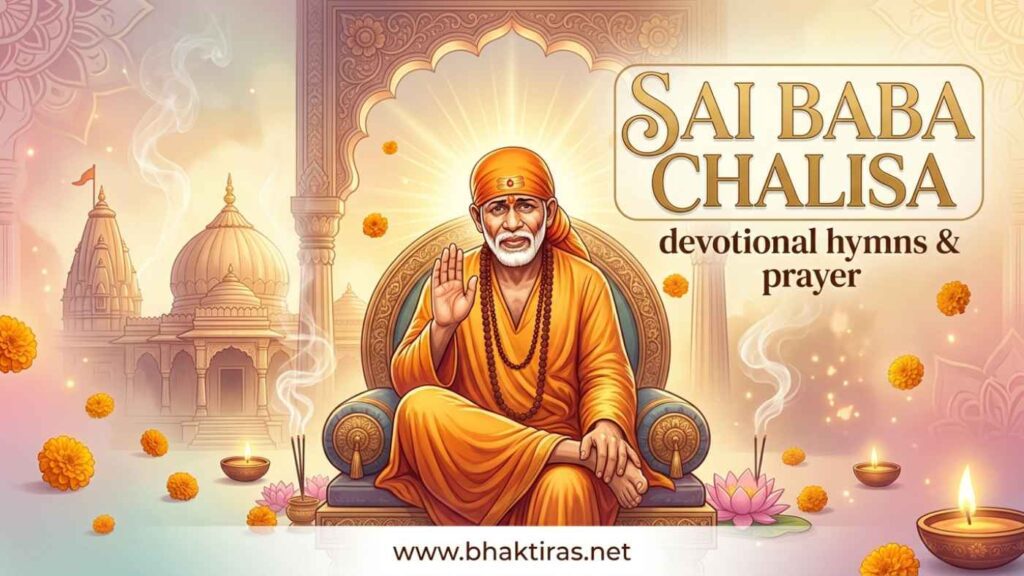
The Sai Chalisa is a devotional hymn praising Shirdi Sai Baba, the saint of Shirdi revered by people of every faith. It retells how the unknown child arrived in Shirdi, the miracles attributed to him, and the love between Baba and his devotees. This page carries the full Roman-English transliteration so anyone can read along, with an original plain-English meaning under each verse to make the words easy to follow.
Sai Chalisa Lyrics in English (Transliteration)
Roman transliteration for easy chanting. Tap “Meaning” under any verse for the English translation.
Pehle Sai Ke Charano Mein, Apna Sheesh Nivauo Maiy
Kaise Shirdi Sai Aaye, Saara Haal Sunau Maiy
Meaning
The reciter begins by bowing at Sai's feet and promises to narrate the whole account of how Sai came to live in Shirdi.
Kaun Hai Mata, Pita Kaun Hai, Yeh Na Kisi Ne Bhi Jaana
Kaha Janam Sai Ne Dhara, Prashan Paheli Raha Bana
Meaning
No one ever learned who Baba's mother or father was, and the place of his birth stayed an unanswered puzzle.
Koee Kahe Ayodhya Ke, Yeh Ramchandra Bhagvan Hain
Koee Kehta Saibaba, Pavan Putra Hanuman Hain
Meaning
Some called him Lord Rama of Ayodhya, while others believed Sai Baba was Hanuman, the wind god's son.
Koee Kehta Mangal Murti, Shri Gajanan Hain Sai
Koee Kehta Gokul-Mohan Devki Nandan Hain Sai
Meaning
To some he was the auspicious Ganesha; to others he was Krishna, the beloved of Gokul and son of Devaki.
Shanker Samajh Bhakt Kaee To, Baba Ko Bhajhte Rahte
Koee Kahe Avtar Datt Ka, Pooja Sai Ki Karte
Meaning
Many worshipped him as Shiva himself, and others honoured him as an incarnation of Dattatreya.
Kuch Bhi Mano Unko Tum, Pur Sai Hain Sachche Bhagvan
Bade Dayalu Deen-bandhu, Kitno Ko Diya Jivan-daan
Meaning
Whatever name one gives him, Sai is the true God, deeply kind, a friend of the helpless, who restored hope and life to countless people.
Kaee Varsh Pehle Ki Ghatna, Tumhe Sunaunga Mein Baat
Keesy Bhagyashaali Ki Shirdi Mein Aaee Thi Barat
Meaning
The poet now recalls an event from years past, when a fortunate family's wedding party arrived in Shirdi.
Aaya Saath Usi Ke Tha, Baalak Aik Bahut Sunder
Aaya Aaker Vahin Bus Gaya, Paavan Shirdi Kiya Nagar
Meaning
Travelling with that party was a strikingly beautiful child who stayed on and, by his presence, made the town of Shirdi holy.
Kaee Dino Tak Raha Bhatakta, Bhiksha Maangi Usne Dar Dar
Aur Dikhaee Aisee Leela, Jug Mein Jo Ho Gaee Amar
Meaning
For many days he wandered and begged from door to door, performing wonders that the world would remember forever.
Jaise-jaise Umar Badi, Badti Hee Vaisy Gaee Shaan
Ghar Ghar Hone Laga Nagar Mein, Sai Baba Kaa Gungaan
Meaning
As the years passed his fame only grew, until every household in the town was singing the praises of Sai Baba.
Digdigant Mein Laga Goonjane, Phir To Saiji Ka Naam
Deen-dhukhi Ki Raksha Karna, Yahi Raha Baba Ka Kaam
Meaning
His name soon echoed in every direction, for protecting the poor and the suffering was the work Baba lived for.
Baba Ke Charno Mein Ja Kar, Jo Kehta Mein Hoo Nirdhan
Daya Usee Par Hoti Unkee, Khul Jaate Dhukh Ke Bandhan
Meaning
Anyone who came to Baba's feet and confessed their poverty received his mercy, and their chains of sorrow fell away.
Kabhi Kisee Ne Maangi Bhiksha, Do Baba Mujhko Suntaan
Aivom Astoo Tub Kaihkar Sai De Te Thay Usko Vardaan
Meaning
When someone begged him for a child, Baba would simply say 'so be it' and grant the blessing.
Swayam Dhukhi Baba Ho Jaate, Deen-dukhijan Ka Lukh Haal
Anteh: Karan Bhi Sai Ka, Sagar Jaisa Raha Vishal
Meaning
Baba would feel the pain of the poor as his own, for his heart was as wide and deep as the ocean.
Bhakt Ek Madrasi Aaya, Ghar Ka Bahut Bada Dhanvaan
Maal Khajana Behadh Uskaa, Keval Nahi Rahi Suntaan
Meaning
A very wealthy devotee came from Madras; he had endless riches but no child of his own.
Laga Manane Sainath Ko, Baba Mujh Per Daya Karo
Junjha Se Junkrit Naiya Ko, Tum Hee Mairee Par Karo
Meaning
He pleaded with Sainath for mercy, asking Baba alone to steer his storm-tossed boat safely across.
Kuldeepak Ke Bina Andhera, Chchaya Hua Ghar Mein Mere
Isee Liye Aaya Hoon Baba, Hokar Sharnagat Tere
Meaning
He said his home was dark without a son to carry the family lamp, and so he had come to take refuge in Baba.
Kuldeepak Ke Abhav Mein, Vyarth Hai Daulat Ki Maya
Aaj Bhikhari Ban Kar Baba, Sharan Tumhari Mein Aaya
Meaning
Without an heir, he felt all his wealth was worthless, so he came like a beggar to Baba's shelter.
De De Mujhko Putra-daan, Mein Rini Rahoonga Jivan Bhar
Aur Kisi Ki Aas Na Mujko, Siraf Bharosa Hai Tum Per
Meaning
He asked for the gift of a son, vowing lifelong gratitude, saying his only hope and trust rested in Baba.
Anunaye-vinaye Bahut Ki Usne, Charano Mein Dhar Ke Sheesh
Tub Prasana Hokar Baba Ne, Diya Bhakta Ko Yeh Aashish
Meaning
After he begged at length with his head at Baba's feet, the pleased saint gave him this blessing.
Allah Bhala Karega Tera, Putra Janam Ho Tere Ghar
Kripa Rahegi Tum Per Uski, Aur Tere Uss Balak Per
Meaning
Baba assured him that God would bless him with a son, and that divine grace would protect both him and the child.
Ab Tak Nahi Kisi Ne Paya, Sai Ki Kripa Ka Paar
Putra Ratan De Madrasi Ko, Dhanya Kiya Uska Sansaar
Meaning
No one has ever measured the limits of Sai's grace; by giving the Madras devotee a son, Baba enriched his whole life.
Tan-man Se Jo Bhaje Usi Ka Jug Mein Hota Hai Uddhar
Sanch Ko Aanch Nahi Haiy Koee, Sada Jooth Ki Hoti Haar
Meaning
Whoever worships wholeheartedly is uplifted; truth can never be harmed, and falsehood is always defeated.
Mein Hoon Sada Sahare Uske, Sada Rahoonga Uska Daas
Sai Jaisa Prabhu Mila Haiy, Itni Ki Kum Haiy Kya Aas
Meaning
The devotee declares he will forever live under Baba's care as his servant, for having found a lord like Sai leaves nothing more to wish for.
Mera Bhi Din Tha Ik Aisa, Milti Nahi Mujhe Thi Roti
Tan Per Kapda Duur Raha Tha, Sheish Rahi Nanhi Si Langoti
Meaning
He recalls his own hard days, when even a piece of bread was beyond reach and a thin loincloth was all the clothing he had.
Sarita Sammukh Hone Per Bhi Mein Pyasa Ka Pyasa Tha
Durdin Mera Mere Ooper, Davagani Barsata Tha
Meaning
Though a river flowed before him he stayed thirsty, and his misfortune fell on him like a rain of fire.
Dharti Ke Atirikt Jagat Mein, Mera Kuch Avalumbh Na Tha
Bana Bhikhari Maiy Duniya Mein, Dar Dar Thokar Khata Tha
Meaning
He had no support in the world except the bare earth, wandering as a beggar and stumbling from door to door.
Aise Mein Ik Mitra Mila Jo, Param Bhakt Sai Ka Tha
Janjalon Se Mukt, Magar Iss, Jagti Mein Veh Bhi Mujh Sa Tha
Meaning
In that hardship he met a friend, a great devotee of Sai, who though free of worldly snares was as humble and ordinary as himself.
Baba Ke Darshan Ke Khatir, Mil Dono Ne Kiya Vichaar
Sai Jaise Daya Murti Ke Darshan Ko Ho Gaiye Taiyar
Meaning
The two friends resolved together to go and behold Baba, and made themselves ready for the sight of the compassionate Sai.
Paavan Shirdi Nagari Mein Ja Kar, Dhekhi Matvaali Murti
Dhanya Janam Ho Gaya Ki Humne Jab Dhekhi Sai Ki Surti
Meaning
Reaching holy Shirdi, he gazed on Baba's enchanting form and felt his very birth had become blessed.
Jabse Kiye Hai Darshan Humne, Dukh Sara Kaphur Ho Gaya
Sankat Saare Mite Aur Vipdaon Ka Ant Ho Gaya
Meaning
From the moment of that darshan his sorrow vanished, and every trouble and calamity came to an end.
Maan Aur Sammaan Mila, Bhiksha Mein Humko Baba Se
Prati Bambit Ho Uthe Jagat Mein, Hum Sai Ki Abha Se
Meaning
Baba granted him dignity and respect like alms, and through Sai's radiance his own light shone out in the world.
Baba Ne Sammaan Diya Haiy, Maan Diya Is Jivan Mein
Iska Hee Sambal Le Mein, Hasta Jaunga Jivan Mein
Meaning
With the honour Baba gave him in this life as his strength, he says he will walk through life with a smile.
Sai Ki Leela Ka Mere, Mun Par Aisa Assar Hua
Lagta, Jagti Ke Kan-kan Mein, Jaise Ho Veh Bhara Hua
Meaning
Sai's divine play affected his mind so deeply that he now feels Baba present in every particle of the world.
Kashiram Baba Ka Bhakt, Iss Shirdi Mein Rehta Tha
Maiy Sai Ka Sai Mera, Veh Duniya Se Kehta Tha
Meaning
A devotee named Kashiram lived in Shirdi and would tell everyone, 'I belong to Sai and Sai is mine.'
Seekar Svayam Vastra Bechta, Gram Nagar Bazaro Mein
Jhankrit Uski Hridh-tantri Thi, Sai Ki Jhankaron Se
Meaning
He earned his living selling cloth in village and town markets, while the strings of his heart stayed tuned to Sai's name.
Stabdh Nisha Thi, Thay Soye, Rajni Aanchal Me Chand Sitare
Nahi Soojhta Raha Hath Ka, Hath Timiri Ke Mare
Meaning
One still night, when moon and stars rested in the dark sky and all slept, the darkness was so thick he could not see his own hand.
Vastra Bech Kar Lote Raha Tha, Hai! Haath Se Kaashi
Vichitr Bada Sanyoga Ki Uss Din Aata Tha Veh Akaki
Meaning
Kashiram was returning home after selling his cloth, and by a strange chance he was travelling alone that day.
Gher Raah Mein Khare Ho Gaye, Usse Kutil, Anyaayi
Maaro Kaato Looto Iski, Hee Dhvani Pari Sunaee
Meaning
Wicked, lawless men surrounded him on the road, and the air rang with cries of 'beat him, cut him, rob him.'
Loot Peet Kar Usse Vahan Se, Kutil Gaye Champat Ho
Aaghaton Se Marmahat Ho, Usne Di Thi Sangya Kho
Meaning
After robbing and beating him the villains fled, leaving Kashiram so badly wounded that he lost consciousness.
Anjaane Hi Uske Munh Se, Nikal Pada Tha Sai
Jiski Prati Dhwani Shirdi Mein, Baba Ko Padi Sunai
Meaning
Without knowing it he cried out 'Sai', and the echo of that cry reached Baba's ears far away in Shirdi.
Kshubdh Ho Utha Maanas Unka, Baba Gaye Vikal Ho
Lagta Jaise Ghatna Saari, Ghati Unhin Ke Sanmukh Ho
Meaning
Baba's heart was shaken and he grew restless, as though the entire attack were unfolding before his own eyes.
Uthakar Baithe, Haanth Dhun Mein, Daal De Sabh Mein
Taaki Uski Jalti Deh Ko, Thandak Pahunchaye Tan Mein
Meaning
He sat up and thrust his hand into the sacred fire before everyone, so that cooling relief might reach Kashiram's burning body.
Jab Bhi Koi Rokta Unko, Woh Baba Ko Hataane
Voh Aur Bhi Gehraai Mein, Daalte The Apni Jaanen
Meaning
Each time someone tried to pull him back, Baba only pushed his hand deeper into the flames, risking himself further.
Garam Hote Jalan Se, Uthte Vaise Hee Rehte
Shirdi Mein Aag Ko Sehte, Kashiram Ko Dete Thande
Meaning
As his hand burned in the fire Baba bore the heat himself in Shirdi, sending the cooling comfort to far-off Kashiram.
Jab Tak Kashiram Ko Na Aaya, Poorn Roop Se Hosh
Baba Ne Dhun Se Nikala Na, Apne Kar Ka Posh
Meaning
Not until Kashiram had fully regained his senses did Baba withdraw his hand from the sacred fire.
Thande Thande Jal Ki Dhaar, Behti Rahi Uski Rag Rag Mein
Khul Gaye Aankh, Bai gaye, Khojne Lage Khud Ke Nag Mein
Meaning
A cooling stream seemed to flow through Kashiram's every vein; he opened his eyes, sat up, and began to examine his own wounds.
Dekha Paya Nahin Koi Apna, Mujh Par Kiska Sandesh Hai
Jo Mama Aankh Mein Aaye, Vahi Kashiram Ka Kaam Hai
Meaning
Seeing no one of his own beside him, he wondered whose unseen care had saved him, sensing the hand that watches over its devotees.
Sai Shabd Ki Goonj Sun, Shirdi Mein Baba Huye Shant
Uthhaye Dhun Se Hath, Unke Ho Gaye Punah Sankalp
Meaning
Hearing the cry of 'Sai' answered, Baba in Shirdi grew calm, lifted his hand from the fire, and his vow stood fulfilled.
Chamatkar Yeh Dekh Kar Saare, Bhakt Huye Aascharya
Dwarakamai Dhuni Ka, Mahima Ho Gayi Prasiddha Jag Mein Sari
Meaning
Witnessing this miracle, all the devotees were astonished, and the glory of the Dwarakamai's sacred fire spread across the world.
Aaj Bhakti Ki Visham Pariksha Mein, Safal Hua Tha Kashi
Uske Hi Darshan Ki Khatir The, Ummade Nagar-Nivasi
Meaning
That day Kashiram passed devotion's hardest test, and the townspeople thronged together just to behold him.
Bahut Der Tak Para Raha Vah, Vahin Usi Haalat Mein
Jaane Kab Kuch Hosh Ho Utha, Vahin Uski Palak Mein
Meaning
Closing the account, the poet recalls how Kashiram lay wounded for a long while before, by Baba's grace, his eyelids stirred and consciousness slowly returned.
Benefits of Reciting the Sai Chalisa
Devotees turn to the Sai Chalisa for comfort, faith, and steadiness in difficult times. Regular recitation is valued for the following reasons:
- Inner calm: The steady rhythm of the verses helps quiet a worried mind and brings a settled, peaceful feeling.
- Faith in hardship: The stories of Baba helping the helpless encourage trust that no struggle is faced alone.
- Gratitude: Reading the devotee’s account of rescue and care nurtures thankfulness for the help one already receives.
- Unity beyond labels: Baba was honoured by Hindus and Muslims alike, so the prayer gently encourages tolerance and respect across communities.
- Daily discipline: A short, fixed recitation builds a simple, grounding spiritual habit.
- Focus on service: Baba’s example of caring for the poor inspires kindness and generosity in everyday life.
When and How to Chant the Sai Chalisa
Thursday is the day most associated with Shirdi Sai Baba, so many devotees read the Sai Chalisa then, though it may be recited on any day. A common practice is to bathe, sit before a picture or idol of Baba, light a lamp or incense, and read the verses slowly and clearly. What matters far more than ritual detail is sincerity: recite with attention and an open heart, reflect on the meaning of each verse, and close by remembering Baba’s words and trying to carry that spirit of kindness into the day.
About the Sai Chalisa
The Sai Chalisa is a Hindi devotional poem built from chaupai (four-line verses) framed by doha couplets. Rather than only listing the names of God, it tells a story: it asks who Sai really was, describes his arrival in Shirdi and his care for the poor, and recounts well-loved episodes such as the childless devotee from Madras and Baba thrusting his hand into the sacred fire to save Kashiram. The widely circulated text runs to about fifty-two verses; this page presents that full narrative recension faithfully. Like most chalisas it is traditional and devotional, carried forward by generations of Sai devotees rather than tied to a single named author.
Frequently Asked Questions
What is the Sai Chalisa?
The Sai Chalisa is a Hindi devotional hymn in honour of Shirdi Sai Baba. Through chaupai verses and doha couplets it narrates his arrival in Shirdi, his compassion for the poor, and famous miracles, and is recited by devotees as a prayer of faith and gratitude.
What are the benefits of reciting the Sai Chalisa?
Devotees recite it for inner calm, renewed faith during hardship, and a sense of gratitude. Its stories of Baba helping the helpless encourage trust, tolerance across communities, and a spirit of kindness and service in daily life.
Which day is best to recite the Sai Chalisa?
Thursday is the day most associated with Shirdi Sai Baba and is the favourite day for recitation, but the Sai Chalisa can be read on any day with equal devotion.
How many verses are in the Sai Chalisa?
The widely circulated Sai Chalisa contains about fifty-two verses. The first forty form the core hymn, and the later verses extend the narrative, most notably the story of Baba saving his devotee Kashiram.
Can the Sai Chalisa be recited in English?
Yes. This page gives the full Sai Chalisa in Roman-English transliteration so anyone can read and recite it aloud, with a clear English meaning under each verse to help you understand the words.
॥ Sai Chalisa ॥