
ॐ
Kuber Chalisa
श्री कुबेर चालीसा
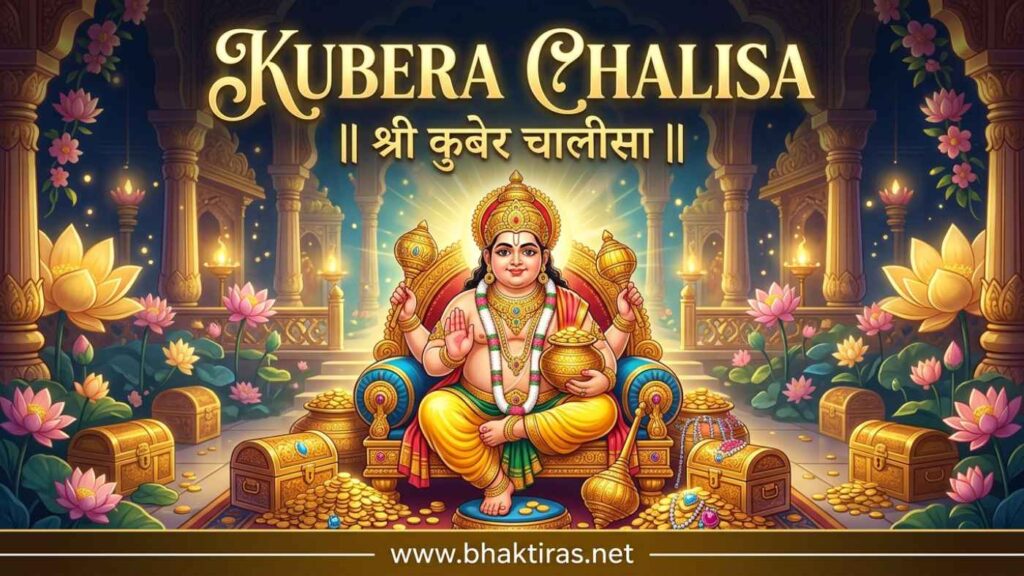
The Kuber Chalisa is a devotional hymn to Kuber, the lord of wealth and treasurer of the gods who guards the northern direction. Devotees recite it to ask for prosperity, the clearing of debt, and steady growth in trade. This page carries the complete Kuber Chalisa in easy English transliteration, with a plain-English meaning under every verse so you can both chant it correctly and understand each line.
Kuber Chalisa Lyrics in English (Transliteration)
Roman transliteration for easy chanting. Tap “Meaning” under any verse for the English translation.
Jaise Atal Himalay, Aur Jaise Adig Sumer,
Aise Hi Swarg Dwar Pe, Avichal Khade Kuber.
Meaning
Just as the Himalayas are unshakeable and Mount Sumeru stands firm, Kuber stands steady and immovable at the gateway of heaven.
Vighna Haran Mangal Karan, Suno Sharanagat Ki Ter,
Bhakt Hetu Vitaran Karo, Dhan Maya Ke Dher.
Meaning
Remover of obstacles and giver of good fortune, hear the call of the one who takes refuge in you; for the sake of your devotee, share out heaps of wealth and abundance.
Jai Jai Jai Shri Kuber Bhandari,
Dhan Maya Ke Tum Adhikari.
Meaning
Victory again and again to Lord Kuber, keeper of the divine treasury; you are the rightful master of wealth and worldly riches.
Tap Tej Punj Nirbhay Bhay Hari,
Pavan Beg Sam Tanu Baldhari.
Meaning
You are a mass of penance and radiance, fearless and the one who removes fear; your strong body moves with the speed of the wind.
Swarg Dwar Ki Kare Pahare Dari,
Sevak Indra Dev Ke Agyakari.
Meaning
You keep watch and guard the gateway of heaven, serving as the obedient attendant of Indra, king of the gods.
Yaksha Yakshani Ki Hai Sena Bhari,
Senapati Bane Yuddh Me Dhanudhari.
Meaning
You command a vast army of Yakshas and Yakshinis, and in battle you become their general, bow in hand.
Maha Yoddha Ban Shastra Dharain,
Yuddh Karain Shatru Ko Marain.
Meaning
As a mighty warrior you take up your weapons, fight in battle, and strike down your enemies.
Sada Vijayee Kabhee Na Harai,
Bhagat Janon Ke Sankat Tarai.
Meaning
You are forever victorious and never defeated, and you carry your devotees safely through every trouble.
Prapitamah Hain Svayan Vidhata,
Pulist Vansh Ke Janm Vikhyata.
Meaning
Your great-grandfather is Brahma the creator himself, and your birth in the lineage of the sage Pulastya is famous.
Vishrava Pita Idavida Jee Mata,
Vibhishan Bhagat Aapake Bhrata.
Meaning
Vishrava is your father and Idavida your mother, and the devoted Vibhishana is your brother.
Shiv Charanon Mein Jab Dhyan Lagaya,
Ghor Tapasya Kari Tan Ko Sukhaya.
Meaning
When you fixed your meditation upon the feet of Shiva, you performed severe penance and let your body grow thin in the effort.
Shiv Varadaan Mile Devaty Paya,
Amrt Paan Karee Amar Huee Kaya.
Meaning
You received Shiva's blessing and gained the rank of a god; by drinking the nectar of immortality your body became deathless.
Dharm Dhvaja Sada Lie Hath Mein,
Devee Devata Sab Phirain Sath Mein.
Meaning
You always carry the banner of righteousness in your hand, and gods and goddesses move along at your side.
Peetaambar Vastr Pahare Gaat Mein,
Bal Shakti Puree Yaksh Jaat Mein.
Meaning
You wear yellow silk garments upon your body, and you hold the full strength and power of the Yaksha race.
Svarn Sinhasan Aap Virajain,
Trishool Gada Hath Mein Sajain.
Meaning
You are seated upon a golden throne, your hands adorned with the trident and the mace.
Shankh Mridang Nagare Bajain,
Gandharv Raag Madhur Svar Gajain.
Meaning
Conches, drums, and kettledrums sound out, while the Gandharvas fill the air with sweet melodies and song.
Chaunsath Yoganee Mangal Gaavain,
Riddhee Siddhee Nit Bhog Lagaavain.
Meaning
The sixty-four Yoginis sing songs of blessing, and Riddhi and Siddhi daily present offerings to you.
Daas Daasanee Sir Chhatr Phiraavain,
Yaksh Yakshanee Mil Chanvar Dhulaavain.
Meaning
Male and female attendants hold the royal canopy above your head, while Yakshas and Yakshinis together wave the fan for you.
Rshiyon Mein Jaise Parashuraam Balee Hain,
Devanh Mein Jaise Hanumaan Balee Hain.
Meaning
As Parashurama is mighty among the sages, and Hanuman is mighty among the divine ones,
Purushon Mein Jaise Bheem Balee Hain,
Yakshon Mein Aise Hee Kuber Balee Hain.
Meaning
and as Bhima is mighty among men, so too is Kuber the mightiest among the Yakshas.
Bhagaton Mein Jaise Pralhaad Bade Hain,
Pakshiyo Mein Jaise Garud Bade Hain.
Meaning
As Prahlada is great among devotees, and Garuda is great among the birds,
Naagon Me Jaise Shesh Bade Hain,
Vaise Hee Bhagat Kuber Bade Hain.
Meaning
and as Shesha is great among the serpents, so is the devotee-king Kuber great in his own right.
Kaandhe Dhanush Haath Mein Bhaala,
Gale Phulo Kee Pahanee Maala.
Meaning
A bow rests on your shoulder and a spear is in your hand, and a garland of flowers hangs about your neck.
Svarn Mukut Aru Deh Vishaala,
Door Door Tak Hoe Ujaala.
Meaning
You wear a golden crown and your form is vast, and your radiance spreads light far and wide.
Kuber Dev Ko Jo Man Mein Dhaare,
Sada Vijay Ho Kabhee Na Haare.
Meaning
Whoever holds Lord Kuber in their heart is always victorious and is never defeated.
Bigade Kaam Ban Jae Saare,
Ann Dhan Ke Rahe Bhare Bhandare.
Meaning
All their spoiled and stalled tasks come right, and their stores stay full of grain and wealth.
Kuber Gareeb Ko Aap Ubharain,
Kuber Karj Ko Sheeghr Utarain.
Meaning
Kuber lifts up the poor, and Kuber quickly helps clear away one's debts.
Kuber Bhagat Ke Sankat Taarain,
Kuber Shatru Ko Kshan Mein Maarain.
Meaning
Kuber carries his devotee past every crisis, and strikes down their enemies in an instant.
Sheeghr Dhanee Jo Hona Chaahe,
Kyun Nahee Yaksh Kuber Manae.
Meaning
Whoever wishes to grow wealthy quickly — why would they not honour and propitiate Kuber, the lord of the Yakshas?
Yah Paath Jo Padhe Padhae,
Din Dugana Vyaapaar Badhae.
Meaning
Whoever reads this hymn or has it read sees their business grow day by day, doubling over time.
Bhoot Pret Ko Kuber Bhagaavain,
Ade Kaam Ko Kuber Banaavain.
Meaning
Kuber drives away ghosts and spirits, and brings stuck, unfinished tasks to completion.
Rog Shok Ko Kuber Nashaavain,
Kalank Kodh Ko Kuber Hataavain.
Meaning
Kuber destroys illness and sorrow, and removes disgrace and disease.
Kuber Chadhe Ko Aur Chadhaade,
Kuber Gire Ko Punah Utha De.
Meaning
Kuber raises the rising one even higher, and lifts up again the one who has fallen.
Kuber Bhaagy Ko Turant Jaga De,
Kuber Bhule Ko Raah Bata De.
Meaning
Kuber awakens fortune at once, and shows the right path to one who has lost their way.
Pyaase Kee Pyaas Kuber Bujha De,
Bhukhe Kee Bhukh Kuber Mita De.
Meaning
Kuber quenches the thirst of the thirsty, and ends the hunger of the hungry.
Rogee Ka Rog Kuber Ghata De,
Dukhiya Ka Dukh Kuber Chhuta De.
Meaning
Kuber lessens the sickness of the ill, and frees the suffering from their sorrow.
Baanjh Kee God Kuber Bhara De,
Kaarobaar Ko Kuber Badha De.
Meaning
Kuber fills the lap of the childless with a child, and makes one's business and trade flourish.
Kaaraagaar Se Kuber Chhuda De,
Chor Thagon Se Kuber Bacha De.
Meaning
Kuber frees the captive from prison, and protects from thieves and swindlers.
Kort Kes Mein Kuber Jitaavain,
Jo Kuber Ko Man Mein Dhyaavai.
Meaning
Kuber grants victory in court cases to the one who meditates upon him in their heart.
Chunaav Mein Jeet Kuber Karaavain,
Mantree Pad Par Kuber Bithaavain.
Meaning
Kuber brings victory in elections, and can raise a devotee to the office of a minister.
Paath Kare Jo Nit Man Laee,
Usakee Kala Ho Sada Savaee.
Meaning
Whoever recites this hymn daily with a focused heart finds their fortune and skill ever increasing.
Jisape Prasann Kuber Kee Maee,
Usaka Jeevan Chale Sukhadaee.
Meaning
The one upon whom the grace of Kuber rests lives a life that runs in comfort and happiness.
Jo Kuber Ka Paath Karaavai,
Usaka Beda Paar Lagaavai.
Meaning
Whoever arranges for this recitation of Kuber has their life's journey carried safely across.
Ujade Ghar Ko Punah Basaavai,
Shatru Ko Bhee Mitr Banaavai.
Meaning
Kuber settles a ruined home anew and can even turn an enemy into a friend.
Sahastr Pustak Jo Daan Karaee,
Sab Sukh Bhod Padaarth Paee.
Meaning
One who donates a thousand copies of this text gains every comfort and the good things they desire.
Praan Tyaag Kar Svarg Mein Jaee,
Maanas Parivaar Kuber Keerti Gaee.
Meaning
When they leave this body they go to heaven, and their family carries on singing the praise of Kuber.
Shiv Bhakton Mein Agranee, Shree Yaksharaaj Kuber,
Hrday Me Gyaan Prakaash Bhar, Kar Do Door Andher.
Meaning
Foremost among the devotees of Shiva is the king of Yakshas, Lord Kuber; fill my heart with the light of knowledge and drive away its darkness.
Kar Do Door Andher Ab, Jara Karo Na Der,
Sharan Pada Hun Aapakee, Daya Kee Drshti Pher.
Meaning
Remove the darkness now, without the slightest delay; I have fallen at your refuge, so turn your glance of compassion toward me.
Benefits of Reciting the Kuber Chalisa
Devotees recite the Kuber Chalisa to invite the grace of the lord of wealth into their daily lives. Its blessings are described in these ways:
- Prosperity: It is chanted to attract steady wealth, keep household stores full, and support honest earning.
- Relief from debt: Several verses speak of Kuber clearing one’s debts and easing money worries.
- Growth in business: Traders and shopkeepers recite it for rising sales and flourishing work.
- Protection: It is said to guard against thieves, cheats, and unfair losses.
- Courage and confidence: Kuber is praised as ever-victorious, so the recitation is taken as support in difficult situations and disputes.
- Peace of mind: The closing dohas ask for inner light and the removal of confusion, bringing calm focus.
When and How to Chant the Kuber Chalisa
The Kuber Chalisa is most often recited on Diwali and Dhanteras, the days closely tied to wealth and the worship of Kuber and Lakshmi, and many devotees also chant it on Fridays or daily. Bathe first, light a lamp or incense before an image of Kuber, sit facing the north, and read the verses slowly with attention to their meaning. The spirit matters more than speed — recite with gratitude and a steady, honest intention rather than only asking for gain.
About the Kuber Chalisa
The Kuber Chalisa is a traditional devotional text built in the familiar chaupai-and-doha form, opening and closing with couplets (dohas) that frame a longer run of rhyming verses. This version carries forty-four chaupais, a little more than the usual forty, and is passed down without a single named author. Its verses praise Kuber’s lineage as the son of the sage Vishrava and brother of Vibhishana, his penance for Shiva that won him immortality, his rule over the Yakshas, and the many everyday blessings — wealth, health, protection, and relief from hardship — that devotees seek from him.
Frequently Asked Questions
What is the Kuber Chalisa?
The Kuber Chalisa is a devotional hymn of praise to Kuber, the Hindu lord of wealth and treasurer of the gods. It is recited to seek prosperity, relief from debt, and protection, and is built in the traditional chaupai-and-doha verse form.
What are the benefits of reciting the Kuber Chalisa?
Devotees recite it for wealth and abundance, the clearing of debts, growth in business, and protection from theft and loss. Its verses also describe Kuber removing illness, sorrow, and obstacles and granting courage in difficult times.
Which day is best to recite the Kuber Chalisa?
Diwali and Dhanteras are considered the most auspicious days, as they are tied to the worship of wealth. Many devotees also recite it on Fridays or as a daily practice.
How many verses are in the Kuber Chalisa?
This version has forty-four numbered chaupais along with opening and closing dohas, slightly more than the forty verses found in many chalisas. The verse count can vary a little between recensions.
Can the Kuber Chalisa be recited in English?
Yes. This page provides the full Kuber Chalisa in Roman (English) transliteration so you can chant it accurately even if you do not read Devanagari, with a clear English meaning under each verse.
॥ Kuber Chalisa ॥