
Goddess Gangamma
గంగమ్మ
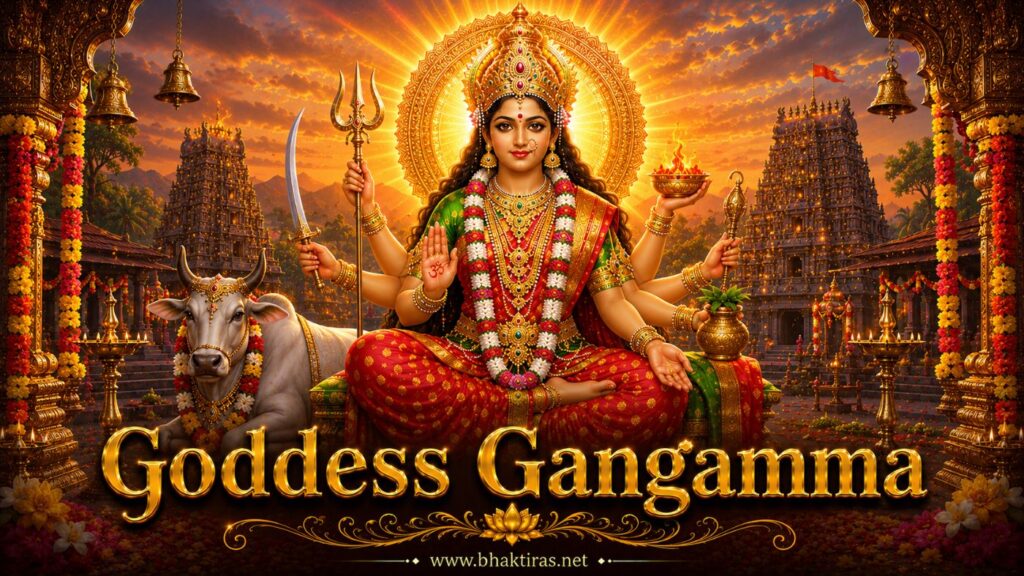
Gangamma is the fierce guardian mother goddess of Tirupati, honoured in local tradition as the sister of Lord Venkateswara and the protector of the town and its people from disease and evil. She is a folk village goddess distinct from the river goddess Ganga, and her worship centres on the vivid weeklong Gangamma Jatara, famous for its elaborate disguises known as veshalu.
Who Is Goddess Gangamma?
Gangamma is the guardian mother of Tirupati, one of the most fiercely loved folk goddesses of southern Andhra Pradesh. In the town famous the world over for the hilltop shrine of Lord Venkateswara, Gangamma is the earthbound mother who watches over ordinary life below – the streets, the homes and the health of the people. Local devotion holds her in deep affection as the protector of the whole town.
It is important to be clear: Gangamma is not the river goddess Ganga. Though the names sound alike, she is a distinct village and folk deity, a form of the fierce Mother, Shakti, rooted in the land and traditions of Tirupati rather than in the sacred river of the north. Her most well-known shrine is at Tatayyagunta, and she is often called Tatayyagunta Gangamma after it.
In the storytelling of Tirupati, Gangamma is remembered as the sister of Lord Venkateswara. This kinship places her within the sacred landscape of the town while keeping her own fierce, independent character as a guardian goddess of the people.
Guardian of Tirupati
Gangamma’s role is protection – fierce, active and personal. She is called upon to shield the town from epidemics, evil forces and misfortune, and to secure the welfare of its people. In the older memory of the region, like other southern mother goddesses she is closely tied to guarding the community against outbreaks of disease, cooling and turning away sickness as a mother would defend her children.
Her guardianship of the town gives her a place beside the great pilgrimage identity of Tirupati: while pilgrims climb to Venkateswara above, Gangamma holds the ground below. In this she belongs to the wider family of protective Gramadevata, the village mothers of the south who each keep watch over their own community’s safety and prosperity.
How Gangamma Is Worshipped
Gangamma is worshipped with intense, town-wide devotion that reaches its height in her jatara. Her worship is direct, folk and participatory – not confined to formal temple ritual but spilling into the streets, homes and lanes of Tirupati, with people of every background taking part.
The Veshalu
The most striking feature of Gangamma’s worship is the veshalu, or disguises. During her festival, men and devotees take on elaborate costumes and guises to honour the goddess, believing that appearing in disguise pleases her and invites her protection. These vivid, changing forms are the signature image of Gangamma devotion and draw the whole town into the celebration.
The Jatara
Her worship centres on the weeklong Gangamma Jatara, when the streets fill with processions, drumming, offerings and folk performance. Families offer food, turmeric, vermilion and vows, and the entire community is swept into a shared act of devotion to their guardian mother. It is one of Tirupati’s most important folk festivals.
Shrine and Offerings
At her Tatayyagunta shrine and other local temples, devotees offer flowers, turmeric, bangles and simple foods, and make vows in times of illness or trouble. Worship is open and personal, reflecting her nature as a mother of the people rather than a remote deity approached only through elaborate ritual.
Why She Matters
Gangamma matters as the local, human-scale heart of Tirupati’s spiritual life. Alongside the grandeur of the hilltop shrine, she offers a mother who belongs to the town itself – approachable, fierce in her care, and woven into the daily hopes and fears of ordinary families. Her worship gives the community a sense of being personally guarded.
Her festival is also a great leveller and unifier. In the days of the jatara, distinctions of role and status soften as the whole town joins in the veshalu and the processions, sharing one devotion. And her story reminds devotees that the sacred landscape of Tirupati is not the hill alone but a family of the divine, in which a fierce sister-goddess holds the ground and keeps her people safe. She stands for protection, belonging and the living power of folk faith.
Traditions and Living Practice
The town in disguise
During the Gangamma Jatara, taking on a vesham – a disguise or costume – is understood as an act of devotion in itself. Devotees who put on these guises believe they are honouring the goddess and placing themselves under her protection for the year. The tradition transforms the whole of Tirupati into a moving, colourful offering to the mother, and it is what makes her festival unlike any other in the region.
The sister who guards the town
Local tradition cherishes Gangamma as the sister of Lord Venkateswara, giving her a treasured place in the sacred family of Tirupati. Devotees hold that while the Lord receives pilgrims on the hill, his fierce sister protects the town below from harm. This bond expresses how folk faith and the great pilgrimage tradition live side by side, each honoured in its own way.
Frequently Asked Questions
Who is Goddess Gangamma?
Gangamma is the fierce guardian mother goddess of Tirupati, honoured as a form of Shakti and, in local tradition, as the sister of Lord Venkateswara. She protects the town and its people from disease and evil, and is celebrated in the weeklong Gangamma Jatara.
Is Gangamma the same as the river goddess Ganga?
No. Despite the similar name, Gangamma is a distinct folk and village goddess of Tirupati, a form of the local Mother Goddess. She is not the river goddess Ganga, who is worshipped as the sacred river of northern India.
What is the Gangamma Jatara?
The Gangamma Jatara is her weeklong festival in Tirupati, one of the town's most important folk celebrations. It fills the streets with processions, drumming and offerings, and is especially famous for the veshalu – the elaborate disguises devotees wear to honour the goddess.
Why do devotees wear disguises for Gangamma?
Wearing a vesham, or disguise, during the jatara is regarded as an act of devotion that pleases the goddess and invites her protection. The tradition draws the whole community into the celebration and is the signature custom of Gangamma worship in Tirupati.
How is Gangamma connected to Lord Venkateswara?
In Tirupati's local tradition, Gangamma is regarded as the sister of Lord Venkateswara. While the Lord is worshipped at the great hilltop shrine, his fierce sister is believed to guard the town below, giving her a cherished place in the sacred family of Tirupati.
May Gangamma Talli guard your family and turn away every harm.