
Bishu Festival 2027 – Reang Bru New Year of Tripura
बुइसु
When is the Bishu (Buisu) festival in 2027?
Bishu, also written Buisu, is celebrated over three days from 13 to 15 April 2027. It is the spring new year of the Reang (Bru) community of Tripura, timed to Chaitra Sankranti, the same mid-April window as Bihu and Vishu elsewhere in the region. The days mark the close of the old year and welcome the coming season with dance, songs, offerings and feasting.
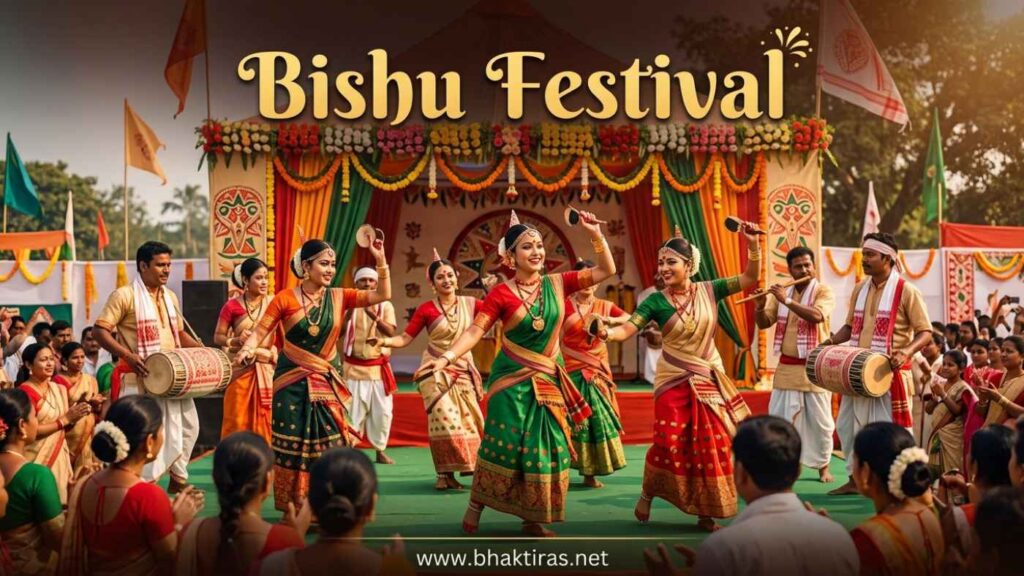
Bishu, more often spelt Buisu, is the new year of the Reang (Bru) people of Tripura, one of the largest indigenous communities of India’s northeast. It arrives at Chaitra Sankranti in mid-April, closing the old year and greeting spring with prayers for a good harvest and a settled year ahead. Homes are cleaned and dressed with wild flowers, cattle are honoured, and the celebrated Hojagiri dance carries songs and rhythm through three days of visiting, feasting and community goodwill.
Bishu (Buisu) 2026-2028: Dates & Calendar
The next Bishu falls from 13 to 15 April 2027. Because it is tied to the solar reckoning of Chaitra Sankranti, the start date sits on 13 April in most years and slips to 14 April in a leap year.
| Year | Dates | Main day | Notes |
|---|---|---|---|
| 2026 | 13-15 April | Monday | Already observed this year |
| 2027 | 13-15 April | Tuesday | Next occurrence |
| 2028 | 14-16 April | Friday | Shifts a day in the leap year |
The three days run in sequence: Hari Buisu on the first day, the main Buisu on the second, and Bisikatal on the third as the celebration winds down.
Why Bishu Is Celebrated
Bishu marks the Reang new year and the turn from the old farming cycle to a fresh one, asking blessings for health, harvest and household prosperity.
For a community whose life has long moved with jhum (shifting) cultivation, the mid-April turn of the year is a natural pause. The rains are near, fields are being readied, and the festival gathers families to give thanks for the year that has passed and to hope openly for the one arriving.
Farewell to the old year
The first day is about clearing away the year that is ending. Houses are swept and washed, courtyards tidied, and old troubles set aside so the household enters the new year clean and settled.
Welcoming spring and harvest
Bishu falls as spring takes hold and the farming year restarts. Offerings and prayers ask for timely rain, a strong jhum harvest and steady food for the months ahead.
Reang identity and belonging
The festival is one of the clearest expressions of Reang Bru identity. Shared songs, dress, food and dance renew the bonds of a community spread across Tripura and neighbouring states.
The Hojagiri heritage
Bishu is closely tied to the Reang’s famous Hojagiri tradition, the balancing folk dance performed by women that has carried the community’s name to national and international stages.
Deities & Figures Honoured
Reang worship centres on nature and household deities rather than a single temple god, with prayers offered at home, at springs and in the open.
Mainouhma (Mailuma)
Mainouhma, the goddess of paddy and grain, is central to Reang prayers for a good harvest. The Hojagiri dance is itself linked to her worship and the wish for plenty.
Goroia (Goriya)
Goroia, associated with wealth, wellbeing and protection, is among the principal deities the community honours around the new year for a prosperous and safe season.
Sangrongma
Sangrongma, the earth mother, is remembered as the ground that feeds the community. Offerings acknowledge the land ahead of a new cultivation cycle.
How Bishu Is Observed, Step by Step
The three days move from cleaning and quiet prayer to open celebration and, finally, a gentle close.
- Clean and ready the home. On Hari Buisu, families sweep and wash the house and courtyard, wanting to meet the new year in a fresh and orderly home.
- Gather and offer flowers. Wild spring flowers are collected and used to decorate doorways and prayer spots, a simple, bright welcome for the season.
- Honour the cattle. Cattle and other domestic animals, valued partners in farming, are washed, sometimes garlanded and given special feed as a mark of gratitude.
- Pray at home and at water. Evening prayers are offered at home, and worship is also made at springs and riverbanks, seeking clean water and good rain for the fields.
- Dance the Hojagiri and sing. Women perform the Hojagiri, balancing on earthen pots and bottles, while songs and drums fill the village through the main Buisu day.
- Visit and share food. On the main day people move from house to house, greeting neighbours and sharing rice beer and festive dishes in an open round of hospitality.
- Close with Bisikatal. The third day, Bisikatal, brings the celebration to a calm end, with final meals and blessings before ordinary work resumes.
Special Foods of Bishu
Bishu food is homely, largely from the field and forest, and made for sharing across the three days.
Chuak (rice beer)
Chuak, the traditional fermented rice beer, is offered to guests and shared at gatherings. It is a fixture of Reang and wider Tripuri hospitality during the new year.
Bamboo-shoot dishes
Fresh and fermented bamboo shoot goes into curries and side dishes, giving Bishu meals the tart, distinctive flavour common across northeastern kitchens.
Pork preparations
Pork, cooked slowly with local herbs and often with bamboo shoot, is a favourite festive meat at Reang tables during the celebration.
Muya awandru
Muya awandru, rice and bamboo shoot mashed together, sometimes with fish, is a well loved Tripuri dish that appears at many Bishu meals.
The Reang Across the Region
Though rooted in Tripura, the Reang Bru community reaches into neighbouring states, and Bishu travels with them.
Tripura
Tripura is the heartland, with the largest Reang population and the fullest Bishu celebrations, from village prayers to public Hojagiri performances.
Mizoram
A significant Reang Bru population lives in Mizoram, where families keep the new year customs even while living away from the Tripura core.
Assam and beyond
Reang communities are also found in Assam and other parts of the northeast, carrying the same three-day new year and its songs wherever they settle.
Bishu Do's and Don'ts
A few simple points help you take part or attend with respect.
Do
- Clean and tidy your home before the first day, as the custom asks.
- Greet neighbours warmly and welcome visitors during the main Buisu day.
- Treat the honouring of cattle and animals as a genuine mark of gratitude.
- Enjoy Hojagiri performances attentively and appreciate the skill involved.
- Share food and rice beer generously, as hospitality is central to the festival.
Avoid
- Do not confuse Bishu with the Kerala Vishu; they are separate festivals.
- Do not treat it as only a stage show; it is a living community new year.
- Do not photograph prayers or homes without asking first.
- Do not carry the old year’s disputes into the new one, against the spirit of the day.
- Do not waste or disrespect the food offered by hosts.
Frequently Asked Questions
When is the Bishu (Buisu) festival in 2027?
Bishu is celebrated from 13 to 15 April 2027. It is the three-day spring new year of the Reang Bru community of Tripura, timed to Chaitra Sankranti in mid-April.
When is Bishu in 2026 and 2028?
Bishu fell on 13 to 15 April in 2026. In 2028 it shifts by a day to 14 to 16 April because that is a leap year, though the festival still sits in the same mid-April window.
Is Bishu the same as the Kerala Vishu?
No, Bishu is not the Kerala Vishu. Bishu, or Buisu, is the new year of the Reang Bru people of Tripura in the northeast, while Vishu is a separate Malayali new year festival of Kerala. They share a mid-April solar timing but are distinct traditions.
Which community celebrates Bishu?
Bishu is celebrated by the Reang, also known as the Bru, one of the largest indigenous communities of Tripura. Reang populations in Mizoram, Assam and elsewhere in the northeast also keep the festival.
What are the three days of Bishu called?
The three days are Hari Buisu on the first day, the main Buisu on the second, and Bisikatal on the third. The first day is for cleaning and preparation, the second for prayers, dance and visiting, and the third for a gentle close.
What is the Hojagiri dance and how is it linked to Bishu?
Hojagiri is a celebrated Reang folk dance performed by women who balance on earthen pots while dancing, linked to the paddy goddess and prayers for plenty. It is one of the signature performances of the Bishu new year.
What foods are eaten during Bishu?
Bishu meals feature chuak (rice beer), bamboo-shoot curries, slow-cooked pork, and Tripuri classics such as muya awandru, a mash of rice and bamboo shoot. Food is shared freely with visiting neighbours across the three days.
Why is Bishu celebrated?
Bishu is celebrated to mark the Reang new year at Chaitra Sankranti, closing the old farming cycle and welcoming spring. Families pray for health, a good harvest and household prosperity while renewing community bonds through dance, song and feasting.
May the new year bring a clean home, a good harvest and glad songs to every Reang household. Happy Bishu.