
Sazo Festival 2027 – Kinnaur's Farewell to the Village Gods
साज़ो
When is Sazo in 2027?
Sazo falls in mid-January 2027, around the Magha sankranti near 15 January. It is the winter festival of the Kinnauri people in Himachal Pradesh, when each village ceremonially sees off its guardian deity, who is believed to leave for the world of the gods until spring. The exact day is fixed locally and varies from village to village.
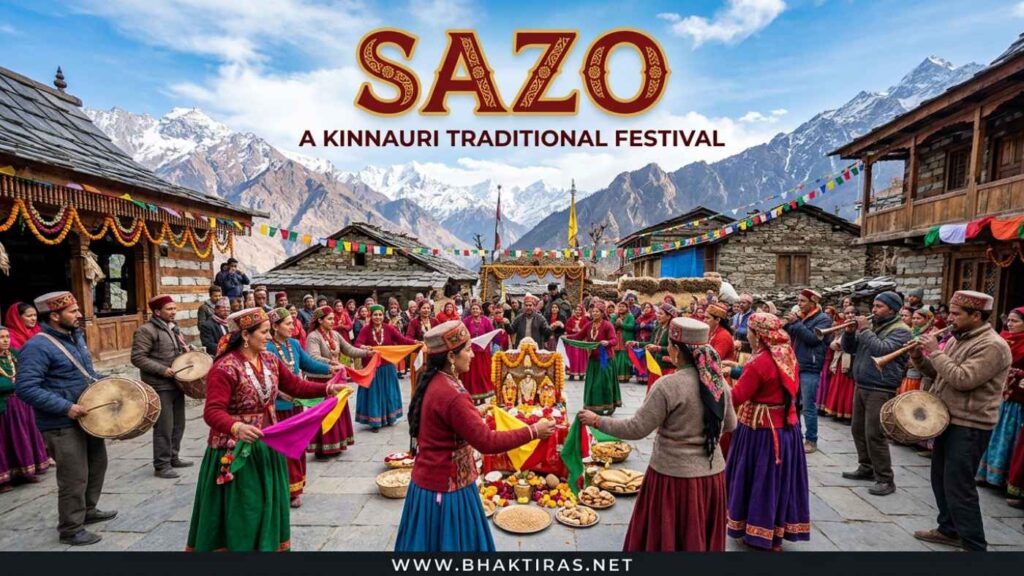
Sazo is the quiet, tender festival with which the people of Kinnaur in Himachal Pradesh send their village gods away for the winter. In this high valley of the Sutlej, every settlement has its own devta, and the community believes that when the deep cold arrives the deity travels to Kailash, the world of the gods, returning only when the snow melts. On the day of Sazo, usually around mid-January near the Magha sankranti, the idol is bathed, fed and honoured one last time before the long, still months set in.
Sazo 2026-2028: Dates & Calendar
Sazo is tied to the entry of winter around Magha sankranti, so it lands in mid-January, though the precise day is set by each village oracle rather than a single fixed calendar.
| Year | Date (approx.) | Season | Notes |
|---|---|---|---|
| 2026 | mid-January | Peak winter | Already observed |
| 2027 | around 15 January | Peak winter | Next occurrence (varies by village) |
| 2028 | mid-January | Peak winter | Around Magha sankranti |
Because the day is announced village by village, neighbouring settlements in Kinnaur may keep Sazo on slightly different dates within the same fortnight.
Why Sazo Is Celebrated
Sazo is celebrated to give the village deity a formal farewell before winter, marking the belief that the god withdraws to the heavens during the coldest months and will return in spring.
Kinnaur’s religious life turns around its devtas. Each god is treated as a living presence with a personality, a palanquin and a voice through the village oracle, and the yearly calendar follows the god’s movements. Sazo is the moment the community accepts that this presence is leaving for a season.
A farewell, not a mourning
The mood of Sazo is affectionate rather than sad. Villagers thank the deity for the year’s protection, ask forgiveness for any lapses, and wish the god a safe journey to Kailash, much as a family sees off an elder going on a long trip.
Marking the turn of the year
Sazo sits near Magha sankranti, when the sun begins its slow climb north again. It signals that the harvest work is done, the granaries are full and the valley can rest through the frozen weeks until the gods and the growing season come back together.
Keeping the bond alive
In many households a small metal image of the deity is kept for daily worship through the winter, so the connection is never fully broken even while the main idol is believed to be away.
Deities & Figures Worshipped
Sazo has no single god across all of Kinnaur. Each village honours its own local devta, the guardian deity whose departure the festival marks.
The village devta
Every Kinnauri village has a presiding god or goddess who protects the land, settles disputes through the oracle and receives the community’s offerings. Sazo is centred entirely on this local deity, whose idol is bathed, fed and sent off for the winter.
Household deity images
Smaller metal figures kept in homes stand in for the departed god during the cold months. Families offer them incense, flowers and a share of the day’s food so that worship continues without a break.
Key Rituals, Step by Step
The rituals of Sazo follow the shape of a proper send-off, from a ceremonial bath to a shared meal and the final farewell.
- Cleaning the temple. The devta’s temple and the idol’s shrine are swept and washed so the god departs from a clean, honoured place.
- The ceremonial bath. The deity’s image is bathed with water, and in some villages with milk or ghee, then dried and dressed afresh for the occasion.
- Offering the special meal. A dish prepared for the day, along with grain, ghee and local butter, is placed before the god as a farewell feast.
- Prayers and the oracle. The community gathers for prayers; the village oracle, or gur, may speak on the god’s behalf, giving blessings and guidance for the winter ahead.
- The formal farewell. Villagers ask the deity’s pardon for the year’s shortcomings and wish the god a safe journey to Kailash until spring.
- Keeping a household image. A small metal figure of the deity is set aside for daily home worship through the cold season.
- The community feast. Families share food, local brew and folk songs, and the valley settles into its quiet winter rhythm.
Special Foods of Sazo
The Sazo table draws on Kinnaur’s mountain kitchen, built around buckwheat, barley, dairy and the local grain-based brew.
Buckwheat and barley breads
Flat breads and cakes made from local buckwheat and barley are staples of the winter table, often eaten warm with generous ghee or home-churned butter.
Ghee and butter offerings
Clarified butter and fresh butter are both offered to the deity and folded into the day’s cooking, prized in the high cold as warming, nourishing food.
Local brew
A traditional home-brewed grain or fruit liquor is shared among adults during the feasting and folk singing, a customary part of Kinnauri celebration.
Dry fruits and nuts
Kinnaur’s famous apricots, walnuts and almonds, dried and stored from autumn, appear as offerings and treats through the winter gatherings.
Where Sazo Is Observed
Sazo is specific to Kinnaur, and even within the district its timing and detail shift from valley to valley.
Upper Kinnaur
In the higher, colder villages towards the Tibetan border the farewell is felt keenly, since these settlements face the longest and harshest winters once the god is believed to have gone.
Lower and central Kinnaur
Villages along the Sutlej and its side valleys keep the same core rite, though the exact day, the songs and the foods vary with local custom and the pronouncement of each village oracle.
Sazo Do's and Don'ts
A few simple courtesies help visitors and families honour the spirit of the day.
Do
- Clean the home and temple before the rituals begin
- Join the community prayers and the deity’s send-off respectfully
- Share food and greetings with neighbours
- Keep a household image of the god for winter worship
- Follow the day and customs set by the village temple committee
Avoid
- Do not treat the farewell as an occasion for grief; it is affectionate
- Do not fix your own date; follow the village oracle’s announcement
- Do not skip the deity’s bath and meal, the heart of the rite
- Do not photograph shrines or oracles without asking permission
- Do not overindulge in the local brew during the sacred parts of the day
Frequently Asked Questions
When is Sazo in 2027?
Sazo in 2027 falls in mid-January, around 15 January near the Magha sankranti. It is the Kinnauri festival that marks the departure of the village deity for the winter. The exact day is set locally, so it can differ slightly from one village to the next.
When is Sazo in 2026 and 2028?
Sazo is observed in mid-January each year, so it fell in mid-January 2026 and will again fall in mid-January 2028, both around the Magha sankranti. These are approximate dates, since each Kinnaur village fixes its own day through its temple committee and oracle.
Why is Sazo celebrated?
Sazo is celebrated to bid farewell to a village’s guardian god before winter. The people of Kinnaur believe the deity leaves for Kailash, the world of the gods, during the coldest months and returns in spring. The festival honours the god’s year of protection and marks the start of the quiet winter season.
Which god is worshipped during Sazo?
Sazo has no single god across Kinnaur; each village worships its own local devta. This guardian deity’s idol is bathed, fed and formally sent off during the festival. Many families also keep a small metal image of the god at home for daily worship through the winter.
Where is Sazo celebrated?
Sazo is a festival of Kinnaur district in Himachal Pradesh, in the upper Sutlej valley. It is specific to the Kinnauri people and their devta culture, and is not widely observed outside the district. Timing and details vary from valley to valley within Kinnaur.
What happens to the deity during winter?
During Sazo the village deity is believed to depart for Kailash, the abode of the gods, and to stay there through the winter. The main idol is ceremonially sent off, while a small household image often stands in for the god at home. The deity is welcomed back with spring festivals when the snow melts.
What food is eaten during Sazo?
Sazo food comes from Kinnaur’s mountain kitchen: buckwheat and barley breads, plenty of ghee and butter, dried apricots, walnuts and almonds, and a traditional home-brewed local liquor shared during the feasting and folk singing. Dishes are both offered to the deity and enjoyed by the gathered families.
Is Sazo the same as Losar or Phagli?
No. Sazo marks the god’s departure at the start of winter, while Losar is the Himachali and Tibetan new year and Phagli is a spring festival that welcomes the gods and the new season back. Together they trace the yearly cycle of the deity’s leaving and returning in the western Himalayas.
As the valley falls quiet and the gods set off for Kailash, Kinnaur wishes its devtas a safe journey and waits patiently for spring.