
Losar in Sikkim 2027 – The Bhutia New Year
ལོ་གསར་
When is Losar in Sikkim in 2027?
Losar, the Tibetan Buddhist New Year of Sikkim’s Bhutia community, falls on 7 February 2027. The exact day follows the Tibetan lunar calendar and shifts each year, usually landing in February. It is a regional public holiday in Sikkim, preceded by the Gutor rites and Chaam mask dances at monasteries like Rumtek and Phodong.
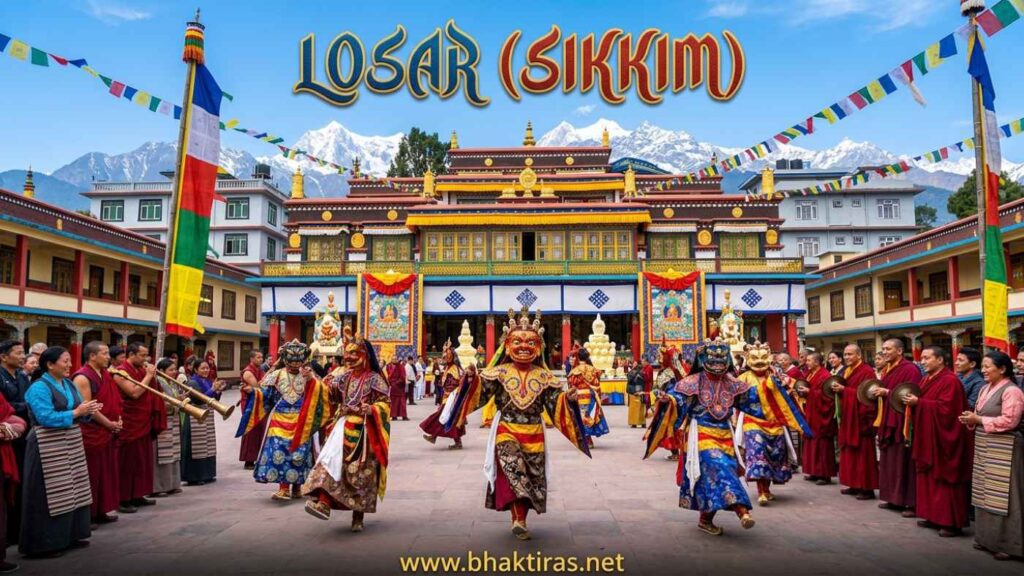
Losar is the Tibetan Buddhist New Year and, for the Bhutia community of Sikkim, one of the year’s most anticipated occasions. It arrives in the depth of the Himalayan winter, its date set by the Tibetan lunar calendar and so moving a little each year – 7 February in 2027. What sets the Sikkimese observance apart is Gutor, the two days of monastery rites that close the old year with masked Chaam dances and the burning of an effigy, clearing away misfortune before the fresh year begins.
Losar in Sikkim 2026-2028: Dates & Calendar
The next Losar in Sikkim is on 7 February 2027. Because the festival is timed to the first day of the Tibetan lunar year, the Gregorian date changes annually and always falls in late winter.
| Year | Losar Day | Day | Notes |
|---|---|---|---|
| 2026 | 18 February | Wednesday | Fire Horse year (past) |
| 2027 | 7 February | Sunday | Next occurrence – Fire Sheep year |
| 2028 | 26 February (approx.) | Saturday | Earth Monkey year |
Losar celebrations traditionally run for the first three days, though the wider observance can stretch across two weeks. In Sikkim the first day is the regional public holiday, with the two Gutor days at the monasteries immediately before it.
Why Losar Is Celebrated in Sikkim
Losar marks the Tibetan Buddhist New Year, and for Sikkim’s Bhutia families it is both a spiritual reset and a homecoming. The days beforehand are given over to clearing out the old year, so that the new one starts clean in body, home and mind.
A fresh start
The turning of the year is treated as a genuine renewal. Homes are swept and scrubbed, old prayer flags are taken down and new ones raised, and debts and quarrels are meant to be settled so nothing sour is carried across the threshold into the new year.
Gutor – closing the old year
In the last two days of the outgoing year, monasteries hold Gutor rites to drive out the accumulated evils and misfortunes of the past twelve months. The climax is a torma effigy, made and then burned or cast out, carrying the year’s bad luck away with it.
The Bhutia identity
For the Bhutia, who trace their roots to Tibet, Losar is a keeping-alive of language, dress and Buddhist practice in the Sikkimese hills. Elders are honoured first, and the festival binds families and monasteries into a single shared season.
Key Rituals, Step by Step
The Sikkimese observance moves from the monastery to the home – first the Gutor rites and Chaam, then the quiet family rituals of New Year’s Eve and Day.
- Gutor rites begin. On the last two days of the old year, lamas at monasteries such as Rumtek and Phodong perform prayers and rituals to expel the misfortunes gathered over the year.
- The Chaam dances. Monks in elaborate silk robes and carved masks – wrathful deities, skeletons, protective spirits – perform the slow, turning Chaam to the beat of drums, cymbals and long horns, dramatising the triumph of good over harmful forces.
- Burning the effigy. A torma effigy that has absorbed the year’s evils is carried out and burned or destroyed, symbolically removing bad luck before the new year can begin.
- Cleaning the home. Families thoroughly clean the house, put up fresh decorations, and display the eight auspicious symbols (Ashtamangala) to invite good fortune.
- Guthuk on New Year’s Eve. On the eve, families gather for guthuk, a hearty noodle soup whose dumplings hide small tokens that jokingly foretell each person’s coming year.
- Raising new prayer flags. Old, weathered prayer flags are replaced with bright new ones on rooftops and ridges so the winds carry fresh prayers outward.
- Monastery visits. On New Year’s Day people visit the monasteries to offer prayers, light butter lamps and receive blessings for the year ahead.
- Feasting and greetings. Families share khapse pastries and festive meals, exchange the greeting Tashi Delek, and call on relatives and neighbours to wish them well.
Special Foods of Losar
Losar food is warming winter fare, made to be shared – some of it carrying meaning as well as flavour.
Guthuk
A thick noodle soup eaten on the eve of Losar. Certain dumplings are stuffed with small hidden tokens – a pinch of salt, a bit of wool, a chilli – each read aloud with laughter as a light-hearted comment on the eater’s character or luck for the year.
Khapse
Deep-fried dough pastries twisted and looped into decorative shapes. Made in large batches before Losar, khapse are stacked on the household shrine and offered to every guest who calls during the celebrations.
Chhaang and butter tea
Warm hospitality flows with chhaang, a mild millet or rice brew, and po cha, the salted butter tea that is a Himalayan staple. Both are offered generously to visiting family and neighbours.
Momos and thukpa
The family table leans on Himalayan comfort food – steamed momo dumplings and thukpa noodle soup – substantial meals suited to the cold weeks when Losar falls.
Losar Do's and Don'ts
A few simple courtesies help visitors and families mark Losar respectfully.
Do
- Greet people with Tashi Delek, the customary Losar wish of good fortune.
- Clean the home and settle old disputes before the new year begins.
- Watch the Chaam dances quietly and respectfully at the monastery.
- Offer and accept khapse and butter tea when visiting, as a sign of goodwill.
- Pay respects to elders and to the monasteries early in the celebrations.
Avoid
- Do not treat the Gutor rites or Chaam as mere entertainment – they are sacred.
- Avoid carrying quarrels or grudges into the new year.
- Do not photograph inside monasteries or of the dances where it is asked you not to.
- Avoid loud or disruptive behaviour during prayers and rituals.
- Do not confuse Losar with Losoong, the separate Bhutia harvest new year held earlier in winter.
Frequently Asked Questions
When is Losar in Sikkim in 2027?
Losar in Sikkim falls on 7 February 2027. It is the Tibetan Buddhist New Year of the Bhutia community and a regional public holiday in the state. The exact date follows the Tibetan lunar calendar and shifts slightly each year.
When is Losar in 2026 and 2028?
Losar fell on 18 February in 2026 and is expected around 26 February in 2028. These dates are approximate because Losar is set by the Tibetan lunar calendar, so its position in February can move from one year to the next.
Why is Losar celebrated?
Losar is celebrated to welcome the Tibetan Buddhist New Year and to make a clean, auspicious start. Homes are cleaned, prayer flags renewed and, in Sikkim, the Gutor rites at the monasteries drive out the misfortunes of the old year before the new one begins.
What is Gutor and how does it connect to Losar?
Gutor is the set of monastery rituals held on the last two days of the outgoing Tibetan year, just before Losar. Lamas perform prayers, monks dance the masked Chaam, and an effigy that has absorbed the year’s evils is burned to clear away bad luck ahead of the new year.
What is the Chaam dance?
Chaam is a sacred masked dance performed by monks in silk robes and carved masks representing deities, protectors and spirits. In Sikkim it is danced at monasteries such as Rumtek and Phodong during Gutor, dramatising the victory of good over harmful forces to close the old year.
What foods are eaten during Losar?
Key Losar foods include guthuk, a noodle soup eaten on New Year’s Eve with fortune-telling tokens hidden in the dumplings, and khapse, decorative fried pastries. Families also share momos, thukpa, butter tea and chhaang with visiting relatives and neighbours.
Is Losar the same as Losoong?
No, Losar and Losoong are different festivals. Losar is the Tibetan Buddhist New Year of the Bhutia community, while Losoong is a separate Bhutia and Lepcha harvest new year celebrated earlier in the winter. Both are important in Sikkim but fall at different times.
How do you greet someone during Losar?
The traditional Losar greeting is Tashi Delek, a Tibetan wish for good fortune and blessings. It is exchanged warmly between family, neighbours and visitors throughout the celebrations.
May the Chaam clear the old year and the winds carry your new prayers far – Tashi Delek, and a joyful Losar to Sikkim’s Bhutia families.