
Bumchu Festival 2027 – Sikkim's Sacred Vase of Prophecy
བུམ་ཆུ
When is the Bumchu Festival in 2027?
The Bumchu Festival falls on approximately 21-22 February 2027 (dates approximate, confirm nearer the time), on the 14th and 15th days of the first month of the Tibetan lunar calendar. It is held at Tashiding Monastery in West Sikkim, where lamas open a sealed holy vase of water and read its level as an omen for the year ahead.
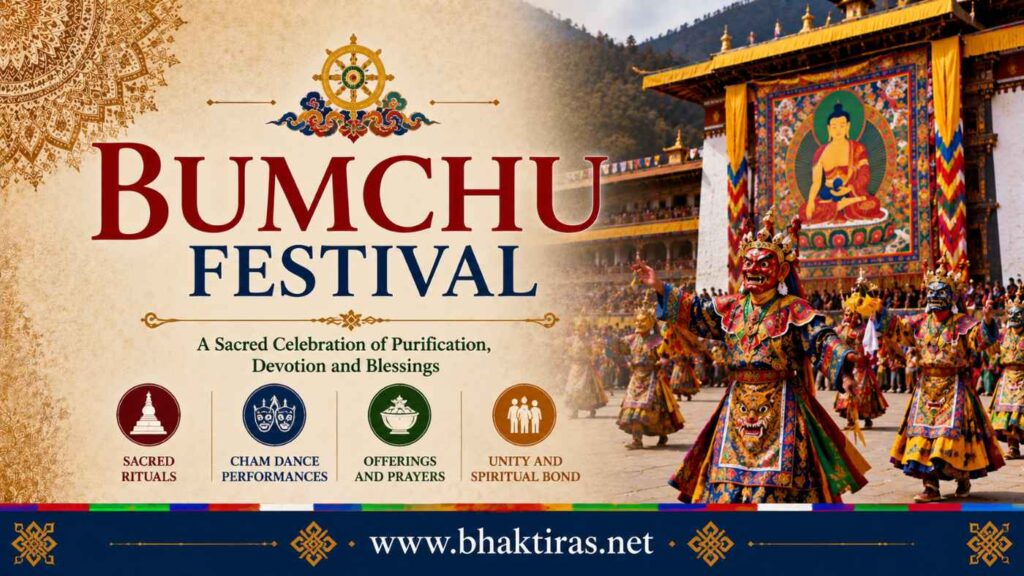
The Bumchu Festival is one of the most quietly dramatic events in the Himalayan Buddhist calendar. Once a year, at Tashiding Monastery high in West Sikkim, the lamas break the seal on a holy vase of water that has stood untouched since the previous year, and the level they find inside is read as an omen for the twelve months to come. The word itself is plain enough – bum means vase or pot, chu means water – but the reading it yields shapes the mood of a whole region. It is observed on the 14th and 15th days of the first month of the Tibetan calendar, usually falling in February or March.
Bumchu Festival 2026-2028: Dates & Calendar
The next Bumchu Festival is expected around 21-22 February 2027. The date shifts each year because it follows the Tibetan lunar calendar, landing on days 14-15 of the first lunar month soon after Losar.
| Year | Dates (approx) | Days | Notes |
|---|---|---|---|
| 2026 | 3-4 March | Tue-Wed | Held in early March |
| 2027 | 21-22 February | Sun-Mon | Next occurrence (approximate) |
| 2028 | Feb-Mar | – | Falls on days 14-15 of the 1st Tibetan month |
The main ceremony, when the vase is opened, takes place in the pre-dawn hours of the 15th day. Because the reading depends on the Tibetan calendar rather than the Gregorian one, the two-day observance can slide anywhere across late February and March from year to year.
Why the Bumchu Festival Is Celebrated
Bumchu is celebrated because the sealed vase of holy water at Tashiding is believed to forecast the fortunes of Sikkim for the coming year, and because a share of that water is treated as a rare blessing.
Tashiding Monastery sits on a hilltop between the Rathong and Rangeet rivers and is counted among the holiest sites in Sikkim. Local belief holds that a single pilgrimage here can wash away the wrongs of a lifetime, which is part of why the vase kept at this particular spot carries such weight.
A reading of the year ahead
When the lamas lift the lid, they look at how much water remains. A full or brimming vase is taken as a sign of peace, good harvests and plenty. A low level warns of shortage or hardship, and water that looks muddy or troubled is read as a warning of unrest or disaster in the year to come.
Water that never quite runs out
The striking part is that the vase is sealed for a full year yet is never found empty, even though a little is given away each time. Devotees see this as proof of its sanctity. The small changes in level from year to year are exactly what makes the reading meaningful.
A blessing you can carry home
A few drops of the sacred water are distributed among the gathered pilgrims. People receive it in cupped hands or small bottles and keep it as a protective blessing for their household through the year, which draws thousands to make the cold pre-dawn journey up to the monastery.
Key Rituals, Step by Step
The heart of Bumchu is a single, carefully guarded act – the opening of the vase – wrapped in prayer, distribution and refilling.
- Pilgrims gather before dawn. Thousands climb to Tashiding Monastery through the night, so that they are in place well before the vase is opened in the dark early hours of the 15th day.
- The lamas prepare the vessel. Senior monks bring out the sacred vase, which has stayed sealed and untouched since the previous year’s festival, and set it for the ceremony amid chanting and the sound of horns and drums.
- The seal is broken. In front of the assembled crowd the lamas open the vase and inspect the level of the water inside – the single moment the whole festival turns on.
- The omen is read. The monks interpret what they see: a high, clear level for a good year of peace and plenty, a low or clouded level as a caution about the months ahead.
- Holy water is shared. A small measure of the sacred water is distributed to devotees as a blessing, given out sparingly so that as many people as possible receive a share.
- The vase is refilled. Fresh water drawn from the Rathong Chu river is added to top the vase back up, joining the water that has remained.
- The seal is closed for another year. The vase is sealed again and set aside untouched until the next Bumchu, when it will be opened to reveal the following year’s reading.
Where It's Celebrated
Bumchu is deeply tied to one place, though its meaning is felt across Sikkim and the wider Himalayan Buddhist world.
Tashiding Monastery, West Sikkim
The festival belongs to Tashiding, a Nyingma monastery founded in the 17th century on a hill above the meeting of the Rathong and Rangeet rivers. This is the only place the sacred vase is opened, which makes the monastery the single focus of the entire observance.
Across Sikkim
Because the reading is understood as a forecast for the whole state, news of the water level spreads quickly through Sikkim’s Buddhist communities. Families who cannot make the climb still follow what the vase foretold and treat it as guidance for the year.
The wider Himalayan Buddhist world
Pilgrims and monks from other parts of the eastern Himalayas, drawn by Tashiding’s reputation as an especially holy site, join the local Bhutia and Lepcha devotees, giving the pre-dawn gathering a mix of communities from beyond Sikkim’s borders.
Bumchu Festival Do's and Don'ts
A few simple points help visitors take part respectfully at a sacred, crowded, high-altitude event.
Do
- Reach Tashiding Monastery early, ideally the night before, since the key ritual happens before dawn.
- Dress warmly in layers – February and March nights in West Sikkim are cold.
- Follow the monks’ and volunteers’ instructions while queuing for the holy water.
- Keep quiet and reverent during the chanting and the opening of the vase.
- Receive the sacred water gratefully and store it carefully as a year-long blessing.
Avoid
- Do not push or crowd the sanctum area when the water is being distributed.
- Do not touch or photograph the sacred vase without permission from the monastery.
- Do not treat the holy water casually or waste it once you receive it.
- Do not litter on the monastery grounds or along the pilgrimage path.
- Do not expect a fixed Gregorian date – always confirm the year’s timing in advance.
Frequently Asked Questions
When is the Bumchu Festival in 2027?
The Bumchu Festival in 2027 is expected around 21-22 February (dates approximate). It is observed on the 14th and 15th days of the first month of the Tibetan lunar calendar, so the exact Gregorian date should be confirmed with Tashiding Monastery or Sikkim Tourism nearer the time.
When is the Bumchu Festival in 2026 and 2028?
In 2026 the Bumchu Festival fell around early March, and in 2028 it is again expected in the February-March window. Because it follows the Tibetan lunar calendar and lands on days 14-15 of the first lunar month, the date moves each year and is best confirmed close to the event.
Where is the Bumchu Festival held?
The Bumchu Festival is held at Tashiding Monastery in West Sikkim, a 17th-century Nyingma monastery set on a hill above the Rathong and Rangeet rivers. It is the only place where the sacred vase is opened, and thousands of pilgrims travel there for the pre-dawn ceremony.
What does the Bumchu ritual predict?
The Bumchu ritual is believed to predict the fortunes of Sikkim for the coming year. When the lamas open the year-sealed vase, a full, clear water level foretells peace and plenty, while a low or muddy level warns of hardship or trouble in the months ahead.
What do bum and chu mean?
In the name Bumchu, bum means vase or pot and chu means water. Together they name the festival’s central object – the sacred vase of holy water that is opened once a year at Tashiding Monastery and read as an omen.
How is the holy water used at Bumchu?
At Bumchu, a small amount of the holy water from the vase is distributed to devotees as a blessing to keep for the year. The vase is then refilled with fresh water from the Rathong Chu river and sealed again until the next festival, and it is said never to run empty.
Which community celebrates the Bumchu Festival?
The Bumchu Festival is a Buddhist festival of the Nyingma tradition, celebrated chiefly by Sikkim’s Bhutia and Lepcha communities. Monks of Tashiding Monastery lead the ritual, and pilgrims from across the eastern Himalayas join the observance.
Can visitors attend the Bumchu Festival?
Yes, visitors can attend the Bumchu Festival at Tashiding Monastery, and many travellers join the pilgrims for the pre-dawn ceremony. Come dressed warmly, arrive early, follow the monastery’s guidance during the ritual, and confirm the year’s dates in advance since they follow the lunar calendar.
May the year the vase foretells be full and clear – Tashi Delek from all of us at Bhaktiras.