
Solung 2026 – The Adi Harvest Festival of Arunachal
When is Solung in 2026?
Solung is celebrated from 1 to 5 September 2026, as it is every year on roughly the same dates. It is the biggest festival of the Adi people of Arunachal Pradesh, held after the sowing season to pray for a good crop and the wellbeing of both people and cattle.
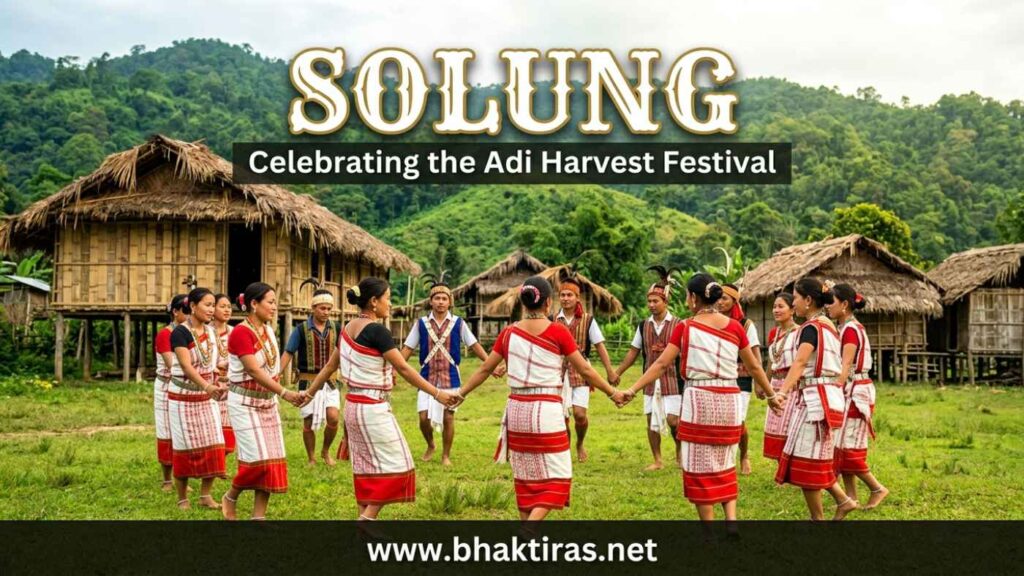
Solung is the most important festival of the Adi people, one of the largest tribal communities of eastern Arunachal Pradesh. Held over about five days in early September, after the fields are sown but before the grain is gathered, it is a long thanksgiving to nature for what the land is about to give. Families pray for a full harvest, healthy children and strong cattle, and the days fill with the Ponung dance, shared meat and rice beer, and the quiet work of building bamboo altars for the household spirits.
Solung 2026-2028: Dates & Calendar
Solung falls in the first week of September every year, most commonly beginning on 1 September, and it is largely fixed rather than shifting with the moon.
| Year | Dates | Opening day | Notes |
|---|---|---|---|
| 2026 | 1-5 September | Tuesday | Next occurrence, five days |
| 2027 | 1-5 September | Wednesday | Same seasonal window |
| 2028 | 1-5 September | Friday | Same seasonal window |
The five days move through distinct phases: the household preparation, the main offering day, and the closing days of dancing and feasting. Because the festival is anchored to the sowing-to-harvest gap rather than a lunar tithi, its dates barely change from year to year.
Why Solung Is Celebrated
Solung is celebrated to thank nature and the spirits for a good sowing and to ask for a rich harvest, along with the health and safety of people and their cattle.
For the Adi, farming is not separate from faith. The rhythm of clearing land, sowing and waiting is bound up with respect for the spirits of the fields, the rivers and the forest. Solung is the moment in the year when a whole community pauses between hard labour and the coming reward to give thanks together.
Gratitude after sowing
The festival comes when the seed is already in the ground and the outcome is out of human hands. It is a collective act of gratitude and hope, marking the shift from work to waiting for the crop to ripen.
Protection of people and cattle
Prayers at Solung are not only for grain. Families ask for the wellbeing of their children and the health of their cattle, the two things a farming household most depends on through the hard months ahead.
The Donyi-Polo worldview
The Adi follow Donyi-Polo, the faith of the Sun (Donyi) and Moon (Polo), seen as the watching, truth-keeping powers of the universe. Solung expresses this outlook of living honestly and in balance with nature.
Spirits & Powers Honoured
Solung honours the powers of the Donyi-Polo faith and the spirits connected with farming, the household and the natural world rather than a single carved idol.
Donyi-Polo
Donyi-Polo, the Sun and Moon, are the central sacred powers of the Adi. They stand for truth, order and the constant witnessing of human conduct, and the festival keeps this relationship alive through prayer and right living.
Kine Nane
Adi tradition honours the spirit associated with crops and the fertility of the fields at this agrarian festival. The offerings and altars of Solung are meant to please the powers that decide whether the harvest will be full.
Household and nature spirits
The miniature altars and hung weapons are addressed to the spirits that guard the home and the surrounding land, asking them to keep sickness and misfortune away from the family through the season.
Key Rituals, Step by Step
The five days of Solung move from preparation to offering to dance, guided by the village Miri, the traditional priest.
- Preparation. Homes are cleaned and stocked, rice beer known as apong is brewed, and families set aside animals and food for the days ahead.
- Solung Binnyat. The Miri recites the long ritual chants that open the festival, invoking the spirits and reciting the ancestral lore that frames the offerings.
- Building the Takar. Bamboo altars called Takar are made, and miniature weapons are shaped and hung at the household to guard the family and drive away harmful spirits.
- Animal offerings. Mithun, pigs and fowl are offered to the spirits as the central act of thanksgiving, with the meat then shared among relatives and neighbours.
- Ponung dance. Women dance in a slow, linked line to the songs of the Miri, their movements and verses carrying the myths and blessings of the community.
- Feasting and exchange. Meat and apong are shared between households, and gifts of food strengthen the bonds of the village through the closing days.
- Closing. The festival winds down with final prayers for a heavy harvest and the safety of people and cattle before ordinary farming life resumes.
Special Foods of Solung
Solung food is hearty and communal, built around meat from the offerings and the rice beer that flows through every household.
Apong
Apong is the traditional fermented rice beer of the Adi, brewed in large quantities for the festival. It is offered to guests, shared at every gathering and exchanged as a gift between homes.
Mithun and pork
Meat from the offered mithun, pigs and fowl is at the centre of Solung feasting. After the ritual offering it is distributed widely, so that even smaller households share in the abundance.
Rice and smoked meat
Steamed rice with pieces of smoked or fresh meat forms the everyday festive plate, often cooked simply so the gathering, rather than the cooking, stays the focus.
Leaf-wrapped preparations
Meat and rice cooked or wrapped in local leaves are common, giving the food a mild, earthy flavour that reflects the forest ingredients around Pasighat and East Siang.
Where Solung Is Celebrated
Solung is an Adi festival, celebrated most fully in the districts where the community lives, with Pasighat as its best-known centre.
East Siang and Pasighat
Pasighat in East Siang holds the largest and most visible Solung celebrations, drawing people from surrounding villages for the community offerings and Ponung performances.
Siang belt and Adi villages
Across the Adi-inhabited areas along the Siang river, individual villages keep their own Solung, so the festival is really many local observances sharing one name and one purpose.
Adi diaspora
Adi families living elsewhere in Arunachal Pradesh and beyond mark Solung on the same early-September dates, keeping the prayers for harvest and cattle alive away from home.
Solung Do's and Don'ts
A few simple courtesies help visitors take part respectfully in a living tribal festival.
Do
- Accept apong or food when offered – sharing is the heart of Solung.
- Watch the Ponung dance quietly and let the women lead the line.
- Ask permission before photographing rituals or people.
- Learn a little about Donyi-Polo before you arrive.
- Bring a small gift of food if you are hosted by a family.
Avoid
- Do not treat the animal offerings as a spectacle or disrupt them.
- Do not touch the Takar altars or the hung weapons.
- Do not push into ritual spaces reserved for the Miri.
- Do not assume it is the same as mainstream Hindu festivals.
- Do not overindulge in apong to the point of causing offence.
Frequently Asked Questions
When is Solung in 2026?
Solung is celebrated from 1 to 5 September 2026. It is the main festival of the Adi tribe of Arunachal Pradesh, held after sowing to pray for a good harvest and the wellbeing of people and cattle.
When is Solung in 2027 and 2028?
Solung falls on 1-5 September in both 2027 and 2028. The festival is largely fixed to the first week of September each year and does not move with the lunar calendar.
Why is Solung celebrated?
Solung is celebrated to give thanks after the sowing season and to pray for a rich harvest and the health of both people and cattle. It reflects the Adi faith of Donyi-Polo and their close bond with farming and nature.
Which community celebrates Solung?
Solung is the most important festival of the Adi people, a major tribal community of eastern Arunachal Pradesh. It is celebrated most prominently around Pasighat in East Siang district.
What is the Ponung dance?
The Ponung is the signature dance of Solung, performed by Adi women who move in a linked line to the songs of the Miri, the traditional priest. The verses carry the community’s myths and blessings for the harvest.
What is a Takar in Solung?
A Takar is a bamboo altar built during Solung as part of the household rituals. Miniature weapons are shaped and hung alongside it to guard the family and keep harmful spirits away.
How long does Solung last?
Solung lasts about five days, moving through preparation, the Solung Binnyat rituals and animal offerings, and closing days of Ponung dancing and feasting. The main offerings fall in the middle of the celebration.
What food and drink are shared at Solung?
Solung centres on apong, the Adi rice beer, and meat from the offered mithun, pigs and fowl. Households exchange meat and apong as gifts, so the festival is as much about sharing as about the rituals themselves.
May the fields be heavy and the cattle strong – a happy Solung to the Adi people of the Siang.