
Rangeeli Holi Pushkar 2026 – Rajasthan's Colour Carnival
रंगीली होली, पुष्कर
When is Rangeeli Holi in Pushkar in 2027?
Rangeeli Holi in Pushkar falls on Monday, 22 March 2027, the main Rangwali Holi day, with the Holika Dahan bonfire on the evening of Sunday, 21 March 2027. The whole of Pushkar’s main bazaar and the ghats around the lake turn into an open-air colour party of gulal, water, drums and dancing that draws travellers from all over the world.
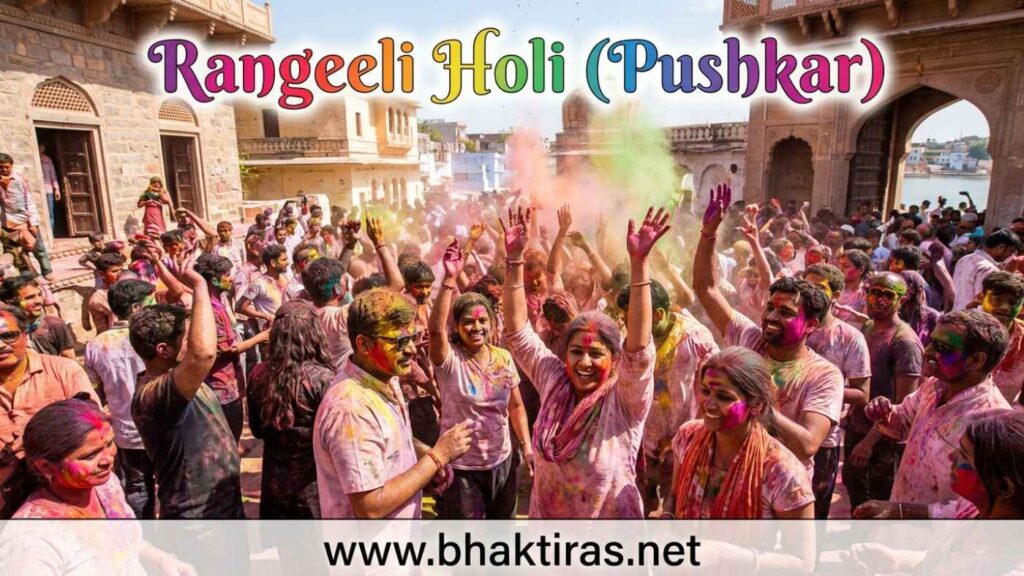
Rangeeli Holi is what the little temple town of Pushkar, in Rajasthan, calls its Holi – and it has grown into one of the loudest, most colourful Holi celebrations anywhere in India. For one day the narrow main bazaar and the ghats around the holy lake fill with thousands of people, locals and backpackers side by side, throwing dry gulal and splashing water while dhol drums and DJ speakers keep the whole town dancing. Like Holi everywhere it carries the playful spirit of Krishna and Radha, and it begins the night before with the Holika Dahan bonfire.
Rangeeli Holi 2026-2028: Dates & Calendar
Rangeeli Holi is simply Pushkar’s Holi, so it lands on the main Rangwali Holi day, which follows Phalguna Purnima and shifts each year with the Hindu lunar calendar. The next celebration is on Monday, 22 March 2027.
| Year | Colour Day | Day | Holika Dahan (eve) |
|---|---|---|---|
| 2026 | 4 March | Wednesday | Tue 3 March |
| 2027 | 22 March | Monday | Sun 21 March |
| 2028 | 12 March | Sunday | Sat 11 March |
In Pushkar the town lights the Holika bonfire after sunset on the eve, and the free-for-all colour play runs through the following morning and afternoon, usually winding down by late afternoon so everyone can wash off and rest.
Why Rangeeli Holi Is Celebrated
Rangeeli Holi carries the same meaning as Holi across India – the triumph of good over evil and the arrival of spring – expressed through Pushkar’s own warm, sociable style of celebration.
The bonfire story
The eve of Holi, Holika Dahan, recalls the demon king Hiranyakashipu and his sister Holika, who tried to burn his devout son Prahlada but was consumed by the fire herself while the boy was saved. The bonfire marks that victory of faith over cruelty, and the ash is treated as blessed.
The colours of Krishna
The playful throwing of colour is tied to Krishna, who is said to have smeared colour on Radha and the gopis at Braj. That legend is why Holi is so joyful and mischievous, and it gives Rangeeli Holi its spirit of open, affectionate fun.
Spring and renewal
Holi is also a spring festival, marking the end of winter and the ripening of the season’s first crops. In Pushkar this turns into a shared release of energy where rank and background dissolve for a day and everyone plays together.
Pushkar's open welcome
Because Pushkar has long drawn pilgrims and travellers to its Brahma temple and sacred lake, its Holi became famous for mixing Rajasthani villagers, sadhus, and visitors from across the world into one crowd. That openness is now a big part of the town’s identity.
Deities & Figures Worshipped
Holi’s spirit belongs above all to Krishna and Radha, while the eve’s bonfire honours the devotee Prahlada and recalls Holika.
Krishna & Radha
The colour play echoes Krishna’s affectionate teasing of Radha and the gopis with gulal at Braj. Their story gives Holi its playful, loving mood, which is why the day is one of laughter and forgiveness rather than solemn ritual.
Prahlada
The young devotee Prahlada is remembered at the eve bonfire as the child whose unwavering faith in Vishnu protected him from the flames. His survival is the reason the fire is lit and circled with prayers.
Key Rituals, Step by Step
The celebration runs across two connected days – a bonfire night followed by the colour morning.
- Gathering wood. In the days before, neighbourhoods collect wood and dried cow-dung cakes to build the Holika pyre, often near a crossroads or open ground.
- Holika Dahan. After sunset on the eve, families light the bonfire, offer grains, coconut and sweets to the flames, and walk around it in prayer for protection and good fortune.
- Blessed ash. Some carry home a little ash the next morning or apply it as a mark, treating the burnt embers as auspicious.
- Morning gulal. The colour day opens with people smearing dry gulal on family and friends’ cheeks, exchanging the greeting and touching elders’ feet before the play gets wilder.
- The bazaar fills. Through the morning Pushkar’s main market street and the ghats crowd with people playing with dry powder and water, as dhol drums, folk singers and DJ sets keep the dancing going.
- Colour and music gathering. Pushkar is known for a big organised colour-and-music meet where travellers and locals dance together in a haze of gulal – the scene that made this Holi internationally famous.
- Winding down. By late afternoon the play eases off; people rinse off the colour, change into fresh clothes, and visit friends with sweets and snacks in a calmer, sociable evening.
Special Foods of Holi in Pushkar
Holi tables in Rajasthan lean sweet and fried, with cooling drinks to balance the heat of a busy colour day.
Gujiya
Crescent-shaped fried pastries stuffed with khoya, dried fruit and cardamom, then dipped in sugar syrup. Gujiya is the signature Holi sweet and appears in almost every household.
Thandai
A chilled milk drink ground with almonds, fennel, pepper, rose and saffron. It is the classic Holi cooler, poured freely for guests through the day.
Dal baati churma
Rajasthan’s hearty signature – baked wheat balls with lentils and a sweet crushed-wheat churma. A common festive lunch once the colour play settles down.
Malpua & ghevar
Syrup-soaked malpua pancakes and the honeycomb-like ghevar are festive Rajasthani sweets you will spot in Pushkar’s mithai shops around Holi.
Kachori & namkeen
Spiced pyaaz and dal kachoris, mirchi bada and other savoury fried snacks line the bazaar, easy to grab between rounds of play.
Rangeeli Holi Do's and Don'ts
A short guide to enjoying Pushkar’s Holi safely and respectfully, especially in a mixed crowd of locals and visitors.
Do
- Use skin-safe, natural or herbal gulal (turmeric, flower-based colours) rather than harsh chemical dyes.
- Oil your hair and skin beforehand and wear old, fully covering clothes so colour washes off more easily.
- Ask before you colour someone, especially strangers, and keep play consensual and good-natured.
- Keep phones and cameras in a sealed pouch or waterproof bag away from the water and powder.
- Stay hydrated, drink water alongside any thandai, and take breaks in the shade during the crowd.
Avoid
- Don’t throw colour or water on anyone who has clearly opted out, on elders, or on animals.
- Don’t use silver, mica-based or oil-paint colours – they can harm skin and eyes and are hard to remove.
- Don’t corner or grab people in the crush; a mixed, dense crowd means respecting personal space matters more, not less.
- Don’t drink bhang or alcohol to excess – it fuels rough behaviour and spoils the day for others.
- Don’t leave valuables, passports or extra cash on you in the thick of the bazaar crowd.
Frequently Asked Questions
When is Rangeeli Holi in Pushkar in 2027?
Rangeeli Holi in Pushkar is on Monday, 22 March 2027, which is the main Rangwali Holi colour day. The Holika Dahan bonfire is lit the evening before, on Sunday, 21 March 2027.
When is Rangeeli Holi in 2026 and 2028?
Rangeeli Holi fell on Wednesday, 4 March 2026, and will next occur on Sunday, 12 March 2028. In each year it follows the main Holi (Rangwali Holi) date, which shifts with the Hindu lunar calendar.
What is Rangeeli Holi in Pushkar?
Rangeeli Holi is the name for Holi as it is celebrated in Pushkar, Rajasthan. On the colour day the town’s main bazaar and lakeside ghats fill with a huge crowd of locals and travellers playing with dry gulal and water while dhol drums and DJ music keep everyone dancing.
Why is Pushkar Holi famous among foreign tourists?
Pushkar Holi is famous with foreign tourists because the small temple town turns into one big, open street party where locals and international visitors dance together in colour. Pushkar’s known colour-and-music gathering, its relaxed atmosphere and its setting by the sacred lake have made it one of India’s most popular Holi destinations for travellers.
Which god is associated with Holi?
Holi is associated above all with Krishna and Radha, whose playful colouring of each other inspires the throwing of gulal. The eve’s Holika Dahan bonfire also honours the devotee Prahlada and recalls the burning of the demoness Holika.
What happens on Holika Dahan in Pushkar?
On Holika Dahan, the evening before the colour day, people in Pushkar light a community bonfire, offer grains and sweets to the flames and circle it in prayer for protection. It marks the victory of the devotee Prahlada’s faith over evil and opens the two-day celebration.
Is Pushkar Holi safe for solo and women travellers?
Pushkar Holi can be enjoyed by solo and women travellers who take sensible precautions in the dense crowd. Go in a group where possible, wear covering clothes, keep valuables secured, insist on consensual play, and step out of the crush if it feels rough.
What colours should I use for a skin-safe Holi?
For a skin-safe Holi, use natural or herbal gulal made from flowers, turmeric or food-grade colours rather than chemical, silver or oil-based dyes. Oiling your skin and hair first and wearing sunglasses help protect against irritation and make the colour easier to wash off.
However you play it, may your Rangeeli Holi in Pushkar be full of colour, kindness and good company – Holi hai!