
Gaan-Ngai 2027 – The Zeliangrong Post-Harvest New Year
When is Gaan-Ngai in 2027?
Gaan-Ngai in 2027 is expected in mid-January (around 13 January, approximate). It is the biggest post-harvest festival of the Zeliangrong people – the Zeme, Liangmai and Rongmei tribes of Manipur, Assam and Nagaland – honouring the supreme god Tingkao Ragwang, giving thanks for the harvest, and marking the Zeliangrong New Year. The exact date follows the Zeliangrong lunar calendar and is confirmed by the community each year.
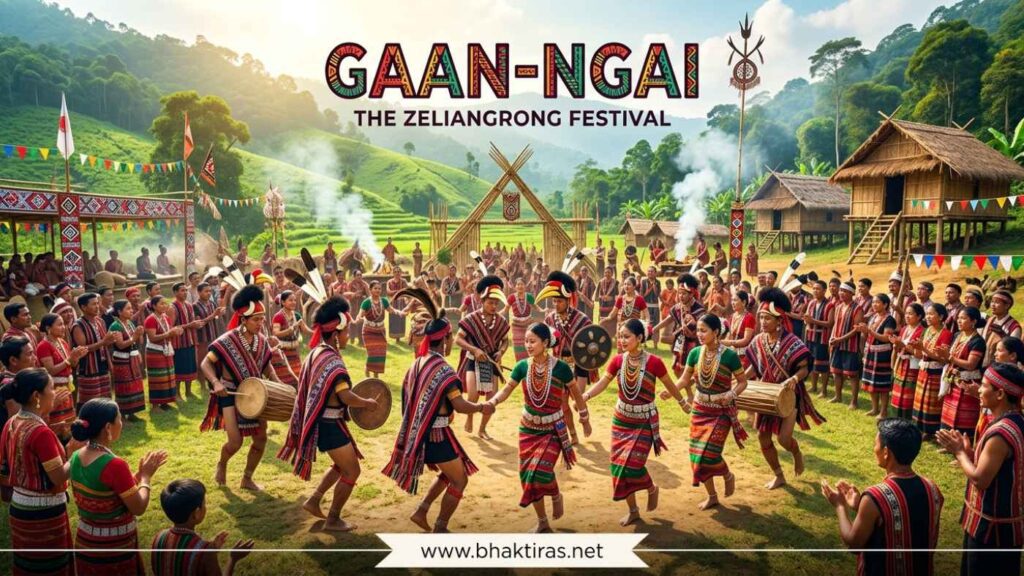
Gaan-Ngai is the most important festival of the Zeliangrong people, the family of Zeme, Liangmai and Rongmei tribes who live across parts of Manipur, Assam and Nagaland. Held for about five days once the last of the crop is safely in, it is at heart a thanksgiving to Tingkao Ragwang, the supreme god, for a good harvest. It is also the Zeliangrong New Year, a turning of the year marked by a sacred fire kindled fresh by friction, long nights of folk song and dance, shared feasts, and old courtship customs among the young.
Gaan-Ngai 2026-2028: Dates & Calendar
The next Gaan-Ngai is expected around mid-January 2027. The festival is set by the Zeliangrong lunar calendar – it falls on the 13th day of the lunar month, usually in late December or January – so the dates below are approximate until each year’s village and community bodies announce them.
| Year | Date (approx) | When | Notes |
|---|---|---|---|
| 2026 | Early January (approx) | Winter | Held after the 2025 harvest |
| 2027 | Mid-January (approx) | Winter | Next occurrence – Zeliangrong New Year |
| 2028 | Late Dec 2027 – Jan 2028 (approx) | Winter | Confirmed locally |
Because the festival lasts roughly five days, the starting day is the one usually quoted; the sacred fire and main dances anchor the celebration, with feasting and games filling the days that follow.
Why Gaan-Ngai Is Celebrated
Gaan-Ngai is celebrated as a harvest thanksgiving and New Year: the Zeliangrong people thank Tingkao Ragwang, the supreme god, for the crop just gathered and ask for well-being in the year ahead.
The timing is deliberate. Once the fields are cleared and granaries filled, families finally have both food and free time, and the community gives its gratitude in the fullest way it can – with fire, food, song and dance shared among everyone.
Thanksgiving to Tingkao Ragwang
At its core the festival honours Tingkao Ragwang, the supreme creator god of the Zeliangrong faith. The harvest just brought in is offered up in gratitude, and blessings are sought for health, peace and a good year to come.
The Zeliangrong New Year
Gaan-Ngai marks the turning of the year for the Zeliangrong people. Old grievances are meant to be set aside, debts settled where possible, and the community steps into the new year together with a clean start.
Holding the community together
The festival binds the Zeme, Liangmai and Rongmei branches of the Zeliangrong family. Shared feasts, group dances and communal games renew the bonds of clan and village that sustain the people through the rest of the year.
Deities & Figures Worshipped
Gaan-Ngai centres on Tingkao Ragwang, the supreme god of the Zeliangrong people, who is thanked for the harvest and invoked for the year ahead.
Tingkao Ragwang
Tingkao Ragwang is the supreme, formless creator god in Zeliangrong belief – the giver of life, crops and prosperity. The whole festival is framed as thanksgiving and prayer to him, offered through the elders and priests on behalf of the community.
Key Rituals, Step by Step
The days of Gaan-Ngai follow a familiar rhythm – the sacred fire first, then dance, feasting, courtship and games.
- Kindling the sacred new fire. The festival opens with a fresh fire made by friction, rubbing wood the old way rather than using a match or lighter. This new fire is treated as pure and auspicious, and homes relight their hearths from it.
- Prayers and offerings. Elders and priests offer prayers to Tingkao Ragwang, giving thanks for the harvest and asking for protection, health and plenty in the coming year.
- Wearing traditional shawls and dress. People put on their finest handwoven shawls and tribal attire, the patterns and colours marking clan and community, and gather at the village common ground.
- Folk dance and song. Young and old join long sessions of folk dance and singing, moving in groups to the beat of drums and traditional music through the day and into the night.
- Community feasting. Families share large communal meals – rice, meat and rice-beer among them – so that the plenty of the harvest is enjoyed together rather than alone.
- Courtship customs among the young. The festival is one of the few times unmarried young men and women mix freely in song and conversation, and it is a recognised season for courtship and the making of matches.
- Traditional games and contests. The later days fill with tribal games, sports and friendly contests of skill and strength that draw the whole village to watch and cheer.
- Closing and New Year blessings. The celebration winds down with final blessings, elders wishing the community a prosperous new year before ordinary life resumes.
Special Foods of Gaan-Ngai
Food is central to Gaan-Ngai, since it is a harvest festival – meals are hearty, shared, and built around the new rice.
New-harvest rice
Rice from the crop just gathered is the heart of every meal, cooked plain or in traditional preparations and shared across families as the first fruits of the season.
Meat dishes
Pork, chicken and other meats are prepared for the communal feasts, often smoked or boiled with local herbs and greens in the simple, robust style of the hills.
Rice-beer
Home-brewed rice-beer is a customary part of the celebration, shared among adults during feasts and offered in hospitality to guests and kin who come for the festival.
The Three Zeliangrong Tribes
Gaan-Ngai is shared across the Zeliangrong family, and its feel shifts a little among the three tribes and the states they live in.
Rongmei
The Rongmei, found in Manipur, Assam and Nagaland, celebrate Gaan-Ngai as a major community event, and in the Imphal valley and Rongmei areas it is one of the year’s most visible tribal festivals.
Zeme
The Zeme, living across Manipur, Assam and Nagaland, keep the same core of sacred fire, prayer, dance and feast, with their own songs, dance forms and shawl designs marking the observance.
Liangmai
The Liangmai, spread across Manipur and Nagaland, join in the shared Zeliangrong New Year, bringing their own local traditions of music and dress to the common celebration.
Gaan-Ngai Do's and Don'ts
A few simple pointers if you are joining or reading about Gaan-Ngai.
Do
- Treat the sacred new fire with respect – it is a religious symbol, not a spectacle.
- Join feasts and dances warmly if invited; hospitality is a big part of the festival.
- Dress modestly and admire the handwoven shawls without touching or handling them uninvited.
- Ask before photographing rituals or people, especially the elders and priests.
- Confirm the exact festival dates with the local community, since they are set by the lunar calendar.
Avoid
- Do not assume a fixed calendar date – the dates move each year and are approximate until announced.
- Do not treat it as only a dance show; it is a religious thanksgiving to Tingkao Ragwang.
- Do not interrupt or crowd the prayers and offerings led by the elders.
- Do not make fun of the tribal dress, language or customs.
- Do not overstate rice-beer or courtship customs out of context – they are part of a whole, dignified tradition.
Frequently Asked Questions
When is Gaan-Ngai in 2027?
Gaan-Ngai in 2027 is expected in mid-January (around 13 January, approximate). It is set by the Zeliangrong lunar calendar and falls on the 13th day of the lunar month, so the community confirms the exact day locally each year.
When is Gaan-Ngai in 2026 and 2028?
Gaan-Ngai fell in early January in 2026 and is expected again in late December 2027 or January 2028. As the festival follows a lunar reckoning, all these dates are approximate until each year’s occurrence is announced by the Zeliangrong community.
Why is Gaan-Ngai celebrated?
Gaan-Ngai is celebrated as a post-harvest thanksgiving and New Year. The Zeliangrong people thank Tingkao Ragwang, the supreme god, for the crop just gathered and pray for health and prosperity in the year ahead, while renewing the bonds of their community.
Which god is worshipped during Gaan-Ngai?
Tingkao Ragwang, the supreme god of the Zeliangrong people, is worshipped during Gaan-Ngai. He is regarded as the formless creator and giver of the harvest, and the festival’s prayers and offerings are made in thanksgiving to him.
Who celebrates Gaan-Ngai?
Gaan-Ngai is celebrated by the Zeliangrong people – the Zeme, Liangmai and Rongmei tribes – who live across Manipur, Assam and Nagaland. It is their biggest festival and marks the Zeliangrong New Year.
What happens during Gaan-Ngai?
During Gaan-Ngai a sacred new fire is kindled by friction, elders offer prayers to Tingkao Ragwang, and the community joins folk dances, songs, communal feasts, courtship customs among the young, and traditional games over about five days.
How long does Gaan-Ngai last?
Gaan-Ngai lasts about five days. It begins after the last crop is gathered, opens with the sacred fire and main prayers, and continues with feasting, dancing and games before closing with New Year blessings.
Is Gaan-Ngai the Zeliangrong New Year?
Yes, Gaan-Ngai also marks the Zeliangrong New Year. Alongside the harvest thanksgiving, the community sets aside old grievances and steps into the new year together, making it both a religious and a social turning point.
May the new fire of Gaan-Ngai bring the Zeliangrong people a warm, prosperous and peaceful new year.